


























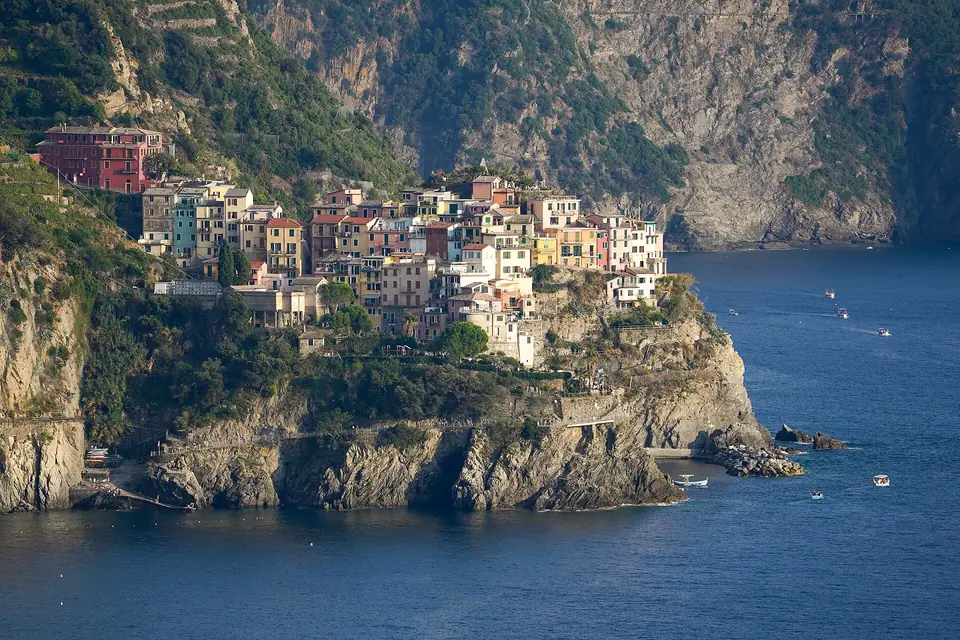
Photo: Timothy A. Gonsalves · CC BY-SA 4.0
Portovenere Day Trip: San Pietro Church, Byron Grotto & Palmaria
Exploring the UNESCO southern cape of Portovenere, from the black-and-white striped Church of San Pietro on its sea cliff to Castello Doria and Palmaria Island.
The medieval maritime fortress town of Portovenere guards the western entrance to the Gulf of Poets (Golfo dei Poeti). It anchors the southern cape of the Portovenere, Cinque Terre, and the Islands (Palmaria, Tino and Tinetto) UNESCO World Heritage Site. Portovenere sits just outside the five villages of the national park. Yet it shares the same vertical cliff topography and medieval Genoese architecture, untouched by railway tracks. Arriving here by passenger ferry from Riomaggiore or La Spezia reveals a screen of tall, narrow pastel tower-houses. That colorful waterfront wall leads out to a black-and-white striped Gothic church on a wave-battered limestone spur.
Calata Doria, the Palazzata tower-houses, and Porta del Borgo
Every ferry docking at Portovenere pulls up to the broad stone quay of Calata Doria. Directly behind the harbour fishing boats rises the Palazzata a Mare. The Republic of Genoa erected this unbroken fortified wall of painted tower-houses. Unlike ordinary harbour houses, these tall pastel tenements were engineered as a defensive curtain wall facing the sea. Their ground-floor stone arches now house waterfront bakeries and seafood trattorias. Inside, narrow staircases climb straight through the living quarters to the upper cliff street behind.
At the eastern end of the Palazzata stands the Porta del Borgo, the fortified medieval stone gateway flanked by a rectangular watchtower. Above the archway, a Latin inscription records that Portovenere was established as a strategic colonial outpost of Genoa (Colonia Januensis). Step through the Porta del Borgo onto Via Capellini, the narrow flagstone main street (caruggio). Artisan pesto shops, focaccerias, and dark slate doorways carved with medieval bas-reliefs line the lane.
| Portovenere Landmark | Architectural Style | Location | Access & Visiting Notes |
|---|---|---|---|
| Palazzata & Porta del Borgo | Genoese defensive wall | Calata Doria & Via Capellini | Open waterfront promenade & main pedestrian gate |
| Chiesa di San Pietro | Genoese Gothic (striped) | Punta San Pietro rocky headland | Free entry; loggia looks onto Byron's Grotto & Cinque Terre |
| Grotta di Lord Byron (Arpaia) | Collapsed marine sea cavern | Base of San Pietro cliff spur | Reached via stone steps behind Piazza Spallanzani |
| Chiesa di San Lorenzo | Romanesque (Antelami) | Upper hill below Castello Doria | Houses the miraculous White Madonna parchment |
| Castello Doria | Genoese citadel | Rocky crest above the old town | Ticketed fortress ramparts; check official municipal site |
| Palmaria Island (Terrizzo) | UNESCO natural island reserve | Across Le Bocche strait | Short boat hop from Calata Doria pier |
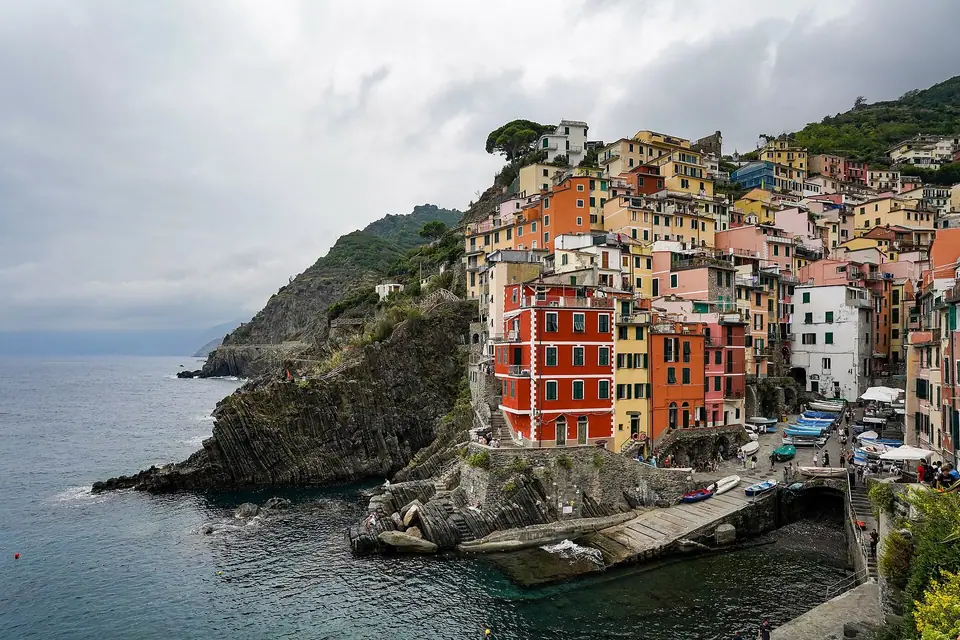
The Church of San Pietro on the sea promontory
Following Via Capellini to its western tip brings you out onto the wind-swept stone piazza of Punta San Pietro. Here, the Church of San Pietro (Chiesa di San Pietro) clings to the sheer cliff edge above the open Ligurian Sea. Historical tradition holds that the church stands over the foundations of a Roman temple to Venus Ericina. Portovenere (Portus Veneris) takes its ancient name from that sea goddess.
The building incorporates two distinct architectural sections that remain clearly visible in its stonework today:
- The Early Christian Syriac Church. Built of dark local stone with a rectangular plan and semicircular apse, forming the older right-hand body of the sanctuary.
- The Genoese Gothic Addition. Builders raised this wing in alternating horizontal bands of black local slate and white Carrara marble. A crenellated bell tower crowns the structure. Before stepping inside, walk through the open Romanesque-Gothic stone loggia on the northern side. Its mullioned stone arches frame a direct coastal view all the way up the cliffs to Riomaggiore, Manarola, and Punta Mesco.
Byron's Grotto (Grotta Arpaia), San Lorenzo Church, and Castello Doria
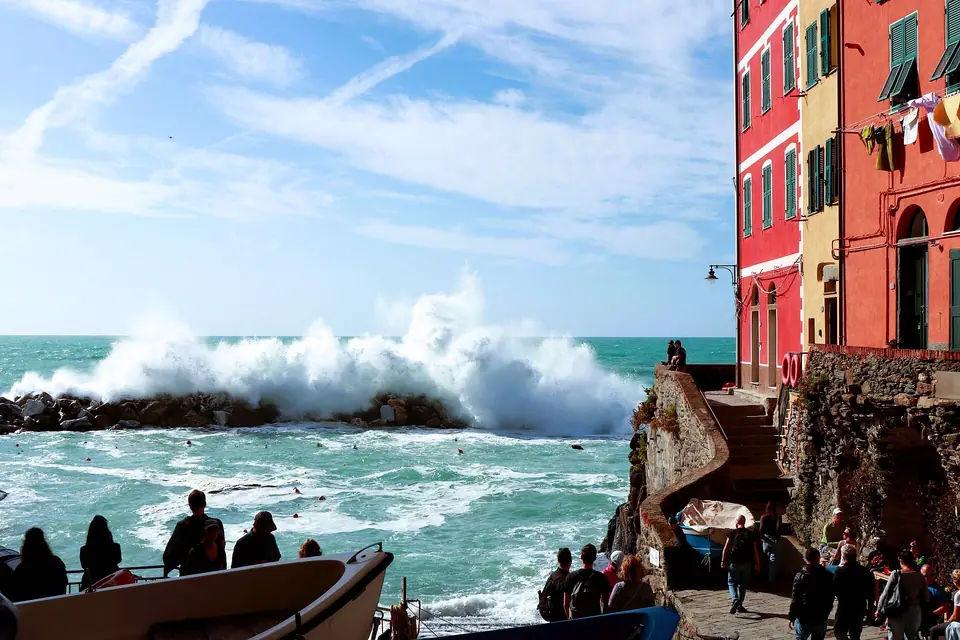
Immediately below the northern wall of San Pietro Church, a stone staircase descends to the viewing terrace above Byron's Grotto (Grotta dell'Arpaia). This deep coastal sea recess had a vaulted roof that partially collapsed during storms. A bronze statue and marble plaque commemorate the English Romantic poet Lord George Gordon Byron, who frequented the cove. Local accounts recall how he swam across the Gulf of Poets to visit Percy Bysshe Shelley in San Terenzo near Lerici. Experienced swimmers sunbathe on the flat limestone ledges below the viewing wall when the sea is calm.
From the grotto terrace, climb the stone steps past the circular ruins of historic grain windmills. Above stands the Romanesque Church of San Lorenzo (Santuario della Madonna Bianca). Erected by the Genoese in the Romanesque style of the Magistri Antelami, the sanctuary was consecrated by Pope Innocent II. Its main portal tympanum features a marble carving of Saint Lawrence roasting on the gridiron. Inside, the chapel preserves a Cedar of Lebanon log brought from the Holy Land. Beside it hangs the venerated icon of the White Madonna (Madonna Bianca). Every year for the patronal festival, townspeople light numerous Roman torches (padelloni). The flames illuminate the entire cliffside of San Pietro for the patronal procession.
Above San Lorenzo towers Castello Doria, one of the most powerful examples of Genoese military engineering in Liguria. Genoese engineers enlarged the fortress across centuries to house artillery batteries. Its polygonal stone ramparts and pentagonal bastion command the narrow channel opposite Palmaria Island. Check the official Portovenere municipal website for current castle admissions.
Crossing to Palmaria Island, Tino, and Tinetto
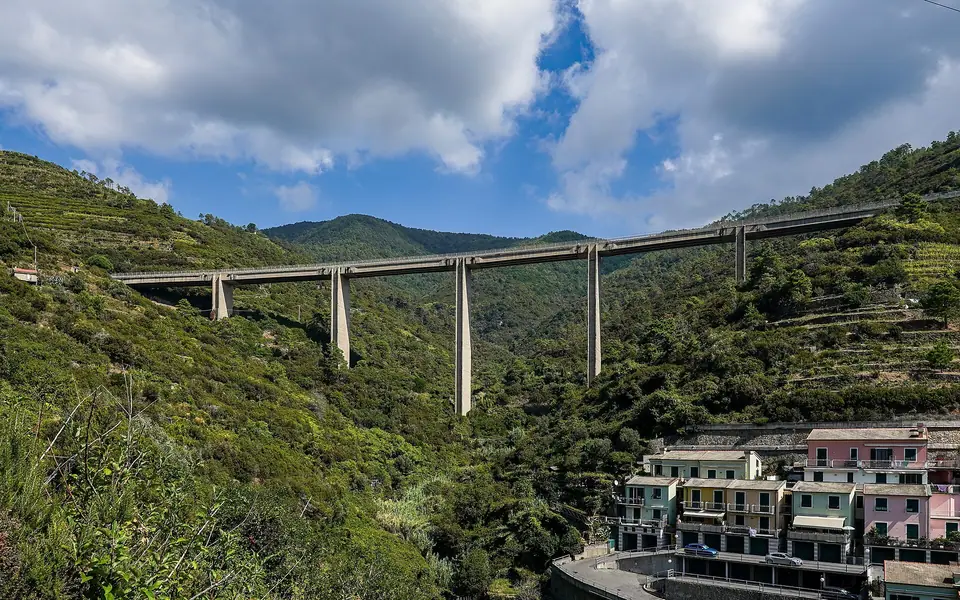
Separating Portovenere from the three islands of the UNESCO archipelago is the sea strait known as Le Bocche. Small yellow-and-white cooperative motorboats (Barcaioli di Portovenere) depart frequently from Calata Doria. The quick crossing drops passengers at the pier of Terrizzo on Palmaria Island. Palmaria offers a scenic circular coastal trail winding through fragrant Aleppo pines around the island. Along the way sit abandoned black-and-gold Portoro marble quarries and historic Forte Cavour. Just south of Palmaria lies the military lighthouse island of Tino, open during the feast of Saint Venerius. Beyond Tino sits the rocky islet of Tinetto, crowned by early Christian monastic ruins.
Getting to Portovenere by ferry, bus, and trail
Because Portovenere has no train station, visitors combine transport links with our Cinque Terre Card and ferry guide. In season, passenger ferries sail directly between Monterosso, Vernazza, Manarola, Riomaggiore, Portovenere, and La Spezia. Year-round, public buses depart regularly from central La Spezia along the coast to Portovenere. Buy your paper bus ticket at a tabaccheria before boarding. Dedicated hikers can walk the high coastal trail from Riomaggiore via Santuario di Montenero and Campiglia, as outlined in our Cinque Terre hiking trails guide. The ridge trek descends directly to Castello Doria. Once your transport brings you to the peninsula, allow time to wander the upper stone lanes behind Via Capellini. Afternoon sea breezes keep the rock terraces around San Pietro refreshing even on warm summer days. Watching coastal sailboats tack through the narrow strait opposite Palmaria Island is a fitting finale to any Gulf of Poets excursion. Keep your return ferry or bus ticket handy in a dry pocket for the evening ride back to La Spezia. Walking along the narrow medieval caruggio behind the harbour reveals traditional bakeries and slate portals carved in stone. Taking the short passenger boat across the channel to the island trails adds a peaceful nature walk to your visit. Pausing on the rocky headland beside the striped church lets you watch ferries rounding the point toward the open sea. Checking the late afternoon boat schedule at the main quay ensures a smooth return ride to La Spezia. Bringing sturdy walking shoes makes exploring both the cliffside fortress and the island footpaths far more enjoyable.
Where it is
- 1Portovenere Day Trip
- Pisa International Airport (PSA) · about 61 km from here in a straight line
- Directions in Google Maps
Stations and taxi ranks: OpenStreetMap. Airports: OurAirports. Distances are in a straight line.
Traveller tips
Real advice from people who have been to Cinque Terre. Every tip is read by our team before it goes live.
No tips yet. Been here? Yours could be the first.
Thank you! Your tip will appear here after a quick review.
More in Cinque Terre
Continue exploring Cinque Terre with related neighbourhood, food, and planning guides
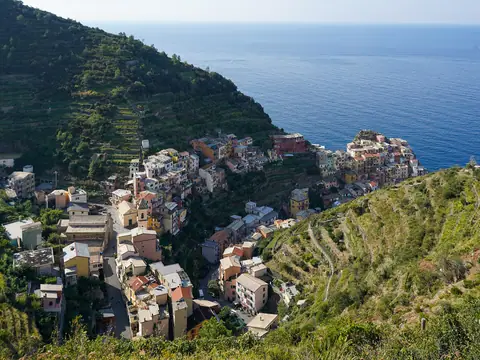
What to Eat in Cinque Terre: Trofie al Pesto, Monterosso Anchovies, Focaccia & Farinata
Cinque Terre, Italy
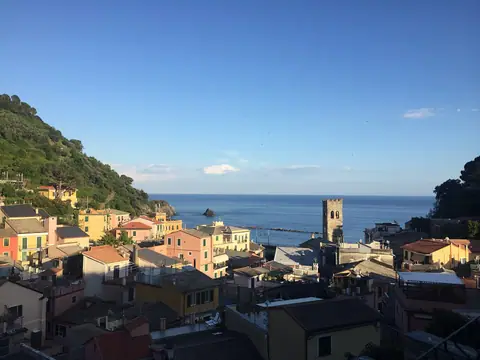
Cinque Terre: Coastal Villages, Trains & Park Rules
Cinque Terre, Italy
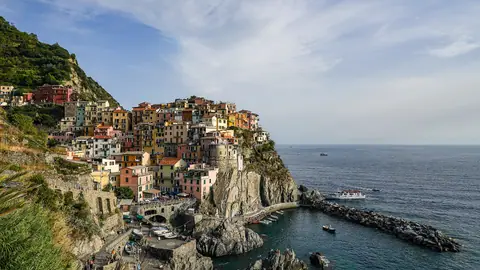
Things to Do in Cinque Terre: Villages, Cliff Trails & Boat Trips
Cinque Terre, Italy
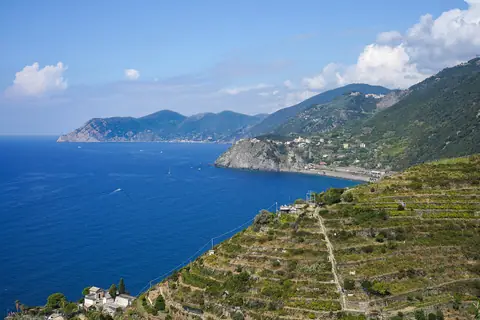
How to Get to Cinque Terre: Airports, Trains & Coastal Ferries
Cinque Terre, Italy
