


























Photo: MichelaGrasso99 · CC BY-SA 4.0
Cinque Terre: Coastal Villages, Trains & Park Rules
Learn how the five coastal villages align along the Ligurian coastline with essential train passes and mandatory trail rules.
Travellers arriving on the eastern Ligurian Riviera often expect the Cinque Terre to resemble a conventional seaside resort strip. In reality, you will not find wide coastal boulevards or beachfront car parks here. On the ground in the Province of La Spezia, the reality is far steeper and more engineered. UNESCO inscribed the coast as a World Heritage Site. The official designation covers Portovenere, Cinque Terre, and the Islands (Palmaria, Tino and Tinetto). Today, the core lies within the Parco Nazionale delle Cinque Terre. Established as a protected national park, the reserve safeguards permanent residents across local medieval communities. Private cars are barred from every village core, and flat ground barely exists. Your daily rhythm revolves around nineteenth-century railway tunnels, stone staircases, and cliffside vineyard paths.
How the five villages align from south to north along the coast
Understanding Cinque Terre geography starts with reading the coastal ridge between Punta Mesco in the northwest and Capo di Montenero in the southeast. Bookended by the northern surfing town of Levanto and the southern naval port of La Spezia, the five villages belong to three municipalities. Proceeding from south to north (the direction most trains arrive from La Spezia Centrale), each village occupies a distinct geological niche:
- Riomaggiore (Southernmost Village, Commune of Riomaggiore). Wedged inside the narrow Rio Maggiore gorge, Riomaggiore stacks tall pastel tower-houses (case-torri) along a culverted stream bed. It rises between a rock-cut boat ramp and a hilltop castle.
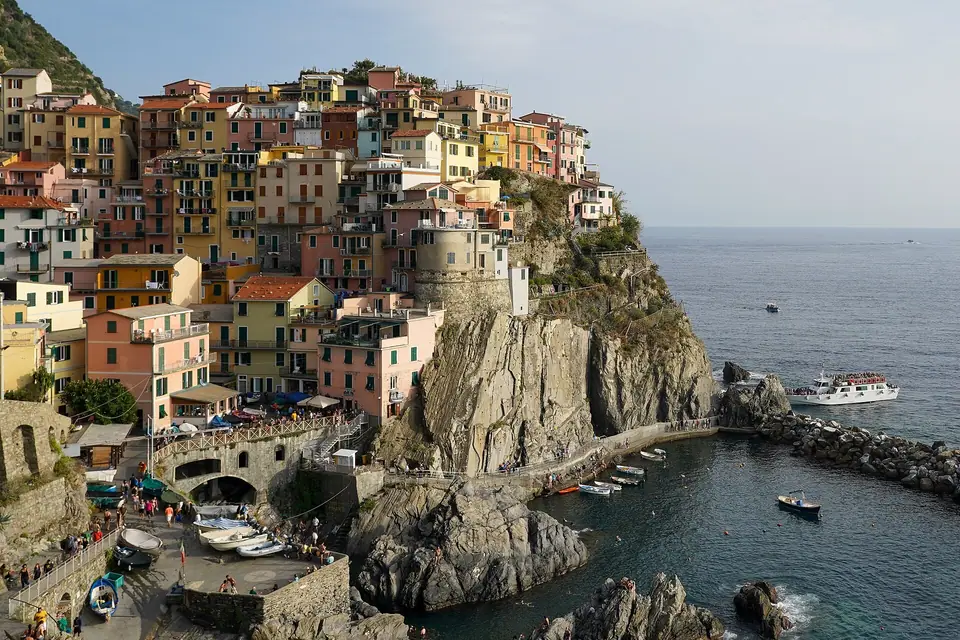
- Manarola (Second from South, Fraction of Riomaggiore Commune). Perched on a dark sandstone spur northwest of Riomaggiore, Manarola marks the end of the Via dell'Amore. Its pastel houses overlook a deep rock swimming basin. Above the town rises an amphitheatre of terraced vines climbing toward Volastra.
- Corniglia (Central Cliff Village, Fraction of Vernazza Commune). Unlike its four sisters, Corniglia has no direct harbour access. The village crowns a high shale headland above the sea. From the station below, you climb the brick steps of the Lardarina staircase or board the electric minibus.
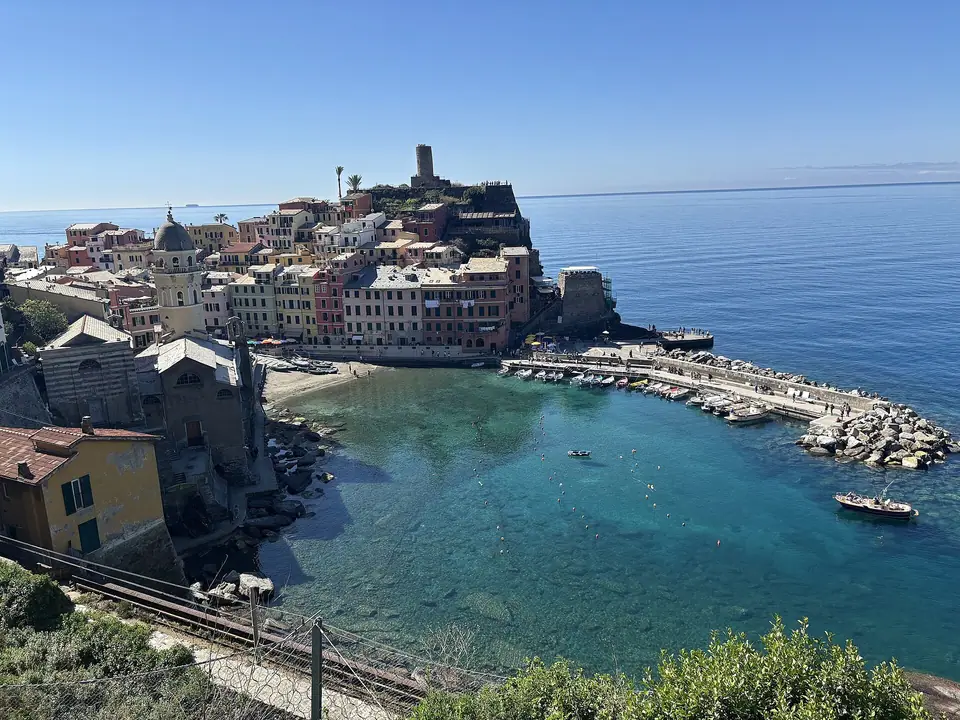
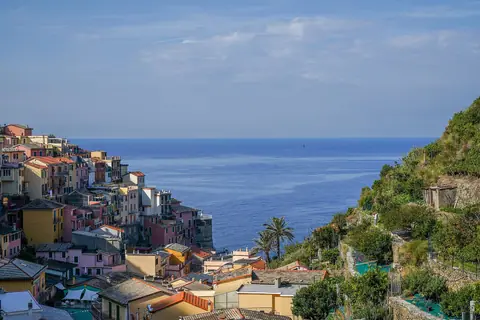
- Vernazza (Fourth from South, Commune of Vernazza). Built around a sheltered harbour basin, Vernazza frames a lively waterfront piazza. The Church of Santa Margherita d'Antiochia rises directly from the harbour rock. Opposite the church stands the cylindrical Belforte bastion of Castello Doria.
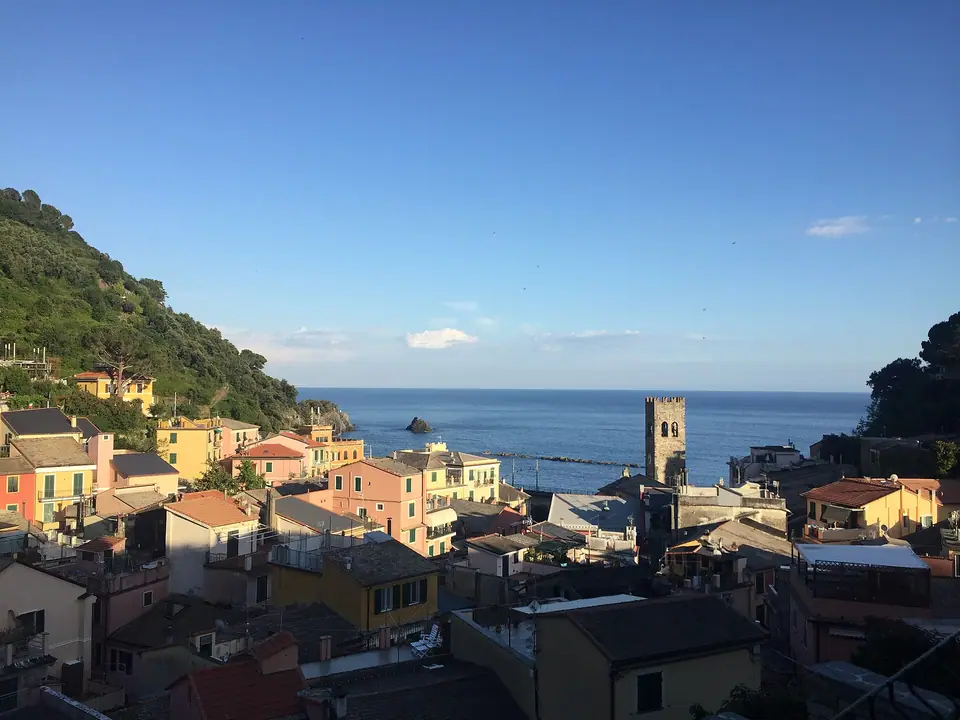
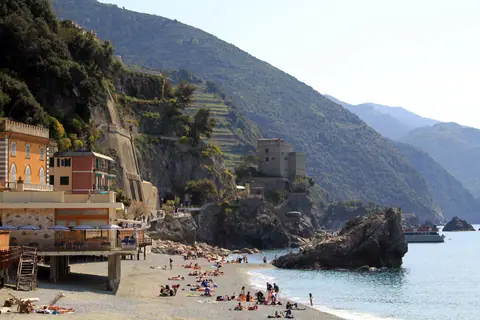
- Monterosso al Mare (Northernmost Village, Commune of Monterosso). A short pedestrian tunnel through the San Cristoforo headland splits Monterosso al Mare into two distinct halves. The Fegina beach promenade stretches west, while the medieval old town sits to the east.
| Village (South to North) | Municipality | Elevation of Core | Waterfront Character | Train from La Spezia |
|---|---|---|---|---|
| Riomaggiore | Riomaggiore | Near sea level | Steep stone boat slipway and pebble cove | Short ride |
| Manarola | Riomaggiore | Cliff spur | Deep rock swimming basin with ladder | Short ride |
| Corniglia | Vernazza | Shale promontory | No harbour; Lardarina stair climb | Short ride |
| Vernazza | Vernazza | Harbour level | Sheltered harbour breakwater and beach | Short ride |
| Monterosso al Mare | Monterosso | Valley mouth | Wide sand-and-pebble beaches at Fegina | Short ride |
The UNESCO cultural landscape and dry-stone terraces
UNESCO inscribed the coast under criteria (ii), (iv), and (v). The citation honoured centuries of organic interaction between human settlement and a steep marine cliffside. Here the Apennine foothills drop directly into the Ligurian Sea at severe gradients. Without human engineering, winter rainstorms would wash the thin topsoil straight into the water. Over centuries, villagers fractured local sandstone slabs and stacked them by hand without mortar to create thousands of horizontal steps known as ciàn.
Surveys by the Parco Nazionale delle Cinque Terre map these hand-stacked retaining walls (muretti a secco) across the park. Together, they stretch for thousands of kilometres across terraced hillsides. The park holds dense networks of stone walls supporting hillside agriculture. UNESCO also added the art of dry-stone walling to its international inventory of living cultural traditions. You can examine how modern cooperative growers use rack-and-pinion vineyard monorails to maintain these terraces in our dry-stone walls and Sciacchetrà wine guide.
How the Cinque Terre Express train, Park Cards, and ferries work together
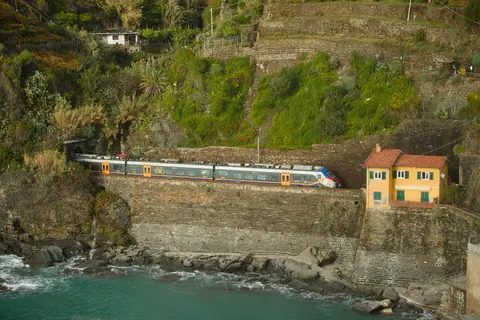
The coastal railway opened through rock-bored tunnels along the Ligurian shore. Before the tracks arrived, the five villages communicated primarily by boat or high mule tracks. Today, that railway forms the umbilical spine of the region. Between late March and early November, Trenitalia operates the dedicated Cinque Terre Express shuttle. Trains link La Spezia Centrale, the five villages, and Levanto throughout the day. Rail journeys between adjacent villages take a brief time underground.
Two official passes issued by the National Park govern trail and rail access, as detailed in our Cinque Terre Card and transport guide:
- Cinque Terre Trekking Card. You need this pass to walk the two paid coastal sections of the Sentiero Verde-Azzurro (Blue Trail). Those segments connect Monterosso to Vernazza and Vernazza to Corniglia. The card includes unlimited rides on the ATC green-and-yellow ecological minibuses linking each village with its hillside hamlets, plus free use of station toilets.
- Cinque Terre Treno MS Card. This pass bundles every benefit of the Trekking Card with unlimited second-class train travel. It covers regional and Cinque Terre Express services between Levanto and La Spezia Centrale. Both cards use a calendar pricing structure based on seasonal demand. Check the official Parco Nazionale delle Cinque Terre portal for current seasonal calendar tiers.
- Via dell'Amore Timed Supplement. This paved cliff path between Riomaggiore and Manarola reopened after an extensive rockfall stabilization project. Walking it requires an advance timed-entry reservation and a dedicated ticket supplement.
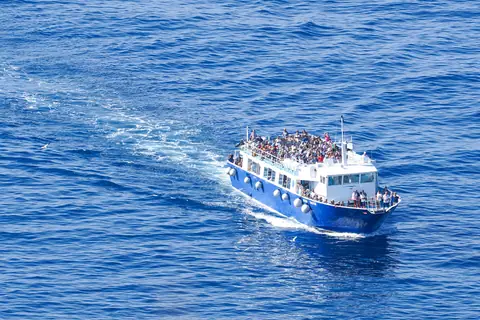
- Coastal Passenger Ferries. From late March through October, the boats of the local maritime consortium sail along the cliffs. They link La Spezia, Portovenere, Riomaggiore, Manarola, Vernazza, and Monterosso. Corniglia has no ferry pier due to its sheer cliff base.
Mandatory hiking footwear rules, weather alerts, and daily timing strategy
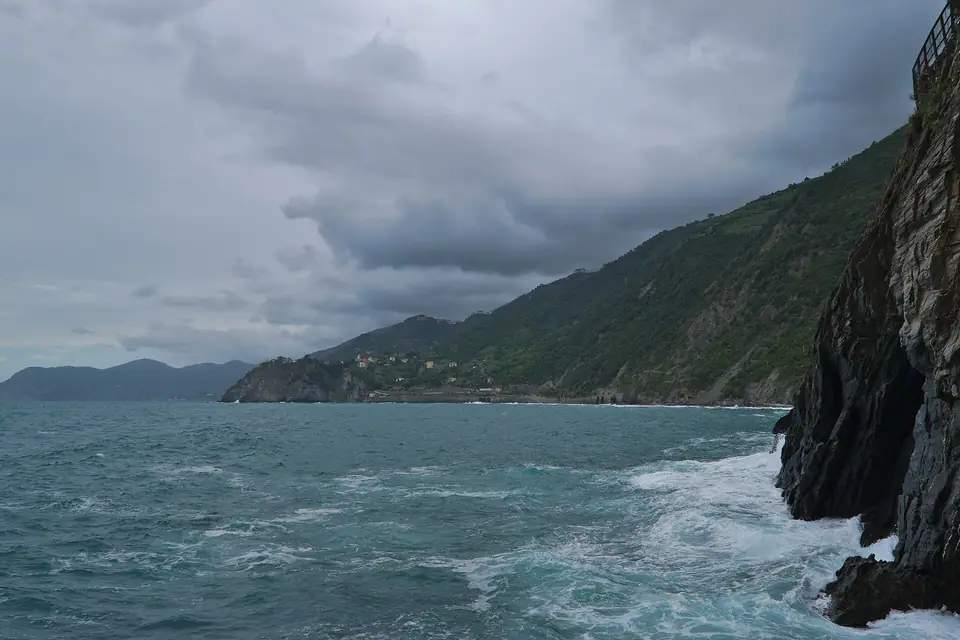
The coastal paths of Cinque Terre are not casual seaside promenades. They are narrow mountain trails cut into friable shale and sandstone ledges high above the surf. The National Park and Carabinieri Forestali rangers enforce a strict footwear law on the hiking network. Open-toed sandals, flip-flops, slip-on canvas shoes, and smooth-soled street trainers are prohibited. Checkpoint staff at the Monterosso, Vernazza, and Corniglia trailheads inspect footwear before scanning your Trekking Card. Violations carry substantial administrative fines, as explained in our Cinque Terre packing guide.
Before lacing your boots each morning, check the regional civil protection weather status (Allerta Meteo Liguria). Whenever authorities issue an Orange (Arancione) or Red (Rossa) weather alert for heavy rain or wind, the park closes all paid trails. Staff also lock the Via dell'Amore gates and suspend coastal ferry docking. Plan your days around peak tour crowds that fill Vernazza and Manarola through midday. Start your hikes early and take a midday break in quiet village bases. You can then enjoy the harbours in late afternoon using our top things to do guide and 3-day Cinque Terre itinerary. Keeping digital copies of your rail and trail passes on your phone speeds up platform and checkpoint inspections. Checking daily sea and trail notices at station information desks ensures smooth transitions between coastal villages. Early morning departures let you enjoy the quiet stone lanes before midday excursion groups arrive by train. Filling a reusable flask at village drinking fountains keeps you hydrated across sunny vineyard staircases.
Where it is
- 1Central Cinque Terre
- Pisa International Airport (PSA) · about 74 km from the central Cinque Terre in a straight line
- Directions in Google Maps
Stations and taxi ranks: OpenStreetMap. Airports: OurAirports. Distances are in a straight line.
Traveller tips
Real advice from people who have been to Cinque Terre. Every tip is read by our team before it goes live.
No tips yet. Been here? Yours could be the first.
Thank you! Your tip will appear here after a quick review.
More in Cinque Terre
Continue exploring Cinque Terre with related neighbourhood, food, and planning guides
Vernazza Guide: Doria Castle, Santa Margherita Church & Harbour
Cinque Terre, Italy
Monterosso al Mare Guide: Fegina Beach, Aurora Tower & Old Town
Cinque Terre, Italy
Cinque Terre Hiking Trails: Blue Trail, Sanctuary Paths & Rules
Cinque Terre, Italy
Cinque Terre Card Guide: Express Trains, Trail Passes & Ferries
Cinque Terre, Italy
