Buffalo Bayou Park and the Cistern
Buffalo Bayou Park turned a concrete edged channel into trails, lawns and public art, and the underground Cistern adds an unusual stop.
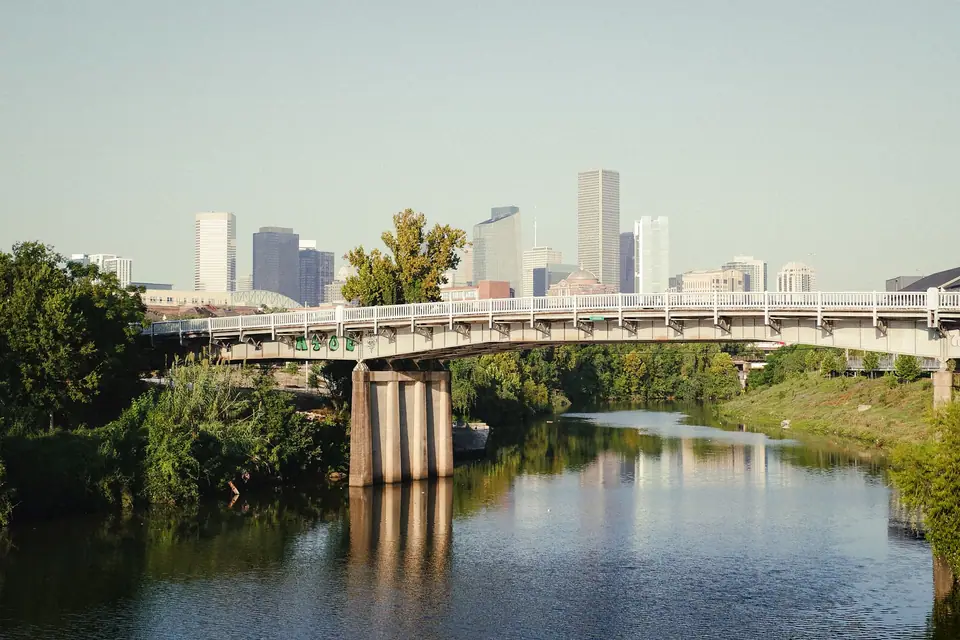
Buffalo Bayou Park is the stretch of green that makes Houston feel less like a grid of freeways and more like a river city. The bayou curls west of Downtown Houston between Allen Parkway and Memorial Drive, and a long restoration after Tropical Storm Allison turned a concrete-edged ditch into trails, bridges, lawns and public art. We use it as the city's best reset button after a morning in museums or meetings.
The Cistern beneath the lawn
The Cistern is the reason many of us come. Built in 1926 as an underground drinking-water reservoir, it was forgotten for decades until engineers found it during park planning. Walk down and you enter a hushed chamber of slender concrete columns standing in a shallow skin of water, with a sound that carries for many seconds. Entry is by timed tour or exhibition slot, so book ahead rather than turning up on a hot afternoon and hoping.
Bats under the Waugh Drive bridge
From spring into autumn, Mexican free-tailed bats roost in the expansion joints beneath the Waugh Drive bridge, and at dusk they pour out in a rolling ribbon over the water. A sloped viewing area sits beside the bridge, and we like to arrive early, claim a patch of grass and watch the sky turn. The show is wildlife, not a schedule, so numbers vary with the weather and the season.
Paths, skyline and the long loop
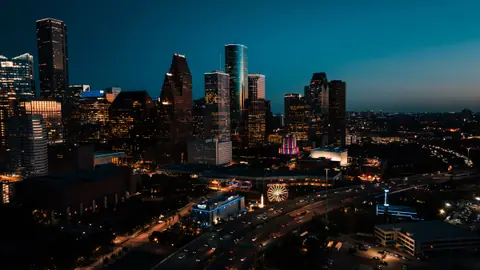
Wide trails run on both banks, with underpasses that let walkers and cyclists avoid the road crossings. The best skyline view is from the Sabine Street Bridge, where the towers of downtown stack up behind a curve of the bayou. Rosemont Bridge is another favourite for photographs, and the Hines pedestrian bridge at Waugh Drive makes crossing easy. Cyclists can follow the whole corridor and continue along other bayou trails toward Hermann Park by linking routes through the city.
Lost Lake is a small, wooded pocket of water near the western end, popular with anglers, picnickers and wedding photographers. Locals bring dogs to the fenced run at Johnny Steele Dog Park, and the skate park under the road is a surprisingly photogenic concrete playground. Eleanor Tinsley Park, on the northern bank, is a big open lawn and a favourite place to gather for fireworks and outdoor events.
Paddling, gardens and neighbours
Kayaks and canoes can be rented near the park, and a paddle down the brown, tree-lined bayou is a calm way to see the city from its original waterway. Houston was founded in 1836 at the confluence of Buffalo Bayou and White Oak Bayou, and the river was the highway that brought steamboats and cotton. Try to paddle when water levels are normal, because the bayou rises fast after storms, and trails by the water can close without notice.
The park sits close to some of the city's most graceful places. Bayou Bend, the former home of Ima Hogg, offers American decorative arts and wooded gardens on the quiet side of the water, while the edge of Montrose brings cafes and murals within a short ride. For a very different evening, Market Square Park and Main Street are close by car or rideshare.
Practical tips for heat and humidity
Houston summers are hot and sticky, so we walk the bayou early or near sunset and carry water, because shade is patchy on the open lawns. Rain can arrive suddenly in the warmer months, and trails near the water are the first places to flood. Parking is available at several trailheads, but a car is not needed if you are staying downtown, since a short rideshare or a bike keeps the day relaxed. Bring insect repellent for dusk, when mosquitoes appear.
Traveller tips
Real advice from people who have been to Buffalo Bayou Park and the Cistern. Every tip is read by our team before it goes live.
No tips yet. Been here? Yours could be the first.
Thank you! Your tip will appear here after a quick review.
More in Houston
Continue exploring Houston with related neighbourhood, food, and planning guides