Museum of Fine Arts, Houston
The Museum of Fine Arts, Houston is the largest art museum in Texas, and this guide covers its buildings, collections and sculpture garden.
The Museum of Fine Arts, Houston, known to everyone as the MFAH, is the largest art museum in Texas and one of the biggest in the United States. It began in 1900, the first art museum in the state, and it has since grown into a campus of several buildings, two historic house museums and a sculpture garden. We usually give it a full morning and then step outside to rest our eyes.
Three buildings, three eras
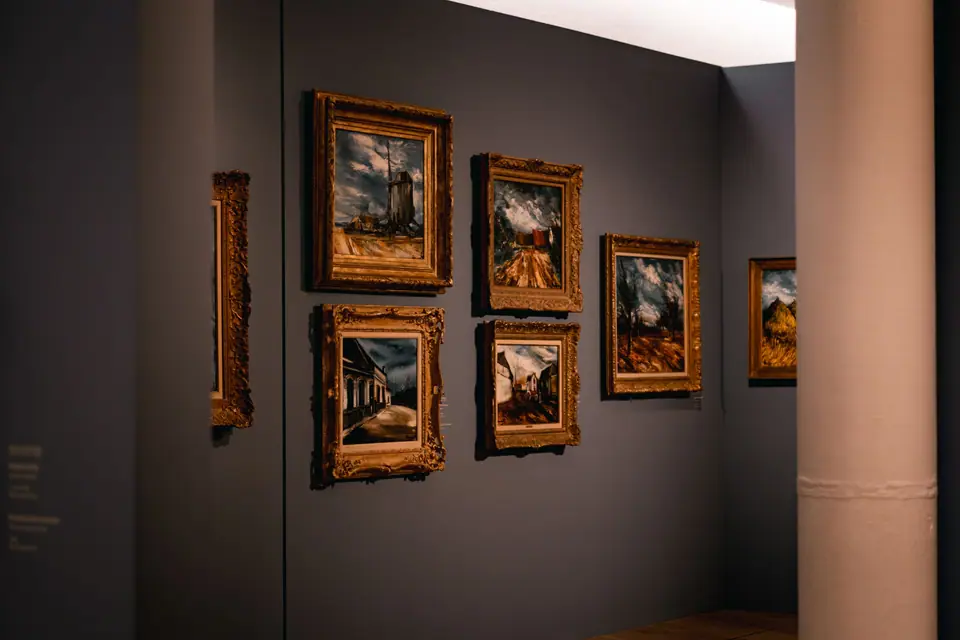
The Caroline Wiess Law Building, designed by Ludwig Mies van der Rohe, brings a calm modernist box of glass and steel to the corner of Main Street and Bissonnet. Across the road, the Audrey Jones Beck Building by Rafael Moneo holds the older European collections, including Impressionist and Post-Impressionist painting. The newest addition, the Nancy and Rich Kinder Building by Steven Holl, opened in 2020 and houses modern and contemporary work, with a luminous interior of white walls and daylight from above.
Together they hold works from antiquity to the present day, with particular strength in Latin American art, Impressionism and African gold from the Asante kingdom.
The tunnel of light
A highlight of our visits is the underground passage between the Law and Beck buildings, which doubles as an installation by James Turrell titled The Light Inside. Slow changing colours wash the walls, and the effect is oddly calming. It is also a practical shortcut when a Texas thunderstorm arrives mid-afternoon.
The museum was built up over a century by Houston families who made their money in oil, cotton and shipping, and that civic pride explains why a city so young holds art of such range.
The sculpture garden across the street
The Lillie and Hugh Roy Cullen Sculpture Garden was designed by Isamu Noguchi and is laid out as a series of sunken lawns and walls among trees. It is free to enter and open to anyone, so we often come here with a coffee after the galleries. Look for work by Matisse, Rodin and Louise Bourgeois, and note how the trees soften the sun in summer.
Bayou Bend and Rienzi
The museum also runs two historic homes. Bayou Bend, the former home of the philanthropist Ima Hogg, stands above Buffalo Bayou and displays American decorative arts in a landscaped garden. Rienzi presents European decorative arts in a modernist house with wooded grounds. They are some distance from the main campus, so we travel by car or rideshare rather than rail, and we like the gardens near River Oaks as an add-on for a second day. The wider green corridor is covered in our Buffalo Bayou Park guide.
What to prioritise
Nobody sees everything in a single visit, and trying leads to a sore back and a blur of frames. We pick one era per building: Impressionism in the Beck Building, modernism and design in the Law Building, and contemporary work in the Kinder Building. Latin American art is a strength of the museum and deserves a slow look. Benches are plentiful, and the cafes make a calm break between wings.
Putting it into a Museum District day
The museum sits at the heart of the Museum District, so it pairs naturally with the dinosaurs nearby or the walks in Hermann Park. We reach it on the Red Line from downtown, getting off at the Museum District stop and walking a few blocks. Our METRORail guide explains the stations. Special exhibitions sometimes need a timed ticket, so we book ahead, and we keep a light jacket handy because galleries are cooled hard against the Houston heat.
For a contrast with these big institutions, we like to spend the afternoon at the smaller, more intimate Menil Collection, which has free admission and a very different pace.
Traveller tips
Real advice from people who have been to Museum of Fine Arts, Houston. Every tip is read by our team before it goes live.
No tips yet. Been here? Yours could be the first.
Thank you! Your tip will appear here after a quick review.
More in Houston
Continue exploring Houston with related neighbourhood, food, and planning guides