





















Fitzroy, Collingwood, Brunswick Street, St Kilda Pier & Brighton Bathing Boxes Guide
Ride Light Rail Route 96 from the Victorian iron-lacework terraces and galleries of Fitzroy and Collingwood across the CBD to St Kilda's 1912 Luna Park, Little Penguin pier, and the 82 Brighton Bathing Boxes.
To understand why Melbourne tops global liveability rankings, step outside the central Hoddle Grid and spend a day in its inner-ring suburbs. Tram Route 96 acts as a bohemian-to-bay thread connecting Melbourne's two most characterful neighbourhoods in a single 35-to-40-minute ride. Remember to touch on your myki card when travelling outside the CBD Free Tram Zone. At the northern end lie the nineteenth-century iron-lacework terraces, independent art galleries, and converted brick factories of Fitzroy and Collingwood. At the southern terminus on Port Phillip Bay sits St Kilda, famous for its palm-lined foreshore, 1912 roller coaster, cake shops, and dusk Little Penguin colony. Just 6 kilometres further south along the bay stand the 82 Brighton Bathing Boxes.
1. Fitzroy: Gertrude Street, Brunswick Street, and the Rose Street Artists' Market
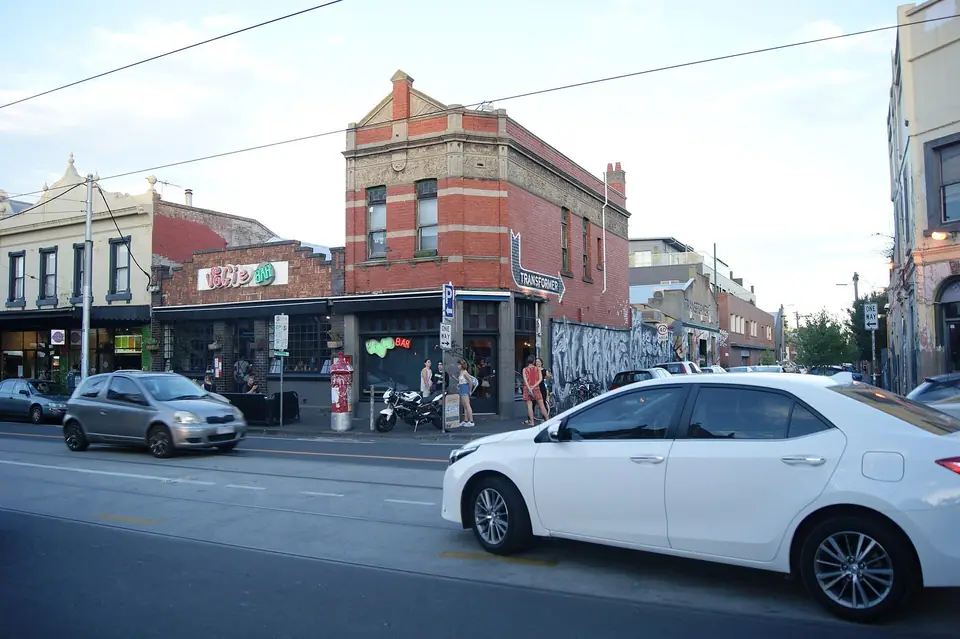
Subdivided in 1839 and named after Sir Charles Augustus FitzRoy, Fitzroy is the first suburb of Melbourne created outside Robert Hoddle's 1837 city grid. Proclaimed a municipality in 1858, the neighbourhood preserves some of the best-preserved Victorian iron-lacework terraces in Australia. Reach its southern gateway in 10 minutes from the CBD on Tram Route 86 (Bourke Street) or Tram Route 11 (Collins Street). You can also ride Tram Route 96 up Nicholson Street past the UNESCO Carlton Gardens.
A morning walk through Fitzroy follows an L-shaped route across three streets:
- Gertrude Street (from Nicholson Street to Smith Street). Running east-west for 800 metres at the southern foot of Fitzroy, Gertrude Street preserves narrow 1850s gold-rush bluestone cottages. Two-storey Victorian storefronts along the strip house independent contemporary art spaces, architectural bookshops, and acclaimed wine bars and bistros.
- Brunswick Street (from Victoria Parade north to Alexandra Parade). Turn north onto Fitzroy's main creative spine. Lined with two- and three-storey late-Victorian boom-style buildings draped in cast-iron filigree balconies, Brunswick Street is packed with vintage clothing boutiques and second-hand bookshops. You will also pass vinyl record stores, vegetarian cafes, rooftop bars, and historic corner pubs such as the 1865 Perseverance Hotel.
- Rose Street Artists' Market and Fitzroy Street Murals. Near the northern end of Brunswick Street, turn into Rose Street. Every Saturday and Sunday at 60 Rose Street, the Rose Street Artists' Market (founded in 2003) hosts local painters, ceramicists, and jewellers. Surrounding Rose, Fitzroy, and Napier streets showcase large-scale street art murals.
2. Collingwood: Smith Street, Keith Haring's 1984 Mural & Warehouse Roasters
Walk three blocks east of Brunswick Street to Smith Street. Served by Tram Route 86, this avenue forms the boundary between Fitzroy on the west and Collingwood on the east. Smith Street was once Melbourne's working-class retail mile, where Australia's first department store opened, and later a busy factory-outlet strip. Today, Collingwood's nineteenth-century brick boot factories and textile mills east of Smith Street house coffee roasteries like Proud Mary. Nearby warehouses hold craft brewery taprooms and arts precincts such as Collingwood Yards.
At 65 Johnston Street, just east of Smith Street, stop at the heritage-listed Keith Haring Mural on the former Collingwood Technical School wall. American pop artist Keith Haring painted the frieze of dancing figures in February 1984 during his visit to the National Gallery of Victoria. It is the only surviving public mural by Keith Haring in Australia and one of only 31 surviving public murals by Haring worldwide.
3. Riding Route 96 South to St Kilda: Luna Park, Acland Street & The Espy
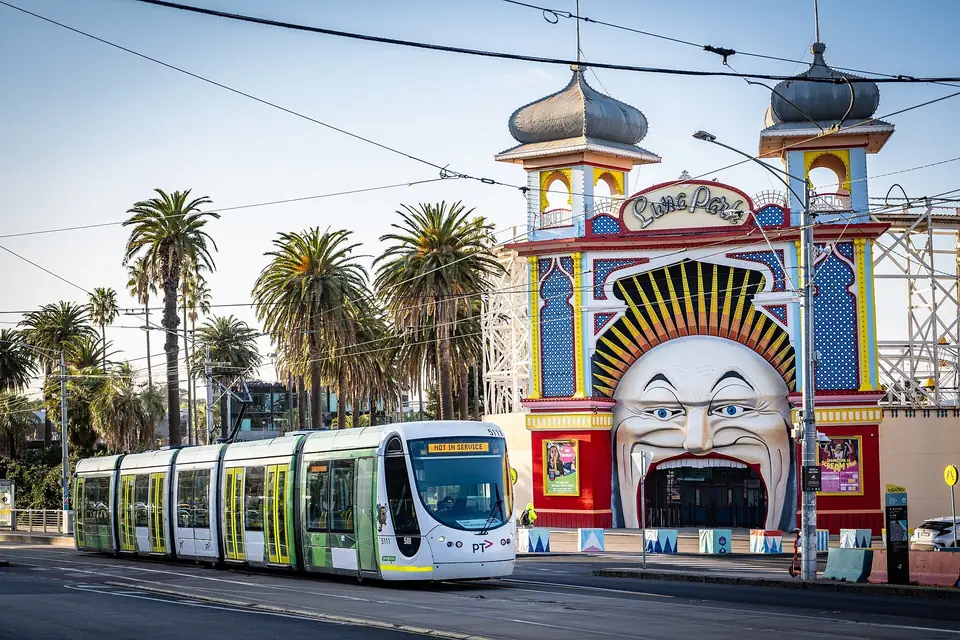
Board a southbound low-floor E-class tram on Route 96, or take Route 16 down Swanston Street and St Kilda Road. Ride 6 kilometres south of the CBD to St Kilda on Port Phillip Bay. En route, stop at Coventry Street for steamed dim sims at the 1867 South Melbourne Market. Named in 1841 after the schooner Lady of St Kilda, the bayside suburb flourished in the late 1800s as Melbourne's seaside resort.
Step off along The Esplanade, home to the Sunday St Kilda Esplanade Market since 1970, outside three seaside landmarks:
- Luna Park Melbourne (18 Lower Esplanade). Opened on 13 December 1912, visitors enter through the giant grinning mouth of "Mr Moon" beneath two Moorish revival domes. Wrapping around the park is the timber Great Scenic Railway, built in 1912 as the oldest continually operating roller coaster in the world. A standing brakeman rides in the centre of the train to manually control the speed overlooking Port Phillip Bay.
- The Palais Theatre and the Esplanade Hotel ("The Espy"). Next door stands the twin-domed 1927 Palais Theatre, which seats nearly 3,000 spectators. Up on the Upper Esplanade sits the white 1878 Esplanade Hotel ("The Espy"), the longest-running live music pub in Australia.
- Acland Street Cake Shops. At the terminus of Route 96 runs pedestrianised Acland Street. Since post-war Jewish migrants arrived from Vienna, Warsaw, and Budapest, its patisserie windows have been stacked with baked cheesecakes, chocolate kugelhupf, poppy-seed strudel, and vanilla slices.
4. St Kilda Pier Little Penguins at Dusk
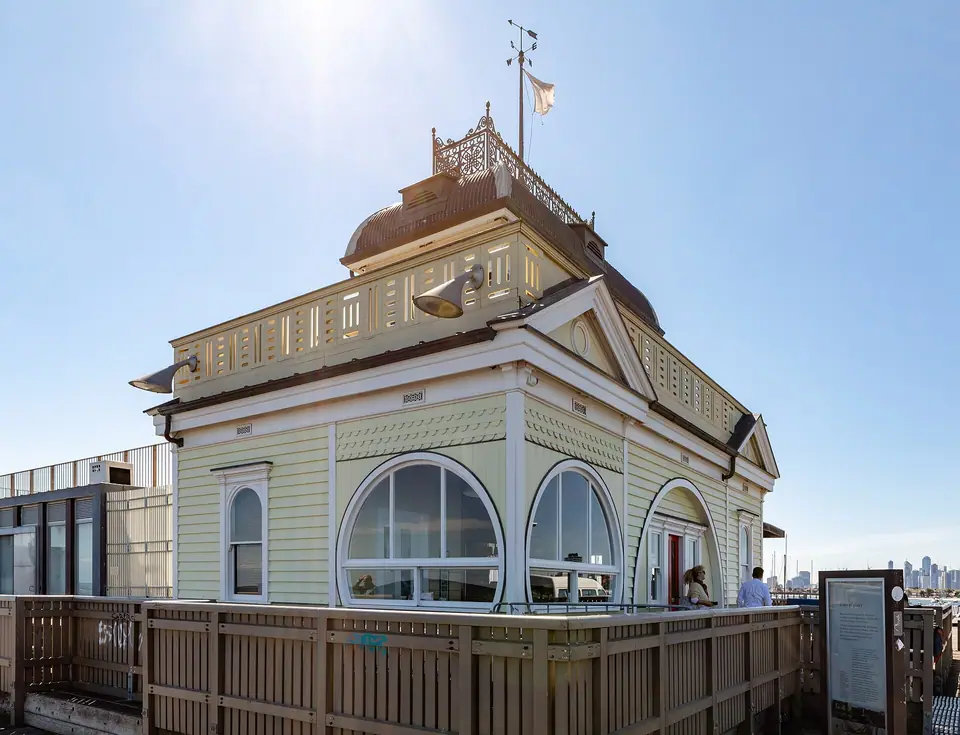
Walk out along the curved timber boardwalk of St Kilda Pier, first built in 1853 and expanded with a 450-metre curved pier in late 2024. At the end sits the Edwardian St Kilda Pavilion, designed in 1904 and rebuilt in 2006. Behind the pavilion, the 1956 Olympic rock breakwater shelters a resident colony of roughly 1,400 Little Penguins (Eudyptula minor). Measuring 30 to 33 centimetres tall, they are the smallest penguin species in the world. At dusk, volunteer rangers staff the free breakwater viewing boardwalk as Little Penguins swim home from Port Phillip Bay. Check Parks Victoria for seasonal viewing rules, and never use flash photography.
5. Extending South to the 82 Brighton Bathing Boxes
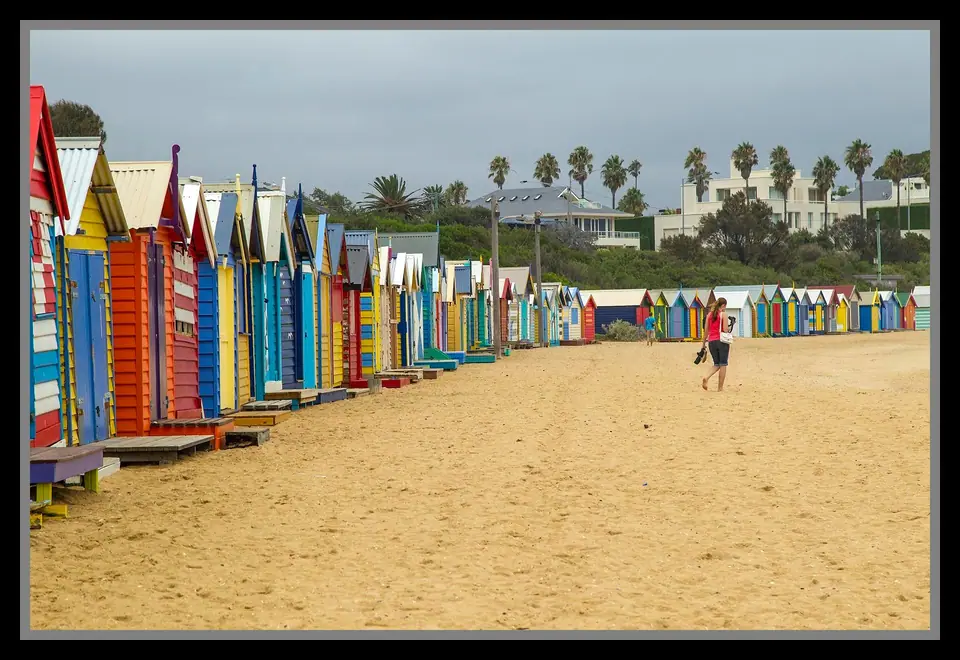
Before sunset, add a one-hour trip 6 kilometres further south along the Bayside Coastal Trail to Dendy Street Beach in Brighton. You can also take a 23-minute Sandringham Line train ride from Flinders Street Station to Middle Brighton or Brighton Beach. Lining the sand stand the heritage-listed 82 Brighton Bathing Boxes. Dating back to 1862, these 82 uniformly proportioned timber beach huts with corrugated iron roofs have zero electricity or running water. Their weatherboard walls are painted in bold stripes, waves, and the Australian flag against the distant CBD skyline.
Traveller tips
Real advice from people who have been to Melbourne. Every tip is read by our team before it goes live.
No tips yet. Been here? Yours could be the first.
Thank you! Your tip will appear here after a quick review.
More in Melbourne
Continue exploring Melbourne with related neighbourhood, food, and planning guides
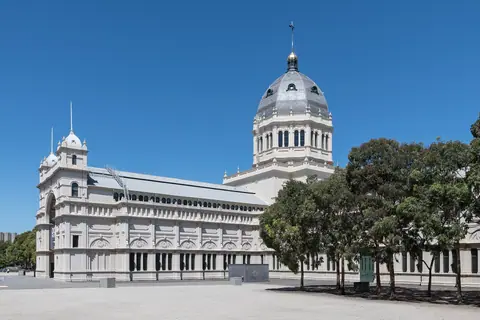
Royal Exhibition Building, UNESCO Carlton Gardens, Melbourne Museum & Lygon Street
Melbourne, Australia
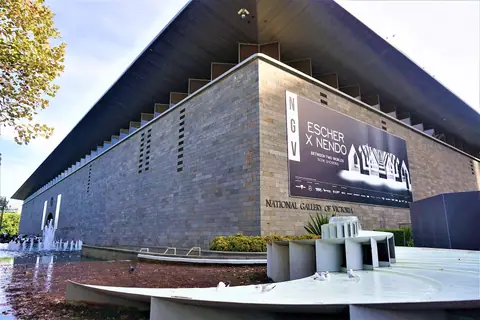
NGV International, Southbank Arts Precinct, Shrine of Remembrance & Botanic Gardens
Melbourne, Australia
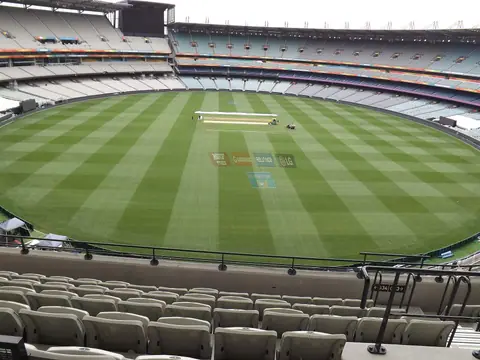
Melbourne Cricket Ground (MCG), Melbourne Park, Fitzroy Gardens & Yarra River Trail
Melbourne, Australia
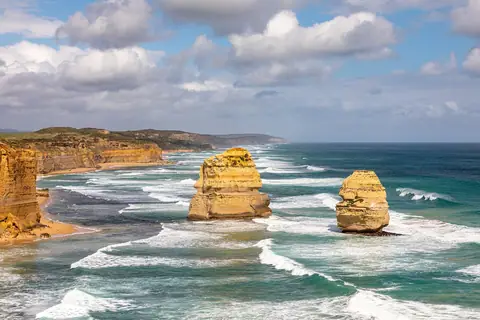
Great Ocean Road, Twelve Apostles, Phillip Island Penguins & Yarra Valley Day Trips
Melbourne, Australia
