





















NGV International, Southbank Arts Precinct, Shrine of Remembrance & Botanic Gardens
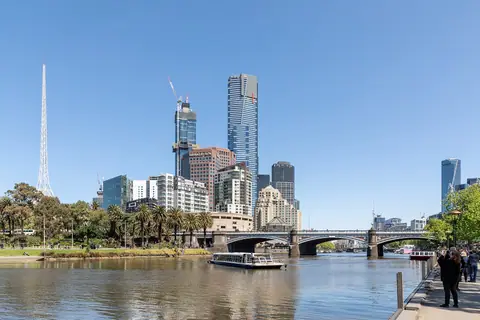
Cross Princes Bridge over the Yarra River to explore Arts Centre Melbourne's 162m spire, Leonard French's stained-glass ceiling at NGV International, the 1934 Shrine of Remembrance, and the 38-hectare Royal Botanic Gardens.
Step onto the 1888 bluestone arches of Princes Bridge outside Flinders Street Station and look south down the tree-lined boulevard of St Kilda Road. Rising straight ahead is the 162-metre white lattice spire of Arts Centre Melbourne, followed by the bluestone walls of NGV International. Beyond them sit the stepped pyramid of the 1934 Shrine of Remembrance atop Kings Domain and the 38-hectare canopy of the Royal Botanic Gardens Victoria. This two-kilometre cultural spine on the south bank of the Yarra River holds Australia's oldest and most visited art museum. It also features the state's principal war memorial and a celebrated nineteenth-century botanic garden. General admission to all three landmarks is completely free.
1. Princes Bridge, Southbank Promenade, and Arts Centre Melbourne
Your walk begins by crossing the Yarra River on Princes Bridge, or via the pedestrian Evan Walker Bridge to the west. Built in 1888 on the site of Melbourne's 1845 timber bridge and 1850 stone bridge, Princes Bridge displays the cast-iron coat of arms of the City of Melbourne. Turning right along the Southbank Promenade leads to the 92-storey, 297-metre Eureka Tower. Inside, lifts ascend in under 40 seconds to the 88th-floor observation deck of Melbourne Skydeck at 285 metres, the tallest viewing platform in the Southern Hemisphere.
At the southern foot of Princes Bridge stands Arts Centre Melbourne, designed by architect Sir Roy Grounds and opened between 1982 and 1984. Because the south bank sits on soft Coode Island silt, Grounds placed the circular 2,466-seat Hamer Hall concert venue beside the river. He then sank the stages of the Theatres Building (including the 2,000-seat State Theatre) up to 33 metres underground. Above the complex rises a steel lattice spire reaching 162 metres (531 feet) into the sky. At night, 6,600 metres of fibre-optic tubing illuminate its ballerina-tutu skirt. Inside Hamer Hall, the free Australian Music Vault celebrates Australian music history.
2. NGV International: The Waterwall, Great Hall Stained-Glass Ceiling & Old Masters
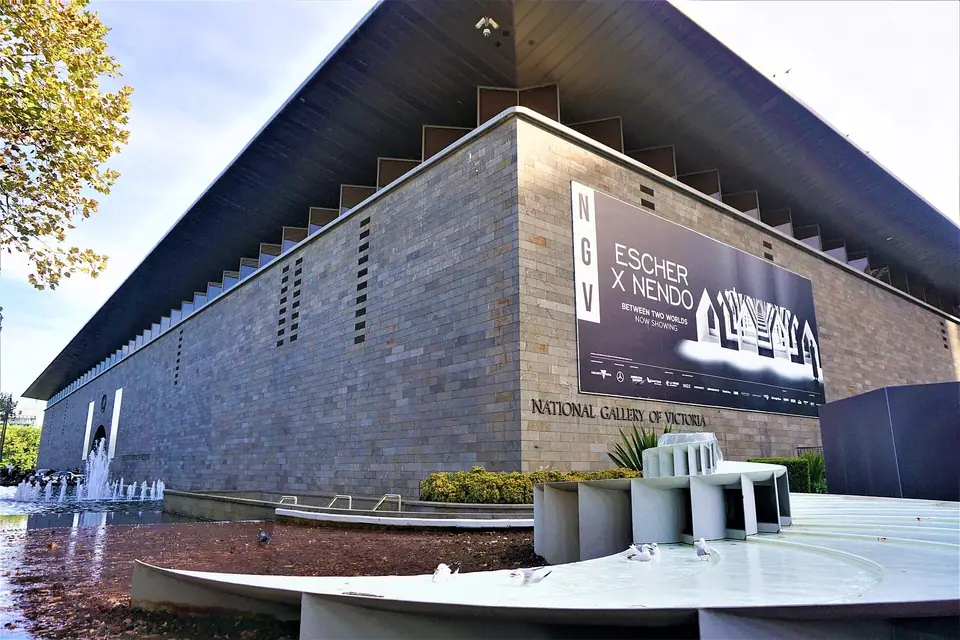
Immediately south at 180 St Kilda Road stands NGV International, the flagship campus of the National Gallery of Victoria. Founded on 24 May 1861 during the gold rush, the NGV is the oldest public art museum in Australia. It also ranks as the most visited art gallery in Australia. Its dedicated Australian art collection lives across the river at The Ian Potter Centre: NGV Australia in Federation Square. Sir Roy Grounds designed the bluestone palazzo on St Kilda Road, which opened on 20 August 1968 and was redeveloped inside by Mario Bellini in 2003. A water moat encircles the building, and visitors enter through a cascading glass waterwall.
Permanent collection entry is free (check the official NGV website for hours and major ticketed exhibitions). Do not miss three highlights inside:
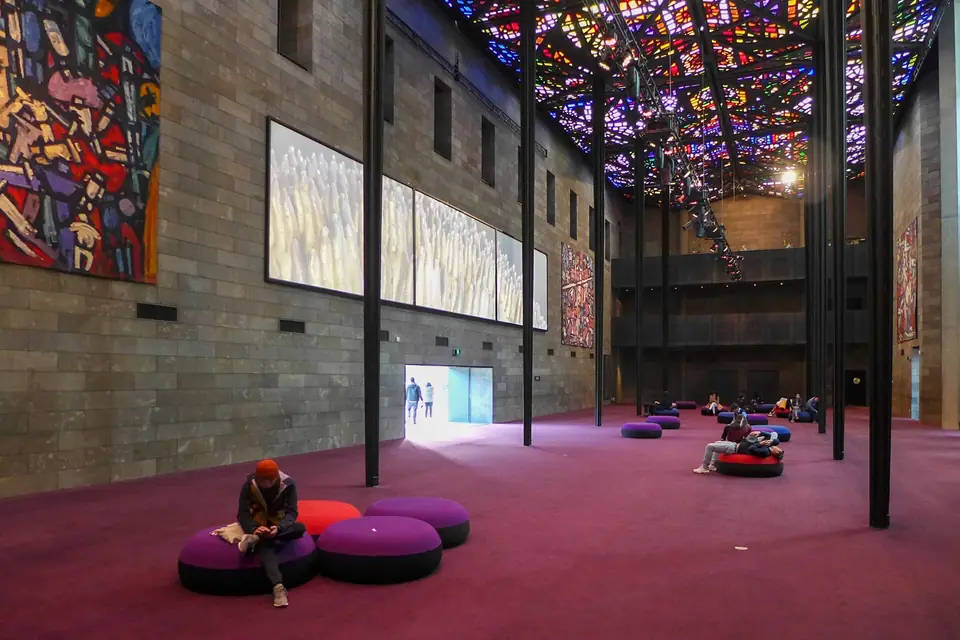
- The Great Hall and Leonard French's Stained-Glass Ceiling. Melbourne artist Leonard French spent five years creating the Great Hall ceiling, which was completed in 1968. The canopy measures 68.5 metres (225 feet) long by 15.2 metres (50 feet) wide and weighs more than 50 tonnes. Assembled from 224 triangular panels of thick Belgian Dalle de Verre glass, it is the world's largest suspended stained-glass ceiling. Visitors lie on upholstered ottomans in the centre of the hall to look up at its glowing geometric panels.
- European Old Masters and Modernist Galleries (Levels 1 and 2). Thanks to the 1904 Alfred Felton Bequest, NGV International holds works by Giambattista Tiepolo, including the 1744 canvas The Banquet of Cleopatra. Galleries also display Rembrandt, Tintoretto, J.M.W. Turner, Claude Monet, Camille Pissarro, Pierre Bonnard, Pablo Picasso, and Mark Rothko.
- Asian Art, Design, and the Grollo Equiset Garden. Galleries of Chinese ceramics, Japanese prints, and contemporary design open onto the rear sculpture garden. Outside, Auguste Rodin's bronze Balzac stands beside the annual NGV Architecture Commission pavilion.
3. The 1934 Shrine of Remembrance and the Axial View up Swanston Street
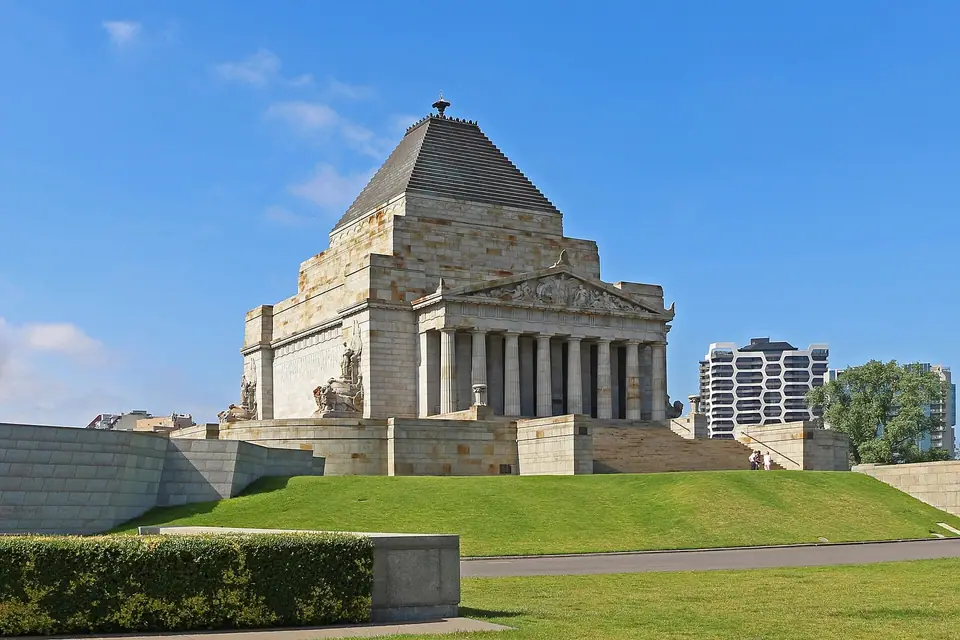
Leaving NGV International, walk 700 metres south through Kings Domain past the 1959 outdoor Sidney Myer Music Bowl. At the crest of the hill stands the Shrine of Remembrance, which offers free admission (check the official Shrine portal for opening hours). Returned First World War veterans Phillip Hudson and James Wardrop designed the memorial. Built from Tynong granite between 1928 and 1934, it was dedicated on Armistice Day, 11 November 1934, before 300,000 people.
The monument combines the Doric portico of the Parthenon in Athens with the seven-stepped pyramid roof of the Mausoleum at Halicarnassus. Inside, the central Sanctuary encloses the sunken marble Stone of Remembrance, engraved with the words "GREATER LOVE HATH NO MAN". A roof aperture is aligned so a ray of sunlight strikes the word "LOVE" on the 11th hour of 11 November. For daily visitors, a simulated light beam recreates that moment every half hour. Visit the bronze-statued Crypt and the underground Galleries of Remembrance, opened in 2014 with over 800 wartime artefacts. Highlights include the original lifeboat Chusan from the 25 April 1915 Gallipoli landing. Afterwards, climb to the upper balcony for an axial panorama straight down Swanston Street.
4. The 38-Hectare Royal Botanic Gardens Victoria
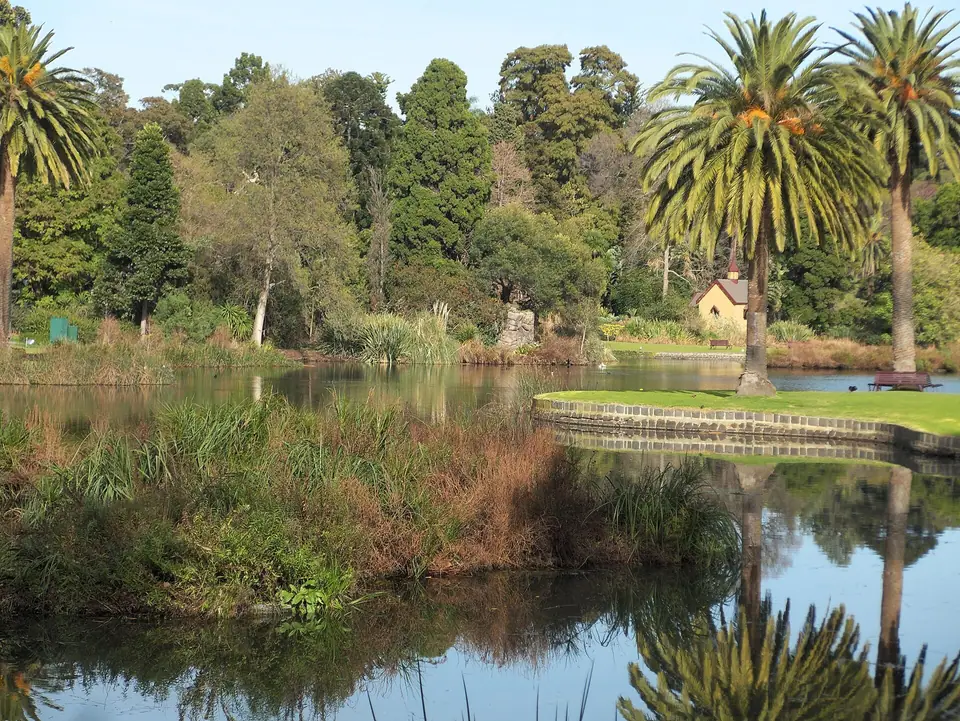
Directly east of the Shrine begins the 38-hectare (94-acre) Royal Botanic Gardens Melbourne. Entry is free daily; check the official Royal Botanic Gardens Victoria website for seasonal gate hours. Charles La Trobe selected the riverside site in 1846, and two nineteenth-century directors shaped its landscape. Botanist Baron Ferdinand von Mueller, appointed in 1857, founded the National Herbarium of Victoria holding 1.5 million plant specimens. Landscape architect William Robert Guilfoyle, director from 1873 to 1909, sculpted the sweeping lawns and lakes.
Today the gardens showcase more than 8,500 plant species and 50,000 plants across 30 living collections. Walk a loop past the Ornamental Lake, where black swans and native short-finned eels swim around wooded islands, and the shaded boardwalk of Fern Gully. At the high southeastern corner rises Guilfoyle's Volcano, an 1876 water reservoir restored in 2010 with cacti, agaves, and skyline views. Visitors can join the Aboriginal Heritage Walk exploring Boon Wurrung and Woi-wurrung Kulin Nation plant uses. From the northern gates, cross the Yarra River onto our Melbourne Cricket Ground (MCG) and Fitzroy Gardens walk. You can also connect this route with Day 2 of our 3-day Melbourne itinerary.
Traveller tips
Real advice from people who have been to Melbourne. Every tip is read by our team before it goes live.
No tips yet. Been here? Yours could be the first.
Thank you! Your tip will appear here after a quick review.
More in Melbourne
Continue exploring Melbourne with related neighbourhood, food, and planning guides
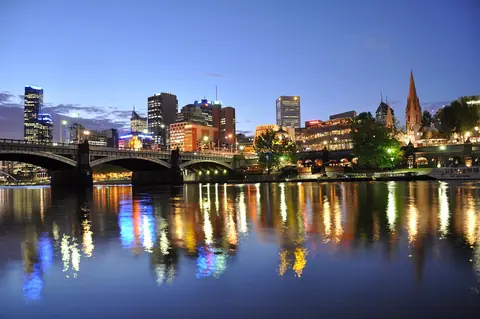
Melbourne 3-Day Itinerary: Hoddle Grid Laneways, Southbank Arts, MCG & Great Ocean Road
Melbourne, Australia
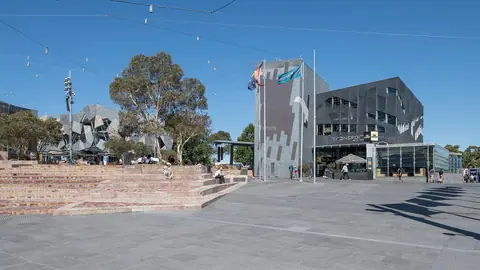
Federation Square, Flinders Street Station, St Paul's Cathedral & Hosier Lane Walk
Melbourne, Australia
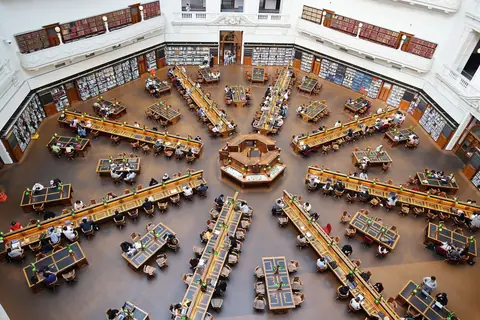
Block Arcade, Royal Arcade, Bourke Street Mall, Chinatown & State Library Walk
Melbourne, Australia
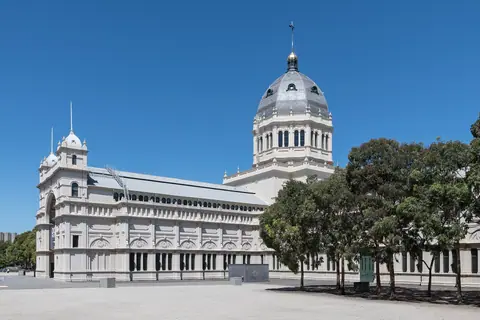
Royal Exhibition Building, UNESCO Carlton Gardens, Melbourne Museum & Lygon Street
Melbourne, Australia
