





















Royal Exhibition Building, UNESCO Carlton Gardens, Melbourne Museum & Lygon Street
Explore Australia's first UNESCO World Heritage building (1880 Royal Exhibition Building), the 26-hectare Carlton Gardens, Melbourne Museum (Bunjilaka, Phar Lap, and Triceratops), and Lygon Street.
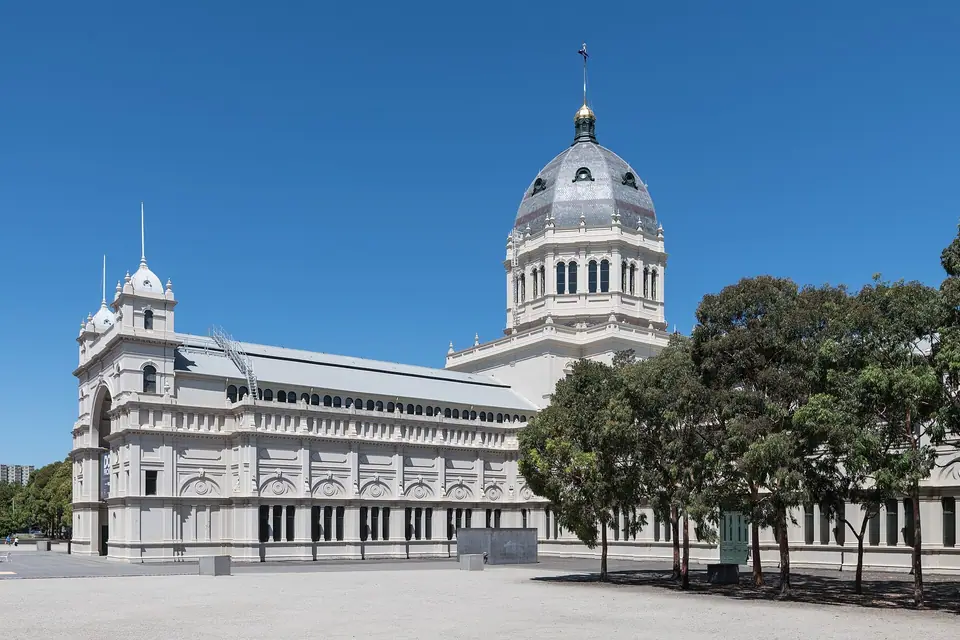
Five hundred metres northeast of State Library Victoria, the northern boundary of the Hoddle Grid meets the leafy Victorian suburb of Carlton. Here, a 68-metre octagonal dome rises above a 26-hectare (64-acre) formal park. Together, the 1880 Royal Exhibition Building and the surrounding Carlton Gardens were inscribed on the UNESCO World Heritage List in July 2004. They hold the distinction of being the first building in Australia to receive World Heritage status. Sharing the northern half of the reserve is Melbourne Museum, the largest museum in the Southern Hemisphere. Two blocks west runs Lygon Street, the birthplace of Melbourne's postwar Italian espresso and trattoria culture.
Why the 1880 Royal Exhibition Building is a UNESCO World Heritage landmark
Between London's Crystal Palace Great Exhibition of 1851 and 1915, more than 50 major international exhibitions staged industrial, scientific, and artistic showcases worldwide. Almost all of those nineteenth-century exhibition halls were built as temporary structures and later demolished or destroyed by fire. Melbourne's Royal Exhibition Building is the only surviving nineteenth-century Great Hall from the international exhibition movement. It still stands in its original landscaped gardens and continues to function as an exhibition venue today.
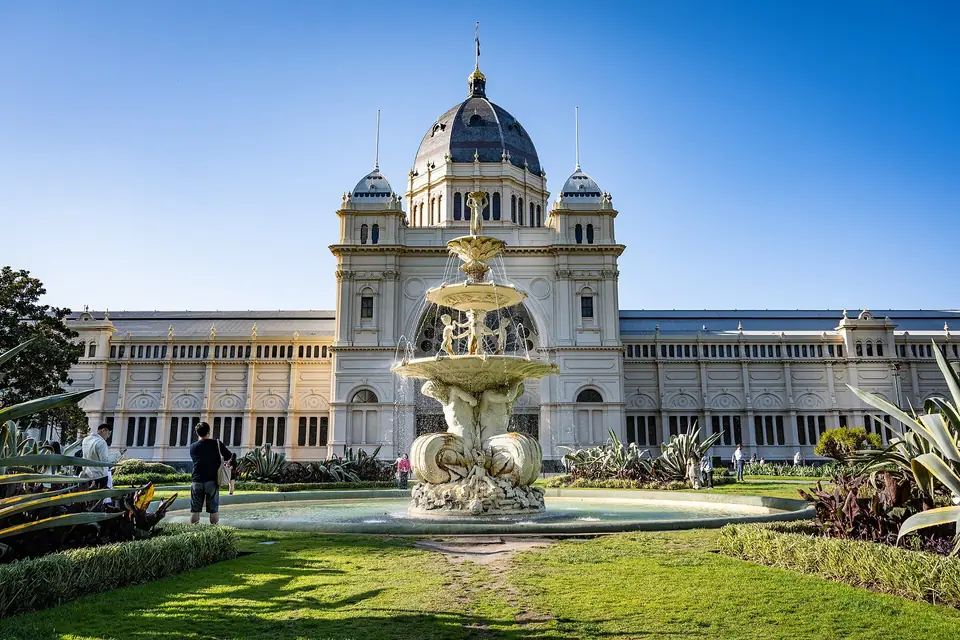
Melbourne architect Joseph Reed designed the pavilion, adding to a portfolio that includes State Library Victoria and Melbourne Town Hall. Builder David Mitchell constructed the hall in 18 months between May 1879 and October 1880. It opened for the 1880 to 1881 Melbourne International Exhibition, which drew 1.3 million visitors. In 1888, the pavilion hosted the 1888 Melbourne Centennial Exhibition before over 2 million visitors. The exterior blends Byzantine, Romanesque, and Italian Renaissance motifs. Inside, the cruciform Great Hall stretches 152 metres (500 feet) long by 54 metres wide beneath arched timber trusses. Crowning the crossing is an octagonal dome modelled on Filippo Brunelleschi's cathedral dome in Florence, measuring 68 metres (223 feet) high and 30 metres in diameter.
Federation in 1901 and the restored Dome Promenade
Beyond its architectural rarity, the Royal Exhibition Building is the birthplace of Australian parliamentary democracy. Following the federation of the six British colonies on 1 January 1901, the Great Hall hosted a historic ceremony. On 9 May 1901, the first Parliament of the Commonwealth of Australia opened beneath the dome before 12,000 guests. From 1901 until 1927, the Victorian State Parliament sat in the western annex for 26 years. During that same period, the Federal Parliament occupied Parliament House on Spring Street. Later, the hall served as an emergency hospital during the 1919 influenza pandemic and a Royal Australian Air Force school in the Second World War. It also hosted events during the 1956 Summer Olympic Games.
Because the Great Hall remains an active venue for exhibitions and university exams, interior access is via guided tours booked through Melbourne Museum. Check the official Museums Victoria website to reserve the Dome Promenade Tour. Reopened in 2022, this tour leads visitors past the 1880, 1888, and 1901 stencilled murals up to the open-air observation deck wrapping around the dome.
Carlton Gardens and the three nineteenth-century fountains
Before or after your tour, stroll the free pathways of the 26-hectare Carlton Gardens. Redesigned in 1879 and 1880 by Clement Hodgkinson and William Sangster, the southern gardens retain their Victorian gardenesque layout. Avenues of plane trees, English elms, oaks, and buttressed Moreton Bay fig trees frame two ornamental lakes. Look for three historic fountains around the pavilion. The multi-tiered 1880 Hochgurtel Fountain stands on the southern forecourt, while the cast-iron 1880 French Fountain and 1888 Westgarth Drinking Fountain sit nearby.
Inside Melbourne Museum: Bunjilaka, the Forest Gallery, Phar Lap & Horridus
Facing the northern facade of the 1880 pavilion stands Melbourne Museum at 11 Nicholson Street, opened in October 2000. Allow two to three hours for its five main permanent galleries (check the official Museums Victoria portal for tickets):
- Bunjilaka Aboriginal Cultural Centre. Co-curated with Victorian Aboriginal Elders, the First Peoples exhibition explores Kulin Nation creation stories of Bunjil the wedge-tailed eagle and Waang the crow. Displays include historic possum-skin cloaks, more than 35 Victorian Aboriginal language groups, and the outdoor Milarri Garden trail.
- The Forest Gallery. This living tall-timber gully is planted with mountain ash (Eucalyptus regnans) and tree ferns from Victoria's Central Highlands, complete with streams and birds.
- The Melbourne Story & Phar Lap. Exhibits trace Melbourne's social history from gold-rush tent cities and nineteenth-century cottages to the mounted hide of Phar Lap, winner of the 1930 Melbourne Cup.
- Triceratops: Fate of the Dinosaurs. This gallery displays Horridus, a 67-million-year-old fossilised Triceratops horridus skeleton that is 85 percent complete and weighs over 1,000 kilograms. It is the most complete real dinosaur skeleton in Australia.
- IMAX Melbourne. Located inside the museum complex, IMAX houses one of the largest cinema screens in the world at 32 metres wide by 23 metres high.
Lygon Street ("Little Italy") and Espresso Heritage
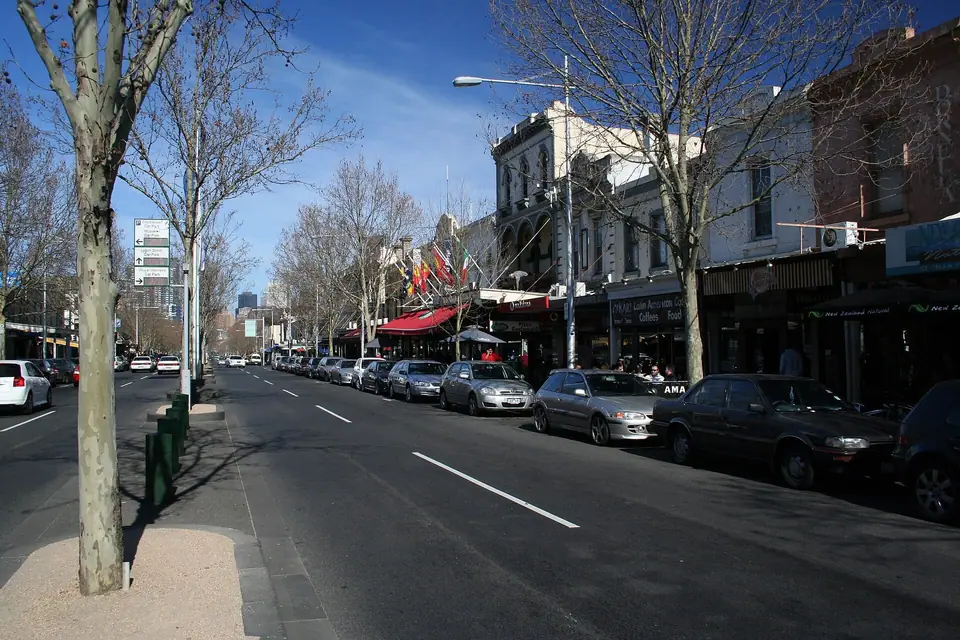
Exit Carlton Gardens to the west across Rathdowne and Drummond streets to reach Lygon Street. This strip has been the heart of Italian Melbourne since post-war migrants settled in Carlton in the 1940s and 1950s. Early lever-operated espresso machines at venues such as University Café (opened in 1952) and pastry cases at Brunetti Classico introduced Melburnians to sidewalk espresso culture. At 101 Lygon Street, Toto's Pizza House opened in 1961 as the first pizzeria in Australia. Nearby on Faraday Street, independent bookshop Readings Carlton has anchored the university quarter since 1969.
Old Melbourne Gaol on Russell Street
Walk back into the CBD down Russell Street, or ride Tram Route 96 down Nicholson Street and Tram Routes 1 and 6 down Swanston Street. On Russell Street, stop at the bluestone Old Melbourne Gaol, built between 1842 and 1864 and closed in 1924. Its three-tiered cellblocks preserve the death masks of bushrangers and the gallows where Ned Kelly was executed on 11 November 1880. For more culinary stops in Carlton and the CBD, read our what to eat in Melbourne guide.
Traveller tips
Real advice from people who have been to Melbourne. Every tip is read by our team before it goes live.
No tips yet. Been here? Yours could be the first.
Thank you! Your tip will appear here after a quick review.
More in Melbourne
Continue exploring Melbourne with related neighbourhood, food, and planning guides
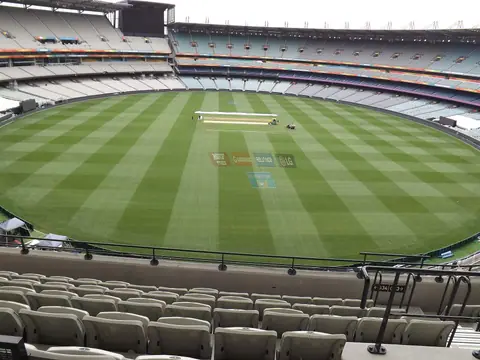
Melbourne Cricket Ground (MCG), Melbourne Park, Fitzroy Gardens & Yarra River Trail
Melbourne, Australia
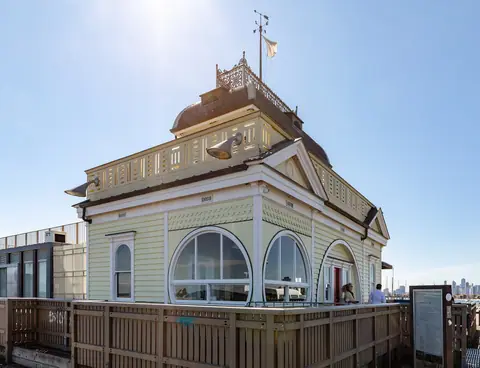
Fitzroy, Collingwood, Brunswick Street, St Kilda Pier & Brighton Bathing Boxes Guide
Melbourne, Australia
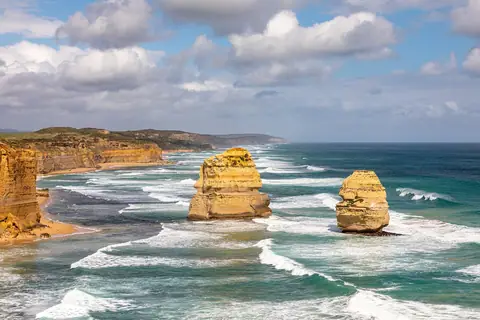
Great Ocean Road, Twelve Apostles, Phillip Island Penguins & Yarra Valley Day Trips
Melbourne, Australia
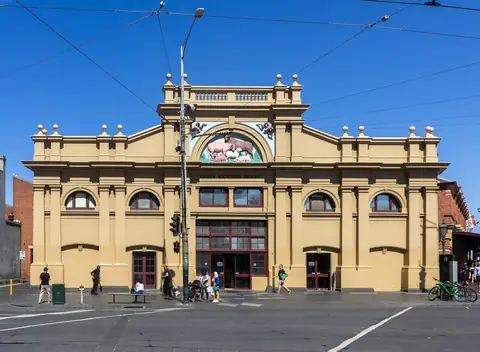
What to Eat in Melbourne: Laneway Coffee, Queen Victoria Market & Eight Iconic Dishes
Melbourne, Australia
