





















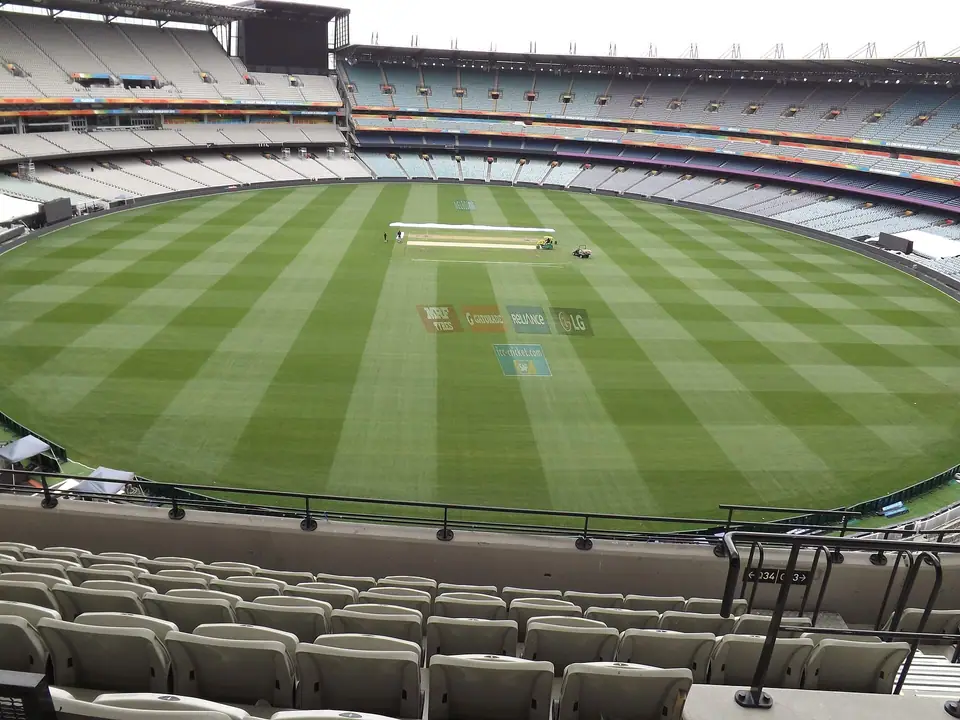
Melbourne Cricket Ground (MCG), Melbourne Park, Fitzroy Gardens & Yarra River Trail
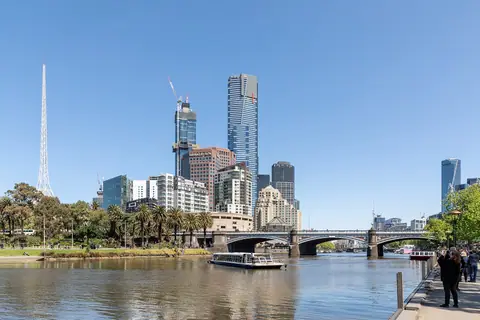
Walk east from Federation Square along Birrarung Marr to the Australian Open courts of Rod Laver Arena, the 100,024-capacity Melbourne Cricket Ground (MCG), AAMI Park, and historic Fitzroy Gardens.
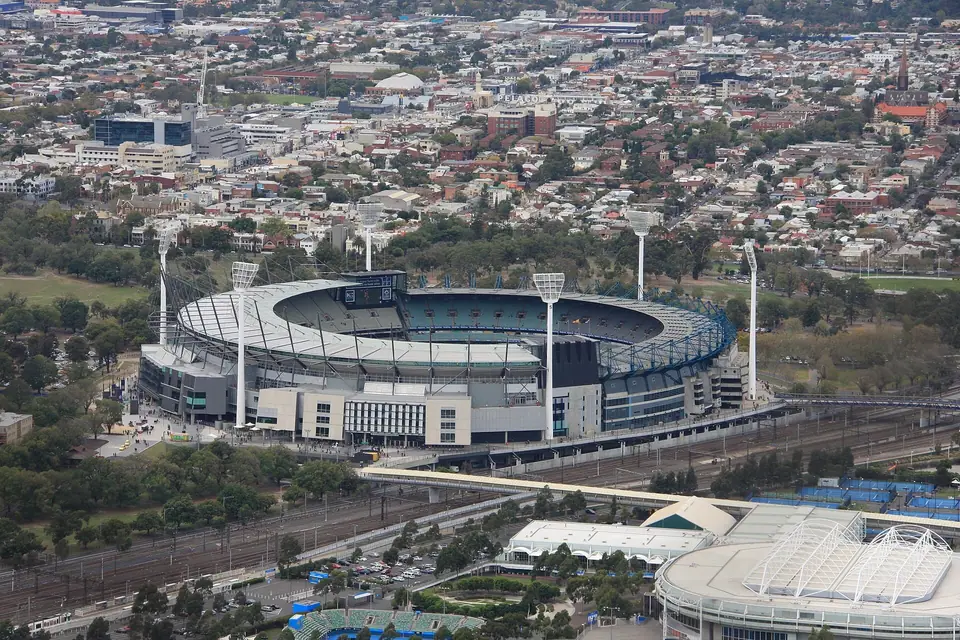
In almost any other world metropolis, a stadium holding more than 100,000 spectators and a Grand Slam tennis complex would sit in an outer suburb. In Melbourne, the Melbourne and Olympic Parks Sports Precinct and the Melbourne Cricket Ground (MCG) sit inside parkland 1 kilometre east of Federation Square. A car-free fifteen-minute riverside walk through Birrarung Marr links the arenas directly to the Hoddle Grid. Immediately north of the stadium stretch the 26-hectare elm avenues of Fitzroy Gardens.
1. Birrarung Marr, the Federation Bells, and William Barak Bridge
Begin at the eastern terrace of Federation Square and follow the riverside parkland of Birrarung Marr. Opened on 26 January 2002, the park occupies 8 hectares of former Jolimont railway yards along the north bank of the Yarra River. In the Woi-wurrung language of the traditional Wurundjeri owners, Birrarung means "river of mists" and Marr means "side of the river". Along the middle terrace stand the Federation Bells, an installation of 39 upturned bronze bells, and Deborah Halpern's ceramic-tile sculpture Angel near the river edge.
From the upper terrace of Birrarung Marr, two pedestrian bridges carry walkers across the railway tracks into the sports arenas. The Tanderrum Bridge leads directly into Melbourne Park for the Australian Open. Beside it, the 525-metre William Barak Bridge spans Batman Avenue straight into Yarra Park and the MCG. Its centrepiece is a soundscape and a 35-metre-high steel portal cut with the silhouette portrait of nineteenth-century Wurundjeri elder and leader William Barak (1824 to 1903).
2. The Melbourne Cricket Ground (MCG, "The 'G'") and the Australian Sports Museum
Rising from Yarra Park beneath six 85-metre-tall floodlight towers is the Melbourne Cricket Ground, universally called "The 'G'". Those six light towers were erected in 1984 and tilt 3 degrees inward over the 171-by-146-metre turf oval. Founded by the Melbourne Cricket Club (MCC) in 1838, the club has played on its present Jolimont site since September 1853. Today the MCG holds 100,024 spectators, with 95,000 seats and roughly 5,000 standing spaces. That capacity makes it the largest stadium in the Southern Hemisphere, the largest stadium in Australia, and the second-largest cricket stadium in the world.
Three major global sporting milestones define the arena:
- Birthplace of Test and One Day International Cricket. Between 15 and 19 March 1877, the MCG staged the world's first Test cricket match between Australia and England. Australia won by 45 runs, led by Charles Bannerman's 165 retired hurt, the first Test century in history. Ninety-four years later, on 5 January 1971, the MCG hosted the world's first One Day International (ODI) match. It also staged the 1992 and 2015 Cricket World Cup Finals, and hosts the annual Boxing Day Test starting every 26 December.
- Birthplace of Australian Rules Football (AFL). Codified in May 1859 by Tom Wills and fellow MCC members, Australian Rules Football plays here every weekend between March and September. The season culminates on the last Saturday in September with the AFL Grand Final before 100,000 fans (see our best time to visit Melbourne guide).
- The 1956 Summer Olympic Games and 2006 Commonwealth Games. From 22 November to 8 December 1956, the MCG served as the main stadium for the first Olympic Games held in the Southern Hemisphere.
On non-match days, walk the external concourse to view the bronze statues of Australian sporting legends. Highlights include Shane Warne outside Gate 2, Sir Donald Bradman, Betty Cuthbert, Shirley Strickland, Ron Barassi, and Leigh Matthews. Next, head to Gate 3 inside the Olympic Stand to join a 75-minute MCG Guided Tour. You will visit the players' change rooms, the Ron Casey Media Centre, and the wood-panelled MCC Long Room. Remember to follow the neat footwear rules in our what to wear in Melbourne guide. Gate 3 also leads into the underground Australian Sports Museum; check the official MCG website for tour and match schedules.
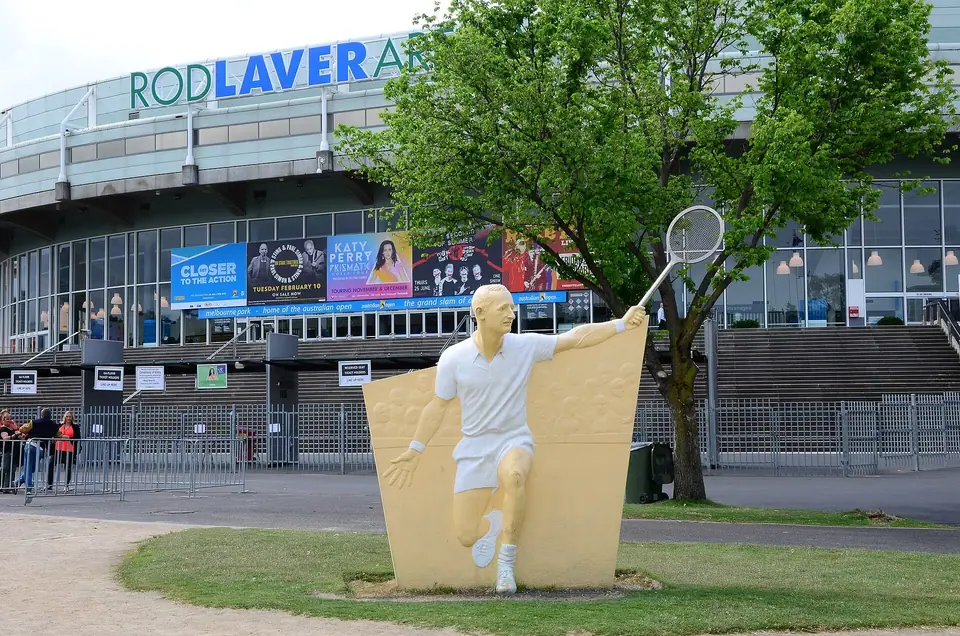
3. Melbourne Park (Rod Laver Arena) and AAMI Park
Immediately southwest of Yarra Park sits Melbourne Park, opened in January 1988 as the permanent home of the Australian Open. It is the first of the four annual tennis Grand Slams and the highest-attended Grand Slam in the world. Melbourne Park is the only Grand Slam venue in the world with three retractable-roof courts. That engineering allows play to continue during a 38°C January afternoon or a sudden rain shower:
- Rod Laver Arena. Opened in 1988 and named in 2000 after Australian tennis champion Rod Laver, this centre court seats 14,820 spectators. Laver famously won all four Grand Slam singles titles in both 1962 and 1969.
- John Cain Arena. Opened in 2000 with a capacity of 10,500, this show court is accessible during the tournament with a Ground Pass.
- Margaret Court Arena. This stadium seats 7,500 spectators beneath the fastest-closing retractable roof in the world (sealing in 5 minutes), beside the 5,000-seat open-air KIA Arena (opened in 2022).
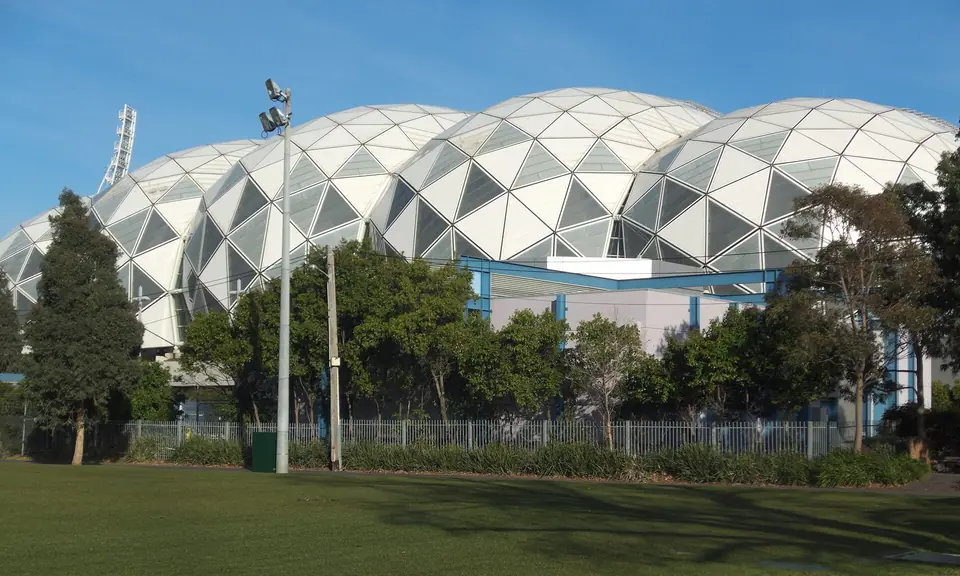
Across Olympic Boulevard stands AAMI Park, opened in May 2010 with a capacity of 30,050. Its white geodesic "bioframe" dome roof uses 50 percent less steel than a conventional cantilever stadium roof.
4. Fitzroy Gardens, the 1930 Conservatory, Cooks' Cottage & the Yarra River Trail
To loop back to the CBD, walk north from the MCG across Wellington Parade into the 26-hectare (64-acre) Fitzroy Gardens. Reserved in 1848 in East Melbourne, the park sits directly beside the Hoddle Grid. Its lawns are crossed by pathways of English elms laid out in the pattern of the British Union Jack flag. Inside the gardens sit the 1930 Spanish Mission Conservatory (staging five floral displays each year) and the Model Tudor Village. Nearby stands the Fairies' Tree, carved between 1931 and 1934 by Ola Cohn into a 300-year-old red gum stump. Near the southern lawn stands Cooks' Cottage, built in 1755 in Great Ayton, Yorkshire, England by Captain James Cook's parents James and Grace Cook. Sir Russell Grimwade purchased the cottage in 1933 and had it dismantled into 253 cases and 40 barrels. Shipped to Melbourne and reassembled in October 1934 for Victoria's centenary, it is the oldest building in Australia by construction date. You can also return to the city along the riverfront Main Yarra Trail (part of the 29-kilometre Capital City Trail) opposite the Royal Botanic Gardens.
Traveller tips
Real advice from people who have been to Melbourne. Every tip is read by our team before it goes live.
No tips yet. Been here? Yours could be the first.
Thank you! Your tip will appear here after a quick review.
More in Melbourne
Continue exploring Melbourne with related neighbourhood, food, and planning guides
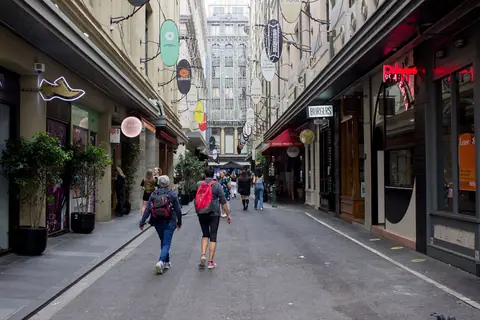
What to Wear in Melbourne: Layering for Cool Changes, High UV & Laneway Style
Melbourne, Australia
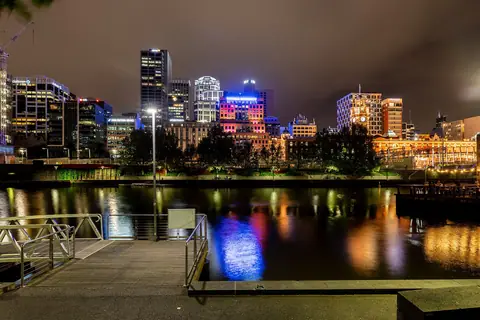
Where to Stay in Melbourne: CBD Paris End, Laneways, Southbank, Fitzroy & St Kilda
Melbourne, Australia
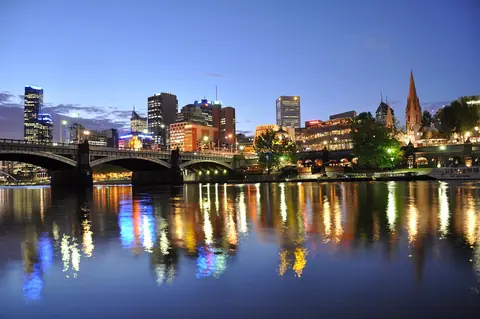
Melbourne 3-Day Itinerary: Hoddle Grid Laneways, Southbank Arts, MCG & Great Ocean Road
Melbourne, Australia
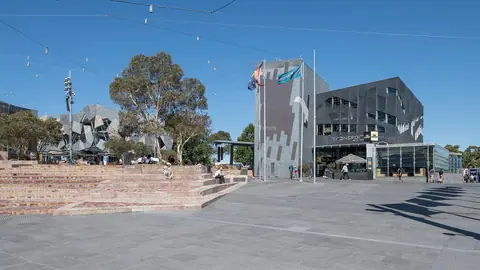
Federation Square, Flinders Street Station, St Paul's Cathedral & Hosier Lane Walk
Melbourne, Australia
