





















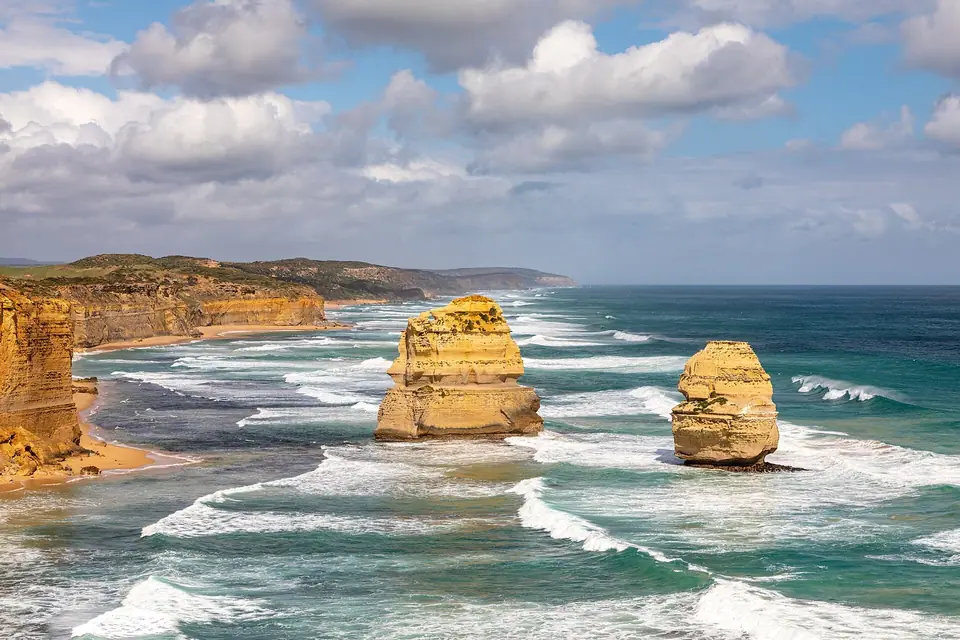
Great Ocean Road, Twelve Apostles, Phillip Island Penguins & Yarra Valley Day Trips
Plan the three classic day trips from Melbourne: the 243 km Great Ocean Road to the Twelve Apostles and Loch Ard Gorge, the Phillip Island Penguin Parade, and Yarra Valley vineyards with Puffing Billy.
Within one to three hours of the Melbourne Hoddle Grid lie three of Australia's most celebrated coastal and wine landscapes. To the southwest winds the 243-kilometre cliffside ribbon of the Great Ocean Road leading to the limestone sea stacks of the Twelve Apostles. To the southeast, thousands of Little Penguins come ashore at dusk on Phillip Island. Northeast of the city, cool-climate Pinot Noir vineyards fill the Yarra Valley beside the 1900 Puffing Billy narrow-gauge steam train in the Dandenong Ranges. Because each destination lies in a different compass direction from Melbourne, plan them as separate day trips. Do not try to combine the Great Ocean Road and Phillip Island into a single day.
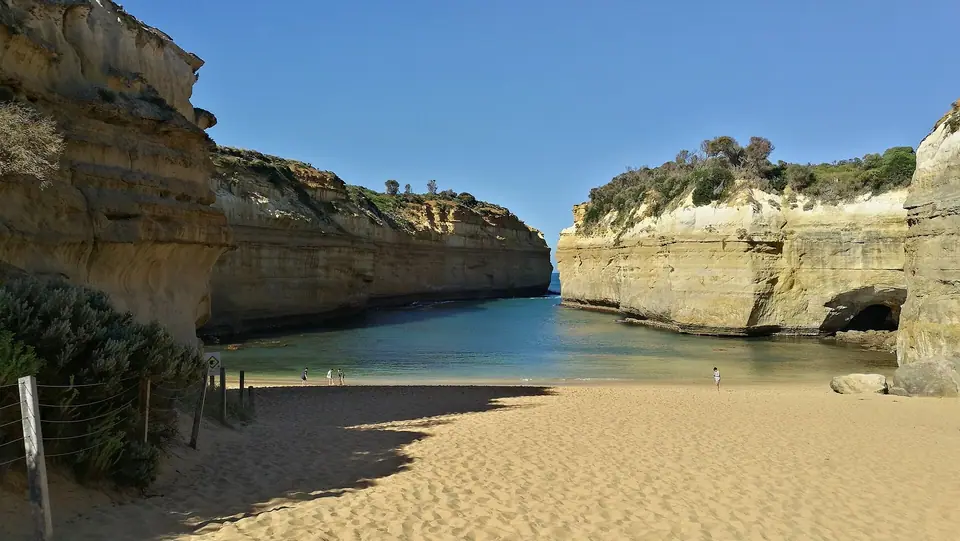
Day Trip 1: The 243-Kilometre Great Ocean Road, Twelve Apostles & Loch Ard Gorge
The 243-kilometre (151-mile) Great Ocean Road (Route B100) is carved into the coastal headlands of southwestern Victoria. It begins at Torquay (100 kilometres or 75 minutes southwest of Melbourne via the M1 Princes Freeway past Geelong) and finishes at Allansford near Warrnambool. This scenic highway is the world's largest war memorial. Roughly 3,000 returned Australian servicemen from the First World War built the road between 19 September 1919 and 26 November 1932. Using picks, shovels, and small explosives, they carved the cliffside route to honour their fallen comrades. The road winds above the Southern Ocean surf and climbs through the temperate rainforests of the Otway Ranges. West of Cape Otway, it emerges onto the vertical limestone cliffs of the Shipwreck Coast.
Follow these key stops from east to west along the coastal route:
- Torquay, Bells Beach, and the Memorial Arch at Eastern View. Torquay is Australia's surfing capital and the birthplace of Rip Curl and Quiksilver. Nearby Bells Beach has staged the Rip Curl Pro every Easter since 1961, the world's longest-running professional surfing competition. Twenty-five minutes west of Anglesea stands the timber Memorial Arch at Eastern View and its bronze digger tribute.
- Lorne, Kennett River Koalas, Apollo Bay, and Great Otway National Park. Past the resort town of Lorne, pause at Kennett River (Grey River Road), where wild koalas rest in manna gum (Eucalyptus viminalis) trees. Beyond Apollo Bay, the highway crosses Great Otway National Park. Walk the 800-metre rainforest boardwalk through 300-year-old myrtle beech trees and giant tree ferns at Maits Rest. You can also detour to the 1848 Cape Otway Lightstation, the oldest surviving lighthouse on the Australian mainland, perched 90 metres above Bass Strait.
- Port Campbell National Park, Gibson Steps, the Twelve Apostles & Loch Ard Gorge. Roughly 275 kilometres southwest of Melbourne rise the 70-metre Miocene limestone cliffs of Port Campbell National Park, eroding at roughly 2 centimetres per year. Descend the 86 cliff-carved Gibson Steps to the beach, then walk the clifftop boardwalk at the Twelve Apostles. Formed 10 to 20 million years ago and called the "Sow and Piglets" until 1922, only 9 stacks ever stood at the main lookout. Since a 50-metre stack collapsed in July 2005, 7 main limestone stacks remain standing, with the tallest stack rising 45 metres (148 feet) above the surf. Three kilometres west lies Loch Ard Gorge, named after the clipper ship Loch Ard. That vessel wrecked on Muttonbird Island on 1 June 1878 after a three-month voyage from England. Of the 54 people aboard, only 2 eighteen-year-old survivors, apprentice Tom Pearce and Irish migrant Eva Carmichael, washed alive into this sheltered cove.
Self-drive and tour timing tip. A round trip from Melbourne in a single day involves 8 to 9 hours of driving, or 12 to 13 hours total with stops. If self-driving in one day, use the reverse loop. Drive inland early via the Princes Highway (A1) through Colac to reach the Twelve Apostles in 3 hours before midday tour buses arrive. Afterwards, return east along the coastal Great Ocean Road. Remember to drive on the left side of the road and pack a windproof jacket from our what to wear in Melbourne guide.
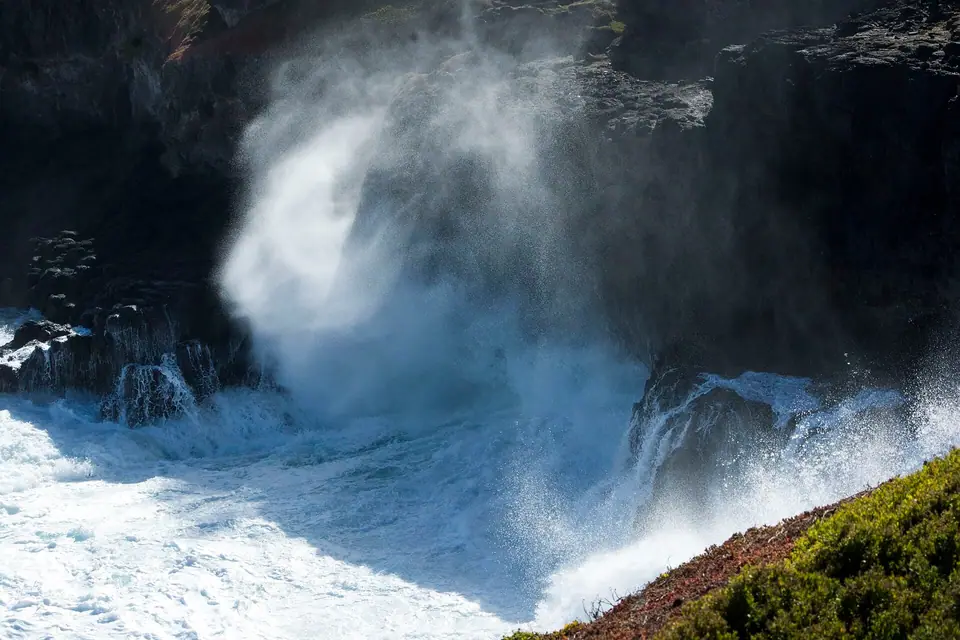
Day Trip 2: Phillip Island Nature Parks, The Nobbies, Koalas & the Penguin Parade
Phillip Island lies 140 kilometres (90 to 120 minutes via the M1 and Bass Highway across the 640-metre San Remo bridge) southeast of Melbourne. Its Summerland Peninsula shelters the largest colony of Little Penguins (Eudyptula minor) in the world, numbering 32,000 to 40,000 birds.
Combine four afternoon stops across the island. Start at Churchill Island Heritage Farm, where Lieutenant James Grant planted the first European agricultural crops in Victoria in 1801. Continue to the treetop boardwalks at the Koala Conservation Reserve and the western basalt headland of The Nobbies. Offshore 1.5 kilometres sit Seal Rocks, home to Australia's largest colony of Australian fur seals with over 20,000 seals. Arrive at Summerland Beach one hour before sunset for the nightly Penguin Parade. At dusk, rafts of 33-centimetre-tall Little Penguins waddle up the beach past raised viewing boardwalks. Book tickets in advance on the official Phillip Island Nature Parks website, and note that all photography is prohibited after dusk.
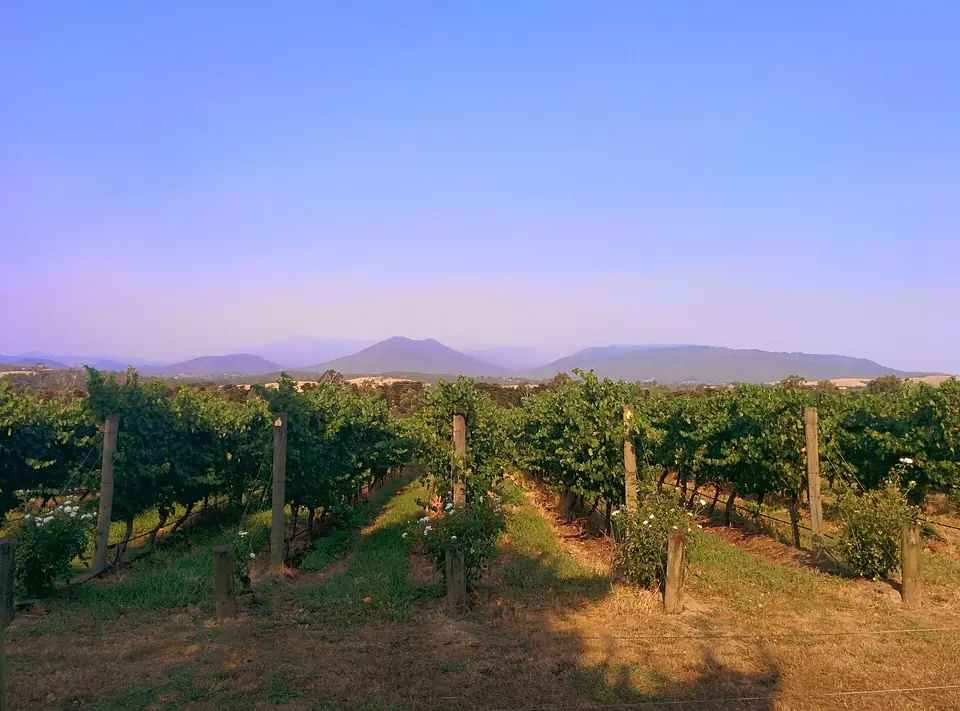
Day Trip 3: Yarra Valley Vineyards, Healesville Sanctuary & Puffing Billy Steam Railway
Just 50 to 60 kilometres (one hour) northeast of Melbourne lies the Yarra Valley, the oldest wine region in Victoria. Here, the state's first grape vines were planted in 1838 at Yering Station. More than 80 cellar doors operate across the valley today, including Yering Station, Domaine Chandon, De Bortoli, and Oakridge. Visitors can also tour TarraWarra Estate, home to the TarraWarra Museum of Art. Tastings focus on cool-climate Pinot Noir, Chardonnay, and sparkling wines (see our what to eat in Melbourne guide).
Pair a vineyard lunch with Healesville Sanctuary, which cares for native Australian platypus, wombats, kangaroos, koalas, and Tasmanian devils. Nearby in the Dandenong Ranges (40 kilometres east of Melbourne, reachable by Metro train to Belgrave) runs the Puffing Billy Railway. Opened in 1900 on a 2-foot-6-inch (762-millimetre) track, Puffing Billy is one of the best-preserved narrow-gauge steam railways in the world. Vintage locomotives steam 24 kilometres through mountain ash forests from Belgrave to Gembrook across the timber Monbulk Creek Trestle Bridge. Check the official Puffing Billy website in advance to reserve your seat.
Traveller tips
Real advice from people who have been to Melbourne. Every tip is read by our team before it goes live.
No tips yet. Been here? Yours could be the first.
Thank you! Your tip will appear here after a quick review.
More in Melbourne
Continue exploring Melbourne with related neighbourhood, food, and planning guides
Fitzroy, Collingwood, Brunswick Street, St Kilda Pier & Brighton Bathing Boxes Guide
Melbourne, Australia
What to Eat in Melbourne: Laneway Coffee, Queen Victoria Market & Eight Iconic Dishes
Melbourne, Australia
Melbourne Orientation: The 1837 Hoddle Grid, Laneways, Trams & Six Core Precincts
Melbourne, Australia
Best Things to Do in Melbourne: Laneways, Arcades, Galleries, MCG & Coastal Day Trips
Melbourne, Australia
