





















What to Eat in Melbourne: Laneway Coffee, Queen Victoria Market & Eight Iconic Dishes
Taste your way through Melbourne's culinary scene: flat whites and double-ristretto 'magic' coffees, 1878 Queen Victoria Market borek and hot jam doughnuts, 1945 Melbourne dim sims, meat pies, and lamingtons.
Food and coffee in Melbourne form the daily civic ritual through which the city's waves of immigration express themselves. Cantonese prospectors established the Western world's oldest continuous Chinatown on Little Bourke Street in 1851. Post-war Italian, Greek, and Eastern European families then transformed Carlton, Lonsdale Street, and St Kilda in the 1940s and 1950s. From the 1970s onward, Vietnamese, Lebanese, Turkish, and Indian communities shaped the dining strips of Victoria Street, Sydney Road, and Dandenong. Every generation has added a signature dish to Melbourne's table. Pair this culinary guide with our Degraves Street and Fed Square walk and our 3-day Melbourne itinerary.
1. How to Order Coffee in Melbourne: Flat White, Long Black & "The Magic"
Melbourne's espresso culture began in the early 1950s when Italian migrants installed Gaggia lever espresso machines. Early pioneers included University Café on Lygon Street (1952) and Pellegrini's Espresso Bar on Bourke Street (opened in 1954 with one of Melbourne's first Gaggia machines). In the 2000s, Melbourne specialty roasters made the city a global benchmark for third-wave coffee. Leading suburban roasteries include St Ali in South Melbourne (founded in 2005), Seven Seeds in Carlton, and Proud Mary in Collingwood. Inside the central city, look for Market Lane Coffee at Queen Victoria Market, Patricia Coffee Brewers on Little Bourke Street, and Dukes Coffee Roasters on Flinders Lane.
At any laneway espresso bar in the Hoddle Grid, order one of three Melbourne staples:
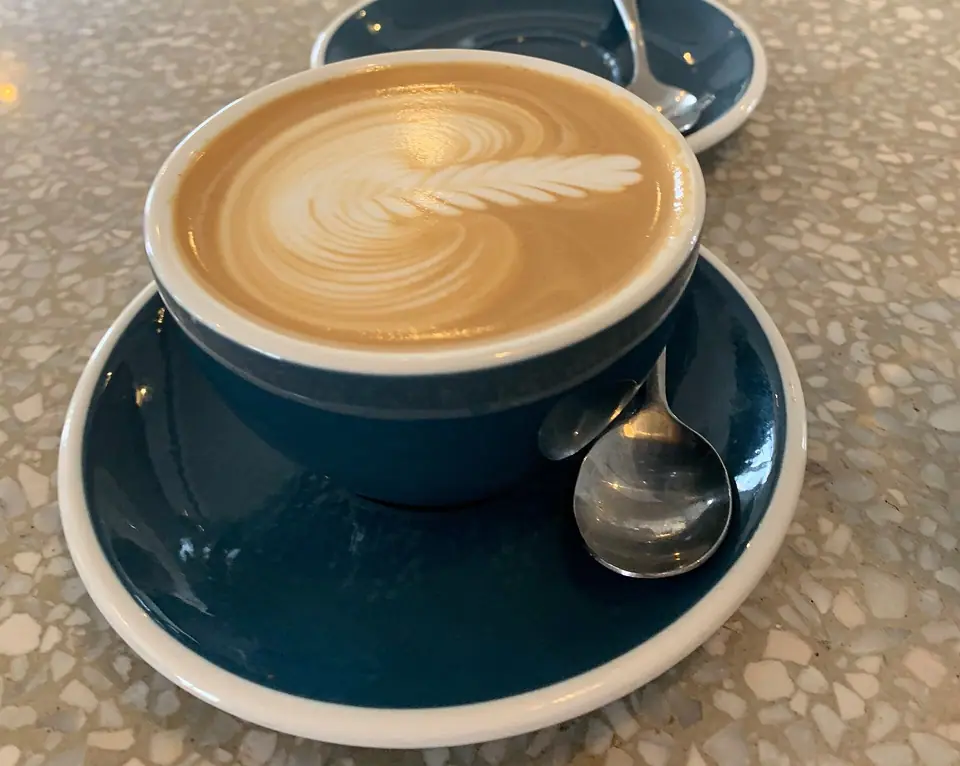
- Flat White. This staple pours a single or double shot of espresso topped with silky micro-foamed milk and a thin layer of foam in a ceramic tulip cup.
- The "Magic" (Melbourne's signature barista order). Invented in Melbourne cafes in the mid-2000s, a magic uses a double ristretto (the sweeter first 15 to 20 millilitres of each espresso extraction). Baristas top it with steamed micro-foam milk in a smaller 150-to-160-millilitre (5-ounce) cup, giving a richer coffee-to-milk ratio than a flat white.
- Long Black or Batch Filter. A long black pours hot water into the cup first and extracts a double espresso on top to preserve the golden crema. Specialty cafes also serve single-origin pour-over and batch filter options.
2. The Two Great Food Markets: Queen Victoria Market (1878) & South Melbourne Market (1867)
Spend at least one morning grazing through Melbourne's two nineteenth-century municipal markets (check their official websites for weekly trading days):
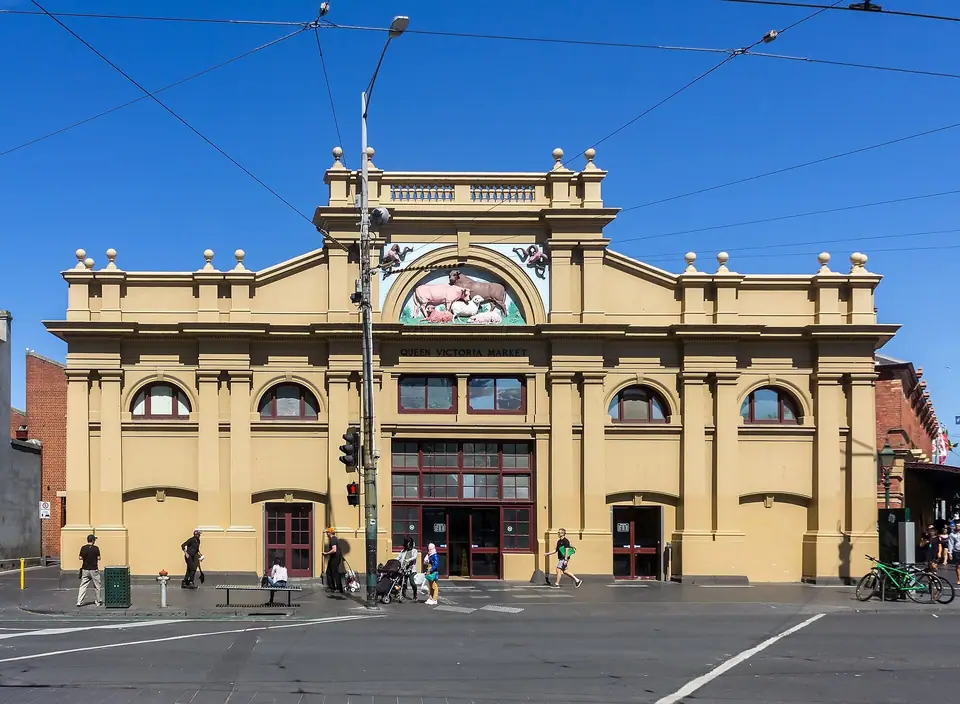
- Queen Victoria Market ("Queen Vic", Elizabeth and Victoria streets). Opened on 20 March 1878 across 7 hectares (17 acres) at the northern edge of the Free Tram Zone, Queen Vic is the largest open-air market in the Southern Hemisphere. It is also the only surviving nineteenth-century market in the Melbourne CBD (closed Mondays and Wednesdays). Walk through the 1884 Meat and Fish Hall and the 1929 Art Deco Dairy Produce Hall (Deli Hall). Stalls bake fresh Turkish börek filled with spiced lamb or spinach and cheese, and sell local Victorian cheeses. Outside on Queen Street, buy a bag of five hot jam-filled doughnuts from the 1950 American Doughnut Kitchen van.
- South Melbourne Market (322 to 326 Coventry Street). Operating since 1867, this covered market sits 15 minutes from Bourke Street Mall on Light Rail Route 96. It opens on Wednesday, Friday, Saturday, and Sunday. Visit for freshly shucked Tasmanian and Sydney Rock oysters and Cecil Street bakeries. Do not miss South Melbourne Market Dim Sims, based on the recipe of late master chef Ken Cheng.
3. Eight Iconic Dishes to Try Across Melbourne
- The Melbourne Dim Sim (Invented in Chinatown in 1945). Chinese-Australian entrepreneur William Chen Wing Young (father of chef Elizabeth Chong) invented the dim sim in Melbourne's Chinatown in 1945. He adapted Cantonese siu mai into a larger, thicker-skinned pork, cabbage, and five-spice dumpling served steamed with soy sauce or deep-fried across markets and fish-and-chip shops.
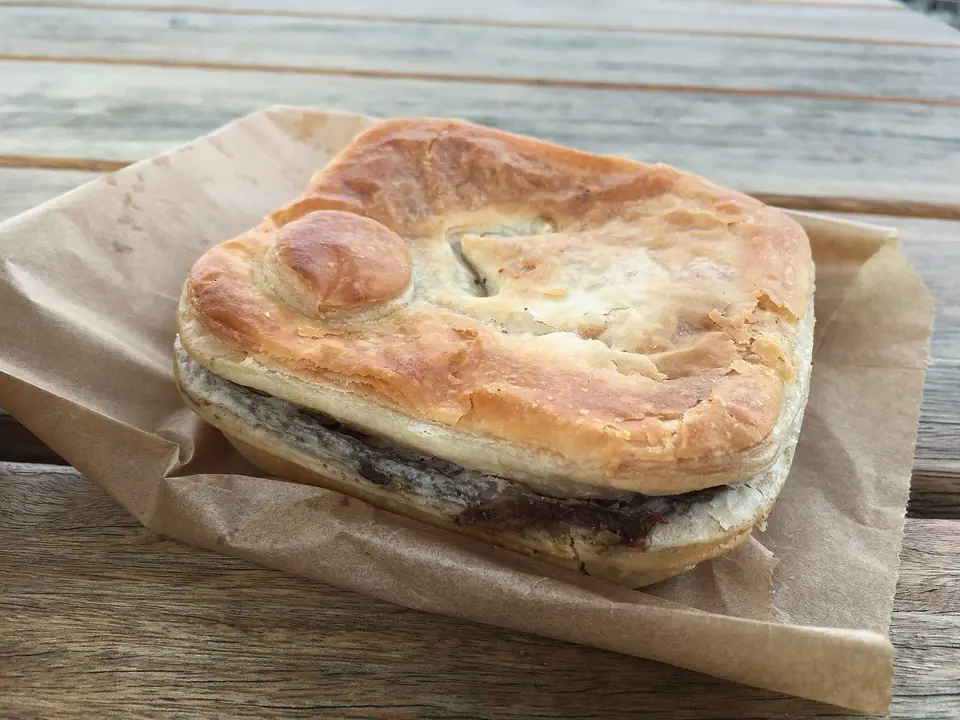
- The Classic Australian Meat Pie. This hand-sized pastry pairs a shortcrust base and flaky puff-pastry lid filled with minced beef and gravy, topped with tomato sauce. Four'N Twenty pies were first baked in Bendigo in 1947 before moving to Kensington, Melbourne. Eating one in the stands of the Melbourne Cricket Ground is a classic match-day ritual.
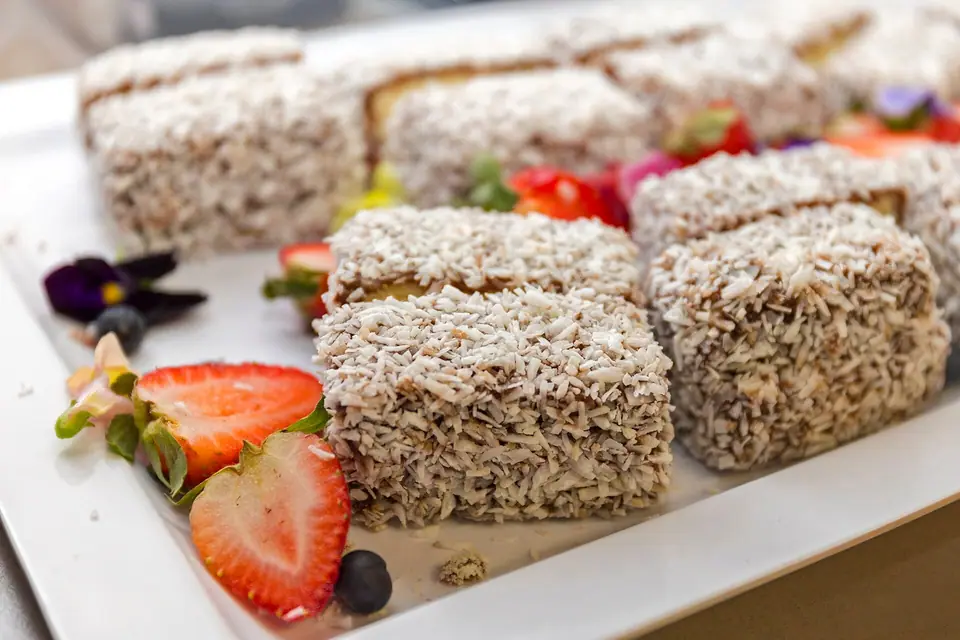
- Lamingtons. Bakers dip cubes of butter sponge cake in dark chocolate icing and roll them in desiccated white coconut, often split with raspberry jam and cream. The cake was named around 1900 after Lord Lamington, Governor of Queensland from 1896 to 1901.
- Pub Chicken Parmigiana ("The Parma"). This pub classic anchors corner hotels across Fitzroy, Collingwood, and Carlton. Pub kitchens top a crumbed chicken schnitzel with Napoli tomato sauce, leg ham, and melted mozzarella and cheddar over hand-cut chips. Pair it with a glass of Carlton Draught, brewed in Abbotsford since 1904.
- Melbourne Cafe Brunch (Smashed Avocado with Meredith Feta). Morning menus showcase sourdough toast topped with smashed Hass avocado, marinated goat feta from regional Victoria's Meredith Dairy, poached eggs, lemon, and dukkah, or ricotta hotcakes.
- Little Bourke Street Soup Dumplings (Xiao Long Bao). Head to the 1851 Chinatown along Little Bourke Street, Tattersalls Lane, and Celestial Avenue. Multi-storey dining rooms serve bamboo steamers of broth-filled pork xiao long bao and Sichuan chili-oil wontons.
- Greek Charcoal Souvlaki. Home to one of the largest Greek diaspora communities in the world outside Greece and Cyprus, Melbourne excels at spit-roasted lamb and chicken gyros souvlaki. Try it wrapped in thick pita with tzatziki and hot chips along Lonsdale Street and Eaton Mall in Oakleigh.
- Architectural Croissants at Lune. Former Formula 1 aerodynamics engineer Kate Reid founded Lune Croissanterie in 2012 in Elwood. Today it runs bakeries on Rose Street in Fitzroy and Collins Street in the CBD. Bakers craft three-day-fermented laminated croissants inside a climate-controlled glass cube.
4. Where to Drink: Victorian Pinot Noir, Shiraz, and Laneway Bars
In the 1990s, the City of Melbourne introduced small-bar licensing reforms that revitalised the central laneways. Today, hidden wine bars and cocktail rooms fill basements and rooftops off Flinders Lane, Meyers Place, and Curtin House on Swanston Street. On local wine lists, look for cool-climate Pinot Noir, Chardonnay, and sparkling wines from the Yarra Valley (first planted in 1838) and the Mornington Peninsula. You can also sample peppery Shiraz from Heathcote and the Grampians, fortified Rutherglen Muscat, and Yarra Valley craft gin.
Traveller tips
Real advice from people who have been to Melbourne. Every tip is read by our team before it goes live.
No tips yet. Been here? Yours could be the first.
Thank you! Your tip will appear here after a quick review.
More in Melbourne
Continue exploring Melbourne with related neighbourhood, food, and planning guides
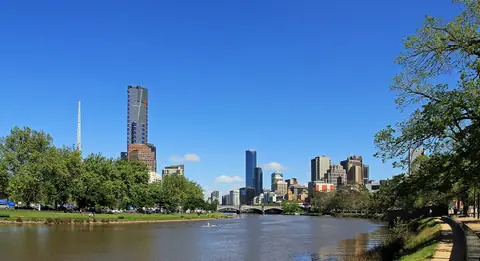
Best Time to Visit Melbourne: BoM Climate Normals, Four Seasons & Major Events
Melbourne, Australia
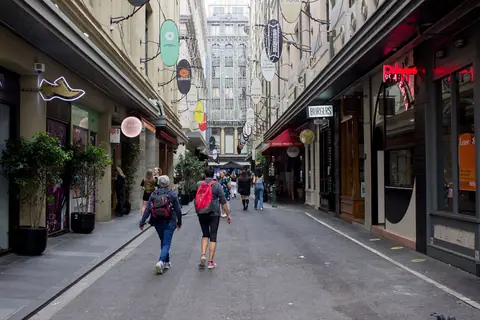
What to Wear in Melbourne: Layering for Cool Changes, High UV & Laneway Style
Melbourne, Australia
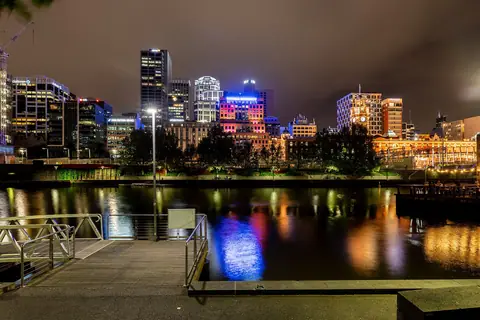
Where to Stay in Melbourne: CBD Paris End, Laneways, Southbank, Fitzroy & St Kilda
Melbourne, Australia
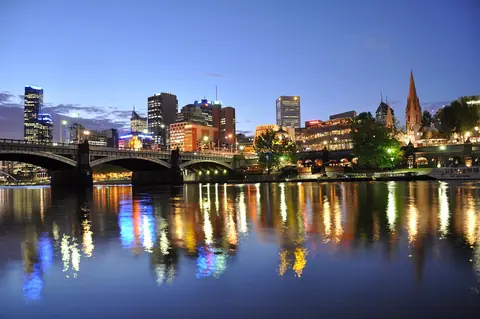
Melbourne 3-Day Itinerary: Hoddle Grid Laneways, Southbank Arts, MCG & Great Ocean Road
Melbourne, Australia
