


























National Archaeological Museum (MANN) and Capodimonte: Farnese and Roman treasures
Explore the world's finest collection of Pompeii frescoes, mosaics, and Farnese sculptures at the Naples National Archaeological Museum (MANN), then ascend to the Bourbon palace and galleries of Capodimonte.
Two former Bourbon royal buildings at the northern edge of central Naples house collections that rival any capital in Europe. Both owe their existence to a single dynastic inheritance: when Charles of Bourbon (King Charles VII of Naples, later Charles III of Spain) ascended the Neapolitan throne in 1734, he inherited the fabulous Renaissance art and ancient sculpture collection assembled in Rome and Parma by his mother, Elisabetta Farnese, the last descendant of Pope Paul III. Combined with the sensational discoveries unearthed from 1738 at Herculaneum and 1748 at Pompeii, those works were eventually divided between the National Archaeological Museum (MANN) at Piazza Museo and the hilltop Museo e Real Bosco di Capodimonte.
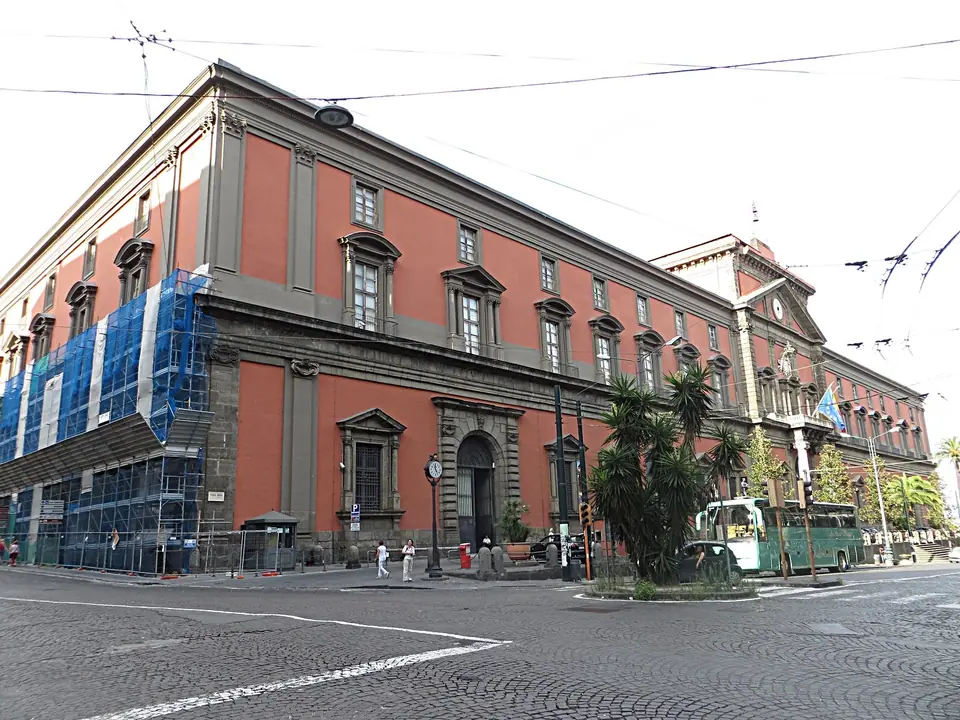
Naples National Archaeological Museum (MANN)
Standing directly outside the Museo station of Metro Line 1 (and connected by an underground pedestrian passage to Piazza Cavour on Metro Line 2), the red-and-grey piperno palace of the National Archaeological Museum was begun in 1585 as royal cavalry stables before architect Giulio Cesare Fontana remodelled it between 1610 and 1615 as the Palazzo degli Studi for the University of Naples. In the late eighteenth century, King Ferdinand IV commissioned architects Ferdinando Fuga and Pompeo Schiantarelli to expand the building to bring the royal antiquities and Vesuvian treasures together under one roof. Today the museum is organised across four levels:
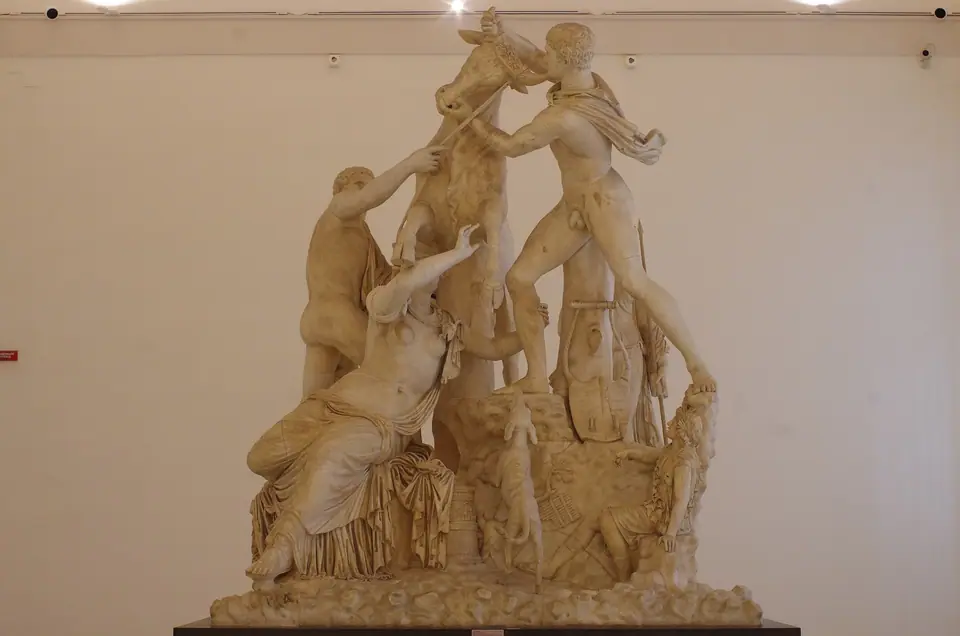
- The Farnese Marbles (Ground Floor): The eastern wing displays monumental Roman sculptures recovered mostly from the Baths of Caracalla in Rome during the 1540s. Do not miss the 3.17-metre-tall Farnese Hercules (carved by Glykon of Athens after a fourth-century BC bronze by Lysippos, depicting a weary Heracles leaning on his club and the skin of the Nemean lion while holding the apples of the Hesperides behind his back) and the Farnese Bull (Toro Farnese), the largest single sculpture recovered from antiquity, carved from a single block of marble to show Dirce being tied to a rearing bull by Amphion and Zethus.
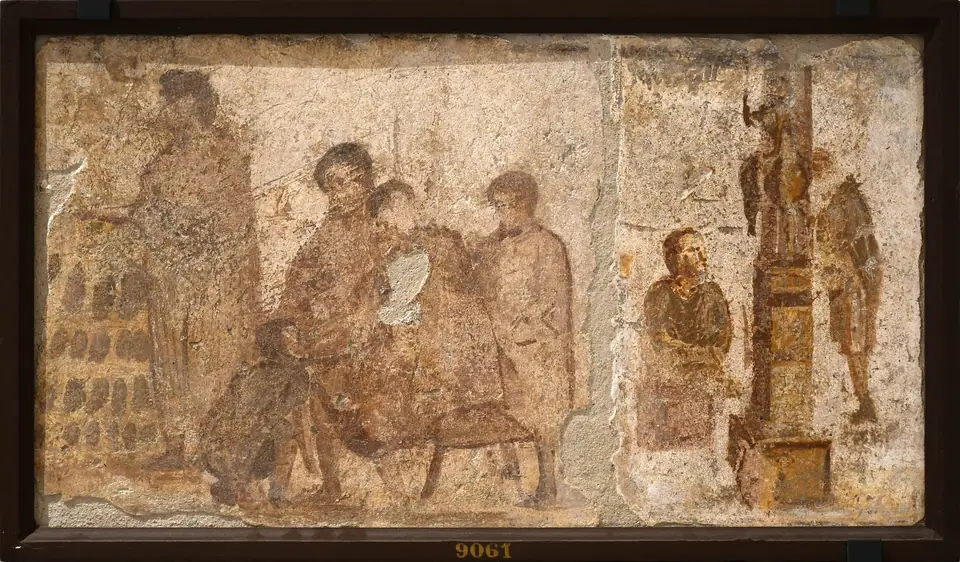
- Pompeii and Herculaneum Mosaics (Mezzanine Floor): Detached from the floors of Roman villas buried by Mount Vesuvius in AD 79, these rooms hold the world-famous Alexander Mosaic (Battaglia di Isso, measuring 5.82 by 3.13 metres and composed of roughly 1.5 million tiny stone and glass tesserae), excavated from the House of the Faun in Pompeii in October 1831. Depicting young Alexander the Great charging bareheaded on Bucephalus toward the chariot of Persian King Darius III, it pairs with realistic wildlife Nilotic scenes and the miniature emblemata mosaics of street musicians signed by Dioskourides of Samos.
- The Secret Cabinet (Gabinetto Segreto): Originally locked away by King Francis I in 1819 so that only visitors of "mature age and respected morals" with royal permission could view them, this mezzanine suite displays erotic frescoes, garden statues of Pan, fertility amulets (tintinnabula), and wall inscriptions recovered from Pompeii and Herculaneum.
- Villa of the Papyri, Wall Paintings, and the Salone della Meridiana (Upper Floor): The vast, barrel-vaulted Great Hall (Salone della Meridiana, 54 metres long and 20 metres wide, with a 1781 ceiling fresco by Pietro Bardellino and a brass meridian line inlaid into the floor) leads to rooms of intact Fourth-Style Roman frescoes (including the Sappho portrait and the Three Graces) and bronze athletes, runners, and philosophers excavated through eighteenth-century tunnels from the luxury seaside Villa of the Papyri at Herculaneum.
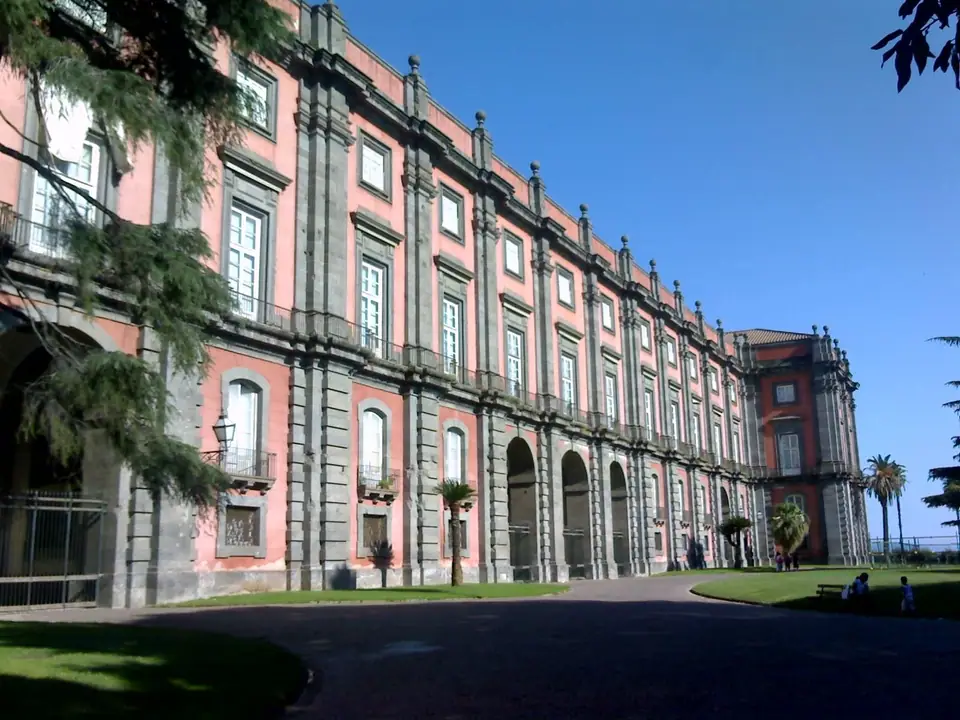
Museo e Real Bosco di Capodimonte
Three kilometres north of MANN on the wooded crest of the Capodimonte hill, King Charles of Bourbon commissioned Giovanni Antonio Medrano in 1738 to construct a grand hunting lodge and royal palace (Reggia di Capodimonte) specifically to house the Farnese painting collection. Surrounded by the 134-hectare historic park of the Real Bosco di Capodimonte (designed by Ferdinando Sanfelice in 1742 with five radiating avenues fanning out from the Porta di Mezzo), the palace is one of Italy's greatest picture galleries:
- First Floor (Farnese Gallery and Royal Apartments): Features Renaissance masterpieces assembled by the Farnese family, including Titian's portraits of Pope Paul III and Danaë, Masaccio's Crucifixion (1426), Giovanni Bellini's Transfiguration, Raphael cartoons, Pieter Bruegel the Elder's The Parable of the Blind Leading the Blind (1568) and The Misanthrope, and the exquisite eighteenth-century Porcelain Boudoir of Queen Maria Amalia of Saxony (Salottino di Porcellana), assembled between 1757 and 1759 from more than 3,000 interlocking panels of hand-painted Capodimonte soft-paste porcelain.
- Second Floor (Neapolitan Gallery from the 13th to 18th Centuries): Traces the evolution of painting in Naples from Simone Martini's 1317 panel of Saint Louis of Toulouse Crowning His Brother Robert of Anjou to the dramatic chiaroscuro of Caravaggio's Flagellation of Christ (painted in 1607 for the Church of San Domenico Maggiore), Artemisia Gentileschi, Battistello Caracciolo, Jusepe de Ribera, Mattia Preti, and Luca Giordano.
- How to reach Capodimonte: From Museo Metro station (outside MANN) or Piazza Trieste e Trento, board ANM bus 3M, 168, 178, or C63, or take the dedicated Capodimonte Shuttle from the Royal Palace / Teatro di San Carlo area up to Porta Piccola and Porta Grande.
Traveller tips
Real advice from people who have been to National Archaeological Museum (MANN) and Capodimonte: Farnese and Roman treasures. Every tip is read by our team before it goes live.
No tips yet. Been here? Yours could be the first.
Thank you! Your tip will appear here after a quick review.
More in Naples
Continue exploring Naples with related neighbourhood, food, and planning guides
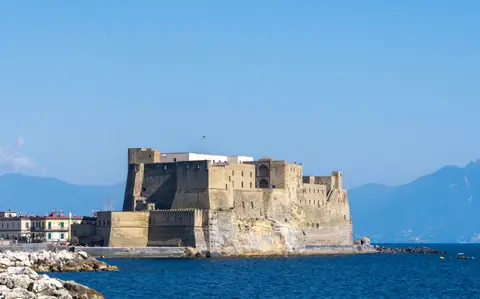
Castel dell'Ovo and the Lungomare: Megaride islet, Borgo Marinari and Via Partenope
Naples, Italy
Quartieri Spagnoli and Rione Sanità: Via Toledo, Baroque staircases and catacombs
Naples, Italy
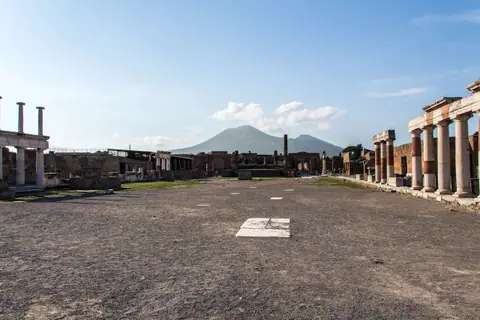
Pompeii, Herculaneum and Mount Vesuvius day trip from Naples: trains and routes
Naples, Italy
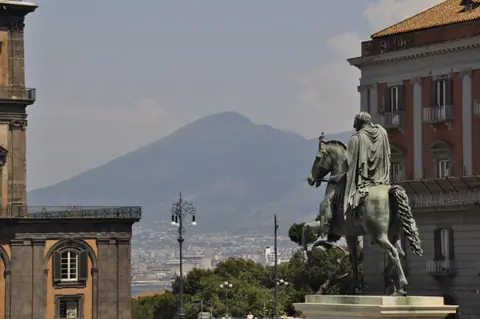
Naples: Greek foundations, royal palaces and volcanic bays
Naples, Italy
