


























Cappella Sansevero and Duomo di Napoli: the Veiled Christ and San Gennaro
Visit the Baroque funerary chapel of Cappella Sansevero to see Giuseppe Sanmartino's 1753 Veiled Christ, then walk to Naples Cathedral for the Royal Chapel of the Treasure of San Gennaro and the fourth-century baptistery.
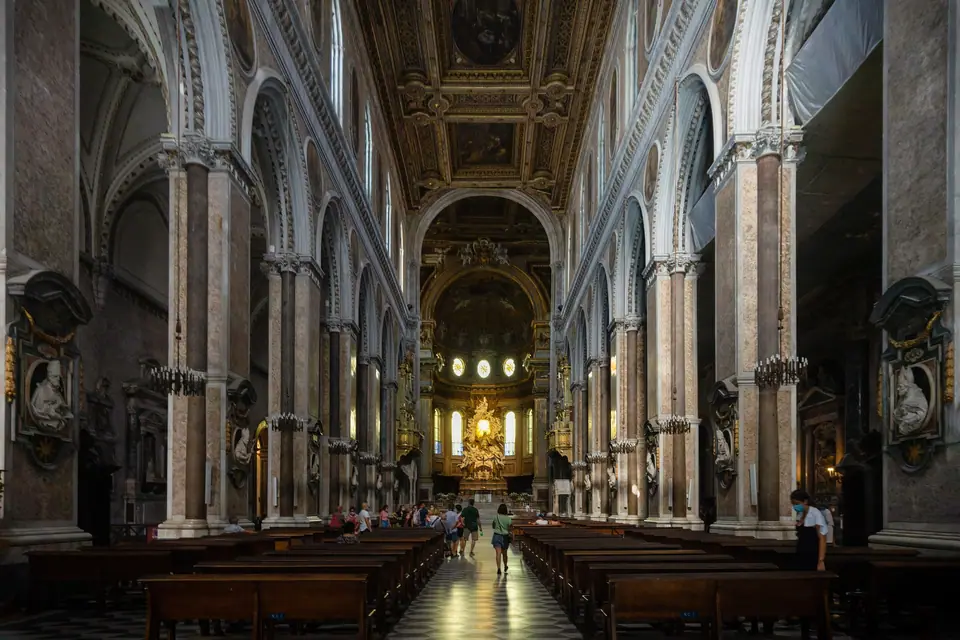
Within a ten-minute walk of one another in the Centro Storico, two monuments embody the spiritual and artistic soul of Naples: the intimate Baroque jewel box of the Cappella Sansevero, where eighteenth-century sculptors pushed marble carving to the edge of optical illusion, and the monumental Naples Cathedral (Duomo di San Gennaro), whose side chapels span early Christian mosaics from the fourth century to the seventeenth-century shrine of the city's patron saint.
Cappella Sansevero and the Veiled Christ
Tucked onto Via Francesco De Sanctis just off Piazza San Domenico Maggiore, the Cappella Sansevero (officially the Church of Santa Maria della Pietà, or Pietatella) began in the late sixteenth century as a private votive chapel built by John Francesco di Sangro, first Prince of Sansevero, and was converted into a family mausoleum by his son Alessandro in 1613. Its extraordinary present form is the creation of Raimondo di Sangro (1710 to 1771), seventh Prince of Sansevero, a scientist, inventor, printer, and Grand Master of Neapolitan Freemasonry who redesigned the chapel between the 1740s and 1770s as an allegorical temple of enlightenment and family glory.
At the centre of the polychrome marble nave lies the Veiled Christ (Cristo Velato), sculpted in 1753 by Neapolitan artist Giuseppe Sanmartino. Originally commissioned from Venetian sculptor Antonio Corradini (who died in 1752 after completing only a terracotta scale bozzetto, now preserved in the Certosa di San Martino), the life-sized work depicts the dead Christ lying on a mattress propped with two cushions and covered from head to toe by a gossamer shroud. Every fold of the transparent veil, along with the nail wounds in the hands and feet and the crown of thorns and pincers at the base, was carved with a chisel from the same single block of Carrara marble, completely refuting eighteenth-century legends that Raimondo di Sangro had "marblised" real fabric through alchemy.
Flanking the nave are two equally virtuoso marble allegories:
- Modesty (La Pudicizia, 1752): Carved by Antonio Corradini as a monument to Raimondo's mother, Cecilia Gaetani dell'Aquila d'Aragona, who died when he was less than a year old; a clinging veil drapes the figure while a cracked tombstone pedestal symbolises a life cut short.
- Release from Deception (Il Disinganno, 1753 to 1754): Carved by Genoese sculptor Francesco Queirolo in memory of Raimondo's father Antonio, showing a man being freed by a winged spirit from an intricate fisherman's net sculpted entirely out of solid marble without breaking a single strand.
- The Anatomical Machines: Down a staircase in the underground chamber stand two eighteenth-century human skeletons (a man and a pregnant woman) prepared by Palermitan physician Giuseppe Salerno under Raimondo di Sangro's direction, with the entire arterial and venous system reconstructed out of beeswax, iron wire, and silk fibres.
Booking note: Tickets for the Cappella Sansevero are sold strictly by timed entry slot and frequently sell out ahead of time; reserve on the official museum website before your trip, and note that photography is prohibited inside the chapel.
Duomo di Napoli (Cathedral of the Assumption of Mary)
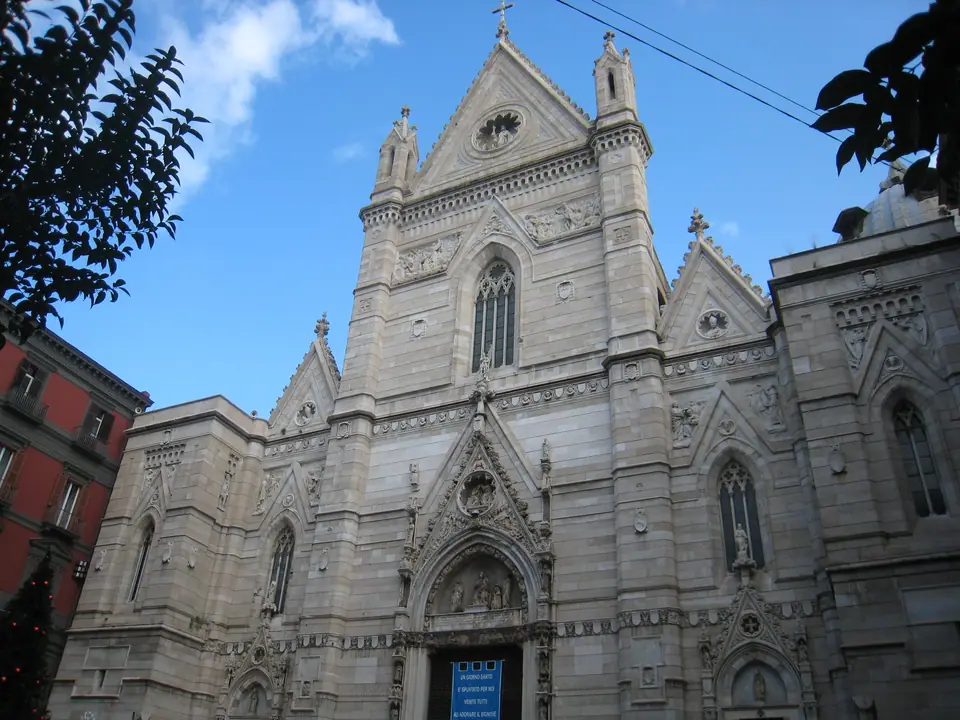
Walking east along Via dei Tribunali and turning north onto Via Duomo brings you to the neo-Gothic white marble facade of Naples Cathedral (completed in the late nineteenth century by Enrico Alvino, preserving the 1407 Gothic central portal Sculpted by Antonio Baboccio da Piperno). Begun by King Charles I of Anjou and completed under Robert the Wise in the early fourteenth century, the cathedral complex actually unites three distinct religious buildings under one roof:
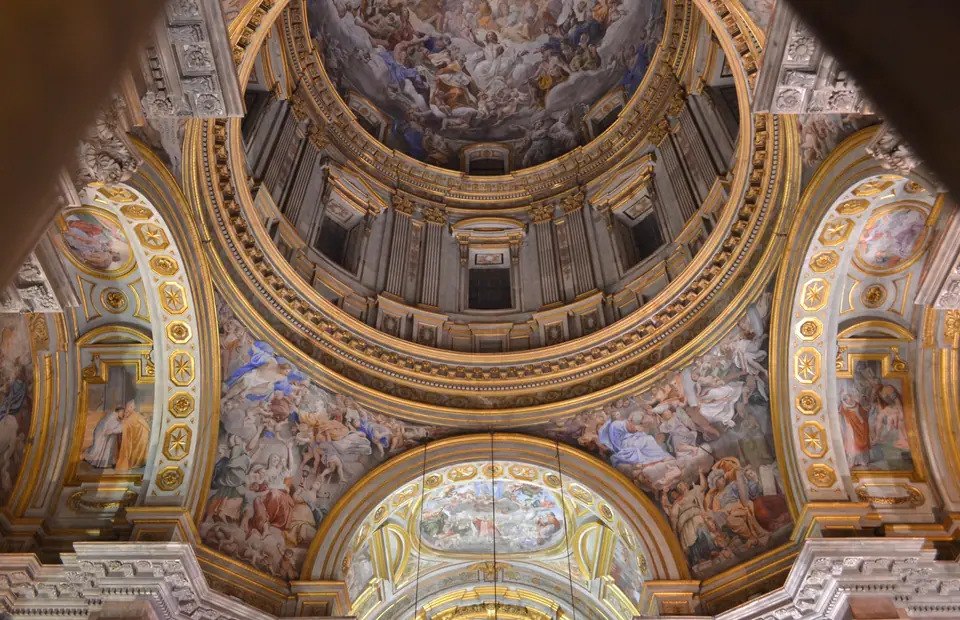
- The Royal Chapel of the Treasure of San Gennaro (Reale Cappella del Tesoro di San Gennaro): Entered through a monumental brass grille forged by Cosimo Fanzago on the right side of the nave, this Baroque chapel was erected between 1608 and 1646 not by the Church, but by a secular civic committee (the Deputazione) fulfilling a 1527 vow by the citizens of Naples after surviving plague, war, and volcanic tremors. Designed by Francesco Grimaldi, it houses copper-plate altarpieces by Domenichino and Jusepe de Ribera, a soaring dome fresco of Paradise by Giovanni Lanfranco (1643), fifty-four silver reliquary busts of the city's co-patron saints, and two ampoules containing the solidified relic blood of Saint Januarius (martyred at Pozzuoli in AD 305 under Diocletian), which is brought out three times a year (the Saturday before the first Sunday in May, 19 September, and 16 December).
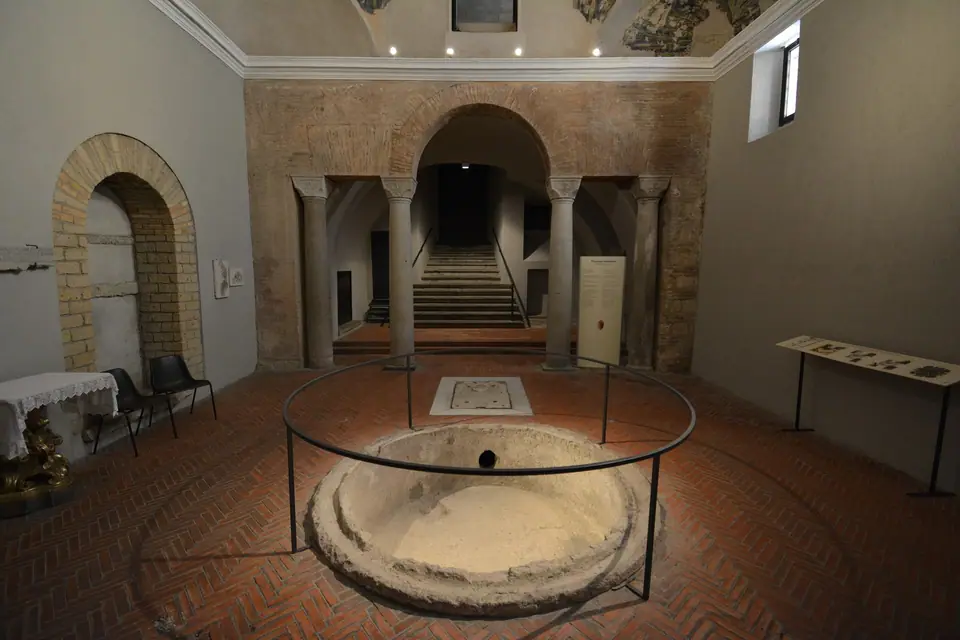
- The Basilica of Santa Restituta and Baptistery of San Giovanni in Fonte: Accessed from the left aisle of the cathedral, the paleochristian Basilica of Santa Restituta was founded in the fourth century under Emperor Constantine and retains ancient marble columns and a ceiling canvas by Luca Giordano. At its apse stands the fourth-century Baptistery of San Giovanni in Fonte, the oldest surviving Christian baptistery in Western Europe, whose dome glitters with fifth-century cobalt-blue and gold mosaics depicting the Traditio Legis and the miraculous draught of fishes.
- The Succorpo Crypt: Directly beneath the high altar of the cathedral, Cardinal Oliviero Carafa commissioned Renaissance architect Tommaso Malvito between 1497 and 1506 to carve a gleaming all-marble Renaissance confessional crypt (Succorpo) housing the bones of San Gennaro.
Traveller tips
Real advice from people who have been to Cappella Sansevero and Duomo di Napoli: the Veiled Christ and San Gennaro. Every tip is read by our team before it goes live.
No tips yet. Been here? Yours could be the first.
Thank you! Your tip will appear here after a quick review.
More in Naples
Continue exploring Naples with related neighbourhood, food, and planning guides

What to eat in Naples: Neapolitan pizza, sfogliatella, babà and ragù
Naples, Italy
Getting around Naples: Metro Line 1 Art Stations, funiculars and Circumvesuviana
Naples, Italy
Spaccanapoli and the Centro Storico: walking the ancient Greek-Roman grid
Naples, Italy
National Archaeological Museum (MANN) and Capodimonte: Farnese and Roman treasures
Naples, Italy
