


























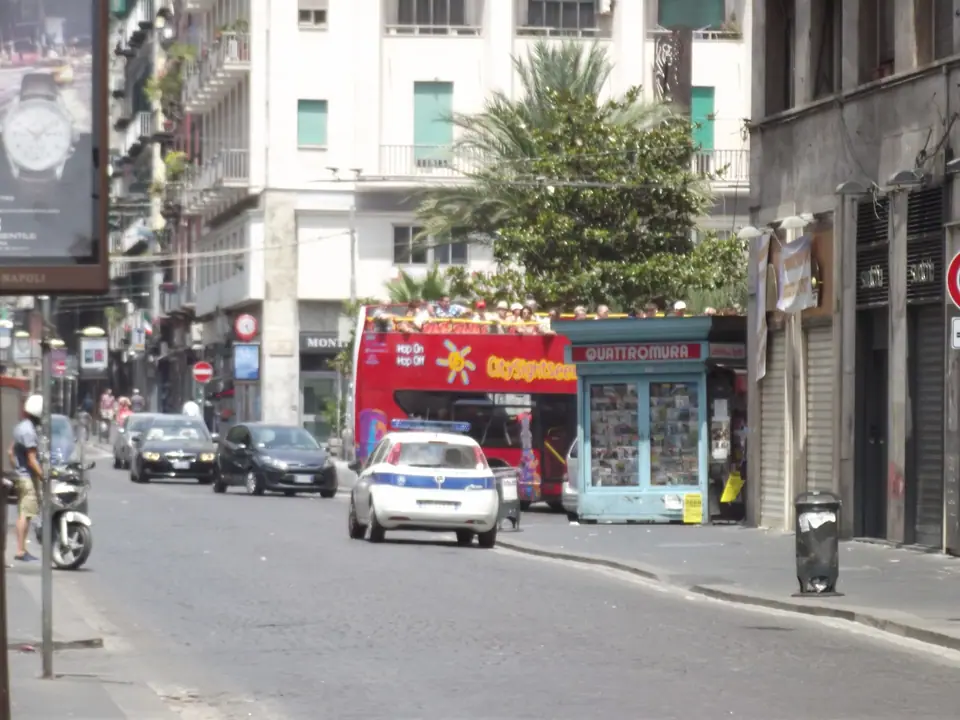
Quartieri Spagnoli and Rione Sanità: Via Toledo, Baroque staircases and catacombs
Explore two of Naples's most atmospheric quarters: the sixteenth-century military grid of the Quartieri Spagnoli rising west of Via Toledo, and the Baroque palaces and early Christian catacombs of Rione Sanità.
Immediately outside the ancient Greek-Roman perimeter of the Centro Storico, two densely built hillside neighbourhoods showcase the dramatic urban topography of sixteenth- to eighteenth-century Naples. West of Via Toledo, the checkerboard alleys of the Quartieri Spagnoli (Spanish Quarters) climb the slope toward Castel Sant'Elmo; north of Piazza Cavour and the National Archaeological Museum, the valley of Rione Sanità hides open-work Rococo staircases by Ferdinando Sanfelice and vast multi-level Christian catacombs carved into the yellow Neapolitan tufa rock.
Via Toledo and the Quartieri Spagnoli
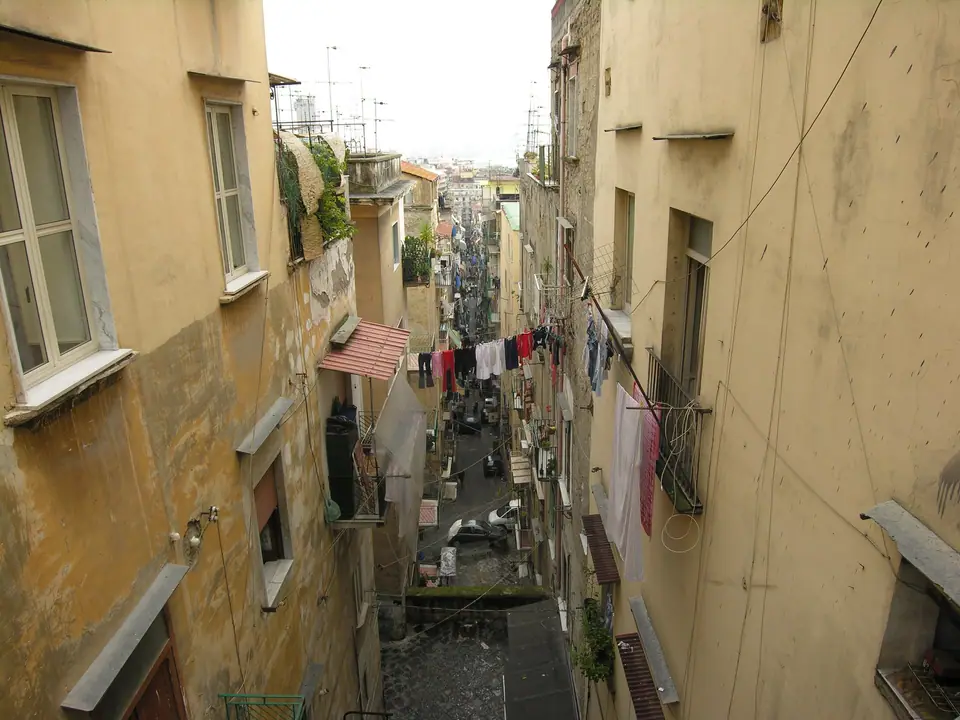
In 1536, Spanish Viceroy Don Pedro Álvarez de Toledo commissioned royal architect Ferdinando Manlio to trace a 1.2-kilometre-long straight avenue along the western ditch of the old Aragonese city walls, linking Piazza Dante (then Largo del Mercatello) down to the Royal Palace precinct. Still known as Via Toledo, it remains the primary shopping and pedestrian artery of Naples. Directly above its western pavement, the viceroy laid out the Quartieri Spagnoli across roughly 800,000 square metres of hillside divided into an orthogonal grid of eighteen streets running parallel to Via Toledo and twelve steep cross lanes climbing toward Corso Vittorio Emanuele.
Originally built with two-storey barracks to house Spanish Habsburg garrison soldiers sent to suppress urban revolts, the quarter rapidly grew upward into five- and six-storey tenement blocks during the seventeenth-century population boom. Walking up the stepped stone lanes today reveals ground-floor street-level dwellings known as bassi, devotional street shrines (edicole votive), the Pignasecca open-air food market at the northern edge near Montesanto station, the Baroque Church of Santa Maria Francesca delle Cinque Piaghe, and family-run trattorias hanging checked tablecloths between scooters and balconies.
Rione Sanità: Sanfelice's staircases and the Basilica of Santa Maria della Sanità
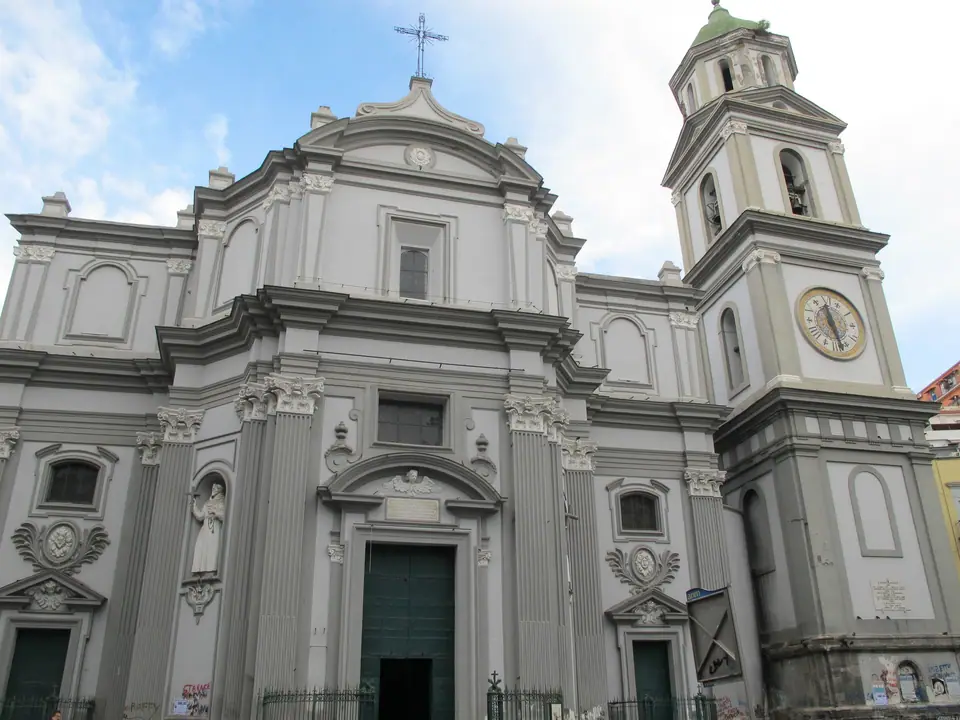
North of the ancient northern city wall at Porta San Gennaro, a natural valley descending from the Capodimonte hill served in Greco-Roman and early Christian times as a necropolis outside the legal city boundary before developing from the late sixteenth century into the monumental suburb of Rione Sanità (part of the Stella district). Because the Bourbon and Napoleonic rulers later spanned the valley with the high brick arches of the Ponte della Sanità (built between 1806 and 1809 along Corso Amedeo di Savoia so royal carriages could ride straight from the centre to the Capodimonte Palace without descending into the ravine), visitors today can enter the quarter either by walking along lively Via Vergini from Piazza Cavour or by riding the public lift built inside the bridge pier down to the square of the Basilica of Santa Maria della Sanità.
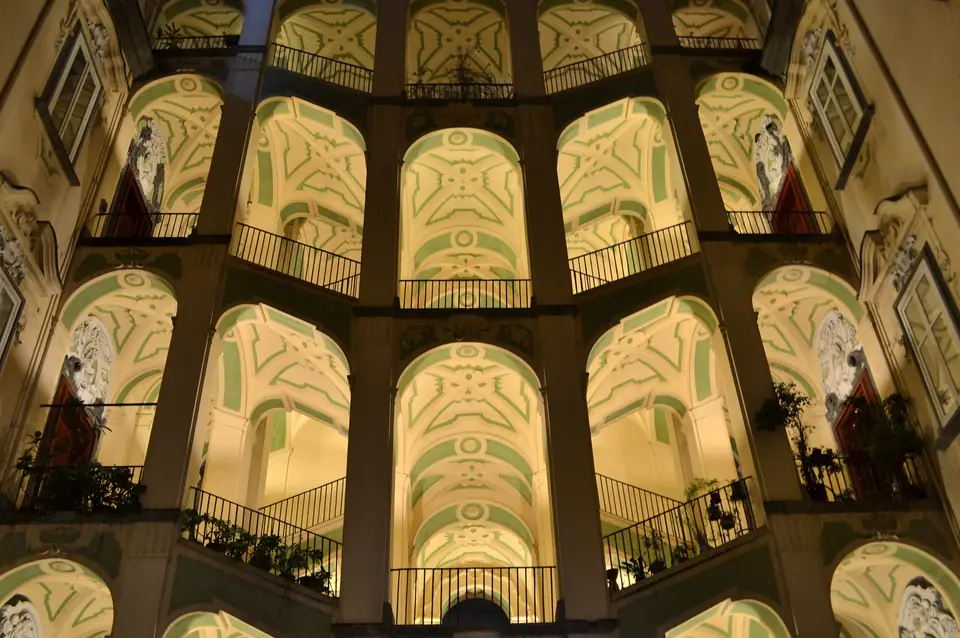
Built between 1602 and 1613 to a Greek-cross design by Dominican friar and architect Fra' Nuvolo (Giuseppe Donzelli), the Basilica of Santa Maria della Sanità (known locally as San Vincenzo 'o Munacone) is crowned by a brilliant green-and-yellow majolica-tiled dome and features a dramatically raised presbytery resting atop the early Christian Catacombs of San Gaudioso. Five minutes east along Via Vergini and Via Santa Maria Antesaecula (the street where Neapolitan comic actor Totò was born in 1898), step into the courtyards of two masterpieces of eighteenth-century residential architecture designed by Ferdinando Sanfelice: the Palazzo dello Spagnolo (built in 1738 on Via Vergini 19) and the nearby Palazzo Sanfelice (built in 1724 to 1728 on Via Arena alla Sanità), both famous for their theatrical double-flight "hawk-wing" (ali di falco) open-work vaulted staircases that frame the courtyard life across multiple storeys.
The Catacombs of San Gennaro, San Gaudioso, and the Fontanelle Cemetery
Because the soft yellow tufa stone of the Sanità valley is self-supporting and easily quarried, early Christians excavated spacious underground burial halls rather than narrow Roman-style tunnels:
- Catacombs of San Gennaro: Accessed from the hillside beside the Basilica of the Incoronata Madre del Buon Consiglio on Via Capodimonte, this two-level subterranean complex expanded around the tomb of Agrippinus of Naples before receiving the remains of Saint Januarius in the fifth century; its wide vaulted halls preserve early Christian frescoes and bishops' crypts managed by the local youth cooperative La Paranza.
- Catacombs of San Gaudioso: Located directly beneath the high altar of Santa Maria della Sanità, combining fifth-century Christian mosaic tombs with macabre seventeenth-century Dominican wall burials prepared by the painter Giovanni Balducci.
- Fontanelle Cemetery (Cimitero delle Fontanelle): Further west at the top of the Sanità valley, this vast former sixteenth-century tufa quarry became an ossuary holding tens of thousands of skulls (capuzzelle) from the great plague of 1656 and the cholera epidemic of 1837; check the official Municipality of Naples website before setting out to verify current opening status and guided access.
Traveller tips
Real advice from people who have been to Quartieri Spagnoli and Rione Sanità: Via Toledo, Baroque staircases and catacombs. Every tip is read by our team before it goes live.
No tips yet. Been here? Yours could be the first.
Thank you! Your tip will appear here after a quick review.
More in Naples
Continue exploring Naples with related neighbourhood, food, and planning guides
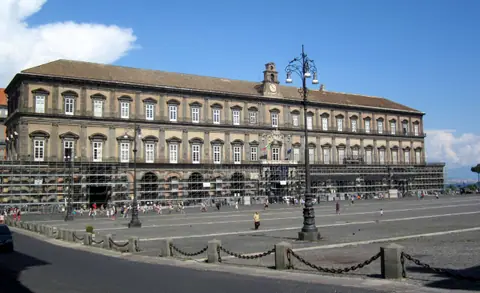
Piazza del Plebiscito and Royal Palace: San Carlo, Galleria Umberto and Castel Nuovo
Naples, Italy
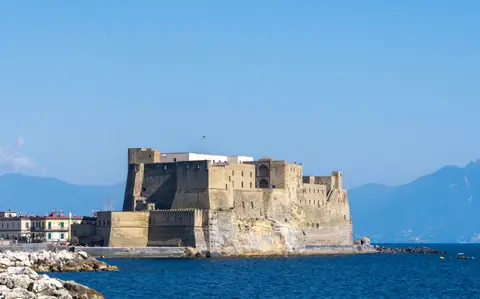
Castel dell'Ovo and the Lungomare: Megaride islet, Borgo Marinari and Via Partenope
Naples, Italy
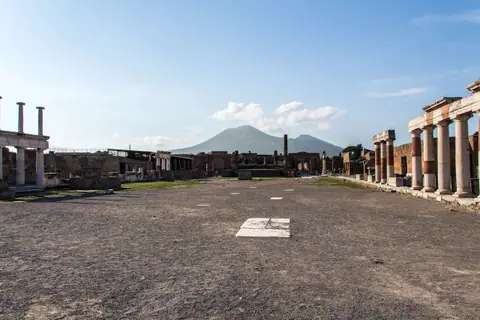
Pompeii, Herculaneum and Mount Vesuvius day trip from Naples: trains and routes
Naples, Italy
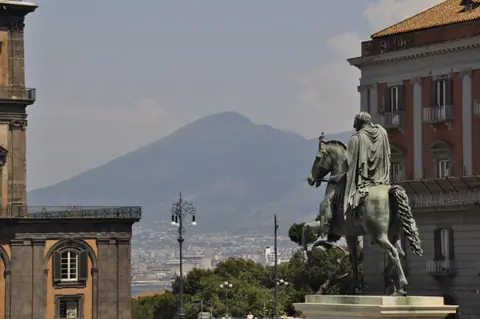
Naples: Greek foundations, royal palaces and volcanic bays
Naples, Italy
