


























Spaccanapoli and the Centro Storico: walking the ancient Greek-Roman grid
Walk the razor-straight lower decumanus of Spaccanapoli and parallel Via dei Tribunali through Piazza del Gesù Nuovo, Santa Chiara, San Domenico Maggiore, San Lorenzo Maggiore, and Pio Monte della Misericordia.
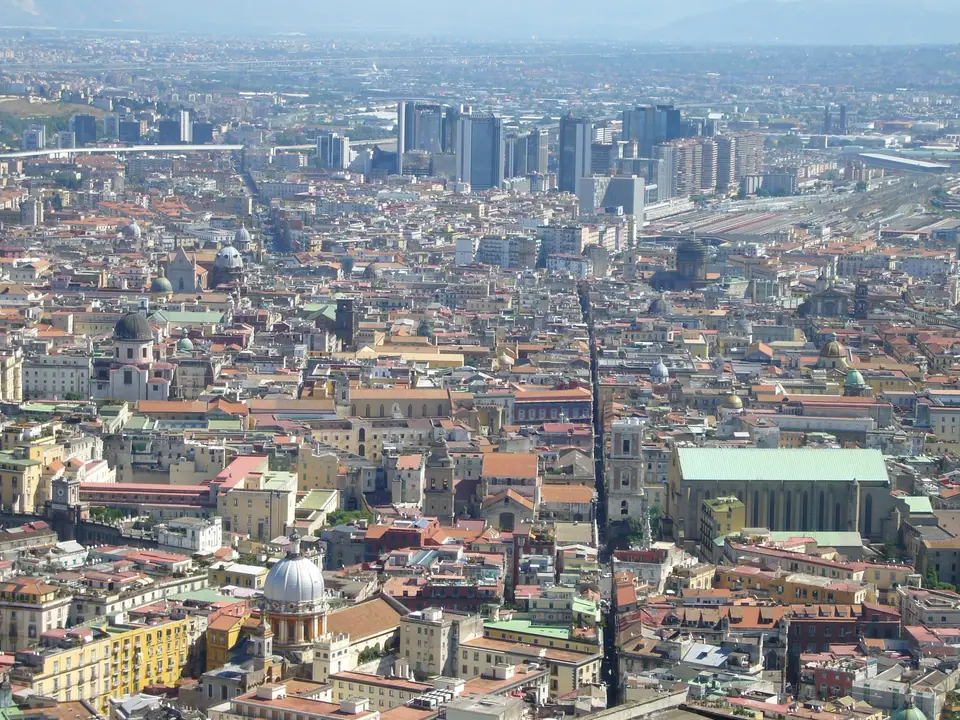
Viewed from the ramparts of Castel Sant'Elmo on the Vomero hill, a single razor-straight street slices the dense rooftop sea of old Naples cleanly in two. Locals call it Spaccanapoli ("Naples-Splitter"). Together with its parallel sister avenues to the north, it preserves the original fifth-century BC Greek street plan (plateiai and stenopoi, later Romanised as decumani and cardini) of ancient Neapolis. Walking from west to east along Spaccanapoli and returning westward along Via dei Tribunali forms the quintessential walking circuit of the UNESCO-listed Historic Centre of Naples.
The three ancient Decumani explained
Greek planners laid out Neapolis around three long east-to-west thoroughfares intersected at right angles by roughly twenty narrow north-to-south cross lanes:
- Decumanus Inferior (Spaccanapoli): Running east from the foothills of the Spanish Quarters to the edge of Forcella, the street carries seven consecutive official names, most famously Via Benedetto Croce, Via San Biagio dei Librai, and Via Vicaria Vecchia.
- Decumanus Major (Via dei Tribunali): The widest and busiest central artery of the ancient city, linking Piazza Bellini and Port'Alba with Piazza Girolamo Muziano and the former judicial tribunal inside Castel Capuano.
- Decumanus Superior (Via della Sapienza, Via Pisanelli, and Via Anticaglia): The northernmost route, where two massive brick overhead arches still brace the remains of the Roman Theatre of Neapolis, where Emperor Nero once performed in the first century AD.
West-to-east along Spaccanapoli: Gesù Nuovo to SanBiagio dei Librai
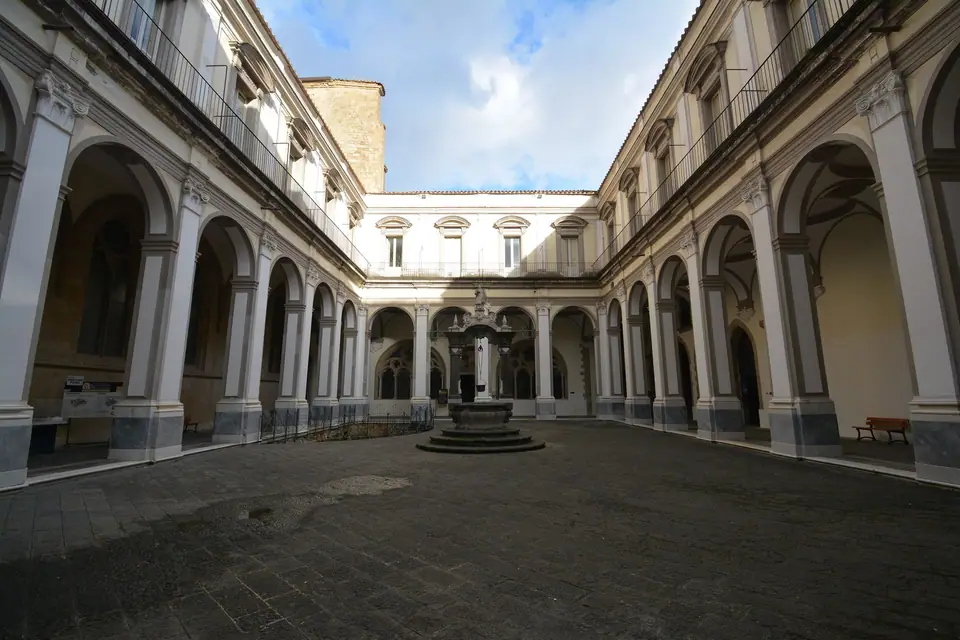
Begin your walk at Piazza del Gesù Nuovo, anchored at its centre by the sculpted Baroque spire of the Guglia dell'Immacolata (erected in 1747 to 1750). On the northern side stands the Church of Gesù Nuovo, built inside the 1470 Renaissance palace of Roberto Sanseverino, Prince of Salerno; stonecutters' geometric symbols remain carved into its external diamond-shaped volcanic piperno blocks, while the interior holds frescoes by Belisario Corenzio, Jusepe de Ribera, and Luca Giordano. Across the square, the Angevin Gothic basilica of Santa Chiara contrasts a soaring, austere fourteenth-century nave (restored to its medieval form after Second World War bombing in August 1943) with its luminous eighteenth-century majolica-tiled cloister.
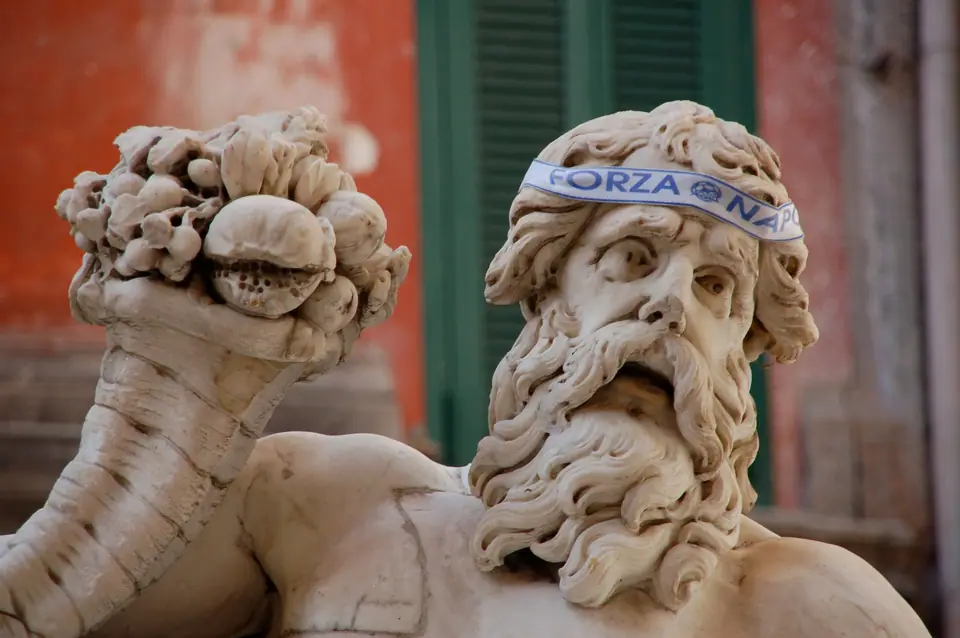
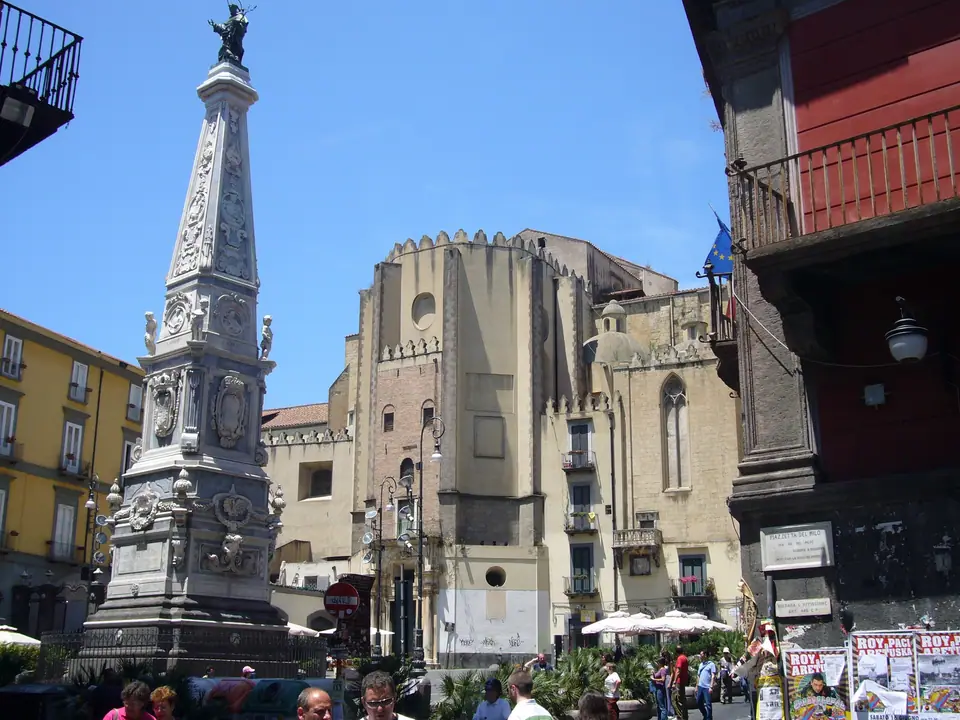
Continuing east along Via Benedetto Croce past Renaissance aristocratic palaces such as Palazzo Venezia and Palazzo Filomarino, you enter Piazza San Domenico Maggiore. Built between 1283 and 1324 under King Charles II of Anjou, the Basilica of San Domenico Maggiore served as the Neapolitan headquarters of the Dominican Order, where Thomas Aquinas taught theology in 1272; its sacristy preserves forty-five velvet-draped coffins of Aragonese royals beneath a ceiling frescoed by Francesco Solimena. One block further east at Piazzetta Nilo stands the marble Statue of the Nile God (known affectionately in Naples as Il Corpo di Napoli), sculpted in Roman times by Alexandrian merchants settled in this quarter and restored with a new bearded head in 1657.
Returning along Via dei Tribunali: San Gregorio Armeno, San Lorenzo, and Caravaggio
Turn north up Via San Gregorio Armeno, the narrow cardo connecting Spaccanapoli with Via dei Tribunali. Beneath the wooden bridge linking the two wings of the Baroque convent of San Gregorio Armeno, workshops hand-sculpt terracotta shepherd figurines and cork landscapes for traditional Neapolitan nativity scenes (presepi) throughout the year. At the top of the lane lies Piazza San Gaetano, the ancient Greek agora and Roman forum of Neapolis, flanked by the Theatines' Baroque Basilica of San Paolo Maggiore (whose facade incorporates two Corinthian columns from the first-century AD Temple of the Dioscuri) and the Gothic Basilica of San Lorenzo Maggiore. Beneath San Lorenzo's cloister, an underground archaeological path descends nine metres to a remarkably intact first-century AD Roman market (macellum) with stone bakery counters and laundry basins.
Follow Via dei Tribunali east toward Via Duomo to finish at Pio Monte della Misericordia. Founded in 1602 by seven young Neapolitan noblemen as a charitable confraternity, its octagonal seventeenth-century chapel displays Caravaggio's monumental 1607 oil painting The Seven Works of Mercy (Le Sette Opere di Misericordia) still hanging above the high altar for which it was commissioned during the painter's first stay in Naples.
Traveller tips
Real advice from people who have been to Spaccanapoli and the Centro Storico: walking the ancient Greek-Roman grid. Every tip is read by our team before it goes live.
No tips yet. Been here? Yours could be the first.
Thank you! Your tip will appear here after a quick review.
More in Naples
Continue exploring Naples with related neighbourhood, food, and planning guides
Where to stay in Naples: Centro Storico, Chiaia, Santa Lucia and Vomero
Naples, Italy
3 days in Naples itinerary: historic decumani, royal palaces and Pompeii
Naples, Italy
What to eat in Naples: Neapolitan pizza, sfogliatella, babà and ragù
Naples, Italy
Getting around Naples: Metro Line 1 Art Stations, funiculars and Circumvesuviana
Naples, Italy
