


























Pompeii, Herculaneum and Mount Vesuvius day trip from Naples: trains and routes
Compare Pompeii and Herculaneum, ride the Circumvesuviana train from Napoli Porta Nolana or Piazza Garibaldi, and plan a combined day trip with the crater rim of Mount Vesuvius.
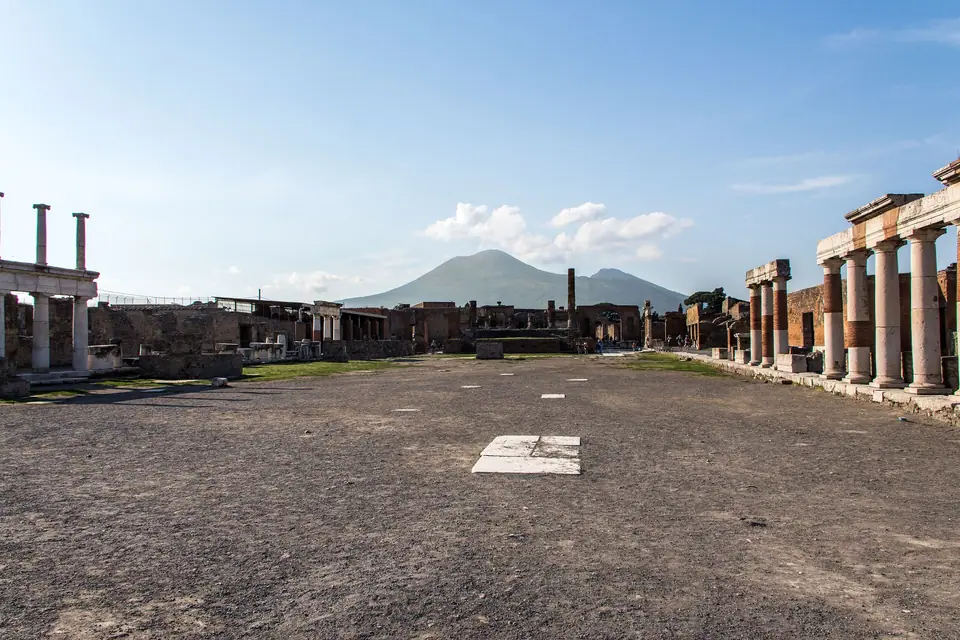
In the autumn of AD 79, a cataclysmic Plinian eruption of Mount Vesuvius sent a column of pumice, ash, and superheated pyroclastic surges towering into the stratosphere above the Bay of Naples, burying the thriving Roman commercial city of Pompeii and the coastal resort town of Herculaneum (along with Oplontis and Stabiae). Rediscovered through systematic excavations initiated in 1738 at Herculaneum and 1748 at Pompeii under King Charles of Bourbon, and inscribed together as a UNESCO World Heritage Site in 1997, the two archaeological parks sit less than forty minutes southeast of central Naples along the Circumvesuviana commuter railway.
Pompeii vs. Herculaneum: how the two buried cities differ
Although buried by the same eruption, Pompeii and Herculaneum experienced completely different volcanic mechanics, which explains why visiting both (or pairing one with the Naples National Archaeological Museum) is so rewarding:
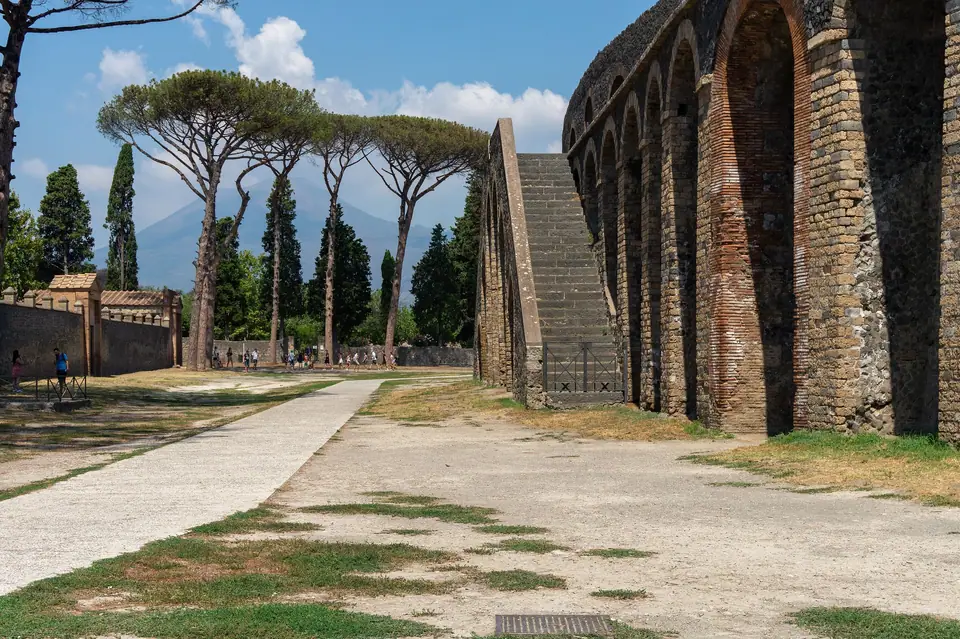
- Pompeii (66-hectare walled city): Located roughly nine kilometres downwind southeast of the crater, Pompeii was first blanketed by several metres of falling white and grey pumice pebbles (lapilli) that caused roofs and upper storeys to collapse before later pyroclastic surges swept the city. Its scale is vast: you walk through a complete Roman urban landscape featuring the civic Forum, the Basilica, the Amphitheatre (built around 70 BC, the oldest known stone Roman amphitheatre), the Large and Small Theatres, the Stabian Baths, stone-rutted streets lined with hot-food counters (thermopolia) and bakeries, the sprawling House of the Faun, the House of the Vettii, and the frescoed Villa of the Mysteries.
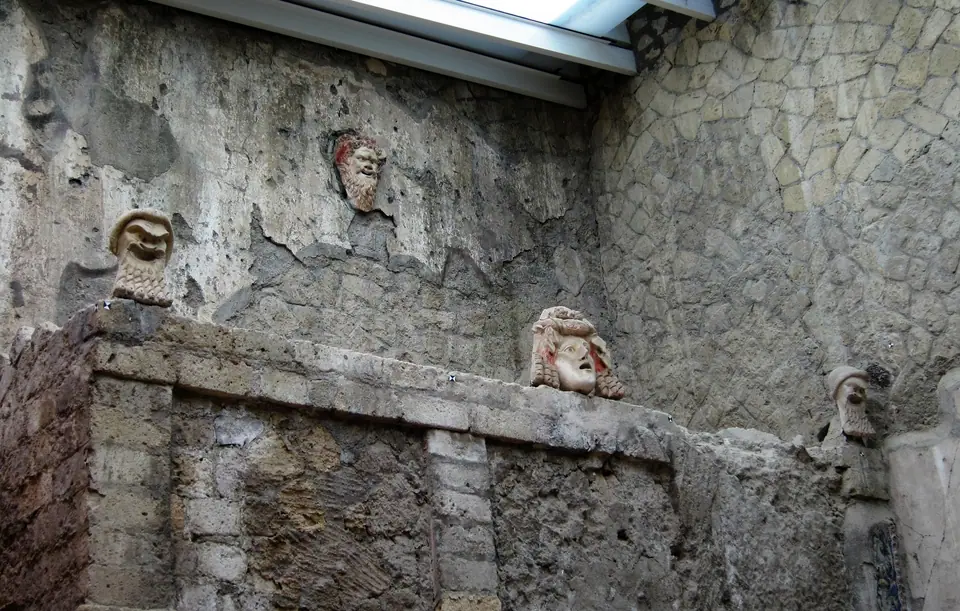
- Herculaneum (compact coastal town): Located just seven kilometres west of the crater on the seafront of modern Ercolano, Herculaneum escaped the initial pumice fall because of wind direction, only to be engulfed by successive pyroclastic surges and volcanic mudflows that solidified into up to twenty metres of dense tufa rock. Because this deep volcanic seal excluded oxygen, Herculaneum preserves upper storeys, wooden roof beams, sliding wooden room partitions, cradles, beds, carbonised loaves of bread, the vaulted Roman boathouses (Fornici) along the ancient shoreline where roughly 300 skeletons of residents awaiting rescue by sea were uncovered from the 1980s, and the glittering blue-and-gold glass mosaic nymphaeum inside the House of Neptune and Amphitrite.
How to get there by train from Naples
Both sites sit directly on the Naples to Sorrento line of the narrow-gauge Circumvesuviana railway (operated by EAV), as well as the tourist-oriented Campania Express:
- Boarding in Naples: Trains originate at Napoli Porta Nolana (on Corso Giuseppe Garibaldi) and stop two minutes later at the underground platforms of Napoli Piazza Garibaldi (directly beneath Napoli Centrale). If you want a guaranteed seat on busy mornings, walk five minutes south from Piazza Garibaldi to board at the Porta Nolana terminus.
- Station for Herculaneum: Alight at Ercolano Scavi. Walk straight downhill along Via IV Novembre for about 600 metres (ten minutes) to the entrance gate of the Herculaneum Archaeological Park.
- Station for Pompeii: Make sure you board a train bound for Sorrento and alight at Pompei Scavi - Villa dei Misteri, which stands less than 100 metres from the Porta Marina entrance of the ruins. (Note: Trenitalia regional trains on the main line to Salerno stop at modern Pompei station, which is nearer the eastern Piazza Anfiteatro entrance.)
Climbing the Gran Cono Crater of Mount Vesuvius
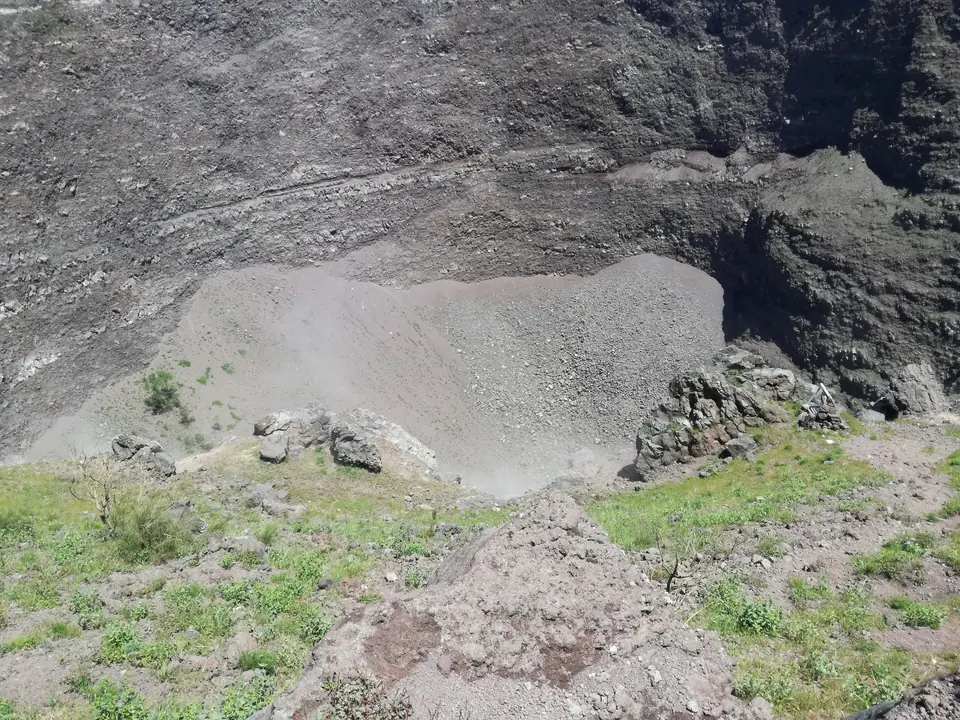
Rising to 1,281 metres above sea level inside the semicircular caldera wall of ancient Mount Somma, the active cone of Mount Vesuvius (which last erupted in March 1944) can be combined in a single day with either Herculaneum or Pompeii:
- Transport to the trailhead: From directly outside Ercolano Scavi station (via private shuttle vans) or from Pompei Scavi / Piazza Anfiteatro (via the public EAV Line 808 bus), vehicles wind up the paved mountain road through Vesuvius National Park to the upper car park at Piazzale Quota 1000 (1,000 metres elevation).
- The crater rim walk and ticket rule: From Quota 1000, a wide, steep volcanic gravel trail (Sentiero n. 5 - Il Gran Cono) ascends roughly 180 vertical metres in twenty to thirty minutes to the crater rim, where park vulcanological guides are stationed along the steaming fumaroles overlooking both the internal abyss of the crater and the entire sweep of the Bay of Naples from Capo Miseno to Capri. Important: Entry to the Gran Cono trail is strictly capped and tickets are not sold at the upper gate (where mobile signal is also weak); you must purchase your named, timed-entry crater ticket online on the official Vesuvius National Park ticketing portal before leaving Naples.
Traveller tips
Real advice from people who have been to Pompeii, Herculaneum and Mount Vesuvius day trip from Naples: trains and routes. Every tip is read by our team before it goes live.
No tips yet. Been here? Yours could be the first.
Thank you! Your tip will appear here after a quick review.
More in Naples
Continue exploring Naples with related neighbourhood, food, and planning guides
3 days in Naples itinerary: historic decumani, royal palaces and Pompeii
Naples, Italy

What to eat in Naples: Neapolitan pizza, sfogliatella, babà and ragù
Naples, Italy
Getting around Naples: Metro Line 1 Art Stations, funiculars and Circumvesuviana
Naples, Italy
Spaccanapoli and the Centro Storico: walking the ancient Greek-Roman grid
Naples, Italy
