





















Malvarrosa & Patacona Beaches, El Cabanyal Fisherman Houses & Marina de Valencia Guide
Explore Valencia's Mediterranean coastline: the ceramic-tiled modernist fisherman cottages of El Cabanyal, Marina de Valencia and Veles e Vents, and Las Arenas, Malvarrosa, and Patacona beaches.
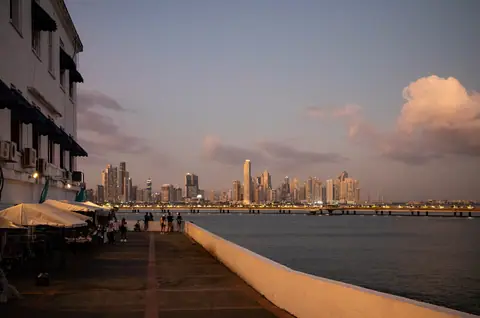
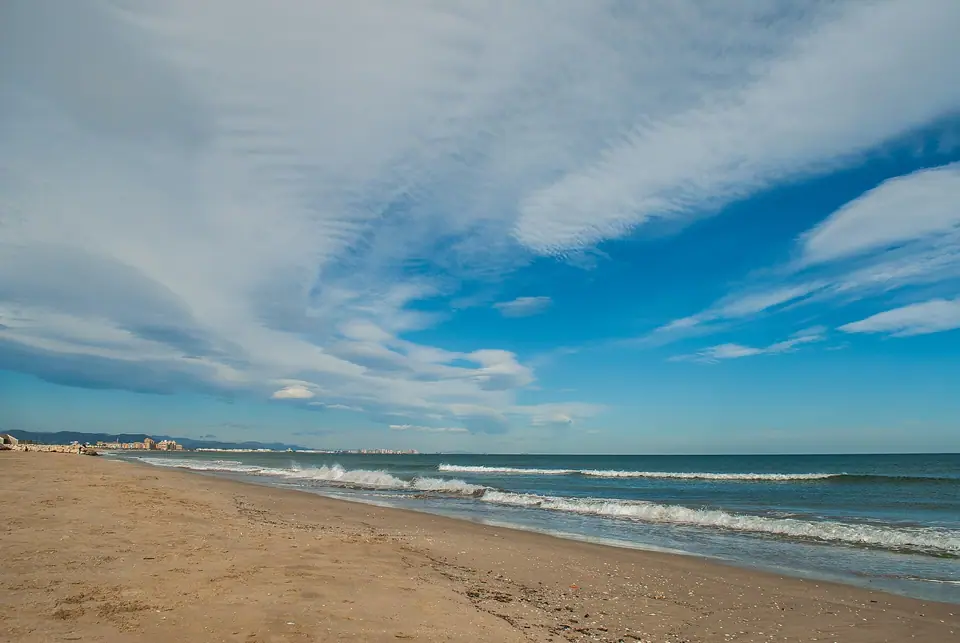
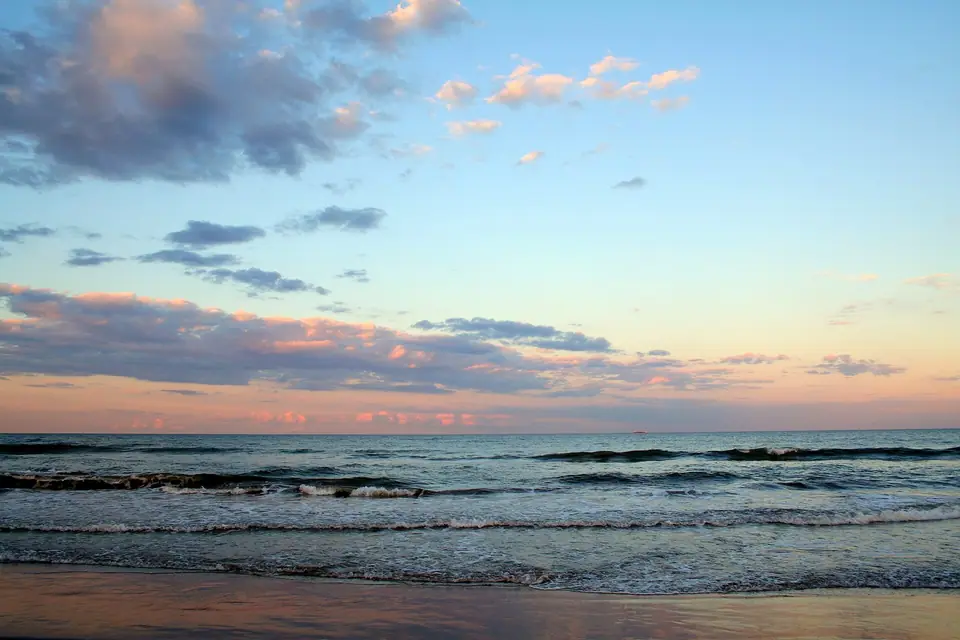
Four kilometres east of Ciutat Vella, Valencia meets the warm waters of the Balearic Sea across the coastal district of Poblats Marítims. Industrial port cities often wall off their waterfront behind container cranes. By contrast, Valencia opens northward from its Royal Marina into a continuous four-kilometre curve of fine golden sand up to 135 metres wide. A traffic-free palm promenade (Paseo Marítimo) and the nineteenth-century fishing quarter of El Cabanyal-Canyamelar back the entire shoreline. Cyclists reach the coast in 20 minutes along flat bike lanes from the City of Arts and Sciences. Alternatively, Metrovalencia Tram Lines 4, 6, and 8 stop right beside the sand.
1. El Cabanyal-Canyamelar: Ceramic-Tiled Fisherman Houses & Modernisme Popular
Before stepping onto the sand, spend ninety minutes walking the parallel north-south grid of El Cabanyal (kah-bahn-YAHL) and Canyamelar. Focus your stroll along Calle de la Reina, Calle San Pedro (Carrer de Sant Pere), Calle Barraca, and Calle Progreso. Until 1897, this district was the independent maritime municipality of Pueblo Nuevo del Mar (1837 to 1897). Inshore fishermen originally settled here in steep-roofed reed-and-mud cottages called barracas. They arranged those huts in narrow rows perpendicular to the shoreline so oxen could haul wooden fishing boats onto the beach.
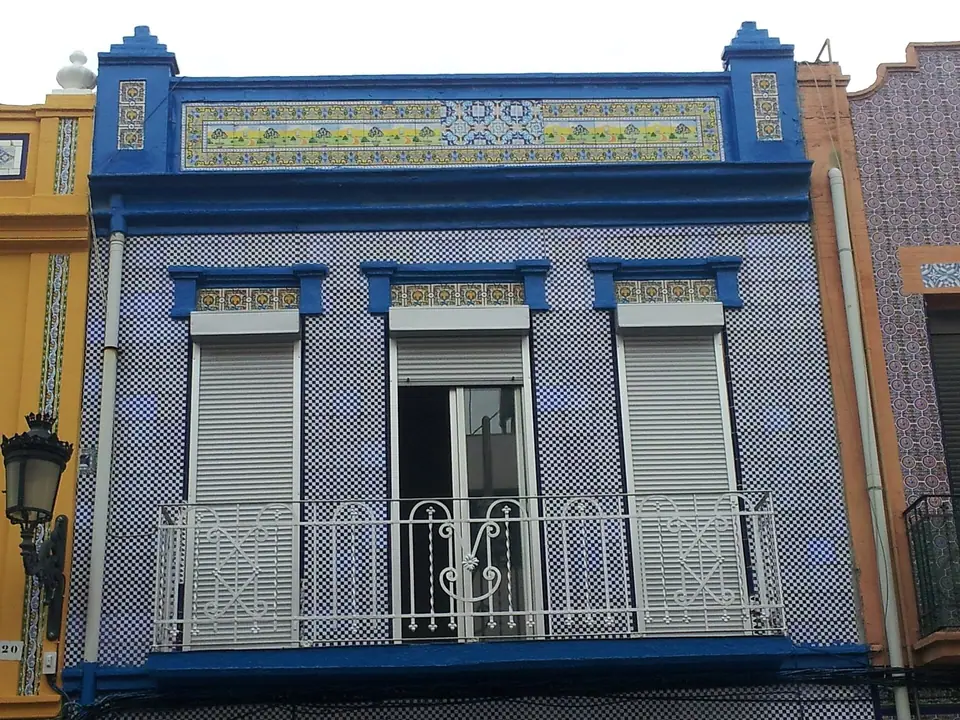
After devastating fires in the late eighteenth and nineteenth centuries destroyed the thatched roofs, municipal ordinances required brick and tile construction. Between 1880 and 1930, local master builders and prosperous fishermen decorated hundreds of narrow two-storey townhouse facades in a vernacular Art Nouveau style. Declared a Cultural Heritage Site (Bien de Interés Cultural) in 1993, this style is known as Modernisme popular del Cabanyal:
- Why the Houses Are Covered in Glazed Ceramic Tiles. Builders clad entire exterior walls in polychrome relief glazed ceramic tiles (azulejos) fired in the nearby kilns of Manises and Onda. Families competed to display floral, geometric, and maritime motifs in cobalt blue, emerald green, turquoise, and ochre. At the same time, the vitrified ceramic skin protected the porous brick walls from corrosive Mediterranean salt spray and humidity while reflecting summer heat.
- Key Stops Inside the Quarter. Browse the morning fish stalls of the Mercado del Cabanyal on Calle Martí Grajales. Next, visit the Rice Museum (Museu de l'Arros, Calle Rosario 3) inside the restored 1906 Serra Industrial Rice Mill. Three floors of wooden belts, sieves, and polishing cylinders explain how Albufera rice was milled a century ago. Right next door at Calle Rosario 1 stands the Museo de la Semana Santa Marinera. Its exhibits trace the coastal quarter's centuries-old Maritime Holy Week processions.
2. Marina de Valencia: The 1914 Clock Building, Tinglado No. 2 & Veles e Vents (2006)
At the southern foot of the beach lies Marina de Valencia. Planners redeveloped the inner harbour to host the 32nd America's Cup sailing regatta in 2007. Walk past the red-brick 1914 Clock Building (Edificio del Reloj) to the open iron-and-mosaic 1914 Harbour Sheds (Tinglados del Puerto Nos. 2, 4, and 5). Engineers Federico Gómez de Membrillera and José María Fuster decorated their gable walls with bright Valencian Art Nouveau ceramic friezes depicting oranges, grapes, and merchant ships. Today Tinglado No. 2 serves as a free shaded public skating and cultural pavilion.
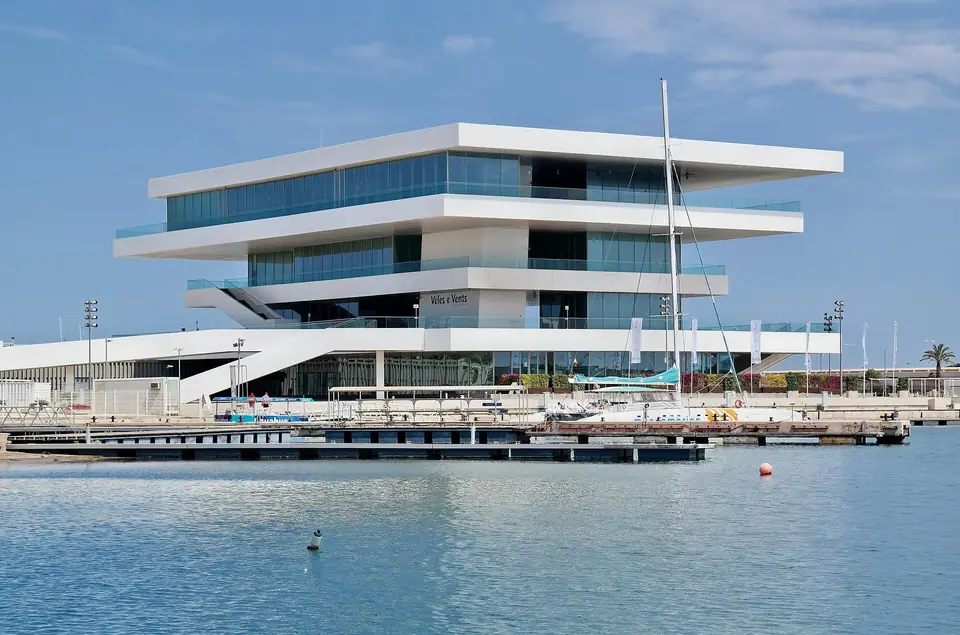
Continuing out along the northern breakwater brings you to Veles e Vents ("Sails and Winds"). British architect David Chipperfield and Barcelona studio b720 (Fermín Vázquez) completed the landmark in May 2006, winning the RIBA European Award. Four horizontal white-painted steel and concrete decks cantilever outward above one another without exterior columns. Public ramps climb the terraces for elevated views over the yacht basin, the canal, and Malvarrosa Beach.
3. Las Arenas, Malvarrosa & Patacona Beaches and Historic Paella Restaurants
North of the Marina breakwater, a single four-kilometre expanse of golden sand is divided by locals into three contiguous beaches. All three are linked by the palm-lined Paseo Marítimo, laid out in the 1990s across 3.2 kilometres from the Marina to Alboraya:
- Playa de las Arenas (Playa del Cabanyal, 1,200 metres long). Closest to the Marina and Les Arenes tram stop, this 135-metre-wide section takes its name from the historic 1888 Balneario Las Arenas bathing pavilion. Its Classical Greek-revival colonnade now anchors a five-star seaside hotel. Directly behind the sand, the pedestrian boardwalk of Paseo de Neptuno is lined with Valencia's oldest seafood and paella dining rooms. Highlights include La Pepica (founded in 1898), where painter Joaquín Sorolla and author Ernest Hemingway dined overlooking the waves. Five minutes north on Calle Isabel de Villena 155 stands Casa Carmela (founded in 1922). Its kitchen still cooks every paella to order over orange-wood fires.
- Playa de la Malvarrosa (Platja de la Malva-rosa, 1,000 metres long). French botanist Félix Robillard gave Malvarrosa its name in 1848 after draining the coastal marshland and planting scented pink hollyhock (Malva rosa). Today it forms the lively centre of the urban shore. At Paseo de la Malvarrosa 82 stands the restored Casa-Museo Blasco Ibáñez. Valencian novelist Vicente Blasco Ibáñez (1867 to 1928) wrote on its colonnaded terrace between 1902 and 1928. His close friend Joaquín Sorolla (1863 to 1923) painted fishermen hauling oxen and sails through the surf right outside.
- Playa de la Patacona (Alboraya, 1,050 metres long). Crossing the small Acequia de la Vera stream at the northern tip of Malvarrosa steps directly into the municipality of Alboraya. Less crowded than Las Arenas, Patacona is lined with relaxed beachfront cafés, stand-up paddleboard schools, and artisanal horchaterías serving fresh Alboraya tiger-nut milk. Freshwater foot showers, seasonal lifeguards, and wooden boardwalk ramps operate along all three beaches.
Traveller tips
Real advice from people who have been to Valencia. Every tip is read by our team before it goes live.
No tips yet. Been here? Yours could be the first.
Thank you! Your tip will appear here after a quick review.
More in Valencia
Continue exploring Valencia with related neighbourhood, food, and planning guides
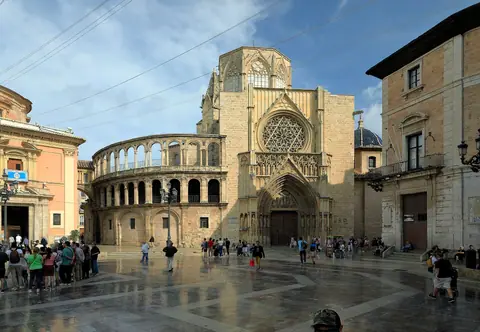
Valencia Cathedral, Holy Chalice Chapel, 207-Step Miguelete Bell Tower, Plaza de la Virgen & Almoina Ruins
Valencia, Spain
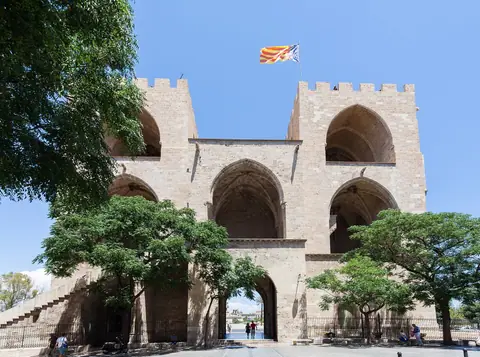
El Carmen Quarter, 1392 Serranos Towers, 1441 Quart Towers, Portal de la Valldigna & Street Art Walk
Valencia, Spain
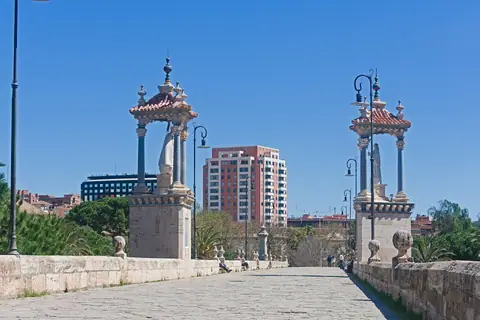
Jardín del Turia Route: Walking & Cycling the 9 km Former Riverbed from Bioparc to Gulliver Park
Valencia, Spain
Albufera Natural Park Lagoon, El Palmar Rice Fields, Sagunto Roman Theatre & Xàtiva Castle Day Trips
Valencia, Spain
