





















Valencia Cathedral, Holy Chalice Chapel, 207-Step Miguelete Bell Tower, Plaza de la Virgen & Almoina Ruins
Explore the sacred and archaeological heart of Valencia: Valencia Cathedral's three portals, the Holy Chalice, the 207 steps of El Miguelete, the Thursday Water Tribunal, and the Almoina Roman ruins.
For more than twenty-one centuries, a 200-metre strip of stone pavement has served as the sacred and civic axis of Valencia. That historic corridor links Plaza de la Reina, Valencia Cathedral (La Seu), Plaza de la Virgen, and the Almoina ruins. Roman consul Decimus Junius Brutus Callaicus founded Valentia Edetanorum here in 138 BCE. His surveyors placed the crossroads of the main north-south street (Cardo Maximus) and east-west avenue (Decumanus Maximus) directly beneath today's squares. Visigothic bishops raised their fifth-century cathedral over the Roman forum. Muslim rulers transformed the precinct into the Great Mosque of Balansiya after 714 CE. King James I of Aragon then consecrated the site to Saint Mary upon conquering the city in October 1238.
1. Valencia Cathedral (La Seu): Three Portals, the Holy Chalice & Renaissance Angels
Bishop Andreu d'Albalat and architect Arnau Vidal began building the Metropolitan Cathedral of the Assumption of Our Lady of Valencia in 1262. Crafted in sparse Mediterranean Valencian Gothic masonry, the church expanded over five centuries. That history left the exterior with three monumental doorways from three distinct architectural periods:
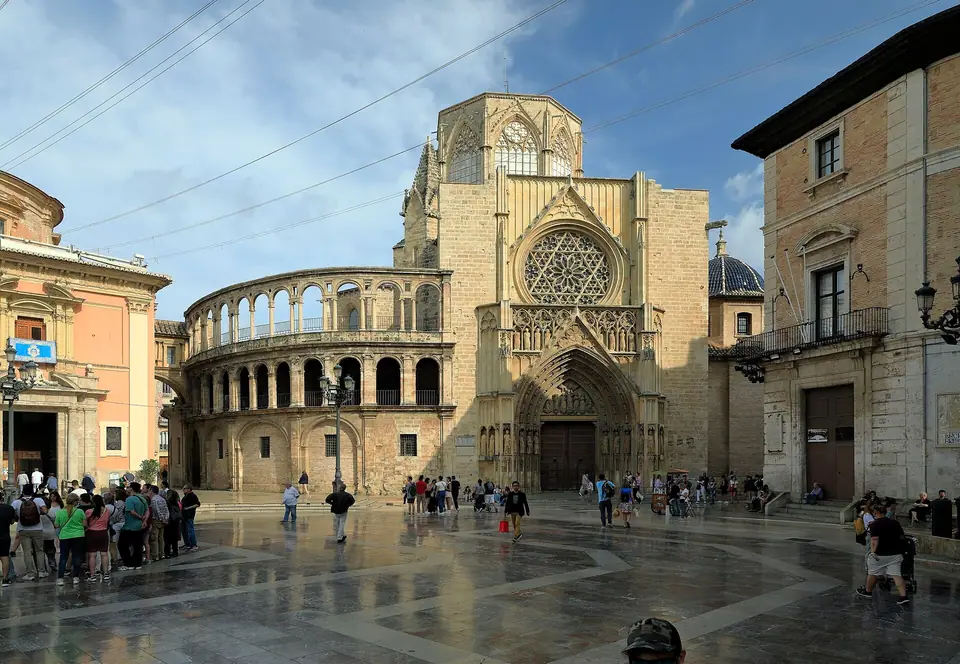
- The Three Doors of the Cathedral. On the eastern flank along Calle del Palau stands the oldest doorway, the 1262 to 1270 Romanesque Puerta del Palau (Porta de l'Almoina). Its six semicircular stone archivolts preserve carved heads of the seven couples from Lleida who repopulated Christian Valencia. On the northwest flank facing Plaza de la Virgen opens the fourteenth-century Gothic Puerta de los Apóstoles (1300 to 1354). Stone apostles and a six-pointed Star of David rose window frame its arches. On the southwest side facing Plaza de la Reina curves Konrad Rudolf's 1703 to 1713 Baroque Puerta de los Hierros, shaped like a concave three-storey stone altarpiece.
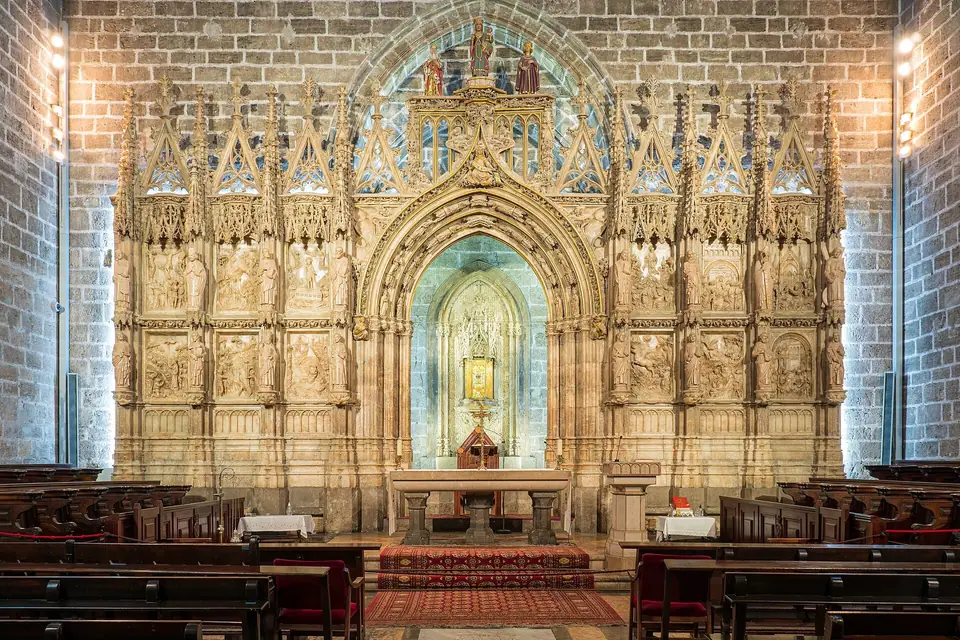
- The Chapel of the Holy Chalice (Capilla del Santo Cáliz). To the right of the main entrance opens the soaring 1356 to 1369 Gothic Chapter House designed by Andreu Julià. Its star-ribbed stone vault rises 16 metres across a 13-metre square. Inside a fifteenth-century alabaster retable carved with twelve Old and New Testament scenes rests the Holy Chalice (Santo Cáliz). Revered by Catholic tradition, the relic was used in papal Masses by Pope John Paul II in 1982 and Pope Benedict XVI in 2006. Its upper vessel is a dark reddish-brown first-century BCE to first-century CE Middle Eastern sardonyx-agate cup measuring 9 centimetres wide. Medieval goldsmiths mounted the cup onto a twin-handled gold stem. They set its base with 28 pearls, two rubies, and two emeralds over a tenth-century Fatimid chalcedony cup. Monks sheltered the cup inside the Pyrenean monastery of San Juan de la Peña during the Islamic era. It passed to King Martin the Humane of Aragon in 1399 before King Alfonso the Magnanimous deposited it in Valencia Cathedral in 1437.
- 1472 Renaissance Frescoes, Goya Canvases & the Arm of St Vincent. Walk up to the Main Altar (Capilla Mayor), where a 2004 restoration removed the 1674 Baroque stucco vault. Underneath appeared a dazzling sky of twelve music-playing Renaissance angels. Italian masters Paolo da San Leocadio and Francesco Pagano painted them between 1472 and 1481. Commissioned by Cardinal Rodrigo de Borja (later Pope Alexander VI), they rank among the earliest Renaissance frescoes in Spain. In the San Francisco de Borja side chapel hang two 1788 oil paintings by Francisco de Goya. Nearby, the ambulatory reliquary chapel holds the incorrupt left arm of fourth-century martyr Saint Vincent of Zaragoza.
2. Climbing the 207 Steps of El Miguelete (El Micalet, 1381 to 1429)
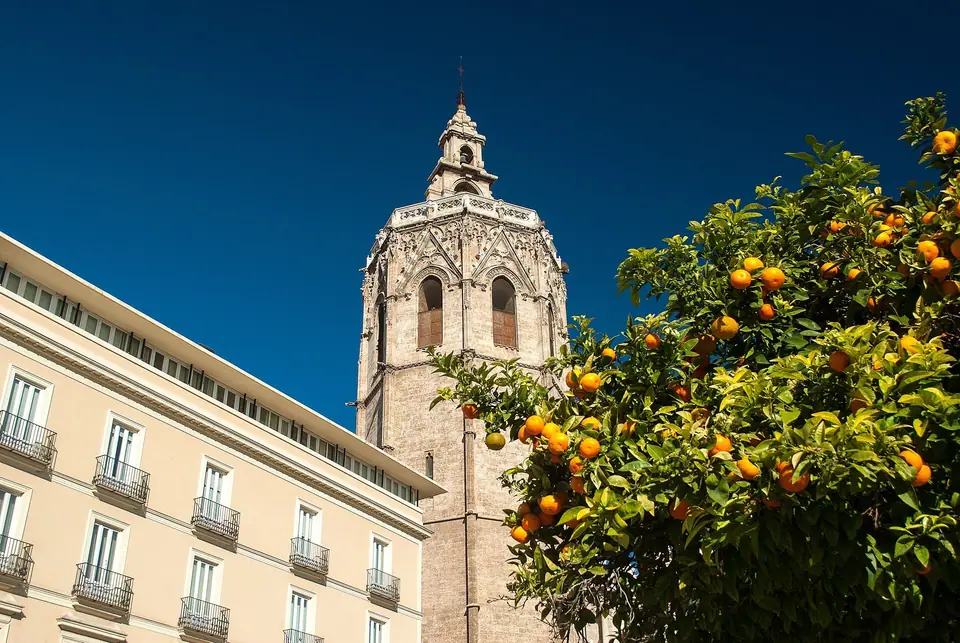
Joined to the southwestern corner of the Cathedral rises Valencia's octagonal Gothic limestone bell tower, El Miguelete (El Micalet in Valencian). Master stonemason Andreu Julià began the tower in 1381 and crews finished the upper stonework in 1429. Its four-tiered prism measures 50.85 metres to its upper terrace, matching the exact length of its octagonal perimeter. Including its seventeenth-century Baroque belfry, the structure reaches 63 metres high. Climbing the 207 narrow spiral stone steps brings you out beside the eleven historic bells. The largest is the 7.5-tonne 1539 Gothic bell El Micalet, cast on the feast of Saint Michael (29 September). From the parapet, a 360-degree view takes in the blue ceramic domes of Ciutat Vella, the green curve of the Turia, and the Mediterranean coastline.
3. Plaza de la Virgen, the Thursday Tribunal de las Aguas & Almoina Ruins
Stepping out through the Cathedral's Gothic Apostles' Portal places you on Plaza de la Virgen (Plaça de la Seu). At its centre flows Silvestre Edeta's 1976 bronze Fountain of the Turia. A reclining figure of Neptune-Turia is surrounded by eight maidens holding terracotta jugs representing the eight medieval irrigation canals of the Valencian huerta. Every Thursday at 12:00 noon sharp, the Tribunal de las Aguas de la Vega de Valencia (Water Court) convenes right outside the Apostles' Portal. When Thursday is a public holiday, the session meets on Wednesday instead. UNESCO inscribed the court as Intangible Cultural Heritage in 2009. Operating continuously since the tenth-century reign of Umayyad caliphs Abd al-Rahman III and al-Hakam II, eight elected farmer-syndics wear traditional black smocks. They adjudicate irrigation water disputes orally in Valencian without written records or appeals.
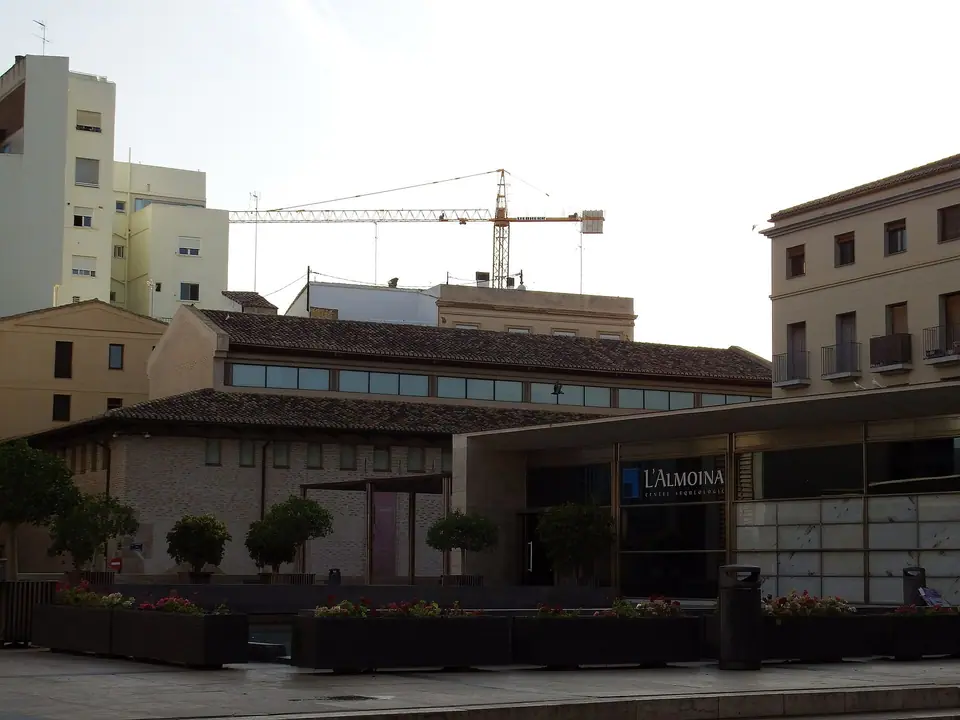
On the eastern side of the square stands the 1652 to 1667 Baroque Basilica of the Virgin of the Forsaken (Basílica de la Mare de Déu dels Desemparats). Antonio Palomino painted its oval dome in 1701 above the fifteenth-century patron statue known as La Geperudeta. Opposite the Basilica rises the sixteenth-century Renaissance loggia of the Palau de la Generalitat. Directly east behind the Basilica sits the underground Almoina Archaeological Centre (Centre Arqueològic de l'Almoina). Beneath a ground-level glass skylight pool, raised steel walkways cross 2,500 square metres of excavated ruins in place. Visitors look down onto the 138 BCE Roman thermal baths and sanctuary of Asclepius and the limestone flagstones of the Decumanus Maximus and Cardo Maximus. Adjacent sectors preserve the fourth-century martyrdom crypt of Saint Vincent, a seventh-century Visigothic cruciform baptistery, and tenth-century Moorish alcázar baths.
Traveller tips
Real advice from people who have been to Valencia. Every tip is read by our team before it goes live.
No tips yet. Been here? Yours could be the first.
Thank you! Your tip will appear here after a quick review.
More in Valencia
Continue exploring Valencia with related neighbourhood, food, and planning guides
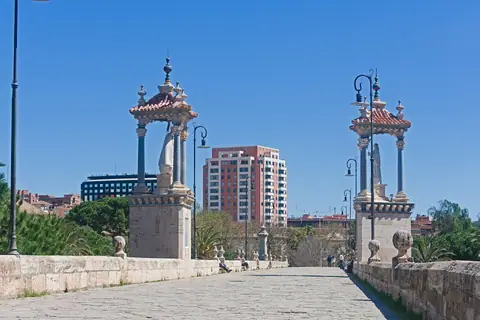
Jardín del Turia Route: Walking & Cycling the 9 km Former Riverbed from Bioparc to Gulliver Park
Valencia, Spain
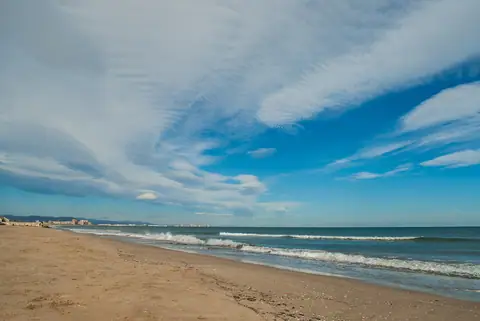
Malvarrosa & Patacona Beaches, El Cabanyal Fisherman Houses & Marina de Valencia Guide
Valencia, Spain
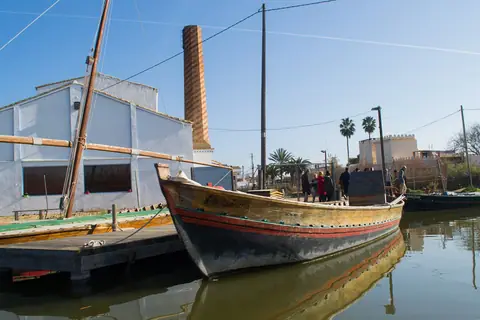
Albufera Natural Park Lagoon, El Palmar Rice Fields, Sagunto Roman Theatre & Xàtiva Castle Day Trips
Valencia, Spain
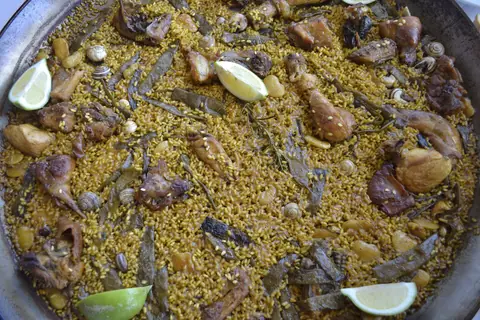
What to Eat in Valencia: Wood-Fired Paella Valenciana, Arroz a Banda, Horchata de Chufa, Fartons & Agua de Valencia
Valencia, Spain
