





















El Carmen Quarter, 1392 Serranos Towers, 1441 Quart Towers, Portal de la Valldigna & Street Art Walk
Walk the medieval walls, Islamic gates, contemporary art cloisters, and urban murals of Barrio del Carmen, from the 1392 Torres de Serranos and 1400 Portal de la Valldigna to the 1441 Torres de Quart.
In the northwestern corner of Ciutat Vella between two medieval military gates sits Barrio del Carmen (Barri del Carme), the oldest lived-in neighbourhood of Valencia. For centuries, this maze of narrow curving lanes lay sandwiched between two concentric defensive rings. The inner circle followed the eleventh-century Moorish mud-and-stone rampart built by Emir Abd al-Aziz ibn Amir (la muralla árabe). The outer perimeter traced the four-kilometre Christian stone wall erected under King Peter IV the Ceremonious of Aragon beginning in 1356. Named after the thirteenth-century Convent of Our Lady of Mount Carmel at its centre, El Carmen blends fourteenth-century Gothic fortresses with Renaissance guild halls. Open-air urban murals, artisan workshops, and lively evening tapas plazas animate its quiet alleys.
1. Torres de Serranos (1392 to 1398): Gothic Fortress Gate & Prado Wartime Vault
Begin your walk at the northern river bend where the 1518 Gothic stone bridge (Pont dels Serrans) crosses the Turia Gardens. The bridge leads directly into Plaza de los Fueros. City magistrates (Jurats) commissioned the Torres de Serranos (Porta dels Serrans) on 6 April 1392. Master stonemason Pere Balaguer completed the fortress in March 1398 after travelling to Catalonia to study the Royal Gate of Poblet Monastery. It served as the ceremonial northern entrance for monarchs and ambassadors arriving down the royal road from Zaragoza, Barcelona, and Los Serranos county:
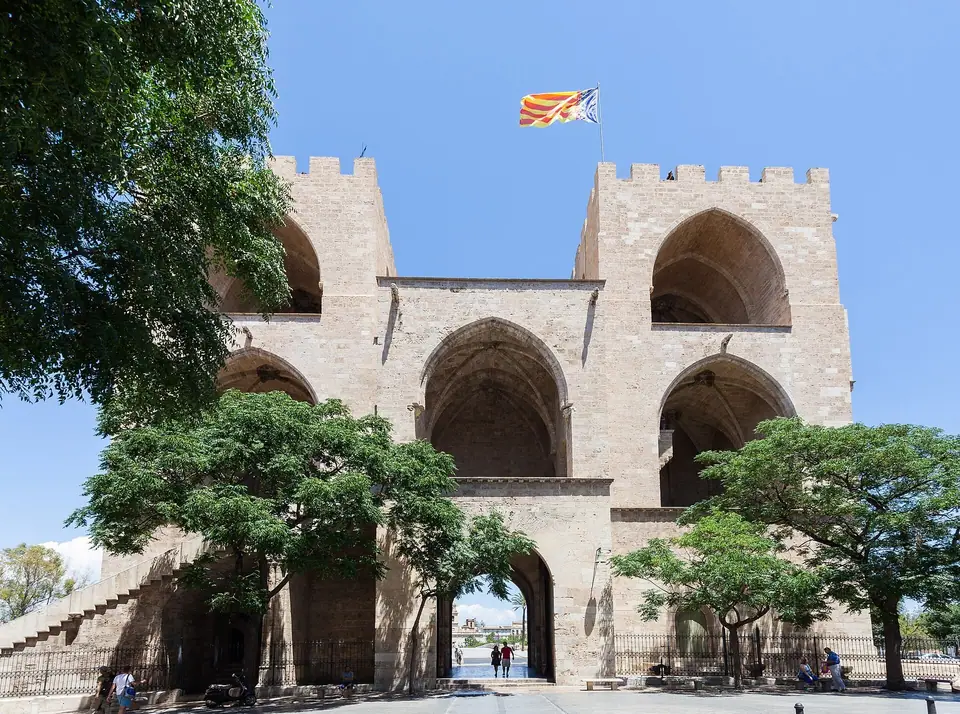
- Architecture and the Open Rear Vaults. Standing 33 metres tall, two polygonal limestone towers flank a central two-storey body. Blind flamboyant Gothic tracery decorates the outer walls below crenellated battlements and a machicolated gallery. Walk around to the inner city side on Plaza de los Fueros and you will see that the rear of the towers is completely open. Five soaring ribbed Gothic stone vaults with carved keystones stand exposed to the square. If enemy troops ever captured the gate, they could never turn the fortress against the city inside.
- Noble Prison and 1936 Prado Museum Sanctuary. After a fire burned the main city jail in 1586, the Serranos Towers served as a prison for knights and noblemen until 1887. That prison role saved the monument when the rest of the 1356 city walls were torn down in 1865. During the Spanish Civil War between November 1936 and 1938, Valencia served as the provisional capital of the Spanish Republic. Architect José Lino Vaamonde reinforced the lower vaults with concrete and sandbags. Inside, crews sheltered more than 500 masterpieces evacuated from Madrid's Prado Museum, including Velázquez's Las Meninas. Climb the exterior Gothic stone staircase to the upper battlements. From the top, a panoramic view takes in the red-tiled roofs of El Carmen and the 9-kilometre Turia riverbed.
2. Portal de la Valldigna (1400), L'Iber Tin Soldiers Museum & Calle Caballeros
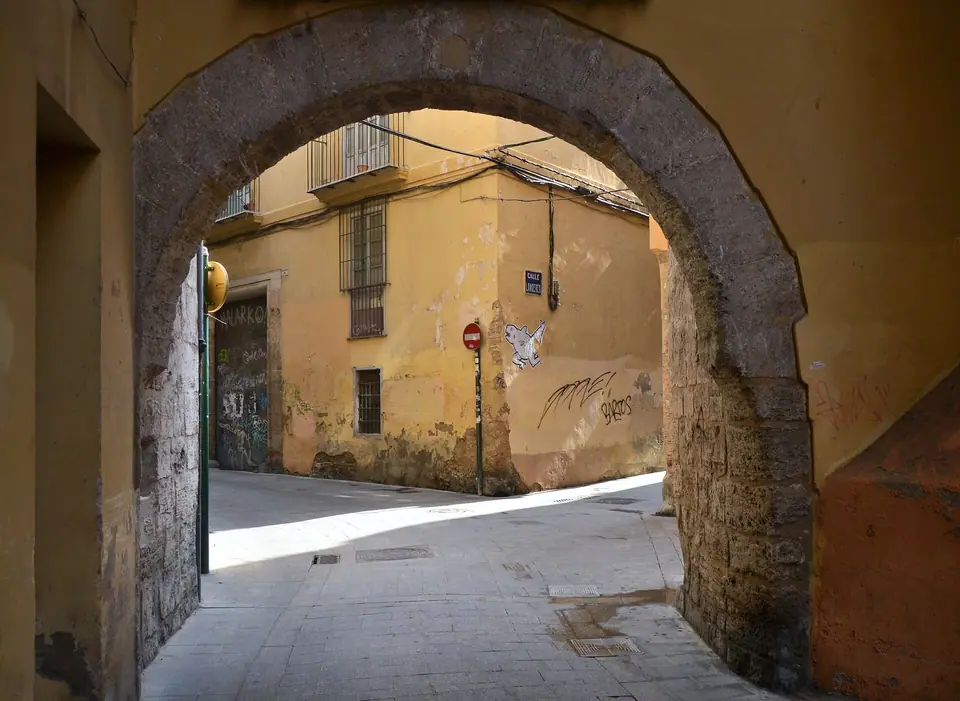
From the Serranos Towers, walk south down Calle dels Serrans past the fifteenth-century aristocratic mansions of Calle Caballeros. At No. 22, the fourteenth-century Palau de Malferit houses the L'Iber Museum. It holds the world's largest collection of historical miniature figures, with more than 95,000 painted tin soldiers on display. Turn north into the quiet alleys of the old Moorish quarter to pass beneath the Portal de la Valldigna. Builders opened this semicircular stone arch in 1400 directly through the eleventh-century Islamic city wall. The new gate linked Christian Valencia with the Moorish quarter (la Morería). It took its name from the nearby town house of the Abbot of the Royal Monastery of Santa María de la Valldigna. An altar niche above the arch commemorates Valencia's first printing press, established beside this gate in 1474 by German master printer Lambert Palmart. There he printed Spain's first literary book, Les Trobes en lahors de la Verge Maria, composed in Valencian verse.
3. Plaza del Tossal, Street Art Alleys, CCCC Cloisters & Casa de los Gatos
West of the Portal de la Valldigna, follow the exposed section of the eleventh-century Islamic rampart and tower base along Plaza del Tossal. An underground municipal gallery beneath the square displays a twelfth-century Islamic gate bastion and moat. From the square, narrow streets lead into El Carmen's creative heart:
- Calle Moret (La Calle de los Colores) and Urban Murals. Along Calle Moret, Plaza de Mossén Sorell, and Calle Na Jordana, blank party walls and metal shop shutters form an open-air gallery. Valencian and international street artists paint here regularly. Look for works by Escif, Julieta XLF, Deih, and David de Limón, who signs walls with his black ninja-cat figures. On Calle Moret, Alfonso Calza's 60-metre Kiss Wall photo-mural draws couples all day.
- CCCC (Centre del Carme Cultura Contemporània, Calle del Museo 2). Founded in 1281 by the Carmelite friars and converted into a museum in 1839, this former monastery is Valencia's leading contemporary arts centre. Admission is free of charge Tuesday to Sunday. Step inside to walk the two tranquil historic cloisters. You will pass the fourteenth-century Gothic Cloister with ribbed vaults and the sixteenth-century Renaissance Cloister around an orange garden, plus the 1924 Sala Ferreres-Goerlich.
- La Casa de los Gatos (Calle del Museo 9). Fifty metres west of the CCCC entrance along the garden wall of the Solar de la Corona sits a famous neighbourhood curiosity. Local artisan Alfonso Yuste Navarro sculpted this miniature 1900s-style tiled two-storey house facade in 2003 around a cat-sized doorway. Its ceramic plaque commemorates four cats that purportedly survived in the quarter in 1094. Look closely to spot its tiny fountain, fire insurance plaque, balcony, and portrait of Charles III.
4. Torres de Quart (1441 to 1460): Cannonball Scars from the 1808 Napoleonic Siege
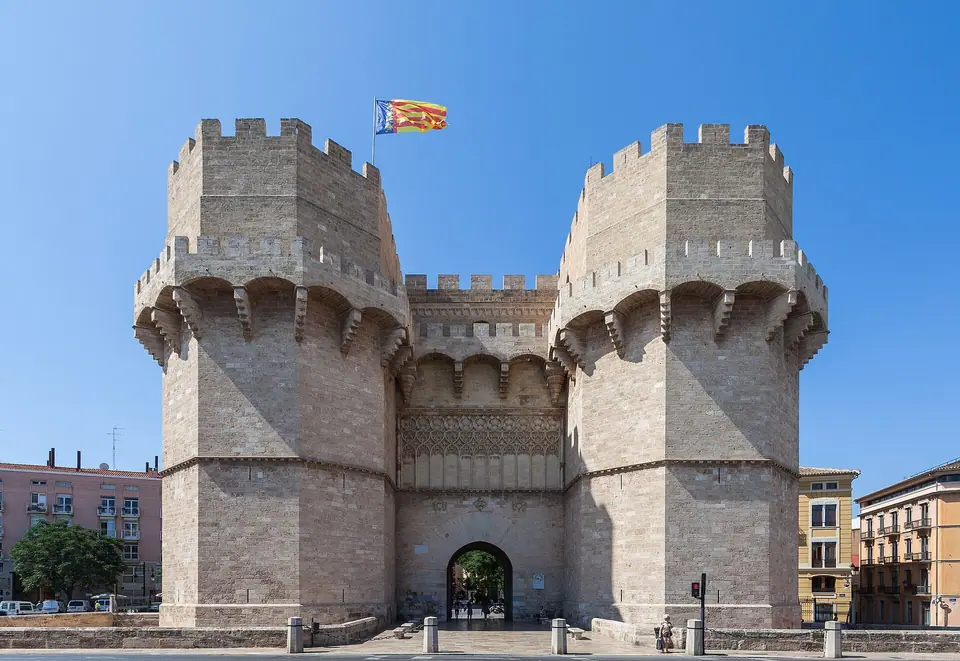
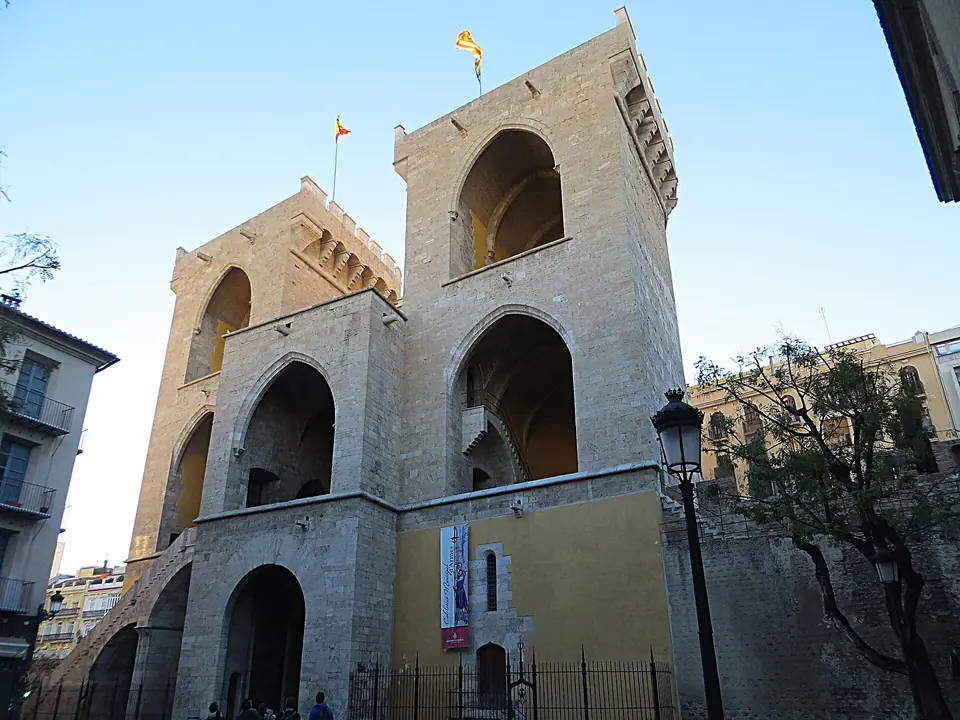
Finish your walk at the western boundary of Ciutat Vella along Calle Quart before the Torres de Quart (Porta de Quart). Master stonemasons Francesc Baldomar and Pere Compte built these twin semicircular cylindrical towers between 1441 and 1460 before Compte designed La Lonja de la Seda. Modelled on the triumphal Towers of Castel Nuovo in Naples, the lime-mortar and masonry fortress guarded the western highway toward Castile. Look closely at the curved outer stone faces and you will see dozens of rough circular craters. Those are the original cannonball impact scars left in June 1808 during the Peninsular War. Valencian defenders under Captain General Conde de Cervellón repelled French Marshal Bon-Adrien Jeannot de Moncey's artillery assault from these battlements. Climb the interior Gothic stairs to the upper ramparts. From the battlements, look back toward El Miguelete and the 1802 Botanical Garden of the University of Valencia.
Traveller tips
Real advice from people who have been to Valencia. Every tip is read by our team before it goes live.
No tips yet. Been here? Yours could be the first.
Thank you! Your tip will appear here after a quick review.
More in Valencia
Continue exploring Valencia with related neighbourhood, food, and planning guides
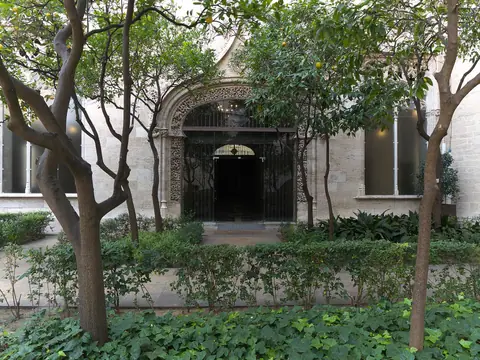
What to Wear in Valencia: UV Sun Protection, Cathedral Shawls, Turia Cycling Gear & Fallas Walking Shoes
Valencia, Spain
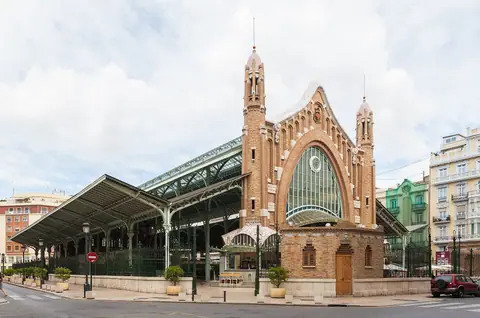
Where to Stay in Valencia: Ciutat Vella, El Carmen, Ruzafa, Eixample, Ciudad de las Artes & Malvarrosa Beach
Valencia, Spain
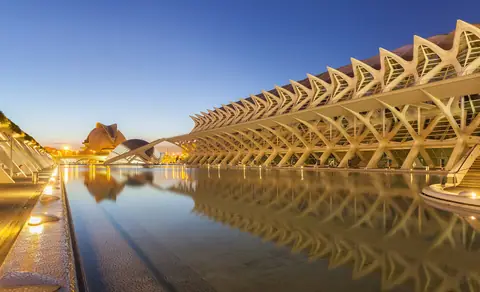
Valencia 3-Day Itinerary: Old Town UNESCO Silk Exchange, Turia Gardens, Calatrava's Arts Complex & Albufera
Valencia, Spain
City of Arts and Sciences Guide: Calatrava's Palau de les Arts, Hemisfèric, Science Museum & Oceanogràfic
Valencia, Spain
