





















Jardín del Turia Route: Walking & Cycling the 9 km Former Riverbed from Bioparc to Gulliver Park
Walk or cycle the 9-kilometre sunken Jardín del Turia across 18 bridges from Bioparc Valencia and Cabecera Park past the old town towers, Palau de la Música, and Gulliver Park.
The Jardín del Turia (Jardí del Túria) winds for more than 9 kilometres through central Valencia, and 12 kilometres including Parque de Cabecera and the Oceanogràfic. It ranks among Europe's largest urban linear parks. The sunken valley spans roughly 110 to 120 hectares across 16 landscape sections (tramos). Its paths sit four to seven metres below street level inside the dry bed of the Turia River. National engineers diverted the river south of the city under the Plan Sur following the catastrophic 14 October 1957 Great Flood of Valencia. All cross-city automobile traffic passes overhead across 18 historic and contemporary bridges. You can cycle, run, or walk the nine-kilometre arc from Bioparc to the City of Arts and Sciences without a single traffic light. Dedicated two-way cycle tracks and a cushioned 5-kilometre Circuit 5K running path follow the riverbed from end to end. Rental bike shops line Calle Blanquerías and Ruzafa for easy access.
Section 1 (West): Parque de Cabecera & Bioparc Valencia (Tramos 0 to III)
At the western head of the old riverbed opens the 33-hectare Parque de Cabecera. You can reach it directly via Nou d'Octubre station on Metro Lines 3, 5, and 9 or by cycling upstream from El Carmen. Artificial lakes fed by Turia canal water recall the river's original riparian landscape. Visitors rent swan-shaped pedal boats on the water or climb the viewpoint hill (Mirador de la Muntanyeta) for views down the riverbed. Inside the park stands Bioparc Valencia, which opened in February 2008 to replace the old Viveros municipal zoo:
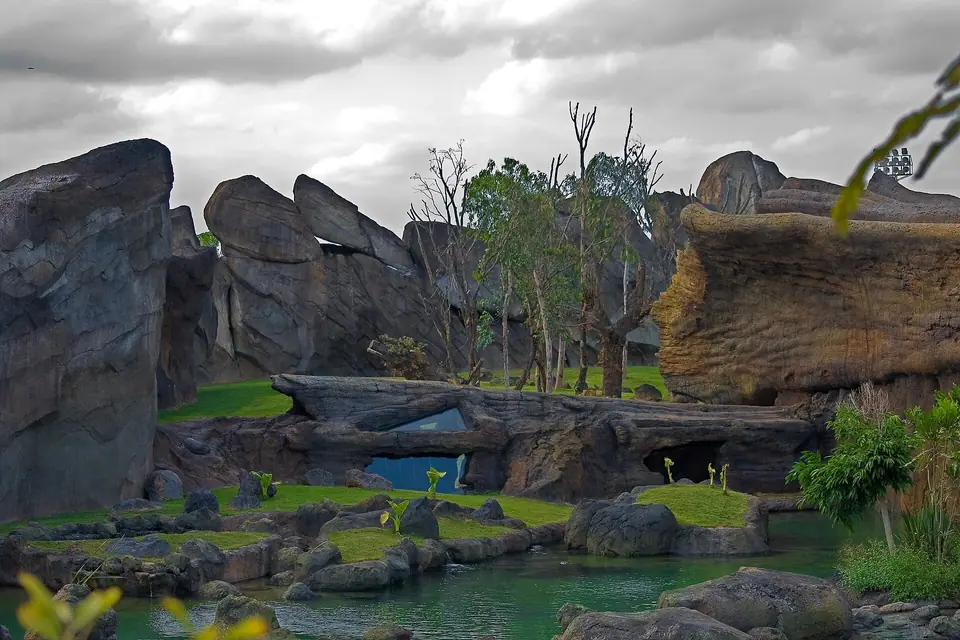
- 10 Hectares of Zoo-Immersion Habitats. Designed by Rain Forest around the concept of zoo-immersion, Bioparc hides barriers using sunken streams, rock trenches, and glass viewfinders. Visitors walk through four reconstructed African ecosystems in sequence. In the Dry and Wet African Savannah, white rhinos, Rothschild's giraffes, zebras, and ostriches roam below lions on a rocky kopje. The Equatorial Forest shelters western lowland gorillas, chimpanzees, pygmy hippos, and forest buffalo, while Kitum Cave offers underwater viewing of Nile hippos and crocodiles. On Madagascar Island, ring-tailed and red-ruffed lemurs leap along open trails beside visitors; check the official Bioparc website for daily schedules.
Section 2 (Central): Six Centuries of Bridges along Ciutat Vella (Tramos IV to IX)
Pedalling east from Campanar along the segregated two-way cycle lane brings you around the northern curve of El Carmen and Ciutat Vella. Seventeenth-century cut-stone embankment walls (pretiles) frame a sequence of historic and modern bridges:
- Pont de Sant Josep (1604) & Pont de les Arts (1999). Pass the 13-arch seventeenth-century stone bridge of San José and Norman Foster's sleek steel Bridge of the Arts. On the southern bank stands the Valencian Institute of Modern Art (IVAM, opened 1989) on Calle Guillem de Castro.
- Pont dels Serrans (1518). Directly beneath the 1392 Torres de Serranos spans this nine-arch Gothic limestone bridge designed by Juan Bautista Corbera and restored as a pedestrian promenade in 2012.
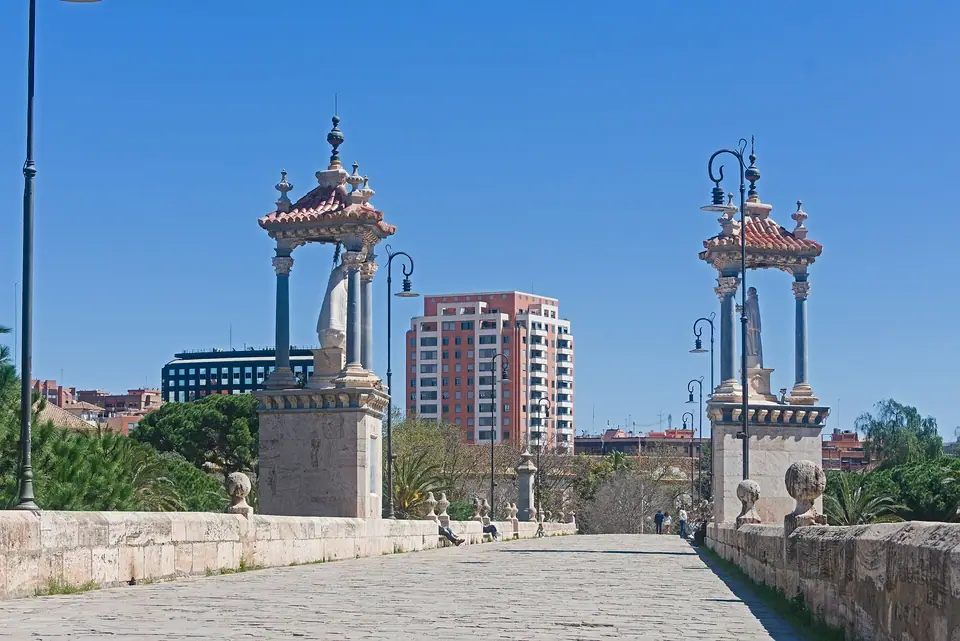
- Pont de la Trinitat (1401 to 1407) & Museo de Bellas Artes. Mateu Teixidor constructed the ten-arch Gothic Trinity Bridge after the 1321 and 1358 floods destroyed earlier wooden crossings. It stands today as the oldest surviving stone bridge in Valencia. Twin Baroque stairs hold 1722 stone statues of Saint Louis Bertrán and Saint Thomas of Villanueva by Giacomo Antonio Ponzanelli. Directly on the northern bank sits the seventeenth-century Colegio de San Pío V. Inside, the Museum of Fine Arts of Valencia (Museo de Bellas Artes) opens free of charge Tuesday to Sunday. Next door stretch the Royal Gardens (Jardines del Real / Viveros) and the neoclassical marble statues of Monforte Gardens 300 metres east.
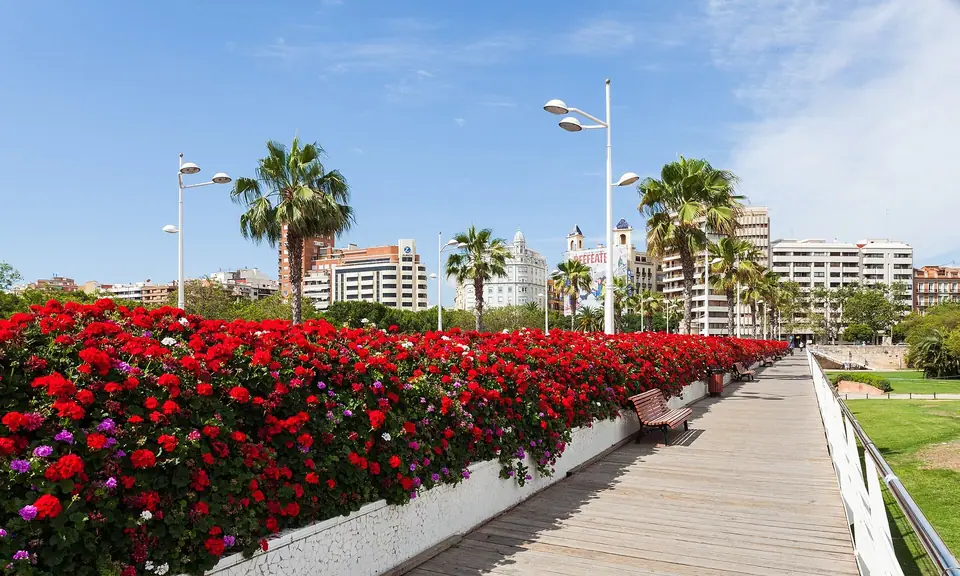
- Pont del Real (1594 to 1599), Puente de las Flores (2002) & Puente de la Exposición (1995). Next comes the ten-arch Royal Bridge bearing stone tabernacles of patron saints Vincent Martyr and Vincent Ferrer. Beside it spans the Puente de las Flores Alcaldesa Rita Barberá, lined year-round with more than 10,000 fresh seasonal petunias, geraniums, and poinsettias. Immediately downstream rises Santiago Calatrava's 1991 to 1995 Puente de la Exposición, nicknamed La Peineta after a fallera's ornamental hair comb. Its 14-metre-tall white steel arch leans backward at a 70-degree angle above Alameda Metro Station.
- Pont de la Mar (1591 to 1598). Francisco Figuerola designed this ten-arch stone crossing to link the city gate with the port road. Architect Javier Goerlich converted the bridge into a pedestrian garden stair in 1933 above a broad reflecting pool.
Section 3 (East): Palau de la Música & the 70-Metre Giant of Gulliver Park (Tramos X to XII)
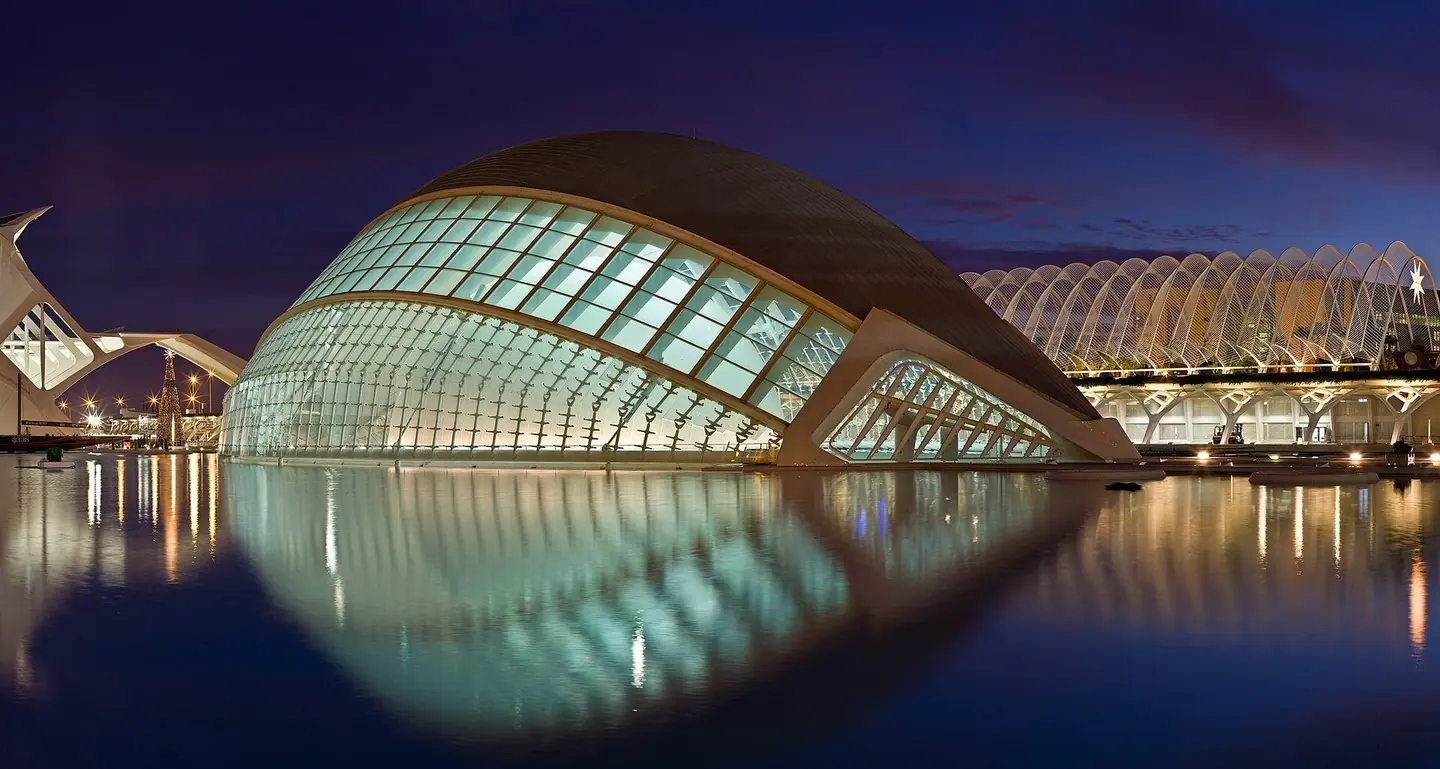
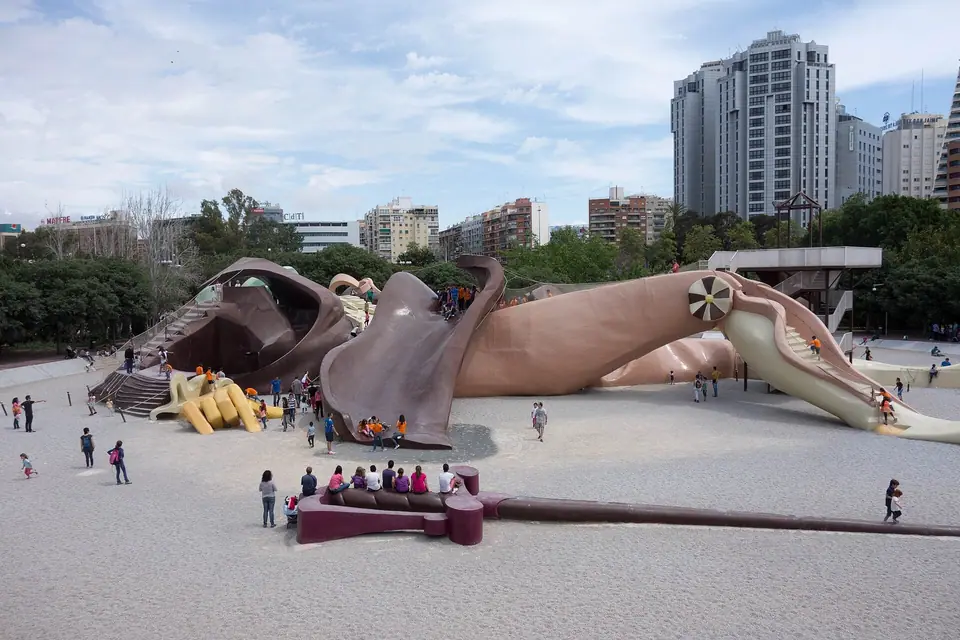
South of the Pont de la Mar across Tramos X and XI, architect Ricardo Bofill laid out symmetrical orange-tree parterres and fountain pools. They frame the entrance to the Palau de la Música de València. José María García de Paredes designed the concert hall, which opened in April 1987 beneath a cascading glass dome as home to the Orchestra of Valencia. Immediately downstream in Tramo XII lies one of Spain's most beloved family landmarks: Parque Gulliver (1990). Architect Rafael Rivera, artist Manolo Martín, and comic illustrator Sento Llobell created this free fenced playground. At its centre lies a 70-metre-long painted fibreglass sculpture of Jonathan Swift's Lemuel Gulliver. Children and adults climb the ropes of Gulliver's hair, fingers, and coat lapels. Riders then slide down his sleeves, boots, and three-cornered hat. Just beyond the playground, the park path opens onto the Palau de les Arts and City of Arts and Sciences. Shaded kiosks and skate bowls line the adjacent paths.
Traveller tips
Real advice from people who have been to Valencia. Every tip is read by our team before it goes live.
No tips yet. Been here? Yours could be the first.
Thank you! Your tip will appear here after a quick review.
More in Valencia
Continue exploring Valencia with related neighbourhood, food, and planning guides
UNESCO La Lonja de la Seda (Silk Exchange), 1928 Mercado Central & Church of Santos Juanes Walk
Valencia, Spain
Valencia Cathedral, Holy Chalice Chapel, 207-Step Miguelete Bell Tower, Plaza de la Virgen & Almoina Ruins
Valencia, Spain
El Carmen Quarter, 1392 Serranos Towers, 1441 Quart Towers, Portal de la Valldigna & Street Art Walk
Valencia, Spain
Malvarrosa & Patacona Beaches, El Cabanyal Fisherman Houses & Marina de Valencia Guide
Valencia, Spain
