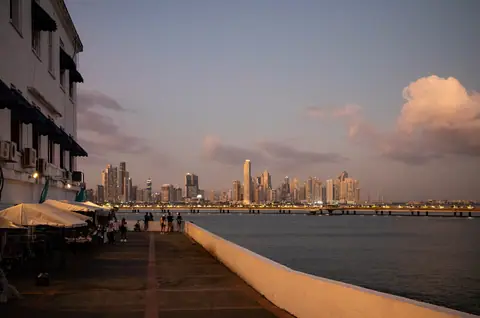






















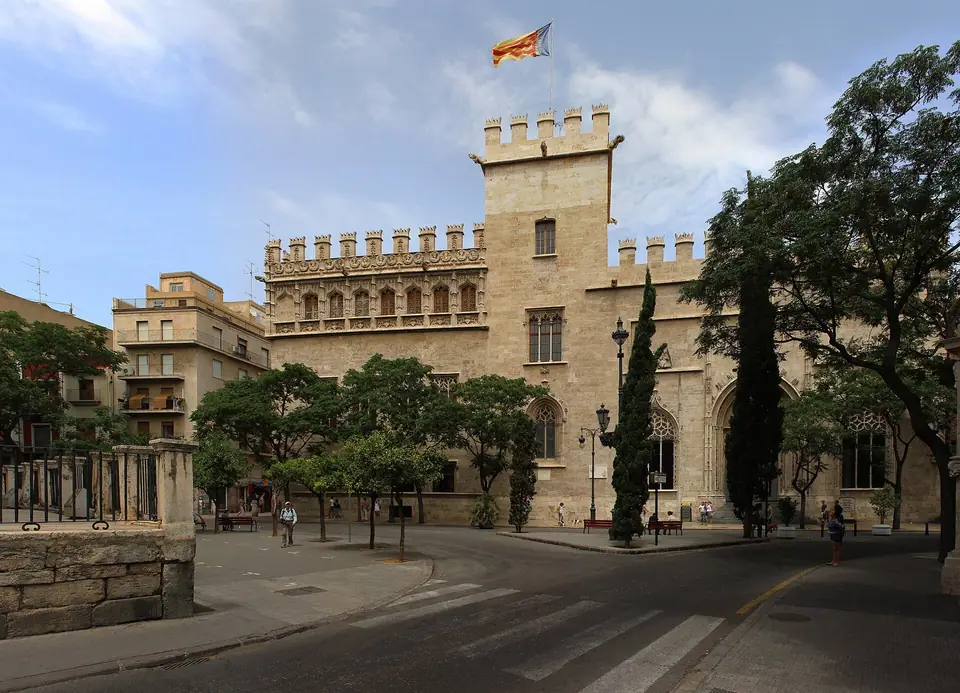
UNESCO La Lonja de la Seda (Silk Exchange), 1928 Mercado Central & Church of Santos Juanes Walk
Walk Valencia's historic commercial heart on Plaza del Mercado, linking the 1482 UNESCO Silk Exchange, the 1,200 stalls of the 1928 Art Nouveau Mercado Central, and Santos Juanes.
At the heart of Ciutat Vella, the curved pedestrian esplanade of Plaza del Mercado (Plaça del Mercat) brings together three of Spain's greatest civic monuments. All three buildings stand within fifty paces of one another. Moorish and medieval markets traded silk and spices for a millennium along this former dry river channel, framing three centuries of Valencian prosperity. On the northern side rise the fifteenth-century late-Gothic stone vaults of the UNESCO-listed Silk Exchange (La Lonja de la Seda). Opposite shine the 1928 iron-and-ceramic domes of the Mercado Central. Closing the western end stands the Baroque facade and frescoed nave of the Church of Santos Juanes.
1. UNESCO La Lonja de la Seda (Llotja de la Seda / Silk Exchange, 1482 to 1548)
UNESCO inscribed La Lonja de la Seda (Llotja de la Seda or Llotja dels Mercaders) as a World Heritage Site in December 1996. The hall stands as a masterwork of late-European secular Gothic architecture from the fifteenth-century Valencian Golden Age (Segle d'Or). During that era, silk weaving led the city's Mediterranean commerce and Valencia's municipal bank (Taula de Canvis) financed the monarchs of Aragon. Master builders Pere Compte (1447 to 1506) and Joan Ibarra began the 2,000-square-metre stone complex in 1482, modelling it on Guillem Sagrera's Lonja in Palma de Mallorca. Upper Renaissance galleries were completed in 1548:
- The Exterior Gargoyles and Royal Medallions. Before entering from Calle de la Lonja, walk along the limestone walls crowned by crenellated battlements and royal coats of arms of the Crown of Aragon. Look up to count the 28 expressive Gothic stone gargoyles. Dozens of satirical stone corbels also carve merchants, minstrels, monsters, and moral warnings against greed.
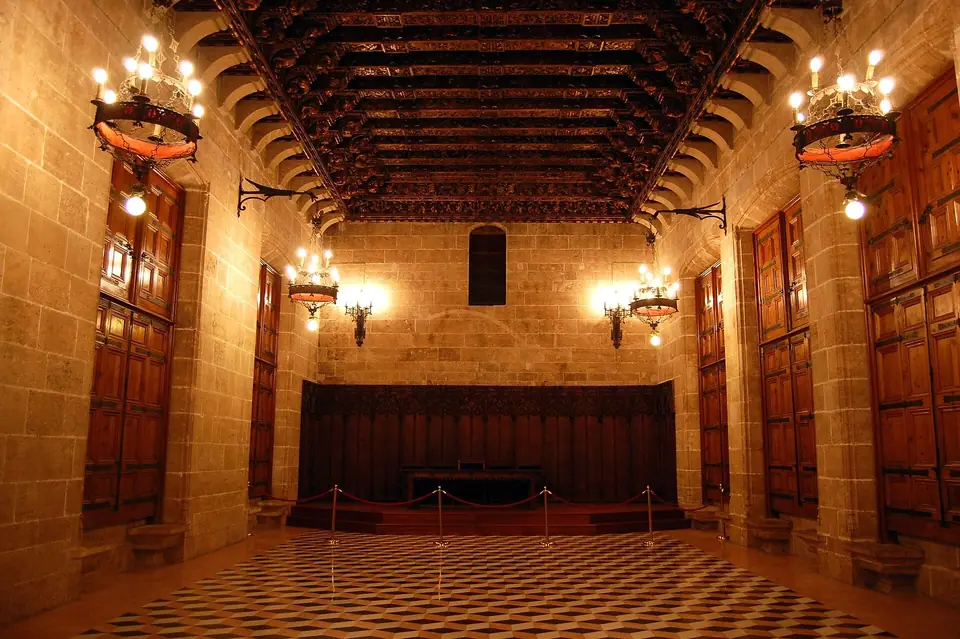
- Sala de Contratación (The Trading Hall, 1483 to 1498). Stepping inside Pere Compte's main trading hall (measuring 35.6 metres long by 21.39 metres wide) places you inside a stone forest. Eight free-standing helical columns and sixteen engaged wall pilasters rise 17.4 metres high without capitals. Their carved ribs twist upward and splay into three naves of star-shaped groin vaults like Mediterranean date palms. Running high around all four walls in gold-on-black Latin lettering is a moral inscription written by humanist Joan Ram. It reminds traders that a merchant who keeps his word and takes no usury shall enjoy eternal life.
- The Central Tower and Debtors' Prison. Connecting the Trading Hall to the western wing stands a crenellated square tower whose ground floor housed the Chapel of the Immaculate Conception (1490 to 1492). Its upper stone chambers served as the prison where bankrupt silk merchants were detained by the maritime court. Visitors can peer up Pere Compte's stone spiral staircase built without a central newel post (escalera de caracol al aire).
- Consulado del Mar (Consolat del Mar, 1498 to 1548) & Patio de los Naranjos. King Peter III established Spain's first medieval tribunal of maritime commerce in Valencia in 1283. Built to house that court, the western pavilion holds the ground-floor Golden Chamber (Cambra Daurada). Master carpenter Joan del Poyo carved its gilded wooden coffered ceiling (alfarje policromado) between 1418 and 1445 for the Old City Hall. Municipal crews later reinstalled the ceiling here between 1921 and 1933. Outside, the quiet Orange Tree Courtyard (Patio de los Naranjos) frames a star-shaped stone fountain. Above the courtyard runs the Renaissance arcaded gallery finished by Joan Corbera and Domingo Urtiaga in 1548.
2. Mercado Central (Mercat Central, 1914 to 1928): Europe's Largest Fresh Produce Hall
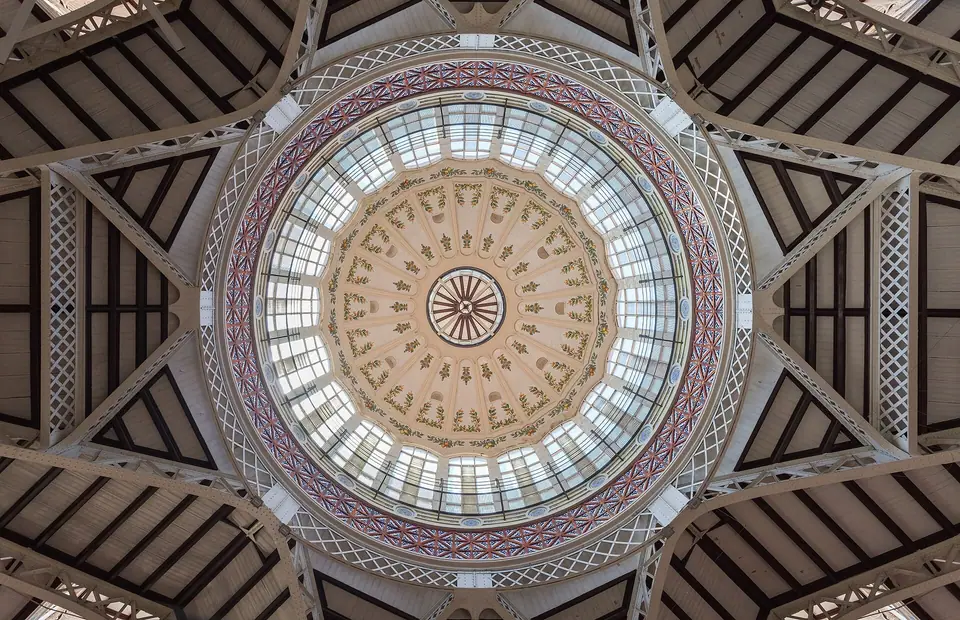
Directly across the narrow street from the Gothic gargoyles of La Lonja rises the cathedral of Valencian gastronomy: the Mercado Central (Mercat Central). Catalan architects Alejandro Soler March and Francisco Guardia Vial won the design competition in 1910 after training with Lluís Domènech i Montaner in Barcelona. Valencian architects Enrique Viedma Vidal and Ángel Romaní Verdeguer completed the building for its inauguration by King Alfonso XIII on 23 January 1928. The market spans 8,160 square metres across two irregular polygons. Riveted iron columns, stained glass, and glazed Manises ceramic panels shelter more than 1,200 stalls run by nearly 300 specialist vendors.
Stand at the central crossing to look up into the 30-metre-high main iron-and-glass dome (Cúpula Central), measuring 14 metres in diameter. Stained-glass clerestories encircle the drum, while the famous iron swordfish weathervane (el Peix) turns on the outer roof. Above the adjacent octagonal fish hall turns a second wrought-iron weathervane shaped like a parrot (la Cotorra del Mercat). Stalls open from 07:30 to 15:00 Monday to Saturday and stay closed on Sundays. Arrive between 08:30 and 11:30 to watch chefs and locals shop across three distinct zones:
- Orchard, Rice & Paella Ingredients. Pick up cloth bags of D.O.P. Arroz de Valencia (Senia, Bomba, and Albufera cultivars) and dried giant white garrofó beans. Stalls also sell sweet smoked paprika and filaments of La Mancha saffron.
- The Octagonal Fish Hall (Pescadería). Inspect glistening trays of Mediterranean red mullet, hake, live Albufera eels (for traditional all i pebre), and crimson Dénia prawns.
- Charcuterie, Citrus & Central Bar. Sample paper-thin slices of acorn-fed jamón ibérico de bellota, aged Manchego cheeses, and freshly squeezed Valencian orange juice. You can also pull up a stool at Central Bar by chef Ricard Camarena for a mid-morning esmorzaret baguette sandwich.
3. Real Parroquia de los Santos Juanes (Sant Joan del Mercat) & Plaza Redonda
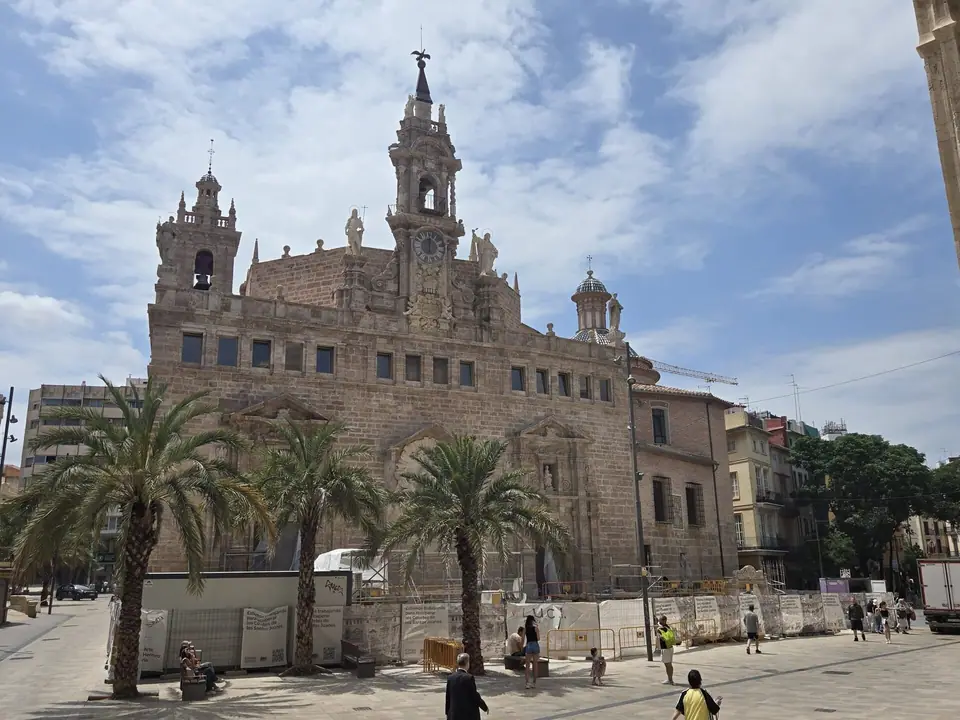
Closing the western curve of Plaza del Mercado stands the Church of Santos Juanes (Església de Sant Joan del Mercat). Founded in 1240 over a former suburban mosque, the church was rebuilt in Baroque style after fires in 1311 and 1592. Its theatrical exterior overlooking the market features the 1700 Baroque stone clock tower topped by the wrought-iron Pardalot de Sant Joan bird weathervane. Below the belfry rises a sculpted stone retable facade (El Trasagrario) carved by Jacopo Bertesi and Leonardo Julio Capuz. Step inside the single-nave interior to see the 1,200-square-metre cycle of Baroque vault frescoes painted between 1697 and 1702 by royal court artist Antonio Palomino. Those frescoes were recently restored after suffering severe fire damage in July 1936. Before finishing your walk, duck 150 metres southeast into Plaza Redonda (1840). Architect Salvador Escrig Melchor designed this circular three-storey neoclassical courtyard of haberdashery, lace, and ceramic stalls around an 1850 iron fountain.
Traveller tips
Real advice from people who have been to Valencia. Every tip is read by our team before it goes live.
No tips yet. Been here? Yours could be the first.
Thank you! Your tip will appear here after a quick review.
More in Valencia
Continue exploring Valencia with related neighbourhood, food, and planning guides
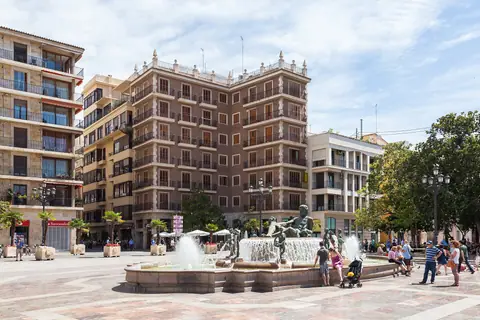
Valencia Orientation: Ciutat Vella, the 9 km Turia Gardens, City of Arts and Sciences & Bilingual Valencian Signs
Valencia, Spain
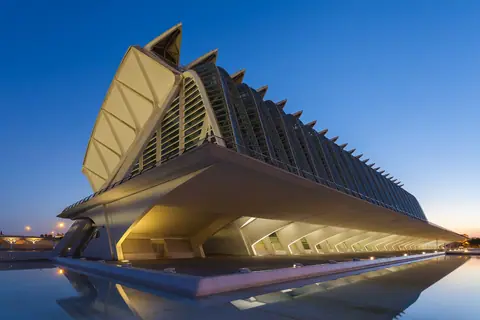
Best Things to Do in Valencia: City of Arts and Sciences, UNESCO Silk Exchange, Central Market, Turia & Paella
Valencia, Spain
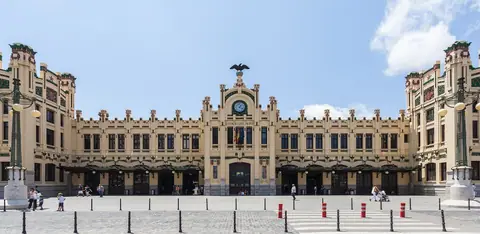
Arriving in Valencia: Manises Airport (VLC) Metro Lines 3 & 5, Joaquín Sorolla AVE High-Speed Rail & Valenbisi
Valencia, Spain
Best Time to Visit Valencia: AEMET 1991-2020 Climate Normals, UNESCO Fallas Festival & Mediterranean Beach Season
Valencia, Spain
