Belvedere Palace: Klimt's Kiss, Baroque Gardens and Tickets
Prince Eugene's two Baroque palaces, the sloped gardens between them and Austria's premier art collection.
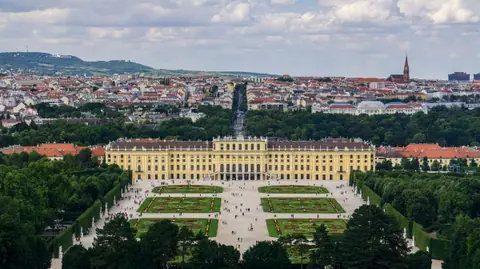
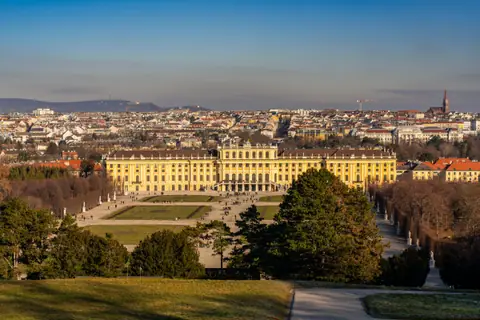
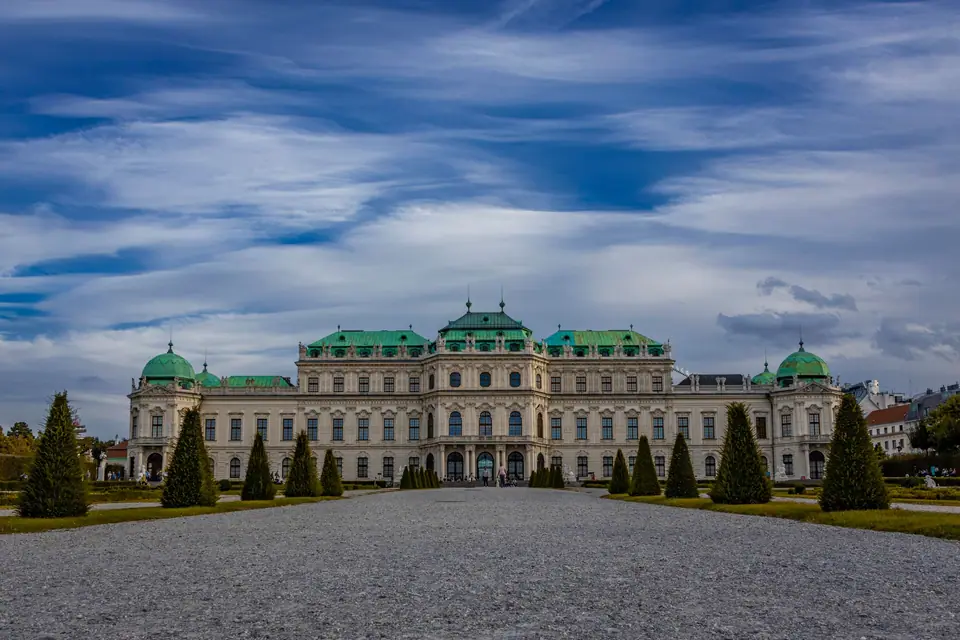
Built in the early 18th century by architect Johann Lukas von Hildebrandt as the summer residence of Prince Eugene of Savoy, the general who defeated the Ottoman siege of Vienna, the Belvedere is not one palace but two: the Upper Belvedere at the top of a long terraced garden and the Lower Belvedere at the foot, aligned so that the Upper palace looks straight down over the old city toward St Stephen's Cathedral.
Upper Belvedere and Gustav Klimt
If you visit only one of the buildings, make it the Upper Belvedere. Prince Eugene used this grander palace for state receptions rather than living quarters, and the architecture alone rewards the ticket: the ground-floor Sala Terrena supported by four carved stone giants (Atlases), the ceremonial white stucco staircase and the two-storey Marble Hall with its ceiling fresco and view across the gardens.
The rooms now hold the permanent collection of the Austrian Gallery, charting eight centuries of art. The heart of the visit is the early 20th-century wing on the first floor, which holds the world's largest collection of paintings by Gustav Klimt, including The Kiss (1908 to 1909) and Judith. Nearby rooms hang major portraits and landscapes by Egon Schiele and Oskar Kokoschka, alongside 19th-century Biedermeier paintings and Franz Xaver Messerschmidt's grimacing metal character heads. For an even larger Schiele collection, pair this visit with the Leopold Museum in the MuseumsQuartier.
Lower Belvedere and the gardens
At the bottom of the hill on Rennweg, the Lower Belvedere was Prince Eugene's residential palace. Today it hosts temporary exhibitions alongside its original Baroque state rooms, including the Hall of Grotesques, the Marble Gallery and the Gold Cabinet, plus the adjacent Orangery and Palace Stables (which hold the medieval panel painting collection).
The formal French garden linking the two palaces is free to enter during daylight hours. Three tiers of fountains, sphinxes and cascades step down the slope, flanked by the Alpine Garden and the University Botanical Garden on the eastern side. A third site, Belvedere 21, sits a ten-minute walk south near the main train station in a glass-and-steel pavilion designed by Karl Schwanzer for the 1958 Brussels Expo, showing postwar and contemporary art.
Tickets and how to walk the slope
The Upper Belvedere uses timed entry slots that sell out for morning hours; book online on the official Belvedere site before your trip, and choose a separate Upper Belvedere ticket unless you specifically want the temporary show in the Lower palace. To walk downhill rather than uphill, take tram D from the Ringstrasse (or S-Bahn/tram 18 to Quartier Belvedere) to Schloss Belvedere at the top gate, visit the Upper Belvedere first, and stroll down through the gardens toward Rennweg and the Schwarzenbergplatz tram stops.
Traveller tips
Real advice from people who have been to Belvedere Palace: Klimt's Kiss, Baroque Gardens and Tickets. Every tip is read by our team before it goes live.
No tips yet. Been here? Yours could be the first.
Thank you! Your tip will appear here after a quick review.
More in Vienna
Continue exploring Vienna with related neighbourhood, food, and planning guides