Viennese Food, Schnitzel and Wine Taverns (Heurigen)
What to order in a Viennese Beisl, the difference between veal and pork Schnitzel, and how to visit a hillside wine tavern.
Viennese cuisine (Wiener Küche) is the only culinary tradition in the world named after a single city rather than a country, and its recipes are a map of the former Austro-Hungarian Empire: Bohemian pastries and dumplings, Hungarian goulash, Northern Italian breaded cutlets and Alpine beef broths. To eat it well, skip the tourist restaurants around Stephansplatz and look for a neighbourhood Beisl (the Viennese bistro, with wood panelling, a chalkboard menu and draught beer) in the 2nd to 8th districts.
Dishes to order
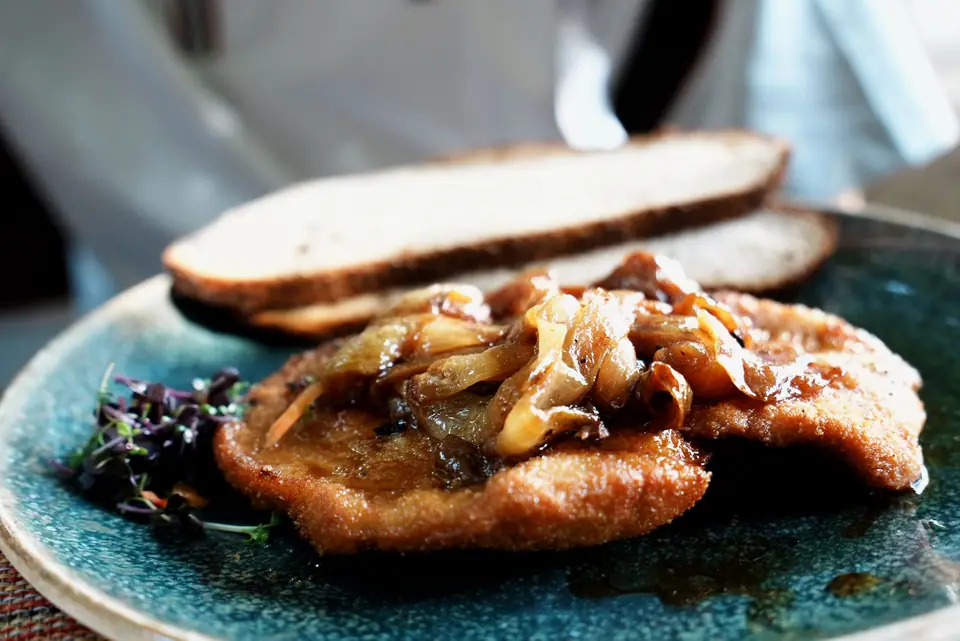
- Wiener Schnitzel: by Austrian law, a menu can only call it a Wiener Schnitzel if it is made from thinly pounded veal, coated in flour, egg and breadcrumbs and fried in clarified butter or lard while the pan is swirled so the crumb puffs into light waves. If it is made from pork, the menu must state Schnitzel Wiener Art or vom Schwein, which is also tasty and cheaper. It comes with lemon, lingonberry jam and warm potato salad dressed with broth and vinegar.
- Tafelspitz: Emperor Franz Joseph's daily favourite: prime beef simmered slowly with root vegetables, served after a starter of clear beef broth with sliced pancake strips (Frittatensuppe), accompanied by roasted potatoes, creamed spinach, apple-horseradish (Apfelkren) and cold chive sauce.
- Wiener Saftgulasch: slow-braised beef shin in a dark, sweet onion and paprika gravy reduced without flour, served with a bread dumpling or Kaiser roll.
- Kaiserschmarrn: a thick, fluffy shredded pancake caramelised with butter and icing sugar, served hot from the pan with stewed plum compote (Zwetschkenröster). One portion easily serves two after a main course.
Cake wars: Sachertorte and strudel
In 1832, 16-year-old apprentice Franz Sacher created a chocolate cake layered with apricot jam and dark icing for Prince Metternich. Hotel Sacher (behind the State Opera) and the former court bakery Demel (on Kohlmarkt) fought a long legal battle over the name: Sacher cuts the cake horizontally to add a second layer of apricot jam in the middle, while Demel spreads the jam only under the glaze. Both serve it with unsweetened whipped cream (Schlagobers). We often prefer a warm slice of stretched-dough Apfelstrudel or curd-cheese Topfenstrudel in one of our recommended coffee houses.
The Würstelstand after dark
Vienna's street food happens at the Würstelstand, the sausage kiosks outside junctions such as the Albertina, Hoher Markt and Schottentor. Order a Käsekrainer (a smoked pork sausage studded with cubes of Emmental cheese that melt on the grill), sliced on a paper tray with mustard, freshly grated horseradish and dark rye bread, or stuffed into a toasted white roll.
How to visit a Heuriger wine tavern
Vienna grows around 600 hectares of vineyards within its own city limits, producing a crisp white field-blend called Wiener Gemischter Satz DAC. A true Heuriger is a seasonal tavern where a winemaker serves only their own wine (signalled by a bundle of pine branches, Ausg'steckt, hanging above the gate and a cold buffet counter inside). Take tram D to the terminus at Nussdorf or bus 38A from Heiligenstadt to Grinzing, walk among the vines overlooking the Danube, and settle into a courtyard garden for the evening.
Traveller tips
Real advice from people who have been to Viennese Food, Schnitzel and Wine Taverns (Heurigen). Every tip is read by our team before it goes live.
No tips yet. Been here? Yours could be the first.
Thank you! Your tip will appear here after a quick review.
More in Vienna
Continue exploring Vienna with related neighbourhood, food, and planning guides