


























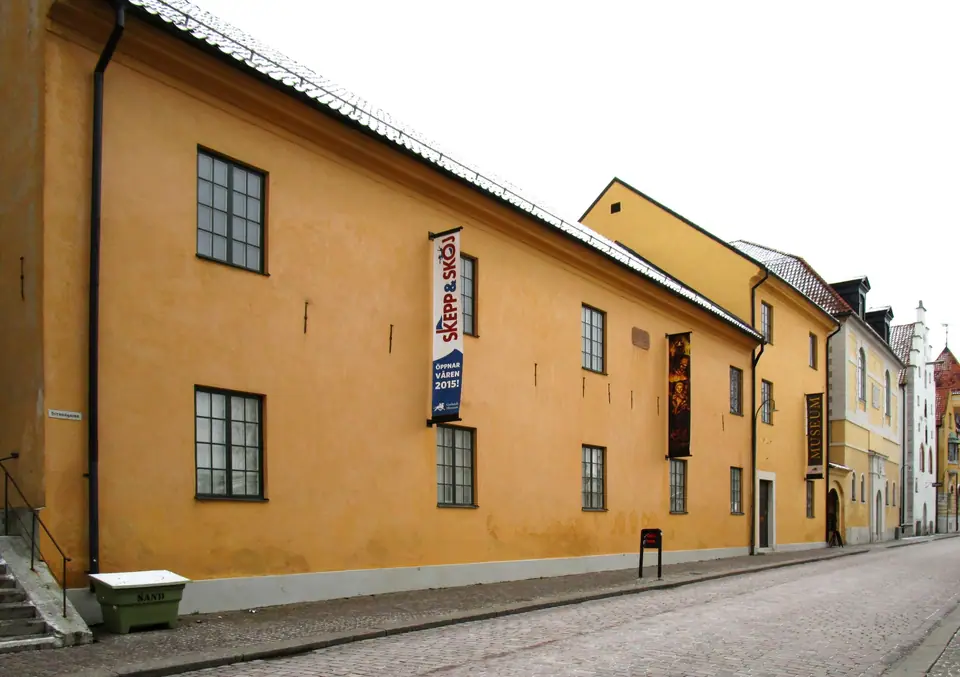
Gotlands Museum (Fornsalen) and the Spillings Viking Silver Hoard
Visit Gotlands Museum (Fornsalen) on Strandgatan to see the 87 kg Spillings Viking Hoard, 8th century carved picture stones, and 1361 Battle of Visby armour.
Occupying a complex of historic buildings along Strandgatan 14 that once housed a 1780s crown distillery and a 19th century school, Gotlands Museum (known locally as Fornsalen) is the premier archaeological and historical museum of the Baltic islands. The institution was founded in 1875 by Gotland antiquarian and teacher Pehr Arvid Säve as the society Gotlands Fornvänner. Because Gotland functioned for over a millennium as the central stepping stone for Baltic trade routes linking Scandinavia, the Kievan Rus river networks, Byzantium, and the Abbasid Caliphate, more Viking Age silver coins have been unearthed in Gotland's soil than in the rest of Sweden combined.
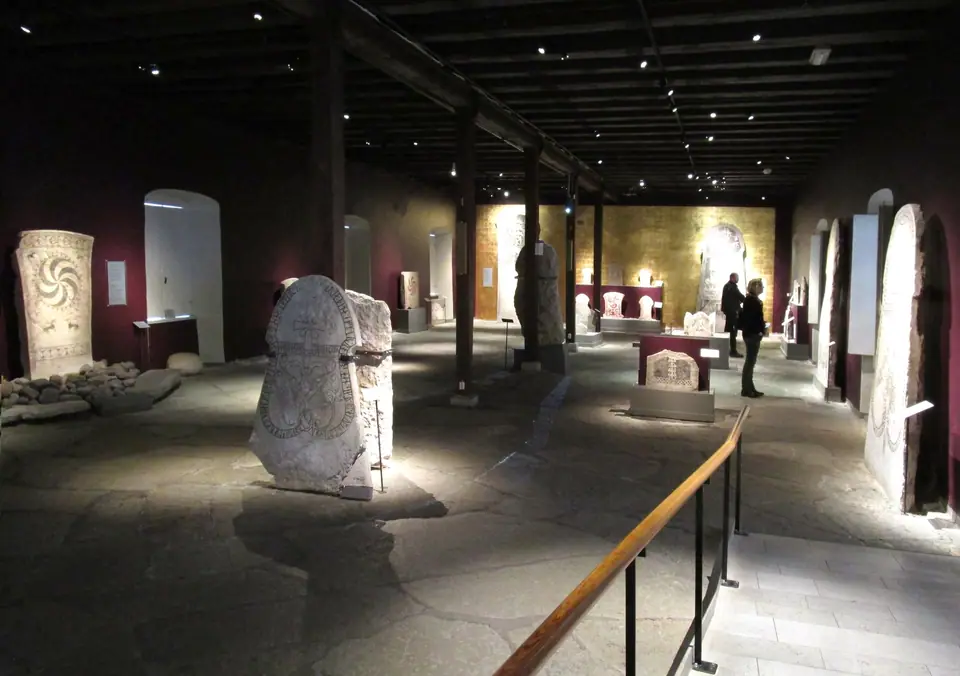
The Picture Stone Hall, Stora Bjers Man and the Spillings Hoard
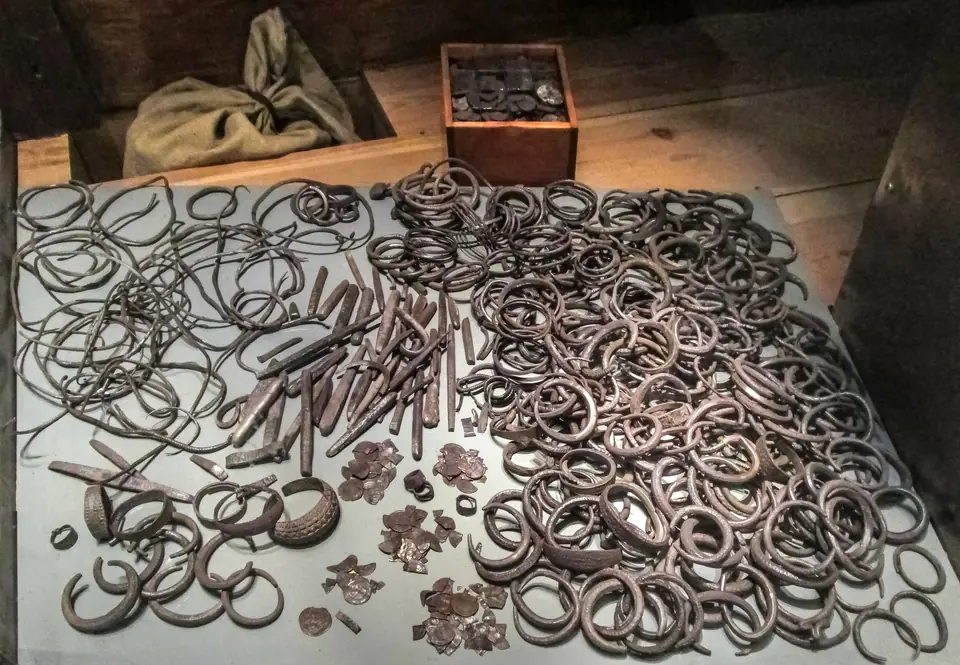
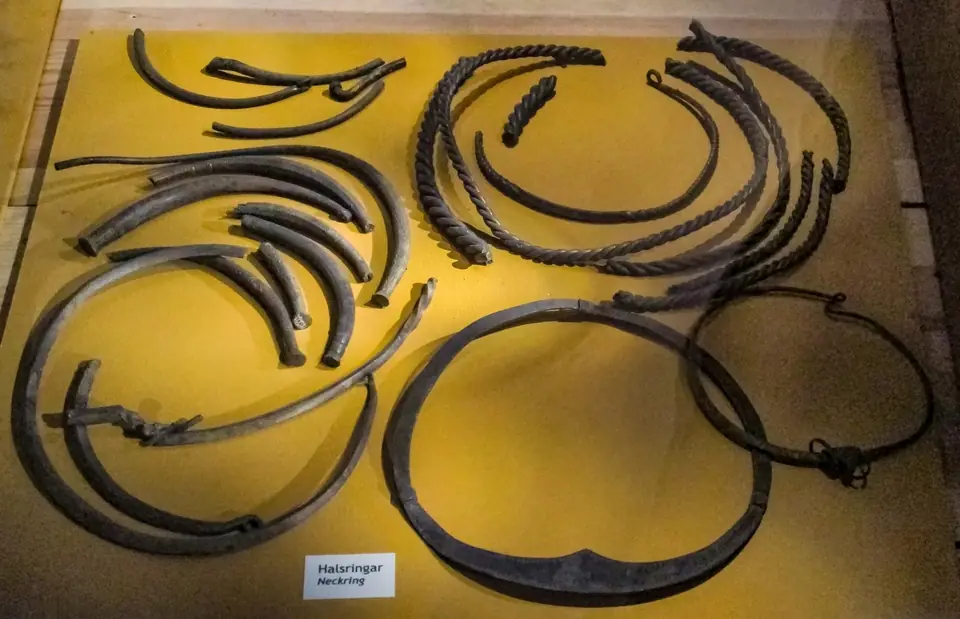
The ground-floor Picture Stone Hall (Bildstenshallen) gathers Gotland's unique carved limestone monuments (bildstenar) dating from AD 400 to 1100. Shaped like keyholes or mushrooms, the stones are incised with solar spirals, eight-legged horses, valkyries welcoming warriors to Valhalla, and some of the earliest detailed depictions of rigged Viking sails and hulls. Nearby prehistoric rooms present Silurian marine fossils from Gotland's 420-million-year-old coral reefs and the Mesolithic skeleton of the Stora Bjers Man, dating back 7,000 to 9,000 years. The centrepiece of the museum's Treasury is the Spillings Hoard (Spillingsskatten), the world's largest Viking Age silver treasure, discovered on 16 July 1999 in a ploughed field at Spillings farm northwest of Slite in northern Gotland. Hidden beneath the floorboards of a 9th century Viking outhouse around AD 870, the hoard comprises two silver caches weighing 67 kilograms in total, including 486 silver arm rings and bracelets, silver ingots, and 14,295 coins (most of them Islamic dirhams struck in Damascus, Baghdad, and Samarkand, alongside four rare Khazar coins stamped 'Moses is the messenger of God'), plus a third cache of 20 kilograms of Baltic bronze neck rings and scrap metal.
1361 Battle of Visby Armour and Medieval Church Art
On the upper floors, the 1361 exhibition presents the skeletal remains, chainmail coifs, brigandine armour plates, and crossbow bolts excavated in 1905 and 1912 to 1930 from the mass graves at Korsbetningen, where around 1,800 Gotlandic yeomen fell fighting Danish King Valdemar Atterdag on 27 July 1361. Because the fallen defenders were buried hastily in their mail shirts and lamellar gauntlets during the July heat, Fornsalen holds one of the world's most complete collections of 14th century battlefield armour. Adjoining galleries showcase painted medieval wooden Madonnas, triumphal crucifixes, and stained glass from Gotland's 92 rural medieval parish churches. Check the official museum site before visiting for seasonal opening days and combined tickets to the museum's historic town properties, including Chapter House (Kapitelhuset) and the 17th century Burmeisterska huset.
Traveller tips
Real advice from people who have been to Gotlands Museum (Fornsalen) and the Spillings Viking Silver Hoard. Every tip is read by our team before it goes live.
No tips yet. Been here? Yours could be the first.
Thank you! Your tip will appear here after a quick review.
More in Visby
Continue exploring Visby with related neighbourhood, food, and planning guides
DBW's Botanical Garden and Almedalen: Visby's Green Seafront
Visby, Sweden
Medieval Week (Medeltidsveckan) and the 1361 Battle of Visby at Korsbetningen
Visby, Sweden
Coastal Walks, Högklint Sea Cliffs and Kneippbyn's Villa Villekulla
Visby, Sweden
Lummelunda Cave and Fårö Island: Sea Stacks, Beaches and Bergman's Gotland
Visby, Sweden
