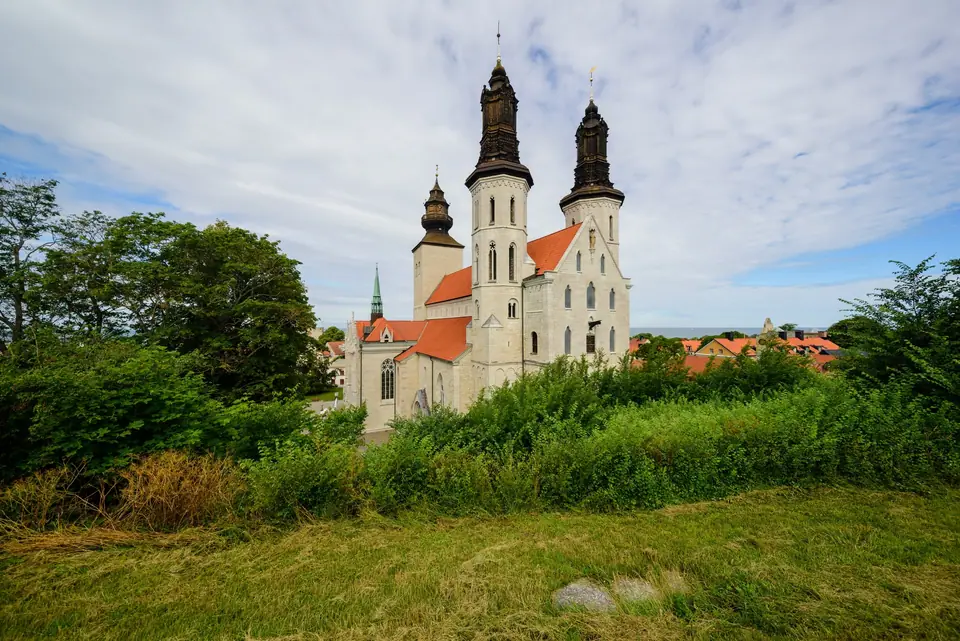
Visby Cathedral and Church Ruins: Sankta Maria, Sankta Karin and Sankt Nicolai
Visit Visby Sankta Maria Cathedral (consecrated 1225) and the roofless limestone church ruins of Sankta Karin, Sankt Nicolai, Drotten, and Sankt Lars.
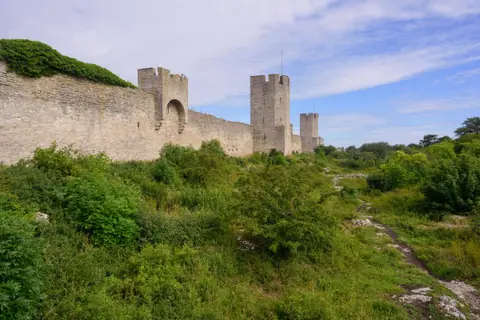
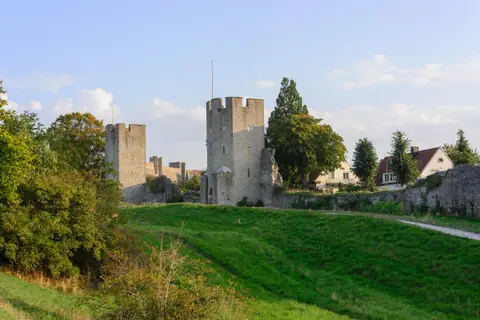
During the 12th and 13th centuries, Hanseatic merchant guilds, local parishes, and monastic orders endowed Visby with more churches than any other city in medieval Sweden. Following the Lübeck raid on Visby in May 1525 and the Protestant Reformation under King Gustav Vasa in the 1520s and 1530s, all town churches except Sankta Maria were abandoned as places of worship. Built of durable local Gotland limestone, their vaulted arches, rose windows, and west towers endured across the centuries, earning Visby its title as the City of Roses and Ruins.
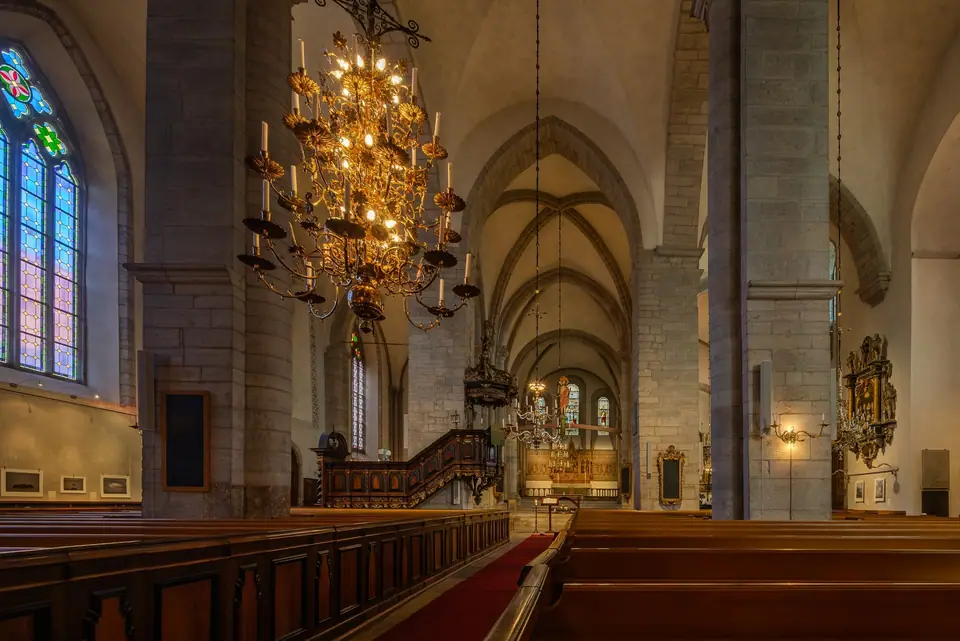
Visby Sankta Maria Cathedral (Domkyrka)
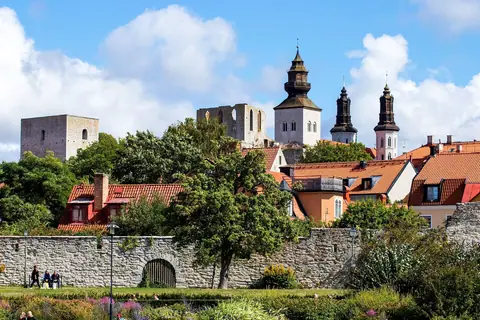
Standing below the Klinten limestone cliff on Västra Kyrkogatan, Visby Sankta Maria Cathedral was begun around 1190 by German merchant sailors who collected construction funds from every trading ship anchoring in the harbour. Consecrated on 27 July 1225 by Bishop Bengt of Linköping as a parish and guest church, the Romanesque basilica was enlarged in the mid-13th century into a Gothic hall church crowned by a stout western bell tower and two slender octagonal eastern towers. In 1572 it became the cathedral of the Diocese of Visby, and architect Axel Haig led a careful restoration between 1899 and 1903. Inside, examine the 13th century red Gotland limestone baptismal font, the 1684 sculpted walnut pulpit imported from Lübeck, and the ornate medieval floor ledger stones.
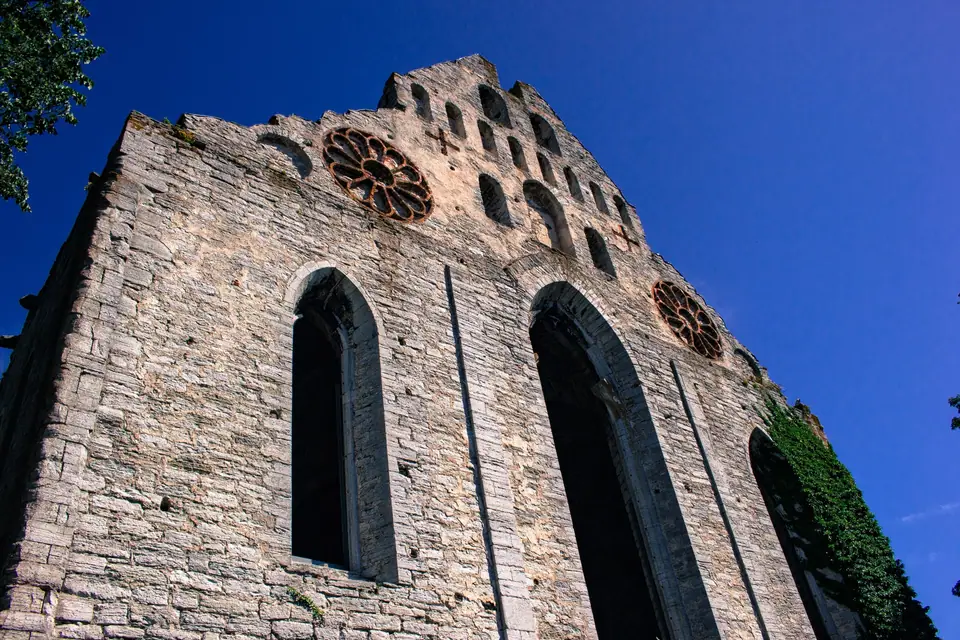
Sankta Karin on Stora Torget and Dominican Sankt Nicolai
Framing the southern side of Stora torget is Sankta Karins kyrkoruin, founded by the Franciscan order in 1233. Rebuilt from the early 1300s into a three-aisled Gothic hall church whose choir was consecrated in 1391, Sankta Karin retains its soaring limestone transverse arches above a grassy floor that turns into an ice rink in winter. Further north in the Norderrotar quarter rises Sankt Nicolai kyrkoruin, begun around 1215 to 1220 and granted to the Dominican order in 1228. Sweden's first known writer, Petrus de Dacia, served as prior here in the 1280s until his death in 1289; the western gable displays two carved rose windows where legend claimed giant carbuncle gemstones once guided sailors at sea, and between 1929 and 1990 the ruin hosted the musical pageant Petrus de Dacia (Ruinspelen).
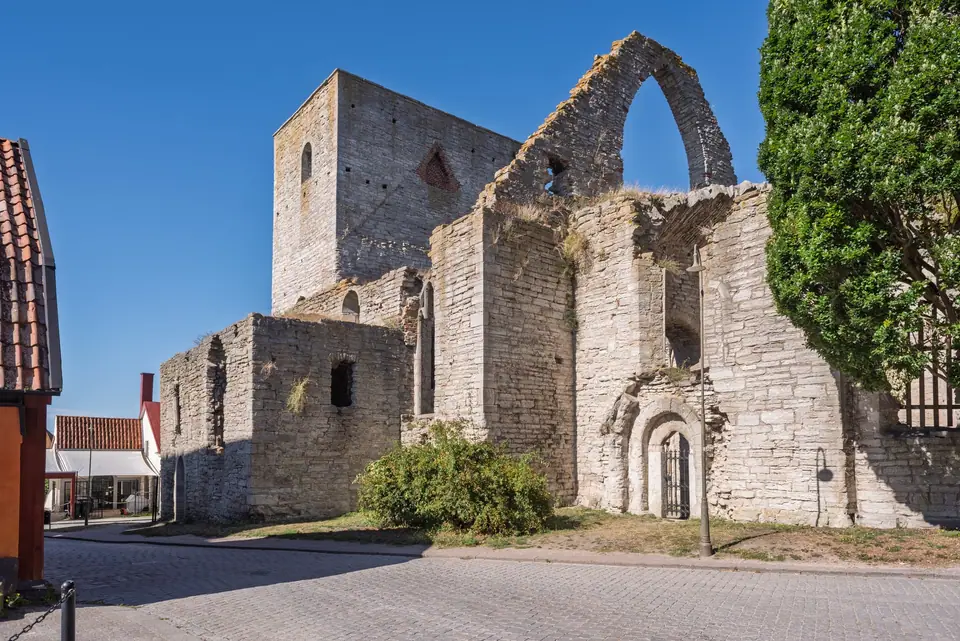
Twin Ruins of Sankt Lars and Drotten, Sankt Clemens and Helge And
Separated only by the narrow lane of Syskongatan stand the 13th century sister ruins of Drotten (Heliga Trefaldighet, built by German merchants) and Sankt Lars, laid out on a Byzantine cross plan with narrow intramural staircases threaded inside its thick limestone walls. North toward DBW's Botanical Garden stand Sankt Clemens, built over 11th century Viking Christian graves, and Helge And (Church of the Holy Spirit), an unusual early 13th century octagonal two-storey hospital chapel.
Traveller tips
Real advice from people who have been to Visby Cathedral and Church Ruins: Sankta Maria, Sankta Karin and Sankt Nicolai. Every tip is read by our team before it goes live.
No tips yet. Been here? Yours could be the first.
Thank you! Your tip will appear here after a quick review.
More in Visby
Continue exploring Visby with related neighbourhood, food, and planning guides