


























Bahnhofstrasse, Paradeplatz & Augustinergasse: Shopping, Banks & Bay Windows
Trace the 1.4-kilometre boulevard built over Zurich's medieval moat from the main railway station to the lake, plus Paradeplatz and Augustinergasse.
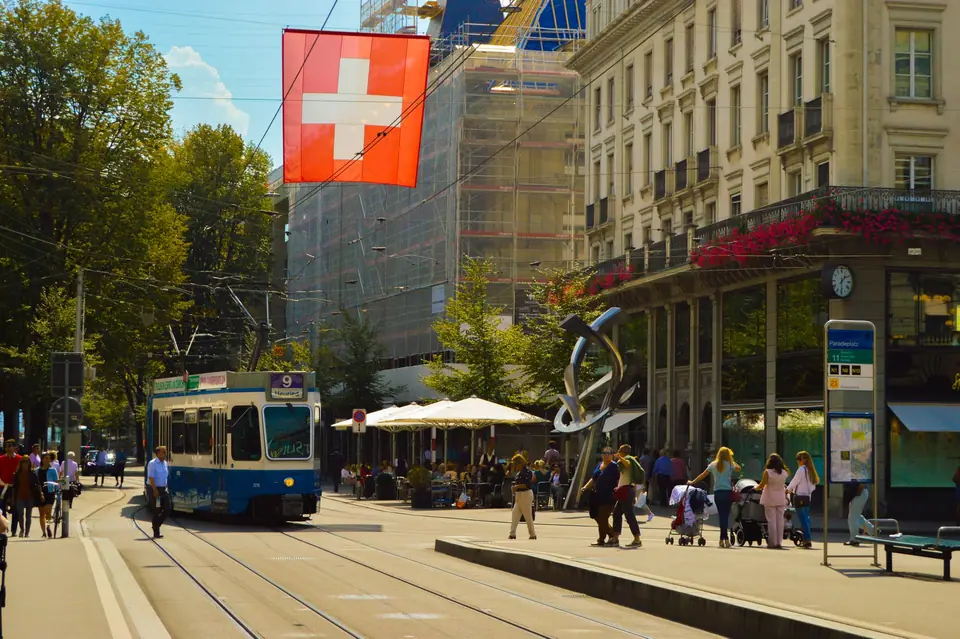
Stretching 1.4 kilometres (0.87 miles) from Bahnhofplatz in front of Zürich Hauptbahnhof south to Bürkliplatz on the shore of Lake Zurich, Bahnhofstrasse ("Railway Station Street") is Zurich's primary downtown avenue and one of the most expensive retail streets in the world. Designed in the nineteenth century as a grand pedestrian-friendly boulevard, it links the city's rail gateway directly to the lakeshore while bordering the medieval lanes of the Altstadt.
From the Ditch of the Frogs to Haussmann Boulevard
Until the nineteenth century, the course of today's avenue formed the western defensive moat outside the medieval city walls, known as the Fröschengraben ("Ditch of the Frogs"). When the fortifications were demolished in 1864 and the ditch was filled in, city engineer Arnold Bürkli laid out a tree-lined boulevard inspired by Georges-Eugène Haussmann's avenues in Paris. Divided into the lower section (untere Bahnhofstrasse) between the station's Alfred Escher fountain and Rennweg, and the upper section (obere Bahnhofstrasse) running south to the lake, the street forms the boundary between the City and Lindenhof quarters. Largely closed to private motor traffic, it serves as a central spine for VBZ trams, carrying routes 7, 11, and 13 north of Paradeplatz and routes 2, 5, 9, and 11 to the south.
Along its broad pavements shaded by lime trees, nineteenth-century sandstone commercial palaces stand beside flagship department stores, international fashion houses, and Swiss watchmakers. Beneath the flagship Beyer retail premises on the avenue, the Beyer Watch and Clock Museum exhibits timepieces spanning from ancient shadow clocks, water clocks, and Renaissance table automata to marine chronometers, pocket watches, and modern wristwatches. Small green parks such as Pestalozziwiese break up the northern stretch of the street, offering shaded benches where shoppers and commuters pause beneath bronze monuments.
Paradeplatz and Confiserie Sprüngli
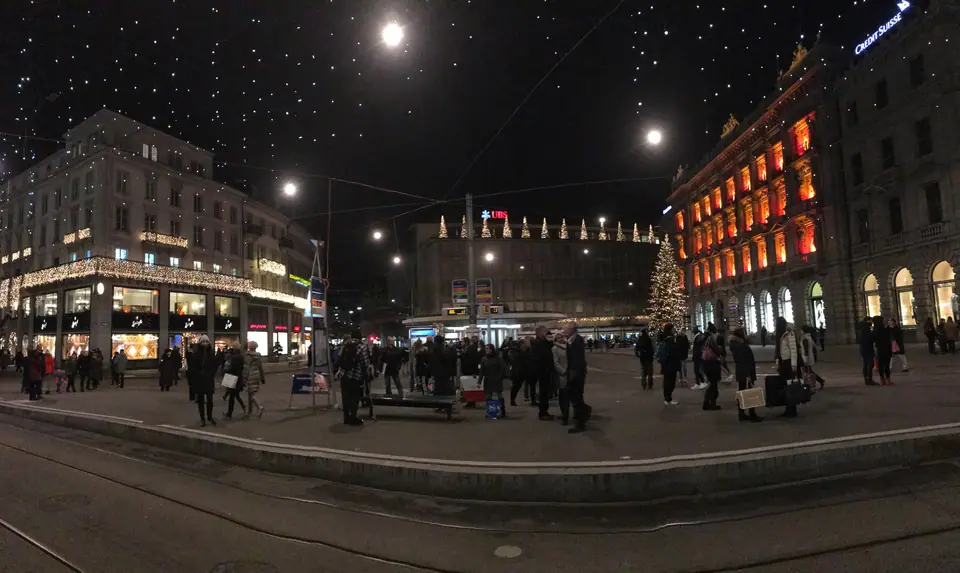
In the southern half of Bahnhofstrasse opens Paradeplatz, the symbolic centre of Swiss banking and one of the major tram hubs in the city. Lying outside the medieval walls until the 1642 ramparts incorporated the area, the plaza served in the seventeenth century as a livestock market called the Säumärt ("pig market"), became Neumarkt in 1819, witnessed clashes during the 1839 Züriputsch, and received the name Paradeplatz in 1865. Four historic blocks frame the square:
- Northern and Western Banking Blocks: The former Kreditanstalt (Credit Suisse) headquarters building on the north side dates to 1873, while the UBS (formerly Bankverein) headquarters on the west side was built between 1897 and 1899.
- Eastern Hotel Block: Anchored by the hotel Baur en Ville (now Mandarin Oriental Savoy), which Johannes Baur opened in October 1838.
- Southern Block (Confiserie Sprüngli): Opened on Paradeplatz in 1859, the flagship café and confectionery of Confiserie Sprüngli is famous across Switzerland for its Luxemburgerli macarons and chocolate truffles.
Immediately east of the square, a short walk leads through Poststrasse to Münsterhof and the stained-glass choir of the Fraumünster, making Paradeplatz a natural pivot between the financial district and the riverfront churches. Upstairs above the ground-floor pastry counters at Sprüngli, a traditional wood-panelled salon serves breakfast, coffee, and handmade cakes overlooking the passing trams. Across the square, grand nineteenth-century stone facades with rusticated arches and sculpted pediments reflect the era when railway expansion turned Zurich into Switzerland's financial capital.
Augustinergasse, Rennweg, and Practical Walking Notes
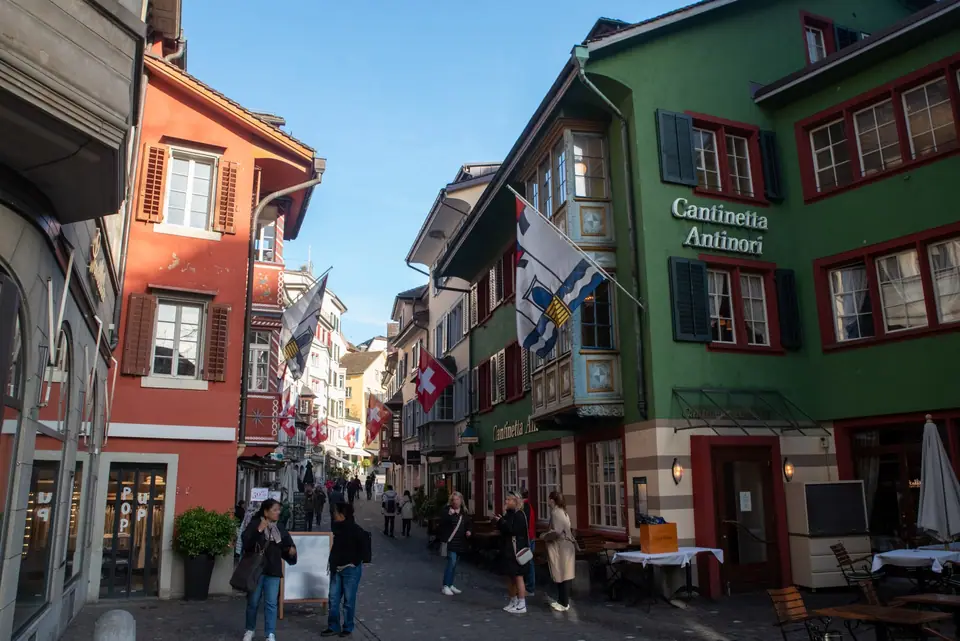
Just north of Paradeplatz, two medieval streets branch east from Bahnhofstrasse into the old town. Augustinergasse climbs past the former Augustinian monastery toward St. Peterhofstatt and St. Peter church, lined with brightly painted townhouses and projecting wooden oriel (bay) windows that once allowed merchants to observe street traffic from their upper parlours. Nearby, pedestrianised Rennweg marks the site of the medieval western city gate below the Lindenhof hill, where early stone burgher houses rose in the thirteenth century and boutique shops now line the cobbles. Between Rennweg and Bahnhofstrasse, the historic armoury courtyard of the Zeughaushof recalls the medieval weapons depots that once stood along the edge of the city wall.
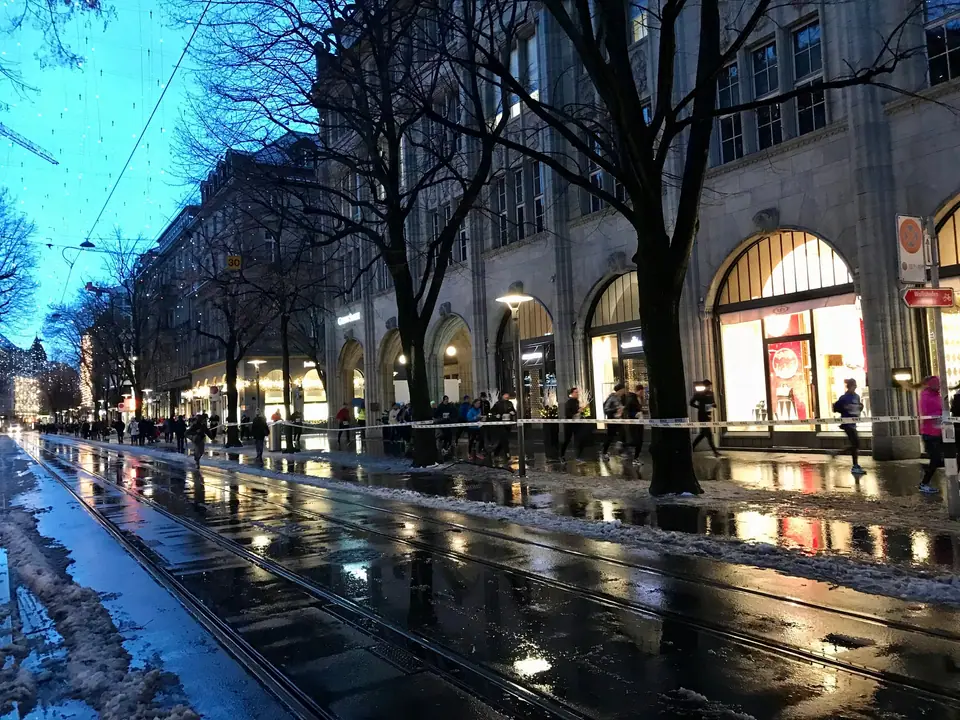
To trace the full architectural contrast of the west bank, start at the monumental railway station portal on Bahnhofplatz, walk south beneath the lime trees to Rennweg, detour up through the quiet courtyard of the Lindenhof and down the painted bay-window lane of Augustinergasse, and rejoin Bahnhofstrasse at Paradeplatz before continuing to the lakefront piers at Bürkliplatz. Along the way, cast-iron drinking fountains and stone benches provide convenient pauses beside the tram islands, while quiet side passages west of the avenue lead toward the tree-lined Schanzengraben canal path and the old botanical garden on a preserved seventeenth-century earthwork bastion. Perched on this green hillock above the water moat, the old botanical garden shelters mature specimen trees and a glass palm house where visitors can rest in complete quiet just a short walk from the retail storefronts. When planning your stroll, keep in mind that retail shops across the city close on Sundays, though the avenue remains a pleasant car-free promenade for window shopping, café stops, and architectural photography in every season. During the winter weeks from late November through December, thousands of suspended vertical light tubes known as Lucy illuminate the entire length of the street after dusk, casting a soft glow across the stone facades and tram tracks all the way to the lake. When you come to browse precision timepieces, sample fresh confectionery at Paradeplatz, or admire painted medieval woodwork in the adjoining alleys, this walk links the city's commercial spine with its historic heart.
Architecturally, a walk down Bahnhofstrasse also serves as an outdoor survey of nineteenth- and early twentieth-century Swiss commercial design. Ornate Neo-Renaissance and Neo-Gothic stone frontages with corner turrets, wrought-iron balconies, and carved allegorical figures alternate with sleek mid-century facades and quiet courtyard passages. Stepping just a few paces off the main boulevard into the cobbled lanes of Augustinergasse, Rennweg, or St. Peterhofstatt immediately shifts the scale from grand avenue to intimate medieval parish square, giving walkers two distinct urban worlds side by side. Benches beneath the lime trees make it easy to pause and watch the blue-and-white trams glide between the station and the lake.
Morning hours before the midday crowds gather are particularly pleasant for photographing the painted bay windows along Augustinergasse and the quiet courtyard around St. Peter, while late afternoon brings a lively café atmosphere around Paradeplatz and Bürkliplatz.
Traveller tips
Real advice from people who have been to Bahnhofstrasse, Paradeplatz & Augustinergasse: Shopping, Banks & Bay Windows. Every tip is read by our team before it goes live.
No tips yet. Been here? Yours could be the first.
Thank you! Your tip will appear here after a quick review.
More in Zurich
Continue exploring Zurich with related neighbourhood, food, and planning guides
Where to Stay in Zurich: Best Neighbourhoods & Areas Compared
Zurich, Switzerland
Best Time to Visit Zurich: Monthly Weather, Lake Season & Sechseläuten
Zurich, Switzerland
3 Days in Zurich Itinerary: Old Town, Lake Cruise, Uetliberg & Rhine Falls
Zurich, Switzerland
Zurich: Essential Planning for Your Visit
Zurich, Switzerland
