


























Kunsthaus Zürich, Swiss National Museum & ETH Polyterrasse
Explore Zurich's major cultural institutions: the expanded Kunsthaus on Heimplatz, the chateau-style Landesmuseum by the main station, and ETH Zurich.
Two flagship museums anchor the cultural landscape of central Zurich: the Kunsthaus Zürich on Heimplatz at the eastern edge of the Altstadt, and the Swiss National Museum (Landesmuseum Zürich) beside Zürich Hauptbahnhof, linked across the eastern hillside by the historic main building of ETH Zurich. Together they allow visitors to move from prehistoric pile-dwelling archaeology and medieval armour to Impressionist canvases, Dada installations, and contemporary architecture within a single day.
Kunsthaus Zürich: From Karl Moser to David Chipperfield
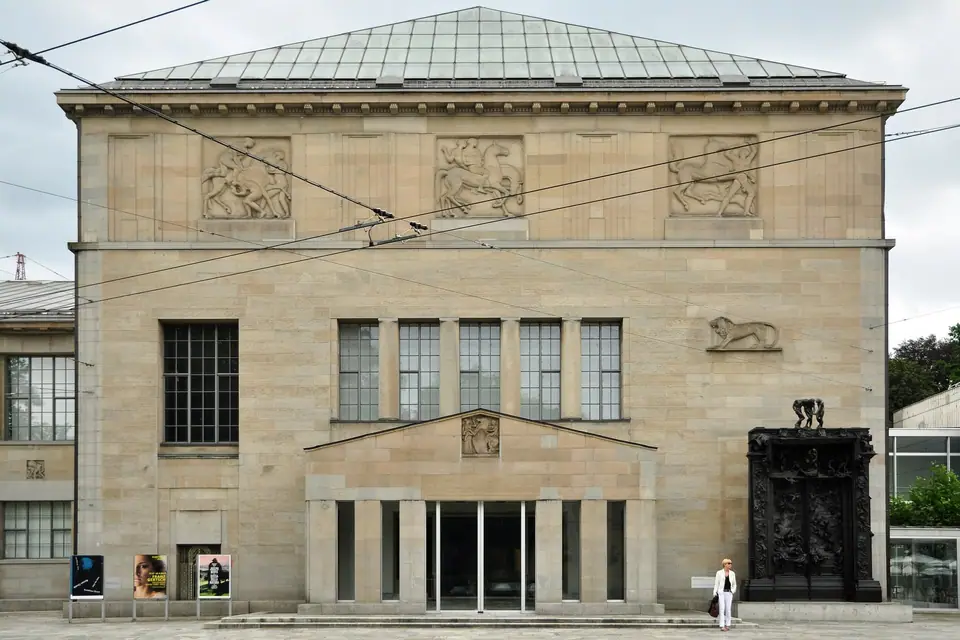
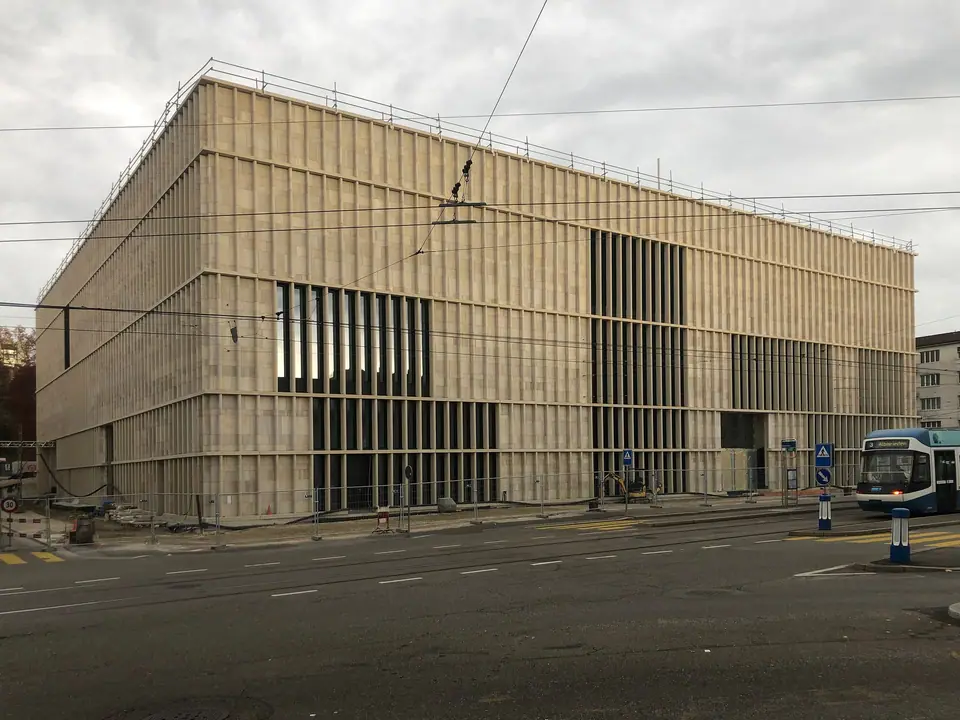
Operated by the non-profit Zürcher Kunstgesellschaft (formed in 1896), the Kunsthaus Zürich is the largest art museum in Switzerland by exhibition area, spanning 11,500 square metres of gallery space across a four-part complex on Heimplatz opposite the Schauspielhaus Zürich. The original museum building, designed by architects Karl Moser and Robert Curjel and opened in 1910, preserves Secession-style Neo-Grec interiors and facade bas-reliefs by Moser's collaborator Oskar Kiefer, following extensions in 1925, 1958, and 1976. Across the street, and connected via an underground passage beneath Heimplatz, stands the rectangular sandstone extension designed by David Chipperfield, which was completed in 2020 and began public operations on 9 October 2021, adding 13,000 square metres of usable space (an increase of more than 80 percent). Key highlights of the collection include:
- Alberto Giacometti and Swiss Art: A comprehensive collection of sculptures, paintings, and drawings by Alberto Giacometti (on permanent loan from the Alberto Giacometti Foundation), alongside Johann Heinrich Füssli, Ferdinand Hodler, Pipilotti Rist, and Peter Fischli.
- European Masters and Dada: A representative collection of Edvard Munch paintings outside Norway, major canvases by Claude Monet (including a monumental water-lily painting), Vincent van Gogh, Pablo Picasso, Henri Matisse, René Magritte, Joseph Beuys, and one of the foremost Dada collections.
- Visitor Access: Served by the Zürich, Kunsthaus tram stop on Heimplatz; admission to the permanent collection is free of charge on Wednesdays.
Outside the main entrance on Heimplatz stands Auguste Rodin's monumental bronze portal The Gates of Hell, while the Chipperfield building frames a quiet public garden courtyard linking the museum square toward the university district. Inside the extension, a soaring central entrance hall finished in brass balustrades and regional Jura limestone gives free public access to the ground-floor café, art bookshop, and garden passage even without an exhibition ticket. Daylight-filled upper galleries display Impressionist and modern rooms alongside multimedia installations such as Pipilotti Rist's suspended crystal light landscape.
Swiss National Museum (Landesmuseum Zürich)
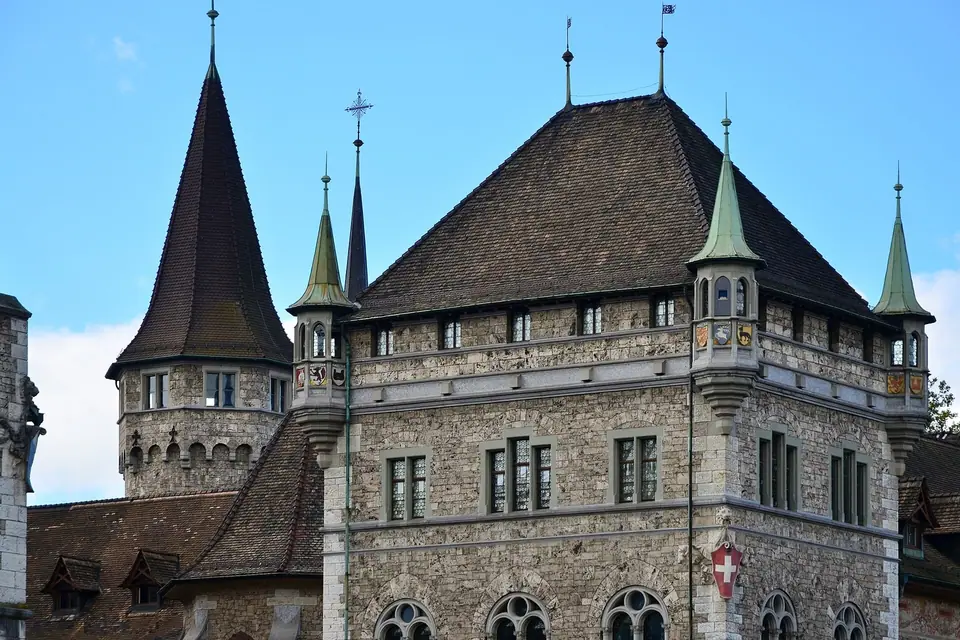
Occupying a park peninsula where the Sihl joins the Limmat immediately north of Zürich HB, the Swiss National Museum is Switzerland's leading historical museum. Built in historicist French Renaissance city-chateau style by architect Gustav Gull and inaugurated in 1898 (with a modern concrete bridge-like wing by Christ & Gantenbein added between 2013 and 2016), its galleries trace Swiss history from prehistory and pile-dwelling finds through medieval Gothic wood sculptures, chivalry, the Armoury Tower, a diorama of the Battle of Murten, and fourteenth-to-sixteenth-century coins. Its porcelain and faience collection is displayed separately at the Zunfthaus zur Meisen on Münsterhof near the Fraumünster.
Permanent thematic exhibitions inside the modern wing examine how trade routes across the Alpine passes, religious reform, direct democracy, banking, and precision watchmaking shaped modern Switzerland. Period rooms rescued from historic monasteries and patrician houses across the cantons are reconstructed inside the 1898 wing, complete with carved wooden ceilings and ceramic tile stoves. Behind the museum courtyard, the tree-lined paths of Platzspitz park lead out to the river confluence where the Limmat and Sihl waters merge, offering a peaceful green retreat right next to the railway station platforms and the departure pier for Limmat river boats.
ETH Zurich Main Building and Polyterrasse
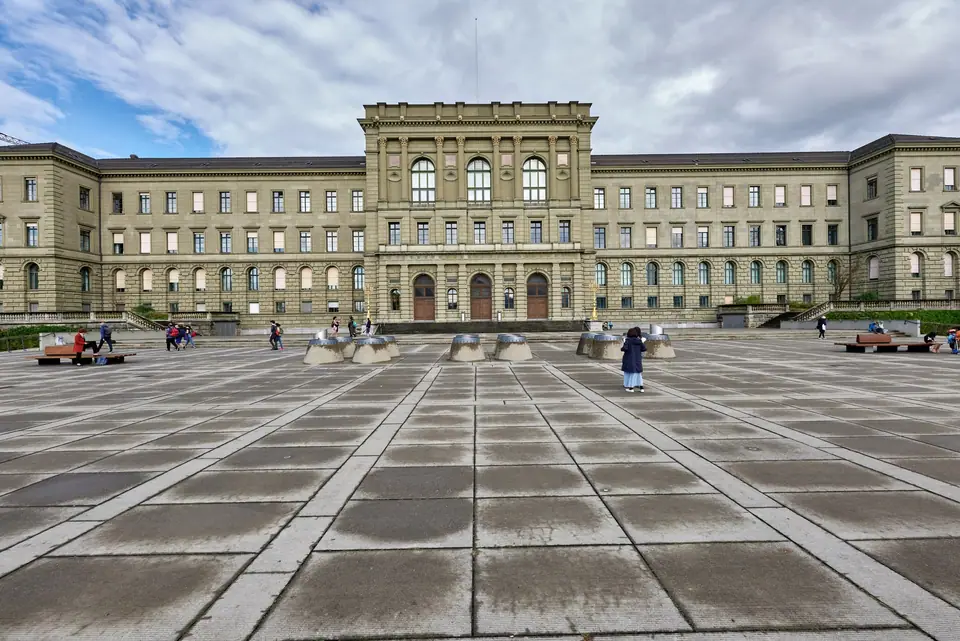
Founded by the Swiss Confederation on 7 February 1854 (with lectures starting in 1855) and associated with 22 Nobel laureates including Albert Einstein, ETH Zurich crowns the Hochschulen terrace above the old town. Its main building (constructed 1858 to 1864 by Gottfried Semper) and panoramic Polyterrasse are reached in under two minutes from Central square via the red 1889 UBS Polybahn funicular.
In addition to the open-air terrace overlooking the Altstadt rooftops, the university quarter rewards curious visitors with several free academic collections. Inside the main building, the Graphische Sammlung ETH Zürich displays prints and drawings from Albrecht Dürer and Rembrandt to modern masters, while nearby department buildings house the earth-science museum focusTerra (with an earthquake simulator and alpine mineral crystals), the Thomas Mann Archive, and the archaeological cast collection. Adjacent to the ETH complex stands the domed main building of the cantonal University of Zurich, designed by Karl Moser and completed in 1914, which houses a botanical garden and anthropological museum nearby. From the Polyterrasse, stepped footpaths wind downhill through the Oberdorf lanes toward Heimplatz and Lake Zurich, making it easy to link all three cultural landmarks into a single half-day route. On rainy or wintry days, combining the morning galleries of the Landesmuseum with an afternoon inside the Kunsthaus provides a comprehensive journey through European art and Swiss heritage without stepping far from the tram lines. Both museums provide cloakrooms, lockers, and English audio guides or mobile companion apps, allowing visitors to explore the collections at an unhurried pace before pausing for coffee in the museum courtyards.
Linking the Landesmuseum, the ETH Polyterrasse, and the Kunsthaus on foot also introduces you to the architectural evolution of the eastern hillside. Starting from Gustav Gull's turreted castle-like museum beside the river confluence, you cross the Bahnhofbrücke to Central, ride the historic funicular up to Gottfried Semper's neoclassical university terrace, and stroll down past Karl Moser's Secession-style galleries and David Chipperfield's minimalist stone cube on Heimplatz. Along the way, quiet residential streets, campus gardens, and old-town cafés provide plenty of places to pause and reflect on the exhibitions. Few European cities concentrate such a rich sequence of history, science, and visual art within a single walkable corridor.
Between gallery visits, the cafés and museum shops at both the Kunsthaus and the Landesmuseum offer art monographs, Swiss design objects, and shaded courtyard tables where you can plan your afternoon walk across the river bridges or down to the lake. Taking a midday break on the sunny steps of Heimplatz or beside the river confluence at Platzspitz makes it easy to enjoy both institutions without museum fatigue.
Traveller tips
Real advice from people who have been to Kunsthaus Zürich, Swiss National Museum & ETH Polyterrasse. Every tip is read by our team before it goes live.
No tips yet. Been here? Yours could be the first.
Thank you! Your tip will appear here after a quick review.
More in Zurich
Continue exploring Zurich with related neighbourhood, food, and planning guides
Best Time to Visit Zurich: Monthly Weather, Lake Season & Sechseläuten
Zurich, Switzerland
3 Days in Zurich Itinerary: Old Town, Lake Cruise, Uetliberg & Rhine Falls
Zurich, Switzerland
Zurich: Essential Planning for Your Visit
Zurich, Switzerland
Things to Do in Zurich: Churches, Lake Cruises & Cultural Highlights
Zurich, Switzerland
