


























What to Eat in Zurich: Zürcher Geschnetzeltes, Rösti, Birchermüesli & Luxemburgerli
From creamy sliced veal in historic guild halls to the original 1900 Birchermüesli recipe and Sprüngli's airy macarons, here is what to eat in Zurich.
Zurich's culinary identity bridges hearty guild-house dishes and refined confectionery. Dining beneath the medieval beams of a traditional Zunfthaus in the Altstadt, visiting a historic armoury beer hall near Paradeplatz, or browsing the market hall at Im Viadukt introduces four signature specialities that define the local table. Alongside classic meat and potato dishes, the city also gave the world one of its most enduring healthy breakfast staples and maintains centuries-old baking and chocolate traditions.
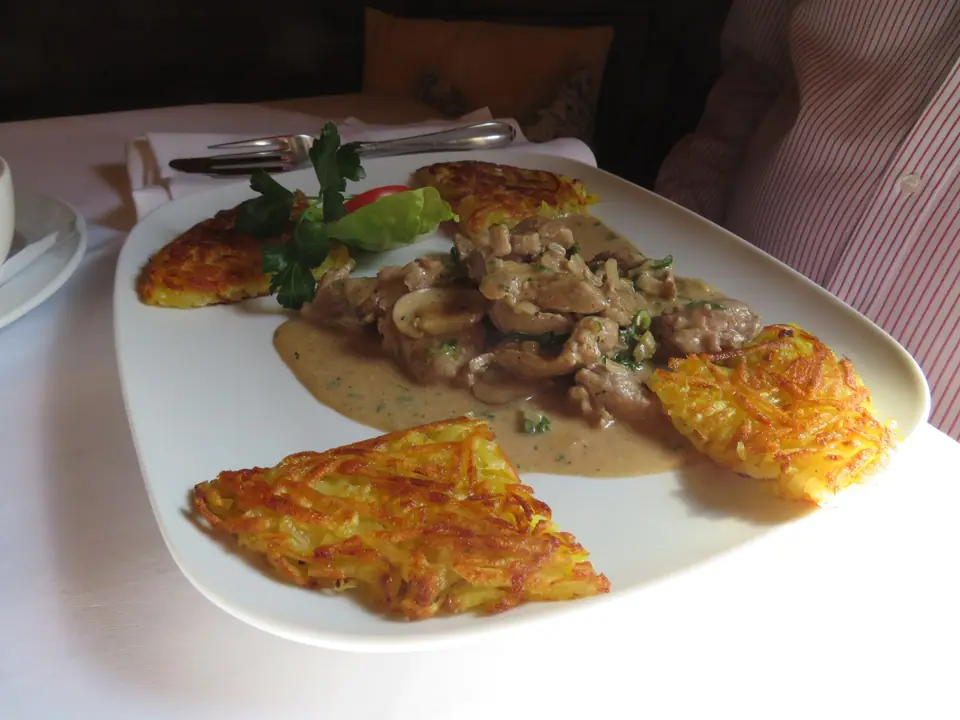
Zürcher Geschnetzeltes with Rösti
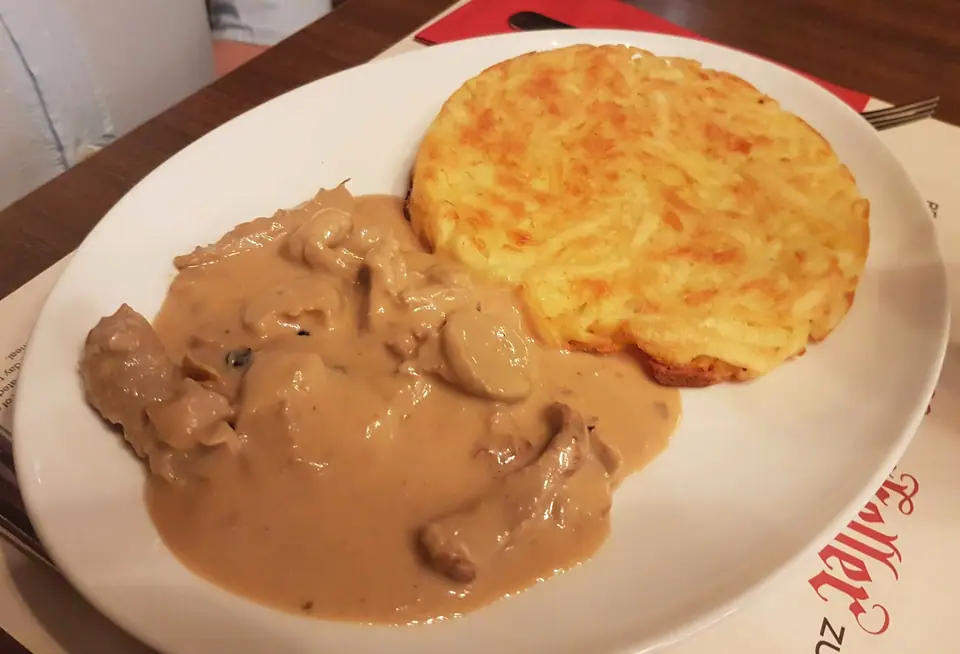
The quintessential main course of the city is Zürcher Geschnetzeltes (called Züri-Gschnätzlets in Zurich German, meaning "sliced meat Zurich style"). First mentioned in a cookbook from 1947, the dish consists of thin strips of veal sautéed rapidly in butter with finely chopped onion, removed from the pan while the cooking juices are deglazed with white wine and reduced with cream and demiglace, and then returned to the sauce with sliced mushrooms and a squeeze of lemon juice (traditional variations sometimes include sliced veal kidney). It is almost always accompanied by Rösti, a pan-fried cake of coarsely grated parboiled or raw potato crisped in butter until golden brown. In Swiss culture, Rösti is so emblematic of German-speaking Switzerland that the linguistic boundary with French-speaking Switzerland is nicknamed the Röstigraben ("Rösti ditch").
You will find authentic versions served in wood-panelled guild dining halls along Limmatquai and Münsterhof, as well as in lively traditional brasseries such as the fifteenth-century armoury halls off Bahnhofstrasse and historic taverns in the Niederdorf. Waitstaff typically bring the veal and mushroom sauce to the table in a copper chafing dish for a second helping alongside the crisp potato cake.
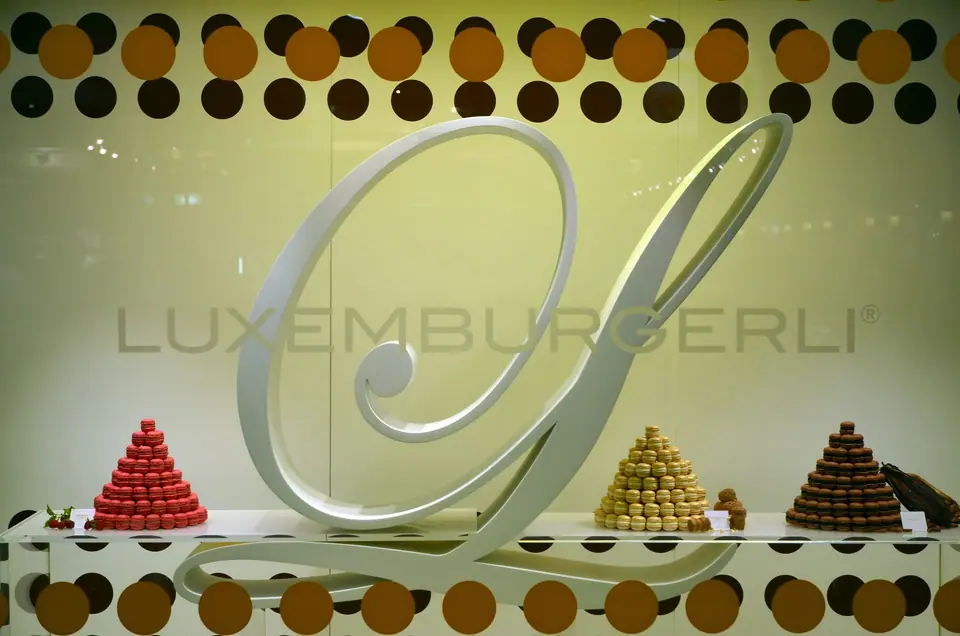
Confiserie Sprüngli's Luxemburgerli and Chocolate
At its flagship café opened on Paradeplatz in 1859 (as well as counters inside Zürich Hauptbahnhof and Zurich Airport), Confiserie Sprüngli produces Luxemburgerli, bite-sized macarons noticeably smaller and lighter than Parisian macarons, formed from two airy almond-meringue discs sandwiching a whipped buttercream or ganache filling in flavours ranging from vanilla, chocolate, and champagne to raspberry, hazelnut, and caramel. Sold by weight in small boxes and best eaten fresh on the day of purchase, they pair naturally with an afternoon coffee or an excursion to the Lindt Home of Chocolate in Kilchberg.
Beyond Sprüngli, artisanal chocolatiers and historic pastry shops across the old town craft dark single-origin bars, fresh cream truffles, and seasonal marzipan or honey-dough biscuits such as Zürcher Tirggel, which are pressed in carved wooden moulds depicting historical scenes of the city and guilds.
Birchermüesli: Zurich's Global Breakfast Invention
Few travellers realise that muesli (Birchermüesli) was invented in Zurich around 1900 by Swiss physician Maximilian Bircher-Benner for patients at his chalet-style sanatorium Lebendige Kraft ("lively power") on the Zürichberg slope. Originally called d Spys ("the dish") or Apfeldiätspeise ("apple diet meal") and served as an opening course or light evening supper (Schweizer Znacht / Birchermüesli complet), Bircher-Benner's original recipe soaked one tablespoon of rolled oats in three tablespoons of water for 12 hours, mixed it with lemon juice and sweetened condensed milk (or cream and honey), and grated two or three whole fresh apples (skin, core, and pips included) directly into the bowl alongside chopped walnuts, almonds, or hazelnuts. Today almost every hotel breakfast buffet, bakery counter, and traditional café in the city serves freshly prepared Birchermüesli topped with seasonal berries and yoghurt.
Swiss Cheese Fondue, Bratwurst, and Autumn Specialties
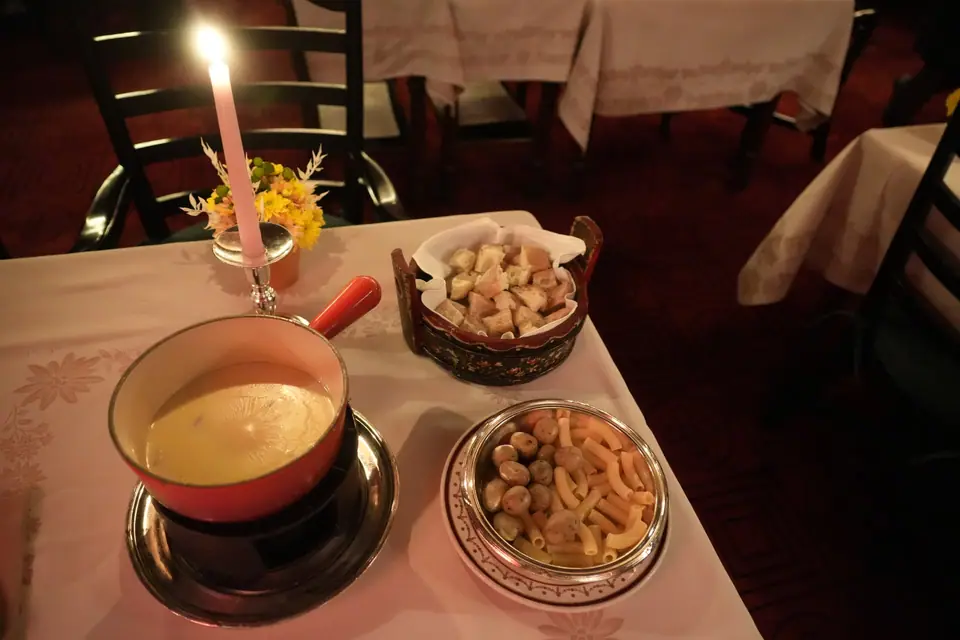
On chilly evenings across the colder months, Zurich brasseries, Niederdorf taverns, and seasonal pop-up chalets serve bubbling Swiss cheese fondue in a ceramic caquelon rubbed with garlic and accompanied by cubed bread, boiled potatoes, pickled onions, and gherkins. Another historic local tradition stands on Limmatquai at the 1898 Hiltl restaurant, which holds the distinction of being a pioneering vegetarian dining room in Europe and offers an extensive buffet alongside classic Swiss specialities prepared in plant-based form. For a quick street-side lunch near Bellevue or Bürkliplatz, outdoor grill kiosks serve grilled veal Kalbsbratwurst or smoky Cervelat sausage with a crusty Bürli bread roll and mustard, while autumn brings hot paper cones of roasted chestnuts (Heissi Marroni), shredded venison dishes, and crisp regional Räuschling or Müller-Thurgau white wines pressed from vineyards along the shores of Lake Zurich. Travellers who enjoy food markets can also visit the Friday morning farmers' market at Bürkliplatz or the covered Markthalle beneath the railway arches in Kreis 5 to assemble a lakeside picnic of alpine cheeses, cured meats, and fresh stone fruit. Reservations are recommended for dinner in the historic guild houses and popular fondue parlours, particularly on Thursday through Saturday nights. At lunchtime on weekdays, many traditional restaurants offer set daily menus (Tagesteller) that include soup or salad alongside a hot main dish, providing an approachable way to sample classic Swiss cooking between museum visits.
To experience the full spectrum of Zurich dining across a short stay, balance a traditional guild-house meal in the Altstadt with casual stops at neighbourhood bakeries, lakeside sausage grills, and indoor food markets. Start your morning with freshly grated Birchermüesli and espresso at a street-side café, pick up a small box of Luxemburgerli macarons on Paradeplatz after your morning walk, pause for a grilled bratwurst with crusty bread near the lake piers at midday, and settle into a wood-panelled dining room in the evening for sliced veal in mushroom-cream sauce with golden potato Rösti or a bubbling pot of cheese fondue. Every quarter of the city offers welcoming tables rooted in regional Swiss produce.
Pairing these classic dishes with local beverages rounds out the experience at any Zurich table. Alongside crisp white wines cultivated on the sunny slopes of Lake Zurich and the northern Rhine valley, traditional guild houses and neighbourhood brasseries pour unfiltered regional lagers, artisanal fruit brandies, and rich hot chocolate, while dozens of historic street fountains outside provide fresh drinking water between meals. Taking time to enjoy both a formal guild-hall dinner and a relaxed market lunch beneath the railway viaduct gives you a true taste of how the city eats today. Many menus also highlight seasonal ingredients sourced from cantonal farms around the lake basin, ensuring fresh regional flavours across every course.
Traveller tips
Real advice from people who have been to What to Eat in Zurich: Zürcher Geschnetzeltes, Rösti, Birchermüesli & Luxemburgerli. Every tip is read by our team before it goes live.
No tips yet. Been here? Yours could be the first.
Thank you! Your tip will appear here after a quick review.
More in Zurich
Continue exploring Zurich with related neighbourhood, food, and planning guides
Zurich's Historic Churches: Grossmünster, Fraumünster, St. Peter & Wasserkirche
Zurich, Switzerland
Bahnhofstrasse, Paradeplatz & Augustinergasse: Shopping, Banks & Bay Windows
Zurich, Switzerland

Lake Zurich Promenades, Bürkliplatz & Boat Cruises
Zurich, Switzerland
Kunsthaus Zürich, Swiss National Museum & ETH Polyterrasse
Zurich, Switzerland
