Lisbon Alfama Guide: Castle, Miradouros, Fado and the Old Hills
How to explore Alfama, the maze of Moorish-era lanes below Lisbon's castle: the right route downhill, the viewpoints, the fado houses and where to eat.
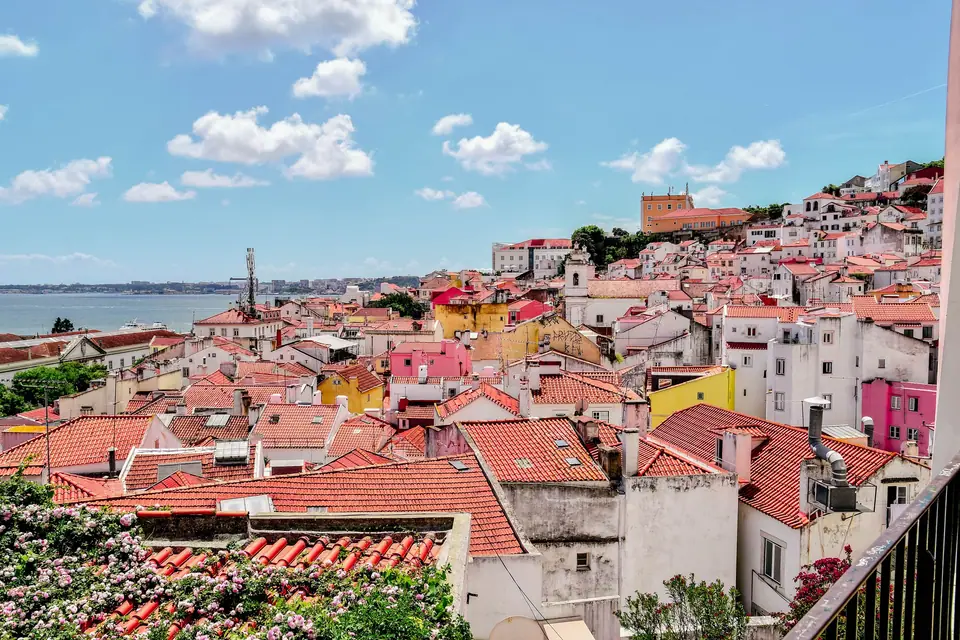
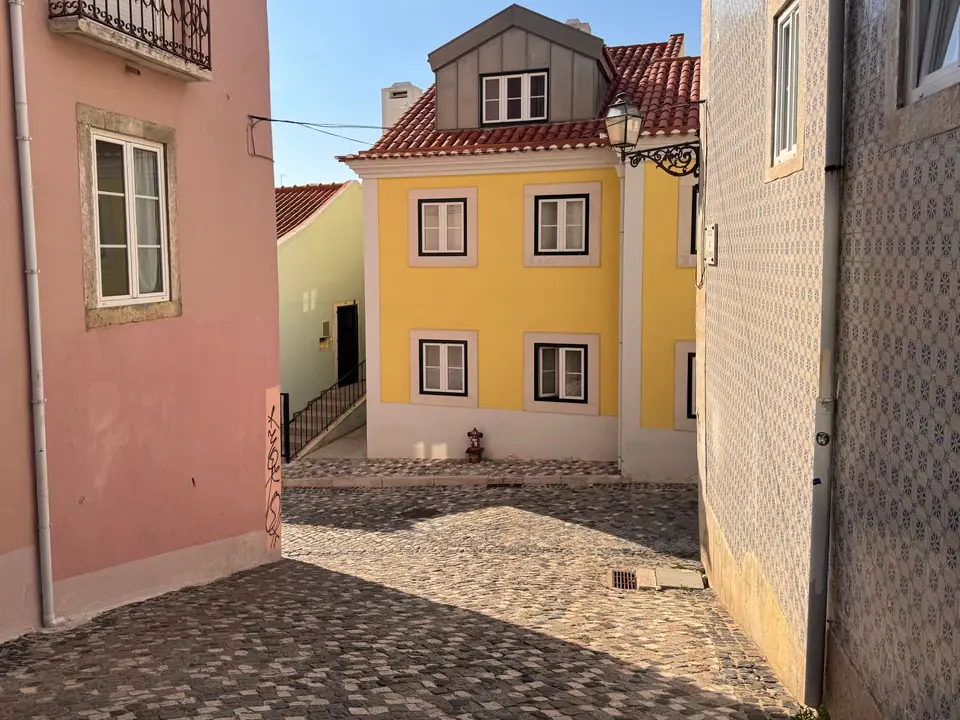
Lisbon is a city of seven hills, and Alfama is the one that feels oldest. It spills down the slope from the castle to the river in a tangle of lanes, stairways and tiny squares, with laundry strung between balconies and tiled houses painted in faded yellow, pink and blue. The name comes from the Arabic for baths or springs, and the layout of the quarter still follows the pattern laid down when Lisbon was a Moorish town. When the great earthquake of 1755 flattened much of the city below, Alfama's solid rock foundations let it come through largely intact, which is why it looks so different from the grid of the downtown streets.
It is also a real neighbourhood, not a museum. Neighbours chat from windows, grandmothers grill sardines on the pavement in summer, and the evenings fill with the sound of fado drifting out of small taverns. This guide explains how to see Alfama in a sensible order, what the main sights are like, where to find the best views and how to avoid the problems that catch out first-time visitors, from the hills to the crowded tram.
Alfama at a glance
- How long? A half day covers the highlights. A full day lets you add the castle properly, a long lunch and the evening music.
- Where to start? At the top, at the castle or the viewpoints, and then walk down. Going uphill in Alfama is hard work.
- The signature view: the red rooftops falling to the river, from the Portas do Sol viewpoint.
- The best free sights: the cathedral exterior, the viewpoints, the lanes and the squares cost nothing.
- The classic evening: dinner in a small restaurant followed by fado in a tavern.
- The biggest mistake: queuing for the yellow tram when walking the lanes would be quicker, cheaper and more rewarding.
- When to go: spring and early autumn, covered in our best time to visit Lisbon guide.
- Where to sleep: in Alfama itself for atmosphere, or in the Baixa for easy transport. More in our Lisbon where to stay guide.
The route that works: start at the castle, drop down to the viewpoints, walk through the lanes to the cathedral, and finish at the river or in a fado house. Our Lisbon 3-day itinerary shows how it fits into a longer visit, and the shorter Alfama guide is a handy summary to keep on your phone.
Finding your way through the maze
Alfama sits on the slope between the Castelo de São Jorge at the top and the Tagus waterfront at the bottom, with the cathedral at its western edge and the Santa Apolónia railway station at the eastern one. The streets are narrow, steep and often dead ends, and they do not follow a grid. Maps on your phone work, but the signal can be patchy among the tall houses and the blue dot may wander, so keep an eye out for the signs pointing to the main landmarks.
The simplest rule is that downhill means the river, and uphill means the castle. If you get lost, which you will, keep walking down and you will reach the Rua de São Pedro or the waterfront road, from where it is easy to find your bearings again. Getting lost is a normal part of the Alfama experience, and some of the nicest corners are found by accident, such as a little square with a fountain, or a doorway full of potted plants.
The Sé and the lanes below it
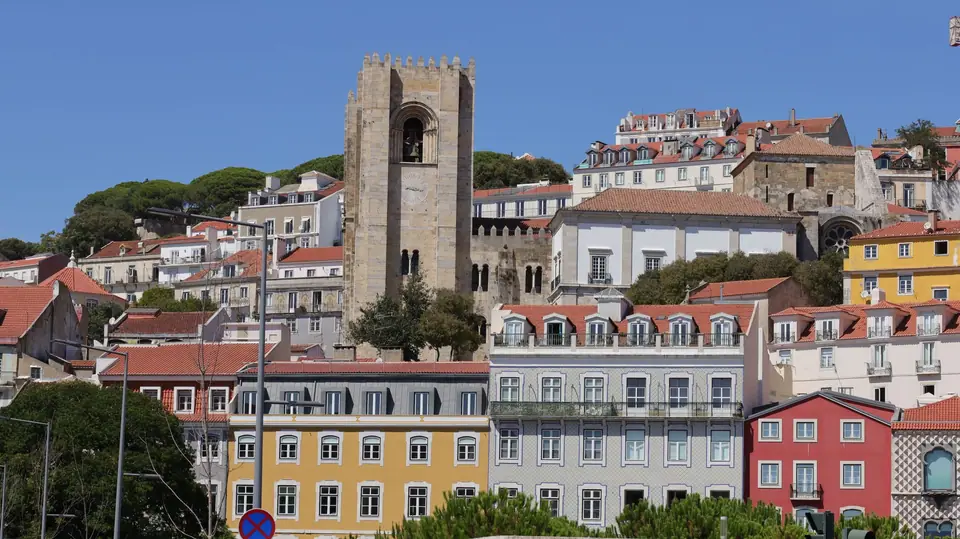
The cathedral, known as the Sé, is the oldest church in Lisbon. It was built in the twelfth century, soon after the Christian conquest of the city from the Moors, and it looks like a fortress, with thick walls, two stout towers and a rose window. The interior is plain and Romanesque, and the cloister contains excavations of Roman and Moorish remains. The exterior is the main attraction, and the steps in front of it are a popular place to wait for the yellow tram to rumble past.
From here, small lanes lead uphill into Alfama proper. Take the stairway beside the church and you are soon in a world of narrow alleys, tile-covered walls and corner shrines. Near the cathedral is the Casa dos Bicos, a sixteenth-century house with a facade of diamond-shaped stones, which now holds a foundation and a small museum. The nearby church of Santo António is said to stand on the birthplace of Saint Anthony, the city's patron saint, and is a hub of the June festival.
Castelo de São Jorge
The castle crowns the hill above Alfama and is the best vantage point in the city. The fortress is of Moorish origin, later rebuilt by the Portuguese kings, and it was a royal palace until the sixteenth century. What you see today is mostly restored, but the ramparts, the towers and the garden courtyards are enjoyable to explore, and peacocks wander the lawns. From the walls you look out over the whole of Lisbon, the Tagus and the bridge, and the downtown streets laid out like a map.
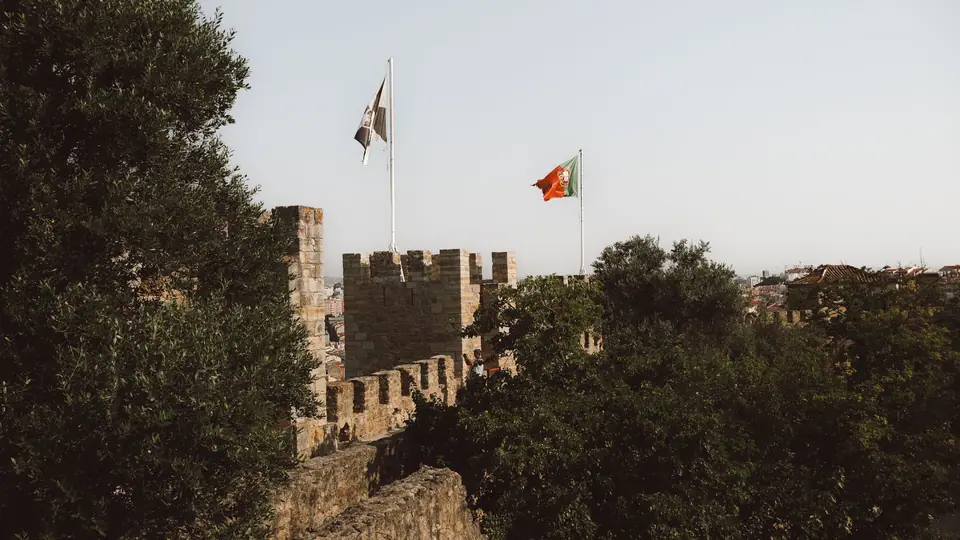
There is a small archaeological museum inside and a viewpoint terrace with a camera obscura that projects live images of the city. We suggest arriving soon after opening, when the light is soft and the courtyards are quiet. Because the castle is at the top of the hill, you can walk down through Alfama afterwards instead of climbing up. If you prefer not to walk up at all, a small bus and the tuk-tuks reach the entrance.
Miradouros: Portas do Sol and Santa Luzia
Lisbon is famous for its miradouros, viewpoints that are really small terraces with a bench, a kiosk and a view. Two of the best are in Alfama, a few minutes below the castle. The Miradouro das Portas do Sol looks out over the rooftops to the river, with a statue of Saint Vincent and a busy cafe terrace. Just along the road, the Miradouro de Santa Luzia is smaller and prettier, with a pergola draped with bougainvillea and blue and white tile panels that show scenes of old Lisbon.
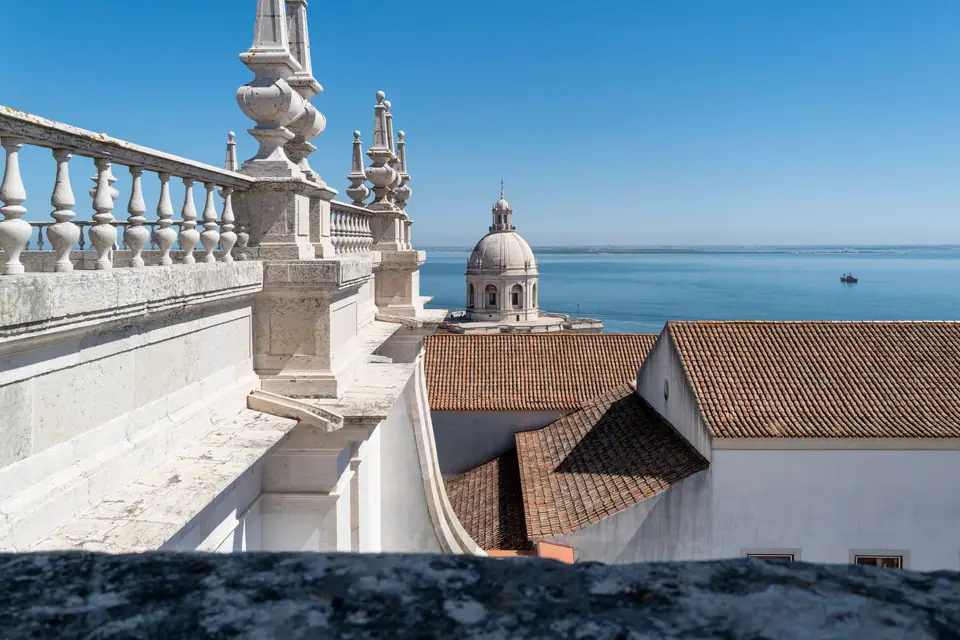
Both are crowded around sunset. If you want a quieter view, walk a few minutes to the Miradouro da Graça in the next district, where there are pine trees and local families, or find a terrace bar and take a seat. In the early morning, the viewpoints are almost empty, and the church bells and the smell of baking drift up from the streets below.
Tram 28 and its alternatives
Tram 28 is the most famous public transport route in Lisbon, a vintage yellow tram that rattles through Alfama, Graça, the Baixa and the Estrela. Its fame is its curse. The cars are small, the queues at the main stops are long, and pickpockets work the crowded interior. Many locals avoid it. If you want to ride it, board at the terminus at Martim Moniz or Campo Ourique at an off-peak hour, and keep your bag in front of you.
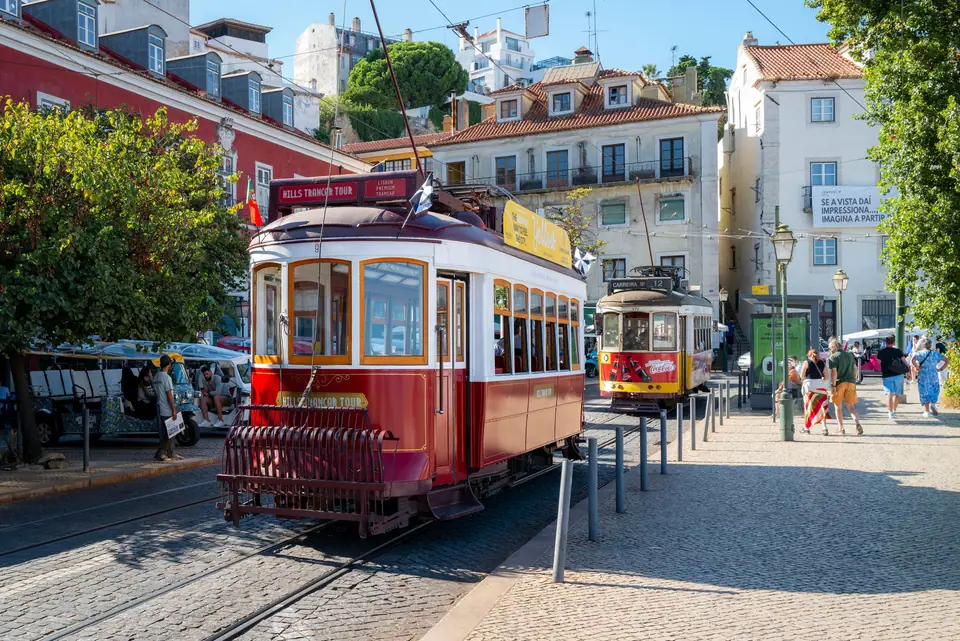
For the same experience without the crush, walk the route instead and catch glimpses of the tram as it squeezes through the lanes. Tram 12 follows a short loop through Alfama and is usually less busy. Our how to get to Lisbon guide explains the airport and train connections for the wider trip.
Santa Engrácia, São Vicente and the Tuesday market
East of the main part of Alfama, the quarter calms down. The National Pantheon, in the church of Santa Engrácia, is a white baroque building with a great dome that took nearly three centuries to complete, which gave rise to the Portuguese expression for a job that never ends. Inside are tombs and monuments to Portuguese national figures, and a roof terrace with a wide view over the river.
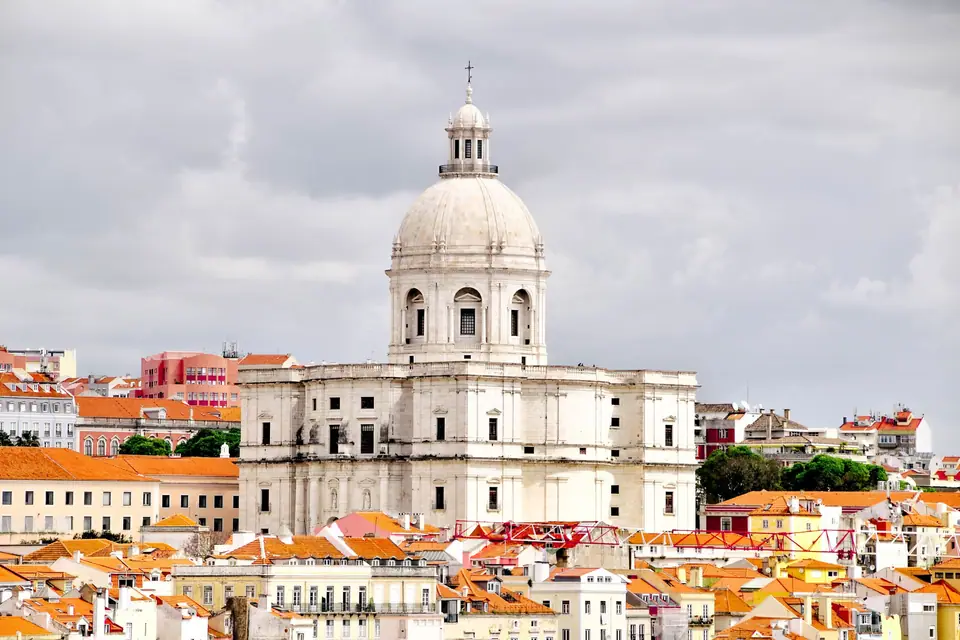
Next door, the Monastery of São Vicente de Fora has tiled cloisters and a rooftop with a view of the dome and the Tagus. On Tuesdays and Saturdays, the square in front, Campo de Santa Clara, hosts the Feira da Ladra, the city's flea market, where stalls sell antiques, vinyl, second-hand clothes and curiosities. It is a pleasant place to browse even if you do not buy anything, and it is far less crowded than the main tourist areas.
Small museums and tile-covered corners
If the weather turns, Alfama has several small museums that suit a rainy hour. The Museu do Fado tells the story of the music through recordings, instruments and portraits of its great singers. The Museum of Decorative Arts, housed in a seventeenth-century palace just below the castle, shows furniture, silver and ceramics in the rooms of a noble house, and its workshops still teach traditional crafts. Both are quiet and rarely crowded.
The streets themselves are a gallery of azulejos, the glazed tiles that cover so many Portuguese walls. Look for house fronts clad in green, yellow and blue geometric patterns, for the small panels that name a street or show a saint above a doorway, and for the large blue and white scenes in the viewpoints and churches. The tiles were practical as well as pretty, since they kept the damp out and the houses cooler in summer. Photographers love the early morning, when the low sun picks out the colours and the lanes are empty.
A morning in Graça and Mouraria
Many visitors never leave the lower slopes, but the neighbouring districts reward a short detour. Graça is a residential hilltop where the lanes are lined with small shops, workshops and cafes, and a church and a convent give the skyline its shape. The terrace at the Miradouro da Senhora do Monte, higher still, offers one of the widest views in the city. Mouraria, on the other side of the castle hill, is where fado is said to have been born. Its streets are lively and slightly rough, and its restaurants serve Portuguese food next to dishes from Goa, Mozambique, Bangladesh and China.
Fado in the neighbourhood that invented its mood
Fado, the music of longing known in Portuguese as saudade, is said to have grown up in Alfama and the neighbouring Mouraria. A singer, usually accompanied by a Portuguese guitar and a classical guitar, performs songs of love, loss and the sea. In small taverns, the room falls silent during a song, and talking or clinking cutlery is frowned upon. It is intense, emotional and entirely unlike anything on the radio.
There are two kinds of fado experience. In a restaurant, you eat dinner while singers perform in sets. In a tavern or small bar, you drink and listen, and the singing may be by amateurs and neighbours. The Museu do Fado on the river side of Alfama explains the history and the main singers, such as Amália Rodrigues. For a ready-made option, our fado night in Lisbon experience takes the guesswork out of choosing a venue.
A downhill day through Alfama
- Early morning: reach the Castelo de São Jorge soon after it opens and walk the walls.
- Mid-morning: drop down to the Miradouro de Santa Luzia and the Portas do Sol for the views.
- Late morning: follow the lanes down to the Sé, stopping for coffee and a pastry on the way.
- Lunch: eat in a small restaurant away from the main squares, ideally one with a short menu.
- Afternoon: walk east to the National Pantheon and São Vicente de Fora, or visit the Museu do Fado.
- Late afternoon: stroll to the river and watch the light on the water at the Cais das Colunas or Praça do Comércio.
- Evening: dinner and fado in a tavern in the lanes.
The day is mostly downhill, but there are plenty of stairs and uneven stones. Take it slowly, drink water and keep time for a rest.
Making two days of the old hills
With a second day, widen the circle. Graça, the district just above Alfama, has a village feel, a lovely viewpoint and a selection of quiet cafes. Mouraria, the old Moorish quarter to the west, is the most multicultural part of Lisbon, with restaurants serving food from Africa, India and Asia, and a number of small fado venues. You could also take the funicular and ride one of the lifts into the Baixa and the Chiado, covered in our things to do in Lisbon page. On the evening of the second day, return to Alfama for a different restaurant and a different fado house.
Trains, trams and tuk-tuks to the old quarter
Alfama is easy to reach but hard to cross. The Santa Apolónia station, on the blue metro line, is at the foot of the quarter, and the Terreiro do Paço and Baixa-Chiado metro stations are a short walk from the other side. Buses climb the hill to the castle. Tram 28 stops in the heart of the quarter, and several buses run along the waterfront. Taxis and ride-hailing cars can reach the edge of the old streets, but not the lanes themselves.
Tuk-tuks are everywhere, and they are useful for the uphill part if you are short of time or energy. Agree the route before you set off. The simplest plan is to take a taxi or bus to the castle and walk back down, which saves your legs for the evening.
Beds with a view or beds with a lift
Staying in Alfama is atmospheric, with small guesthouses and apartments tucked into old buildings, and rooms that look out over the rooftops or the river. The trade-off is the stairs. Many buildings have no lift, and dragging a suitcase along cobbles is exhausting. Rooms on the lower side of the quarter, near the river, are easier. For a quieter, flatter base, many travellers choose the Baixa or the Chiado, within a short taxi ride of the old hills. Our Lisbon where to stay guide compares the areas.
Grilled sardines, cherry liqueur and other local habits
Alfama is a place for simple Portuguese food. In summer the streets smell of grilled sardines, served on a slice of bread with salad, and in other seasons look for bacalhau, salt cod cooked in dozens of ways, caldo verde, a kale and potato soup, and small plates of cheese, ham and olives. Pastéis de nata, the custard tarts, are on every corner, and the bifana, a pork sandwich, is a cheap and filling snack.
To drink, try ginjinha, a sweet cherry liqueur served in a tiny cup, or a glass of vinho verde, a light, slightly fizzy wine. The tourist restaurants on the main squares often charge more for less, so walk a few streets away and look for places filled with locals. Many small restaurants serve a dish of the day, and the menu is usually short.
Tiles, tins and tiny gifts
Souvenir shopping in Alfama is a pleasure. Look for hand-painted azulejo tiles, tinned fish in colourful packaging, cork products, embroidered linen and ceramics in the shape of sardines and roosters. Small independent shops and workshops in the lanes sell better quality than the stalls on the big squares. The Feira da Ladra is the best place for antiques, and a few shops near the cathedral sell traditional Portuguese guitars and records of fado.
Cobbles, gradients and pickpockets
Alfama is safe in the sense that violent crime is rare, but it has its share of petty theft, especially on the tram and in the busy viewpoints. Keep your phone and wallet in a front pocket or zipped bag, and ignore anyone who approaches you offering drugs in the street. The cobbles are polished smooth and become slippery when wet, so wear shoes with a grip. Our what to wear in Lisbon guide covers clothing for the hills and the seasons.
Respect the fact that people live here. Keep your voice down in the evening, avoid blocking doorways when taking photographs and do not wander into private courtyards. A friendly greeting in Portuguese goes a long way.
Saints' festivals and the rest of the year
In June, Alfama throws the biggest party of the year. The Festas de Lisboa, in honour of Saint Anthony, fill the streets with paper garlands, music and the smoke of thousands of grilled sardines. The night of the twelfth is the high point, with parades and open-air dancing. The neighbourhood is at its liveliest and most crowded then, so book accommodation well ahead if you want to be there.
Spring and early autumn are mild and bright, and the best seasons for walking. Summer is hot and the hills can be tiring in the afternoon, so rest in the middle of the day. Winter is quiet and damp, with fewer visitors and a better chance of a table in a fado house. Light rain turns the stones slippery, so take care on the steps.
Beyond the old hills
From Alfama, the rest of Lisbon is within easy reach. Belém, with its tower, monastery and famous custard tarts, is a tram ride west and covered in our Belém guide. Sintra, with its fairy-tale palaces, is a short train ride away, and we describe it in our Sintra day trip page and the Sintra day trip experience. The Baixa, the Chiado and the Bairro Alto lie just across the valley.
Stitching Alfama into a Portugal trip
Most visitors treat Alfama as the old-town chapter of a longer Lisbon stay. Our Lisbon travel guide covers money, transport and etiquette, and our Portugal guides help you combine the capital with Porto, the Algarve and the smaller towns.
Answers for first-time visitors to Alfama
Is half a day enough for Alfama?
Half a day is enough for the castle, the viewpoints and the lanes. Add the Pantheon, the flea market or fado to fill a full day.
Is it better to walk up or down?
Down. Start at the castle or the viewpoints and let gravity do the work. Use a taxi, a bus or a tuk-tuk for the uphill leg.
Is Tram 28 a sensible choice at midday?
Not in the middle of the day. If you want to ride it, go early or late, and watch your belongings.
Do I need to book a fado night?
For the well-known venues, yes, especially in summer. Small taverns often take walk-ins, but seats are limited.
Is Alfama accessible for people with limited mobility?
Only partly. The hills, steps and cobbles are demanding. Taxis can drop you at the viewpoints and the castle, and the waterfront is flat.
Is the area safe at night?
Generally yes, and the lanes are lively in the evening. Keep to the better-lit streets late at night and watch for pickpockets in the crowds.
Can I visit Alfama with a pushchair?
It is possible but tiring. The cobbles are bumpy and many lanes turn into steps. A baby carrier is easier, and the waterfront and the cathedral square are flat.
What should I wear for Alfama?
Flat shoes with a firm grip are the key. Layers help too, because the hills are hot in the sun and the lanes can be cool in the shade.
For everything else about planning your stay, the pages linked above cover the practical details.