Marrakech Medina Guide: Souks, Palaces, Riads and Jemaa el-Fna
How to explore Marrakech's walled old city without getting lost or overwhelmed: the main square, the souks, the palaces, the riads and where to eat.
The medina of Marrakech is a walled city inside a city. Founded in the eleventh century by the Almoravid dynasty, it is ringed by nearly twenty kilometres of rose-coloured ramparts, and behind them lies a labyrinth of covered markets, dusty lanes, hidden courtyards and mosques whose minarets mark the skyline. The colour of its buildings, a deep pink-red from the local earth, gave Marrakech its nickname, the Red City. Almost nothing here has changed in layout for centuries, and that is precisely the attraction.
It is also an intense place. Motorbikes squeeze past donkeys in lanes the width of a doorway, vendors call out in several languages and the smell of spices, leather and grilled meat changes every few steps. First-time visitors often find it thrilling and exhausting in equal measure. This guide explains how the medina is laid out, which sights deserve your time, how to move through the souks with confidence, where to eat and sleep and how to deal with the persistent sales patter without losing your sense of humour.
The Red City at a glance
- How long? Two days give you the main sights and the souks without rushing. Three days let you add hammams, a cooking class and slow afternoons on a rooftop.
- Where to start? At the Koutoubia minaret, then through Jemaa el-Fna and into the souks in the morning, before the heat builds.
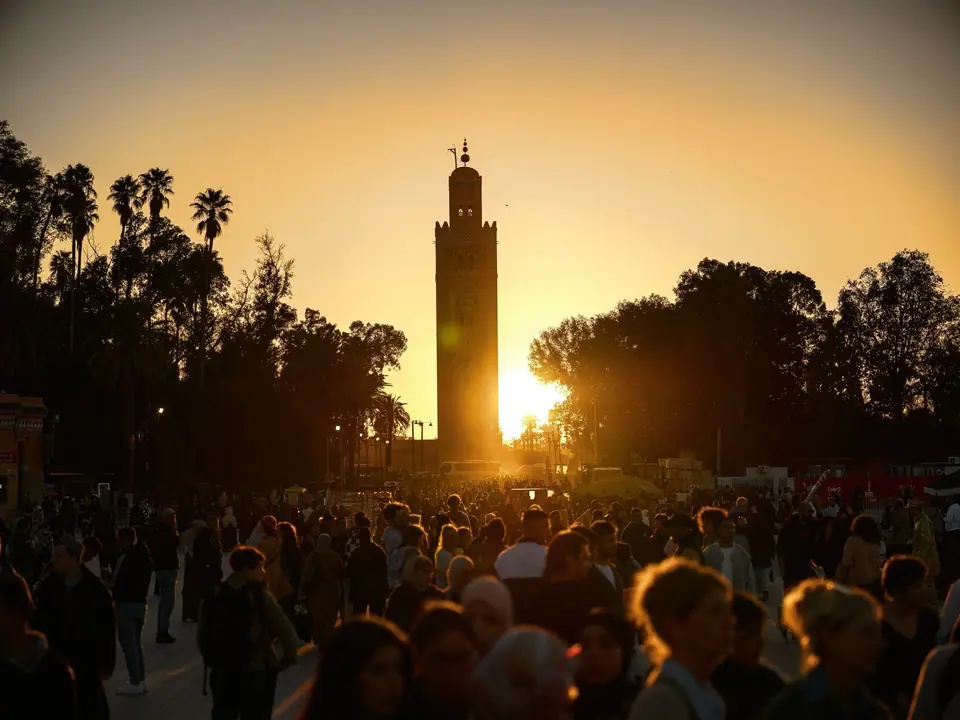
- The signature scene: Jemaa el-Fna at dusk, when the food stalls open and the square fills with musicians and storytellers.
- The best free sights: the square, the ramparts, the lanes, the Koutoubia gardens and the exteriors of the mosques cost nothing.
- The classic evening: a rooftop mint tea above the square, followed by dinner at the food stalls or in a riad.
- The biggest mistake: following a stranger who offers to show you a shortcut or tells you a place is closed.
- When to go: spring and autumn, covered in our best time to visit Marrakech guide.
- Where to sleep: a riad inside the medina for atmosphere, or the newer Guéliz district for modern comforts. More in our Marrakech where to stay guide.
The route that works: start at the Koutoubia, walk through Jemaa el-Fna to the souks, visit the Ben Youssef Madrasa, then spend the afternoon in the southern palaces and finish back at the square. Our Marrakech 3-day itinerary shows how it fits into a longer stay, and the medina guide gives a shorter summary.
Gates, squares and the shape of the old city
The medina is roughly oval, with Jemaa el-Fna, the great central square, at its heart and the Koutoubia mosque just to the south-west. The souks run north from the square towards the Ben Youssef Madrasa. To the south lie the royal palaces, the Saadian Tombs and the old Jewish quarter, the Mellah. The ramparts are pierced by a series of gates, called babs, some of them beautifully decorated. Bab Agnaou, near the Saadian Tombs, is the most elegant.
There are two simple ways to keep your bearings. The minaret of the Koutoubia is visible from many spots and is a reliable landmark, and the square is always near the centre. Also, remember that lanes with shops usually lead towards the square or a gate, while quiet, empty alleys often end at a private house. A map app works, but signal drops in the covered souks, so download an offline map and treat getting lost as part of the experience.
The Koutoubia and the gardens around it
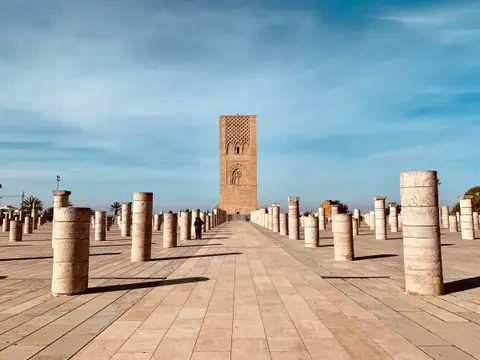
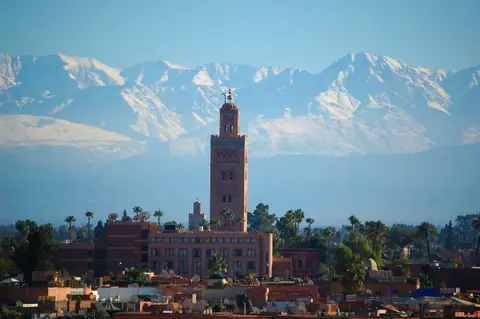
The Koutoubia mosque, built in the twelfth century, is the largest in the city and the model for several other great minarets, including the Giralda in Seville and the Hassan Tower in Rabat. The minaret is about seventy metres high, built of pink sandstone, and decorated with carved panels that vary on each face. Non-Muslims cannot enter the mosque, but its grounds are free to explore, and the gardens beside it are a pleasant place to rest in the shade.
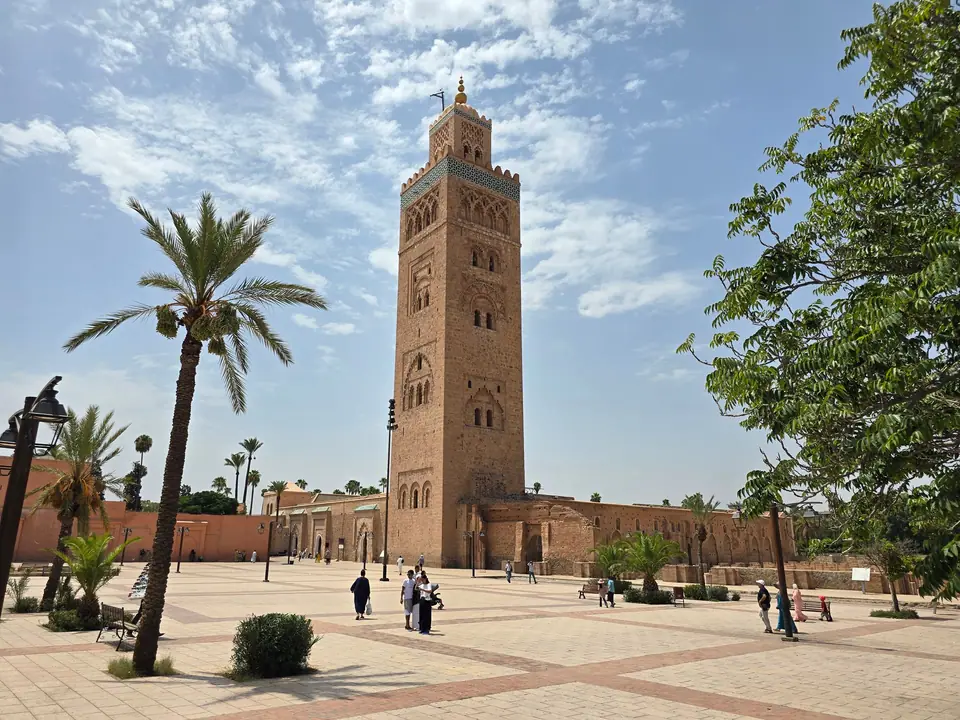
The minaret is at its best in the late afternoon, when the sandstone glows. At dusk the call to prayer rings out across the city from dozens of towers, a sound that stays in the memory long after you leave. The mosque is a short walk from the main square, so it makes a natural starting point for a day in the medina.
Jemaa el-Fna by day and by night
Jemaa el-Fna is the beating heart of Marrakech, a huge open square that UNESCO has recognised for its living traditions of storytelling, music and performance. By day it is quiet and a little hot, with orange-juice sellers, henna artists and the occasional snake charmer. As the sun sets, the square transforms. Food stalls roll out in rows, smoke from the grills fills the air, and circles of spectators gather around musicians, acrobats and storytellers.
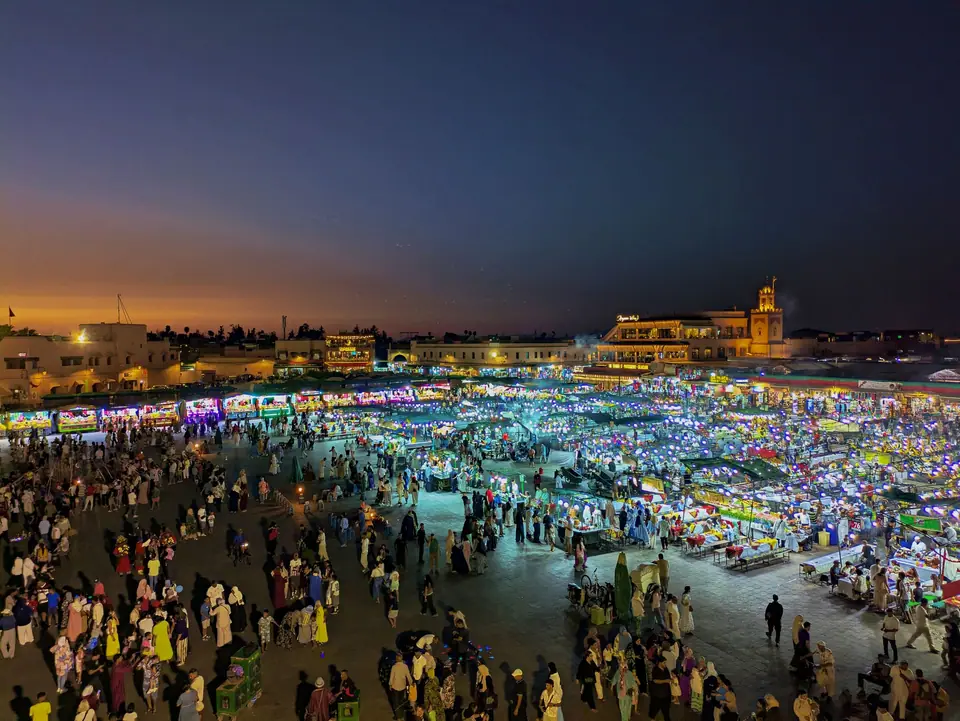
It is lively and fun, but you should know how it works. Performers expect a tip if you take their photograph, snake charmers and monkey handlers may press an animal on you, and henna artists can start working before you agree. Politely say no and keep walking. For the best view without the hassle, take a table on a cafe terrace overlooking the square and watch the show from above. Our Jemaa el-Fna guide covers the stalls, the safety tips and the best terraces in more detail.
Into the souks
North of the square, the lanes narrow and the souks begin. They are organised by trade, so you pass from the spice sellers to the lantern makers, from the leather workers to the woodcarvers, and from the babouche slipper shops to the metal workers hammering brass. The main artery is the Souk Semmarine, which leads north and branches into smaller markets. Covered with lattices of reeds and wooden slats, the lanes let in strips of sunlight that fall on carpets, lamps and pyramids of spices.
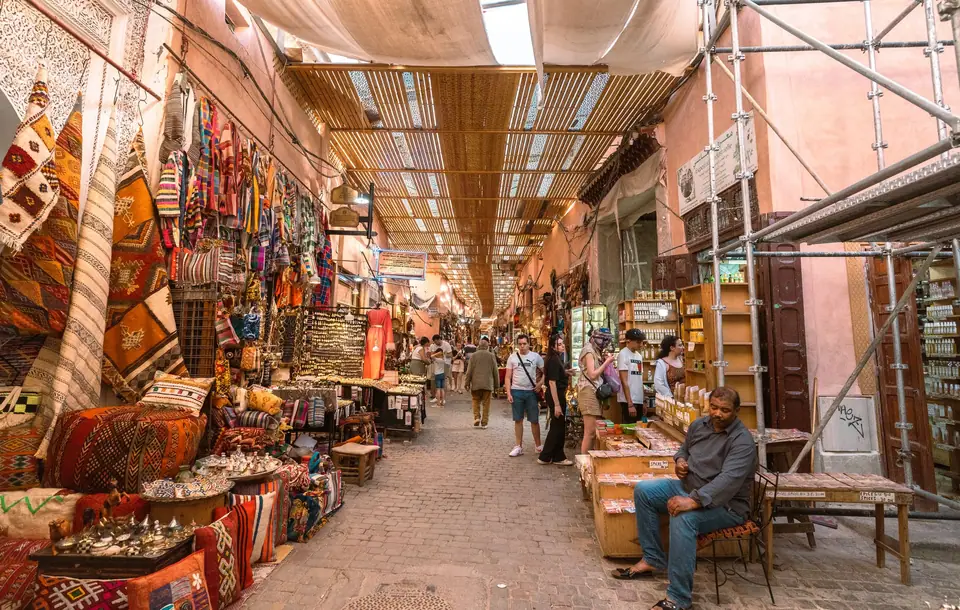
Take your time. A satisfying souk visit is about wandering, sipping tea and chatting, not about ticking items off a list. Learn a few phrases of greeting, smile and do not feel pressure to buy. If a seller invites you in, you may look without obligation. Bargaining is expected, and our approach is simple: decide what you would be happy to pay, start well below it, and walk away politely if the price does not come near. Many shops will call you back.
Ben Youssef Madrasa and the northern quarter
At the northern end of the souks stands the Ben Youssef Madrasa, a former Islamic college founded in the fourteenth century and rebuilt in the sixteenth. Hundreds of students once lived in the tiny cells around its courtyard. Today it is open to visitors, and the courtyard, with its carved cedar, stucco and zellige tile work around a central pool, is one of the loveliest rooms in Morocco. The calm after the souks is remarkable.
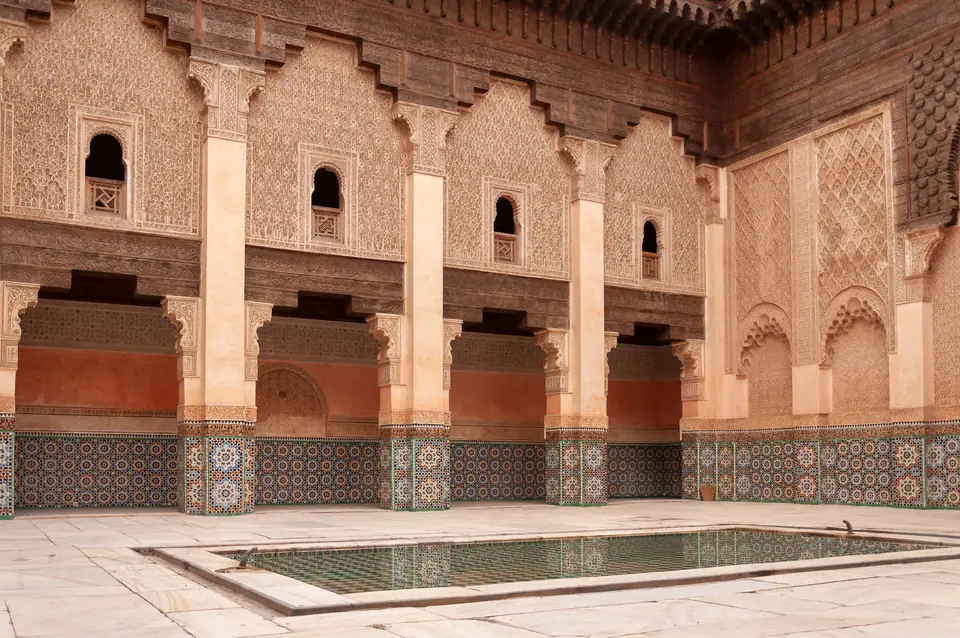
Close by, the Marrakech Museum occupies a palace with a grand central hall and a collection of Moroccan art, and the small Almoravid Koubba is a rare survivor of the eleventh century. A little further on, the tanneries of the northern edge are the most traditional leather workshops in the city. Visits are smelly and the surrounding touts can be pushy, so decide in advance if you want to go.
Bahia, El Badi and the Saadian Tombs
South of the square lies the royal quarter, where three sights sit within walking distance of one another. The Bahia Palace was built in the late nineteenth century for a grand vizier and has rooms of painted cedar ceilings, mosaics and gardens. The El Badi Palace, from the sixteenth century, is now a ruin of vast courtyards and sunken gardens, and storks nest on its walls. The Saadian Tombs, sealed off for centuries and rediscovered in the early twentieth century, hold the graves of a dynasty under a hall of marble columns and gilded ceilings.
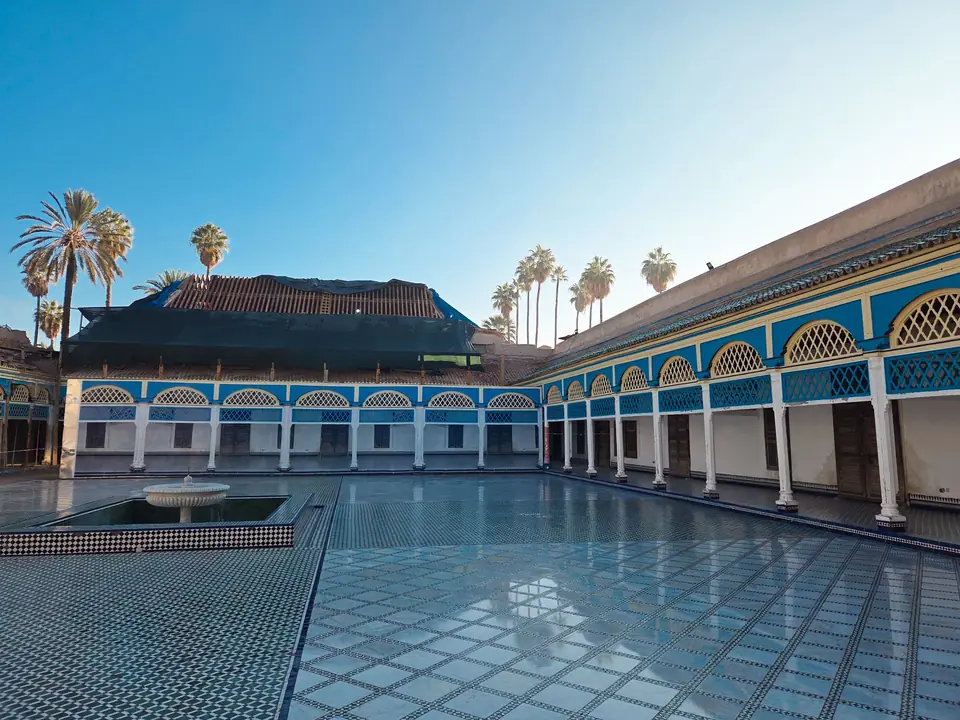
All three are popular with tour groups, so aim to arrive soon after opening, when the courtyards are cool and quiet. The Saadian Tombs have a small entrance and long queues later in the day. The Mellah, the old Jewish quarter next door, deserves a short walk. Its lanes have balconies facing the street, unlike the blank walls of the Muslim quarters, and a small synagogue and a cemetery recall its history.
A rooftop break and a hammam
The medina is hard on the senses, so build in rests. Rooftop cafes and terraces are scattered across the old city and offer shade, mint tea and a view of the minarets and the Atlas Mountains on a clear day. Order a tea or a fresh juice and stay as long as you like. Several of the best overlook Jemaa el-Fna.
A hammam, the traditional steam bath, is the other classic way to recover. Local hammams are inexpensive and basic, while spa hammams in riads are quieter and offer scrubs and massages. Either way, you sit in a warm, steamy room while an attendant scrubs you with black soap and a rough glove. It may feel strange, and you will emerge feeling clean and relaxed. Bring a swimsuit or follow the lead of the other bathers, and ask your host which hammam they recommend.
A slow day through the red lanes
- Early morning: start at the Koutoubia gardens before the heat, then walk to Jemaa el-Fna.
- Mid-morning: enter the souks, aiming for the spice market and the Ben Youssef Madrasa.
- Midday: have lunch in a courtyard or on a rooftop, and rest through the hottest hours.
- Afternoon: visit the Bahia Palace and the Saadian Tombs, or the El Badi ruins.
- Late afternoon: walk the Mellah, then a mint tea above the square.
- Evening: eat at the stalls on Jemaa el-Fna or in a riad restaurant, and wander the square.
The pace is slow by design. In summer, the sensible way to do the medina is to see the sights in the morning and evening, and retreat to a riad pool in between.
Adding a second and third day
With more time, add the Jardin Secret, a restored garden palace, the Mouassine district with its fountains, or a day outside the walls. The Majorelle Garden, with its cobalt-blue villa and cacti, lies in the newer part of town and is a pleasant contrast. The Atlas Mountains are close, and our Atlas Mountains day trip covers villages, waterfalls and mountain scenery. For a taste of the desert, the Agafay desert camel ride is a short drive from the city.
Majorelle Garden and the newer town
When the medina becomes too much, the newer district of Guéliz, a short taxi ride away, offers a change of pace. Its wide boulevards, cafes and boutiques were laid out under the French protectorate in the early twentieth century. The Majorelle Garden, created by the painter Jacques Majorelle and later restored by Yves Saint Laurent, is a quiet botanical garden of cacti, bamboo and fountains around a villa painted a vivid cobalt blue. A museum devoted to Saint Laurent stands next door, and a small Berber museum sits inside the garden. Book ahead for the garden, since entry is limited at busy times.
Guéliz also has some of the best modern restaurants and coffee shops in the city, and a few galleries that show contemporary Moroccan art. It makes a pleasant evening alternative if you want a quiet dinner and a glass of wine, which are easier to find here than in the medina.
Mint tea and the rituals of hospitality
Tea in Morocco is more than a drink. Green tea with fresh mint and plenty of sugar is served at the start of a business deal, at the end of a meal and whenever a guest arrives. The host pours from a height to make a froth, and the first glass is traditionally the strongest. Accepting a glass in a carpet shop does not oblige you to buy, though it does invite conversation. In the same spirit, being invited into a home is an honour. If it happens, take off your shoes, accept what is offered and bring a small gift such as pastries.
Taxis, handcarts and arriving by air
Marrakech Menara airport is close to the city, and a taxi or the airport bus reaches the medina in about twenty minutes. Our how to get to Marrakech guide covers trains from Casablanca and flights. Cars cannot enter the narrow lanes, so you will usually be dropped at a gate or a square, and your riad may send someone to meet you. Porters with handcarts carry luggage the last stretch, so agree the fee beforehand.
Within the medina, you walk. Outside it, small beige taxis ply the roads, and insist on the meter or agree a fare before you set off. Horse-drawn carriages are a tourist ride around the ramparts and are best avoided in the heat.
Courtyard houses and where to rest your head
The riad is the classic way to stay in the medina. These are old townhouses built around an inner courtyard, often with a fountain, orange trees and a rooftop terrace, and converted into small guesthouses. Rooms are quiet, cool and beautiful, and breakfast is usually served in the courtyard. The trade-off is that finding them can be confusing, since many sit at the end of unmarked alleys, so ask your host for directions or a meeting point. For a bigger pool and a swifter journey, the newer neighbourhood of Guéliz has modern hotels. Our Marrakech where to stay guide compares the areas.
Tagines, couscous and rooftop dinners
Moroccan food is rich, fragrant and mostly gentle on the palate. Look for tagines, slow-cooked stews of lamb, chicken or vegetables with preserved lemon and olives, couscous, traditionally eaten on Fridays, harira, a tomato and lentil soup, and pastilla, a sweet and savoury pie of pigeon or chicken in thin pastry. Grilled meats and salads are everywhere, and in the evening the stalls of Jemaa el-Fna offer an entire meal.
The food stalls are fun and generally fine, but pick a busy stall where locals eat and where the food is cooked in front of you. For a more relaxed dinner, riad restaurants and rooftop terraces offer set menus. Tea is a ritual, poured from a height into small glasses with plenty of sugar, and refusing a second glass can seem impolite. A cooking class, such as our Marrakech cooking class, is a hands-on way to learn the dishes.
Leather, lanterns and other things to bring home
The souks are one of the best places in the world to shop for crafts. Look for leather bags and babouche slippers, brass and iron lanterns, woven baskets, hand-knotted rugs, Berber jewellery, painted ceramics, argan oil and spices. Quality varies enormously, so touch and compare before you buy, and walk away if a price feels wrong. Fixed-price cooperatives and some government-run shops offer a calm way to see what things should cost, which helps you bargain elsewhere. Most large purchases can be shipped home, but arrange this carefully and keep receipts.
Scams, touts and keeping your cool
The medina is generally safe, and violent crime is rare, but hustle is part of daily life. The most common trick is the friendly stranger who says the road ahead is closed, or that the tannery is only open today, and then leads you to a shop where he earns a commission. If you did not ask for a guide, politely decline and keep walking. Others will offer henna, photos with animals or help with directions, and then ask for payment. A firm no, said with a smile, is usually enough. Official guides wear a badge and can be booked through your riad.
Dress modestly, covering shoulders and knees, which also helps with the sun and unwanted attention, and keep valuables out of sight. Our what to wear in Marrakech guide has detailed advice. Ask before photographing people, since many do not want to be photographed, and in Ramadan avoid eating or drinking openly during the day.
Seasons, heat and festival months
Marrakech is hot. From June to September, daytime temperatures can pass forty degrees, and the lanes feel like an oven in the afternoon. Spring and autumn are the best seasons, with warm days and cool evenings, while winter is sunny but chilly after dark, and riads can be cold. The month of Ramadan changes the rhythm of life, with shops and cafes closing during the day and the city coming alive after sunset. It can be a memorable time to visit, but plan around the shorter hours.
Beyond the walls
Outside the medina, Marrakech has more to offer. Guéliz, the French-built district, has shops, cafes and the Majorelle Garden. The Palmeraie is a large palm grove to the north. Further afield, the Atlas foothills, the waterfalls of Ouzoud and the coastal town of Essaouira can all be reached in a day. Our things to do in Marrakech page lists them.
Weaving the medina into a Morocco trip
For many travellers, Marrakech is the start or the end of a longer loop through Morocco. Our Marrakech travel guide covers money, transport and etiquette, and our Morocco guides help you link the city to Fes, the desert and the coast.
Questions we hear from first-time visitors
Is two days enough for the medina?
Two days cover the highlights. Add a third for a hammam, a cooking class, and a slower pace.
Do I need a guide?
Not necessarily, but a licensed guide helps for a first morning in the souks. Book through your riad and agree the arrangements beforehand.
Is the medina safe for solo women?
Many women travel alone and enjoy it, but you should expect unwanted attention. Dress modestly, ignore comments, avoid empty alleys after dark and use taxis in the evening.
Can I use cards in the souks?
Mostly no. Carry cash in small notes for shops, tips and taxis, and use cash machines in the newer districts.
What is the best time of day for photographs?
Early morning and late afternoon, when the light is soft and the lanes are quiet. Always ask before photographing people.
Can I visit mosques?
Most mosques in Morocco are closed to non-Muslims. The Ben Youssef Madrasa and several museums and palaces are open and show similar architecture.
For everything else, the pages linked above cover the practical details of your stay.