


























Atlanterhavsparken Aquarium, Tueneset, and Hessa
Visit Atlanterhavsparken at Tueneset on Hessa, one of Northern Europe's largest saltwater aquariums, and hike coastal paths and Sukkertoppen.
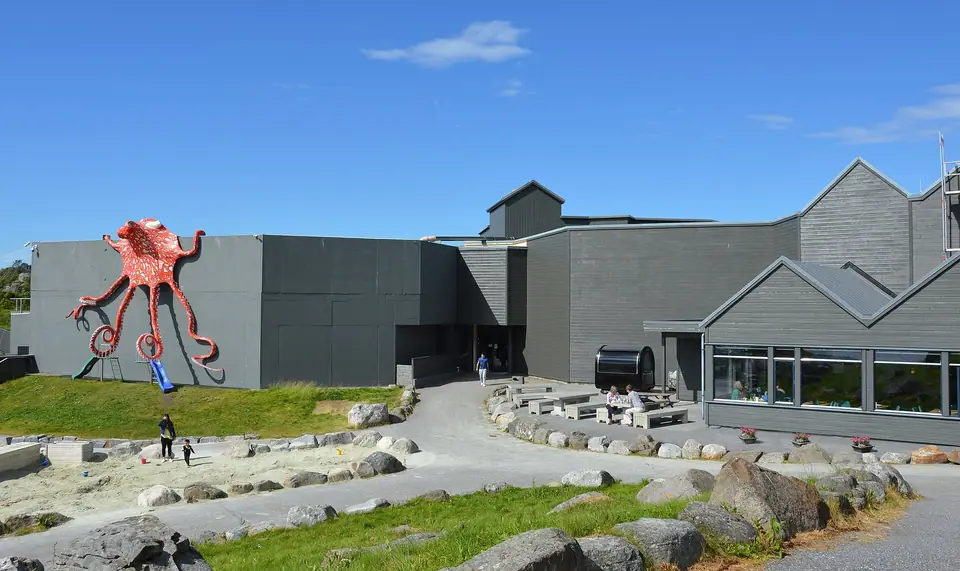
Roughly 3 to 3.5 kilometres west of central Ålesund across Steinvågsbrua (opened on 30 August 1953) lies the 4-square-kilometre island of Hessa (also spelled Heissa), the westernmost of the three main town islands. Facing the open Norwegian Sea at Tueneset near Skarbøvika, Hessa is home to Atlanterhavsparken (the Atlantic Sea-Park), one of Northern Europe's largest saltwater aquariums and Norway's first national marine science centre (vitensenter) following a 2018 partnership with the Norwegian University of Science and Technology (NTNU) and Møreforsking. Built directly into the wave-swept coastal bedrock between sea and mountain, the aquarium combines deep-water Atlantic habitats with outdoor marine mammal bays, wartime coastal artillery trails, and the 314-metre (1,030-foot) peak of Sukkertoppen.
From 1951 Foundation to the 1998 Tueneset Facility and Marine Science Centre
Originally founded as a limited company in 1951 and housed from 1967 in the basement of the Fishermen's House (Fiskernes Hus) near Brosundet, the aquarium became a foundation in 1976 with the goal of building a modern coastal park on the outer shore of Hessa. Opened on 15 June 1998 by King Harald V and Queen Sonja during Ålesund's 150th municipal anniversary, the Tueneset facility integrates nearly 4,000 square metres of indoor exhibition space with 6,000 square metres of rocky outdoor shoreline. Welcoming more than 140,000 visitors each year as a cultural and natural heritage attraction in Møre og Romsdal, Atlanterhavsparken expanded its educational mission in 2018 when it was designated Norway's first national marine science centre, adding interactive oceanography and aquaculture labs for visiting students and families.
Unlike city-centre aquariums enclosed inside windowless halls, the low-slung concrete and timber buildings at Tueneset follow the natural clefts of the rocky headland, so visitors move between dim underwater galleries and bright coastal lookouts where North Sea swells break against the outer skerries.
The 4-Million-Litre Great Atlantic Tank and Indoor Marine Exhibits
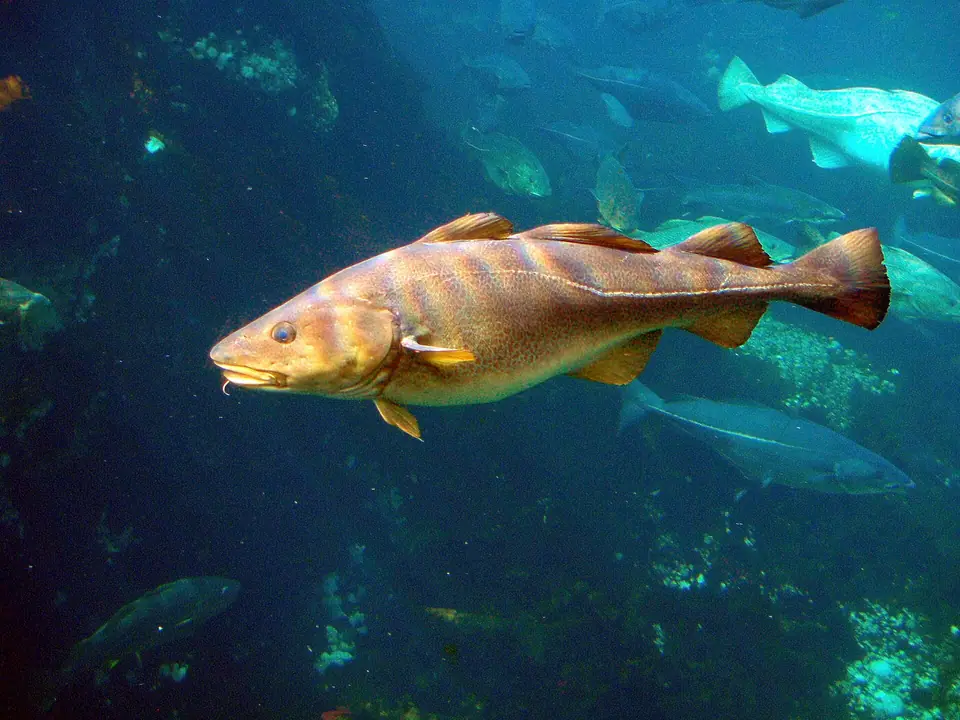
Inside the main building, 11 large landscape aquariums, two open touch pools, and two activity pools trace marine ecosystems from shallow Sunnmøre kelp forests and fjord thresholds down to the cold trenches of the North Atlantic Ocean. The centrepiece of the indoor halls is the 4-million-litre Great Atlantic tank (Stortanken), measuring 36 metres long and 17 metres wide, filled with unfiltered seawater pumped directly from a depth of 45 metres outside Tueneset so temperature and plankton levels mirror the surrounding ocean. Visitors gather in the tiered amphitheatre to watch daily hand-feeding dive shows of large Atlantic cod, halibut, wolfish, conger eels, and salmon through a single 18-metre-wide by 4-metre-high acrylic viewing panel cast 25 centimetres (10 inches) thick to withstand the water pressure. In the shallow touch pools, children and adults can handle starfish, crabs, sea urchins, and flatfish under the guidance of marine educators, while adjacent galleries explain how cold ocean currents sustain Norway's commercial klippfisk and coastal fisheries.
Selbukta Seal Basin, Humboldt Penguins, and Coastal Otters
Stepping outside onto the natural rocky shore of Tueneset, walkways connect three large open-air marine mammal and seabird habitats fed by circulating Atlantic seawater. Opened in 2014, Selbukta is a 15-million-litre natural seawater bay for harbour seals (steinkobber) that ranks among the largest seal habitats in the world, complete with an underwater viewing window and shoreline boardwalks for daily feeding sessions. Alongside Selbukta sit a landscaped coastal enclosure for Humboldt penguins and an outdoor pool for European coastal otters, allowing visitors to observe feeding routines against a backdrop of passing fishing vessels and outer islands.
Tueneset Coastal Trails, Sukkertoppen (314 m), and Slinningsodden
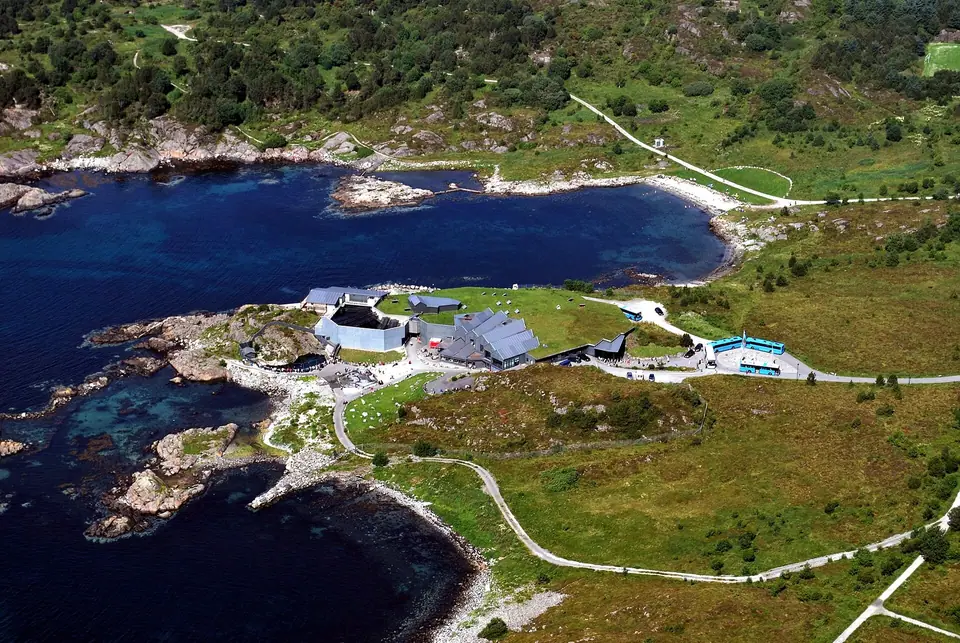
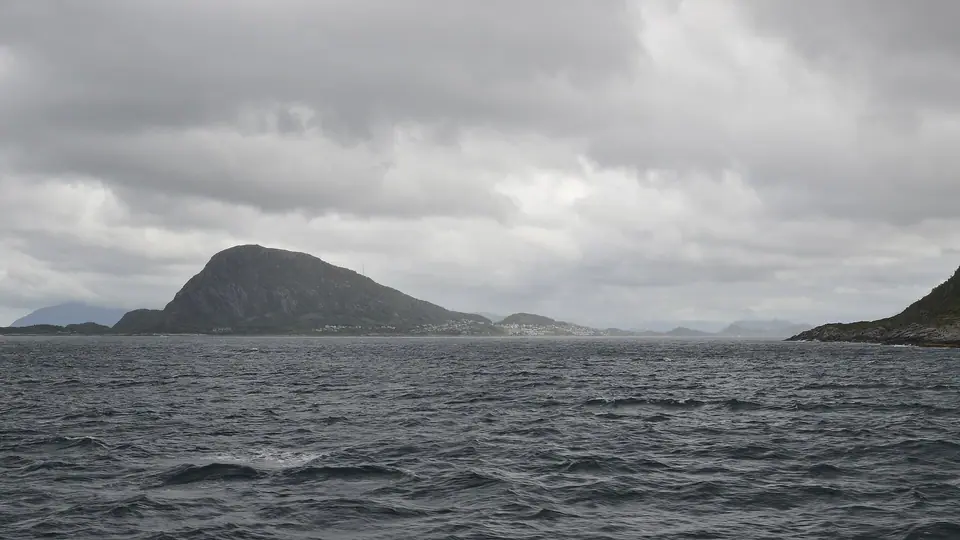
Surrounding the aquarium walls, the Tueneset coastal recreation area encompasses wave-washed pebble and boulder beaches, sheltered diving coves, picnic lawns, and gravel walking paths. Scattered across the headland are concrete bunkers, gun pits, and observation posts from Second World War German coastal artillery emplacements built to guard the shipping approaches to Borgundfjorden and Storfjorden. Looking northwest from the shoreline paths, you can see across the open sound toward Giske and the mountain island of Godøya.
Rising directly behind Hessa's residential streets is the 314-metre (1,030-foot) peak of Sukkertoppen (Sugarloaf), the prominent summit on the three central town islands. A well-trodden footpath climbs from the school and bus stop at Skarbøvika up the eastern shoulder to the elongated summit ridge, rewarding hikers with sweeping views back across Aspøya and Nørvøya toward Mount Aksla as well as south across Borgundfjorden to the jagged skyline of the Sunnmøre Alps. On the southeastern tip of Hessa at Slinningsodden, local builders stack wooden crates and pallets each June for the midsummer Slinningsbålet bonfire on 23 June, which set a Guinness World Record of 47.4 metres in 2016 and reached 40.46 metres in 2023. FRAM local buses and seasonal shuttle buses link Kongens gate and the central bus station in Ålesund with Skarbøvika and Tueneset, while drivers find ample parking right outside the aquarium entrance.
- Great Atlantic Tank (Stortanken): A 4-million-litre indoor saltwater tank (36 by 17 metres) pumped from 45 metres depth and viewed through an 18-by-4-metre acrylic window cast 25 centimetres thick, with daily hand-feeding dive shows.
- Selbukta and Outdoor Bays: A 15-million-litre natural seawater basin for harbour seals (opened 2014) alongside outdoor Humboldt penguin and European coastal otter enclosures overlooking the sea lane.
- Marine Science Centre (Vitensenter): Interactive oceanography, aquaculture, and touch-pool exhibits established in 2018 with NTNU and Møreforsking across the 4,000-square-metre indoor complex.
- Tueneset Coastal Park: Free-access shoreline walking trails, pebble coves, diving entries, and Second World War coastal defence bunkers surrounding the aquarium headland on western Hessa.
- Sukkertoppen (314 m) and Slinningsodden: Island ridge hike starting from Skarbøvika with views over central Ålesund and the Sunnmøre Alps, plus the eastern spit where the midsummer Slinningsbålet bonfire is built each June.
Because the indoor marine galleries and outdoor seawater pools sit side by side on the Tueneset peninsula, visitors can time their walk around the headland between the scheduled diving shows in the Great Atlantic tank and the outdoor feeding sessions at the penguin, otter, and harbour seal enclosures. An on-site waterfront café overlooks the outer skerries toward Godøya, making it easy to spend half a day on Hessa before riding the bus back across Steinvågsbrua to Aspøya and Brosundet, or continuing on foot up the Skarbøvika trail to the summit ridge of Sukkertoppen.
Traveller tips
Real advice from people who have been to Atlanterhavsparken Aquarium, Tueneset, and Hessa. Every tip is read by our team before it goes live.
No tips yet. Been here? Yours could be the first.
Thank you! Your tip will appear here after a quick review.
More in Ålesund
Continue exploring Ålesund with related neighbourhood, food, and planning guides
Klippfisk, Bacalao, Blandaball, and Sunnmøre Ferry Sveler
Ålesund, Norway

Vigra Airport (AES), Hurtigruten, Rail-Bus Links, and Subsea Tunnels
Ålesund, Norway
Best Areas to Stay: Brosundet, Aspøya, Kongens gate & Skansekaia
Ålesund, Norway
Sunnmøre Coastal Climate, Fjord Seasons, and Slinningsbålet
Ålesund, Norway
