


























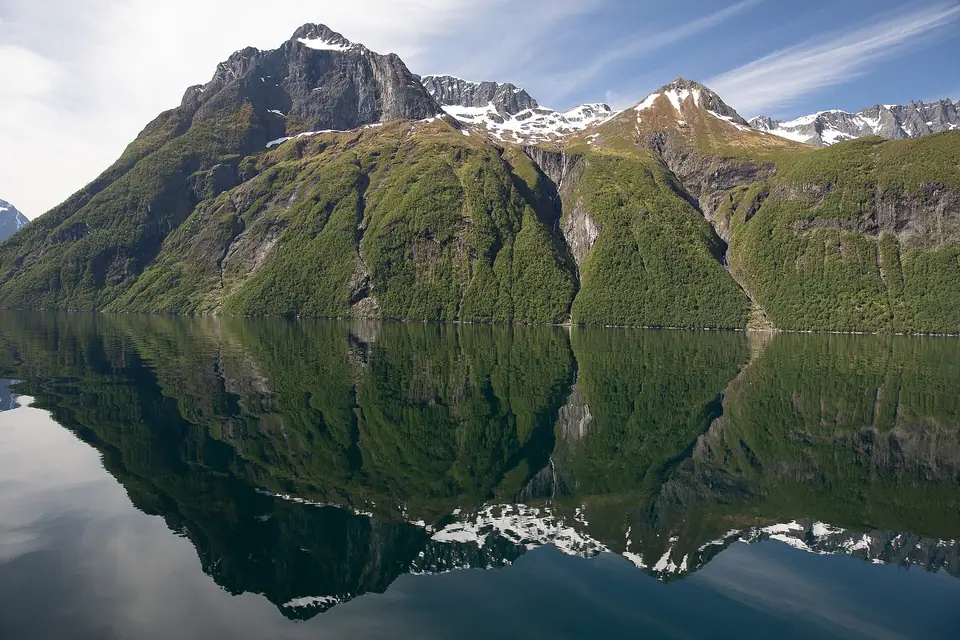
Hjørundfjorden Cruises, Øye, and the Sunnmøre Alps
Sail from Ålesund into the 33-kilometre Hjørundfjorden, flanked by 1,700-metre peaks of the Sunnmøre Alps, Sæbø, Urke, and the 1891 Hotel Union Øye.
Cutting 33 kilometres (36 kilometres including its innermost reach to Bjørke) due south from Storfjorden into the heart of the Sunnmøre Alps (Sunnmørsalpene), Hjørundfjorden is the wildest and least commercialised of the great fjords reachable on a day trip from Ålesund. Unlike wider coastal waterways, Hjørundfjorden narrows from five kilometres across at Hundeidvika in the north to a deep glacial trench reaching 441 metres below sea level south of Stavset, walled in on both sides by jagged granite and gneiss horns that rise straight out of the salt water to between 1,300 and 1,717 metres.
The Peaks of the Sunnmøre Alps Framing the Fjord
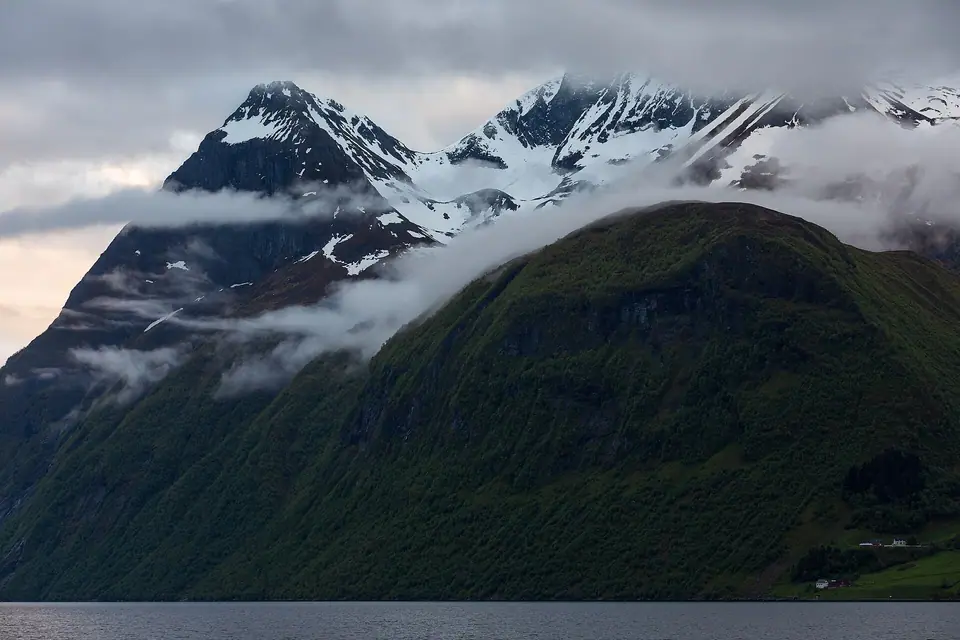
The fjord divides two alpine peninsulas across Ørsta, Sykkylven, Stranda, and Volda municipalities, creating a dramatic corridor of hanging valleys, avalanche chutes, and knife-edged ridges sculpted by Pleistocene glaciers. Along the eastern Råna peninsula, sheer rock walls broken by steep snow gullies climb directly from the shoreline to Råna (1,586 metres), Store Smørskredtind (1,631 metres), Jakta (1,588 metres), and the pointed rock pyramid of Slogen (1,564 metres), celebrated by hikers and ski mountaineers for its uninterrupted view down onto the intersecting arms of Hjørundfjorden and Norangsfjorden.
Across the water on the western Kolås peninsula, hanging U-shaped valleys above Standal and Sæbø open toward Skårasalen (1,542 metres), Kolåstinden (1,432 metres), Ramoen, also called Jønshornet (1,419 metres), Randers Topp (1,414 metres), Hornindalsrokken (1,529 metres), and Kvitegga, the highest summit in the range at 1,717 metres above sea level. Because few roads could be blasted along the vertical cliff bases, small fjord hamlets such as Trandal and Skår remained accessible primarily by boat, preserving quiet waterside boathouses and steep hay meadows beneath the peaks.
Norangsfjorden, Urke, and the 1891 Dragon Style Hotel Union Øye
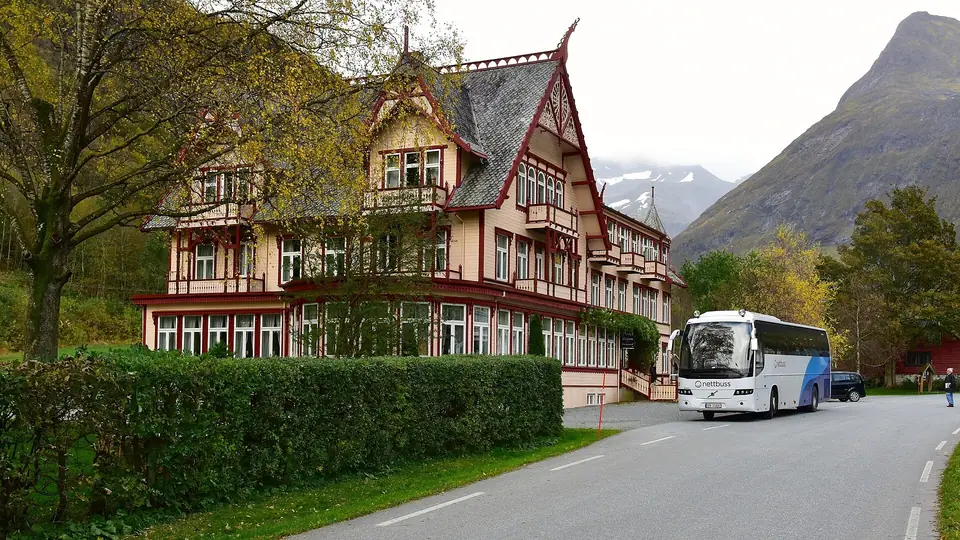
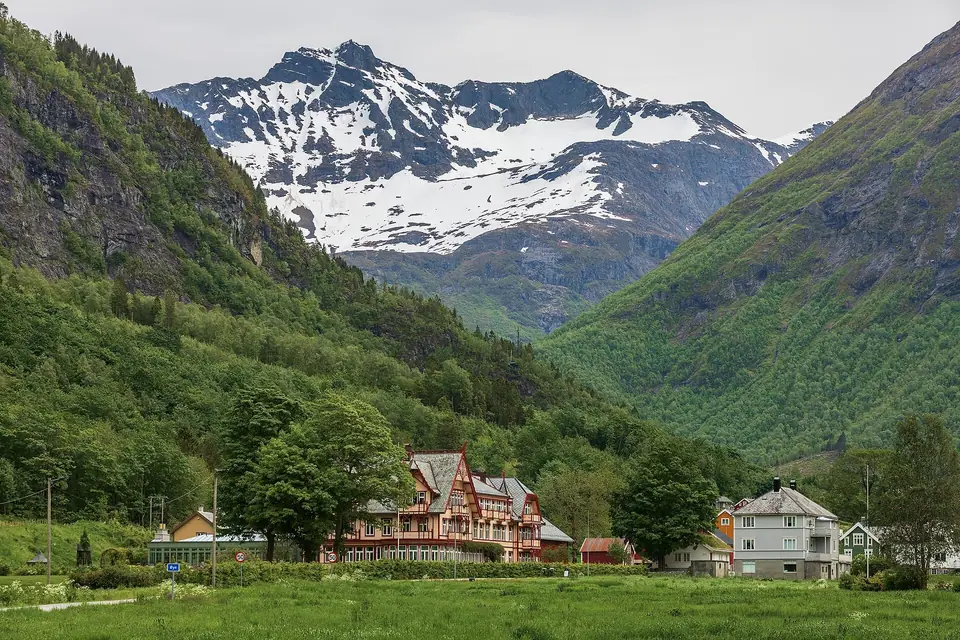
Halfway down the eastern shore at Lekneset, the narrow four-kilometre side arm of Norangsfjorden branches east past the terraced hamlet of Urke to the village of Øye at the foot of Slogen (1,564 metres) and Skruven (1,584 metres). Here in a quiet meadow stands Hotel Union Øye, a timber Dragon Style (dragestil) mountain hotel with carved gables, verandas, and teardrop slate shingles restored to its 1891 appearance, one of only four surviving historic wooden hotels in Møre og Romsdal.
From the late 19th century onward, European royalty, writers, composers, and pioneer mountaineers arrived at Øye by steamship and horse carriage. Its guestbook and individually named bedrooms commemorate stays by Kaiser Wilhelm II of Germany, Queen Wilhelmina of the Netherlands (who holidayed here 12 times between 1921 and 1955), King Oscar II of Sweden and Norway, composer Edvard Grieg, authors Knut Hamsun, Henrik Ibsen, Karen Blixen, and Sir Arthur Conan Doyle, and British mountaineer William Cecil Slingsby. Stopping at Hotel Union Øye for lunch, afternoon coffee, or an overnight stay lets you step straight from the fjord quay into late-19th-century alpine salons.
Norangsdalen Valley and the Submerged Farm at Lygnstøylvatnet
From Øye, County Road 655 climbs east through the narrow, rock-strewn canyon of Norangsdalen, historically the overland carriage route linking Hjørundfjorden with Sunnylvsfjorden at Hellesylt. Halfway up the valley floor lies Lygnstøylvatnet, a crystal-clear mountain lake formed on 26 May 1908 when a massive rockslide from Mount Keipen dammed the Lygna river and submerged the summer pasture farm (seter) of Lygnstøylen along with the old valley road and bridge. On calm summer days, you can stand on the roadside viewing platform and look down through the clear water to see the stone walls of the drowned 1908 farm buildings, stone gateposts, and tree stumps resting on the lakebed.
Standal, Sæbø, Trandal, and Fjord Ferry Crossings
On the western shore of Hjørundfjorden opposite Lekneset sits the village of Sæbø at the mouth of Bondalen valley, where a parish church, fjordside hotel, and small beach look straight across the water toward Slogen and Jakta. Just north along the same shore, the road over the Standalseidet pass descends from Festøya to Standal, the trailhead for summer hikes and spring ski tours toward Kolåstinden (1,432 metres), while the tiny roadless hamlet of Trandal on the eastern shore draws boat visitors for its waterside swings and summer music gatherings. Beyond Sæbø, the innermost branch of the fjord continues past Stenneset to Bjørke at the southern foot of the mountains.
How to Visit from Ålesund by Boat, Hurtigruten, or Car Ferry
From Skansekaia in Ålesund, seasonal sightseeing catamarans and autumn Hurtigruten and Havila Kystruten coastal express ships cruise the full 33-kilometre length of Hjørundfjorden into Norangsfjorden, calling at Urke for shore excursions to Øye and Norangsdalen. By car, drive south from Ålesund via the Solevågen to Festøya ferry onto E39 and turn onto County Road 655 over the Standalseidet pass to Standal, where the local car ferry links Standal, Trandal, Sæbø, Skår, and Lekneset across the fjord. From Øye, drivers can continue through Norangsdalen to Hellesylt to pair Hjørundfjorden with a ferry crossing of Geirangerfjorden.
- Sightseeing Catamaran or Hurtigruten from Skansekaia: Direct round-trip fjord cruise from central Ålesund through Storfjorden and Hjørundfjorden into Norangsfjorden (Urke and Øye).
- Standal to Lekneset and Sæbø Ferry Loop: Drive south via the Solevågen to Festøya ferry (with a warm 1971 MRF ferry svele) and cross Hjørundfjorden between Standal, Sæbø, Trandal, and Lekneset.
- Hotel Union Øye (1891) and Norangsdalen: Visit the Dragon Style timber hotel beneath 1,564-metre Slogen and 1,584-metre Skruven and inspect the 1908 drowned farm at Lake Lygnstøylvatnet along County Road 655.
- Sunnmøre Alps Trailheads: Access summer ridge trails and spring ski-touring routes from Øye, Urke, Standal, and Sæbø beneath peaks rising up to 1,717-metre Kvitegga.
Unlike busier tourist corridors further south, Hjørundfjorden retains the quiet rhythm of working fjord villages connected by local shuttle ferries and mountain roads. Even if you do not climb the alpine ridges above Standal or Øye, sailing beneath the vertical rock walls of Store Smørskredtind, Jakta, and Slogen or driving through the boulder-strewn floor of Norangsdalen past the submerged 1908 ruins in Lake Lygnstøylvatnet delivers a lasting encounter with the Sunnmøre landscape. In September and October, when northbound coastal express liners detour from Skansekaia in Ålesund straight into Hjørundfjorden and Norangsfjorden, the combination of golden birch forests, dark fjord water, and fresh snow on the upper peaks makes this waterway one of the finest autumn excursions on the Norwegian coast.
Traveller tips
Real advice from people who have been to Hjørundfjorden Cruises, Øye, and the Sunnmøre Alps. Every tip is read by our team before it goes live.
No tips yet. Been here? Yours could be the first.
Thank you! Your tip will appear here after a quick review.
More in Ålesund
Continue exploring Ålesund with related neighbourhood, food, and planning guides
Giske Marble Church, Alnes Lighthouse, and Runde Bird Island
Ålesund, Norway
Klippfisk, Bacalao, Blandaball, and Sunnmøre Ferry Sveler
Ålesund, Norway

Vigra Airport (AES), Hurtigruten, Rail-Bus Links, and Subsea Tunnels
Ålesund, Norway
Best Areas to Stay: Brosundet, Aspøya, Kongens gate & Skansekaia
Ålesund, Norway
