Klippfisk, Bacalao, Blandaball, and Sunnmøre Ferry Sveler
Taste Ålesund's signature salted and dried klippfisk in Basque-inspired tomato bacalao, Sunnmøre blandaball dumplings, fresh shrimp, and warm sveler.
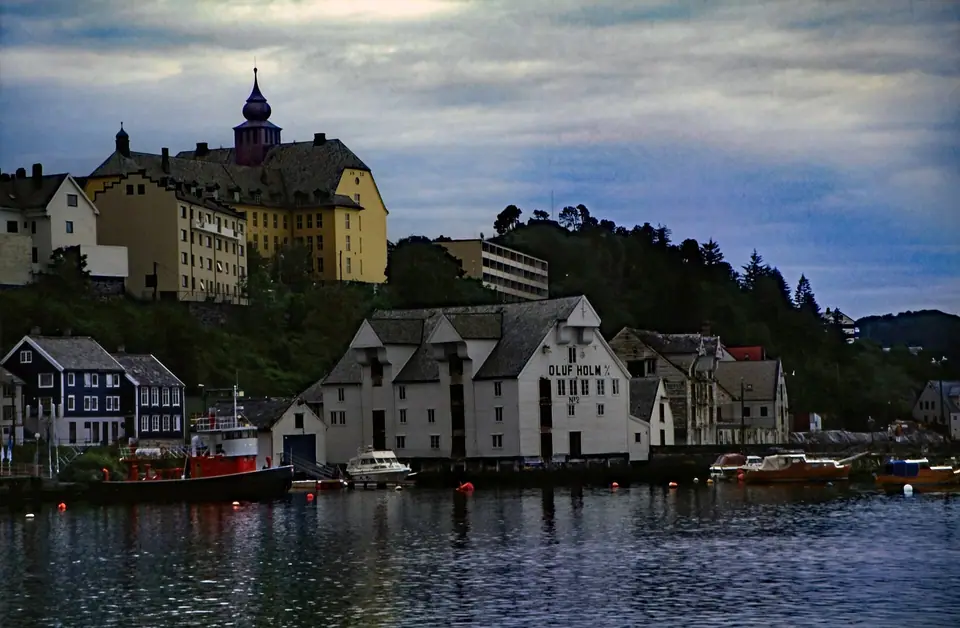
Food in Ålesund is inseparable from the cold waters of Borgundfjorden, the coastal spawning grounds off Sunnmøre, and the deep North Atlantic fishing banks. As Norway's largest fishing port by catch landings and home since the Second World War to the country's largest concentration of klippfisk (salted and dried Atlantic cod) producers and exporters, the town blends centuries-old fish-curing trade links with Spain, Portugal, Italy, and Brazil into everyday coastal dining across Aspøya and Nørvøya.
Klippfisk (Cliff-Fish) and the Curing Warehouses of Sunnmøre
Unlike unsalted stockfish (tørrfisk) hung in the round on open wooden racks in northern Norway, klippfisk is split flat into a broad triangle along the backbone, stacked in alternating layers with coarse sea salt in round piles (la) to mature and press for about a month, then washed, resalted, and dried. For more than two centuries prior to the 1950s, when indoor heated drying tunnels replaced open-air curing, women and children laid the salted cod fillets out each morning across sun-warmed coastal granite slabs (svaberg, giving the Norwegian name klippefisk or cliff-fish) and stacked them under wooden covers whenever rain clouds blew in from the Norwegian Sea.
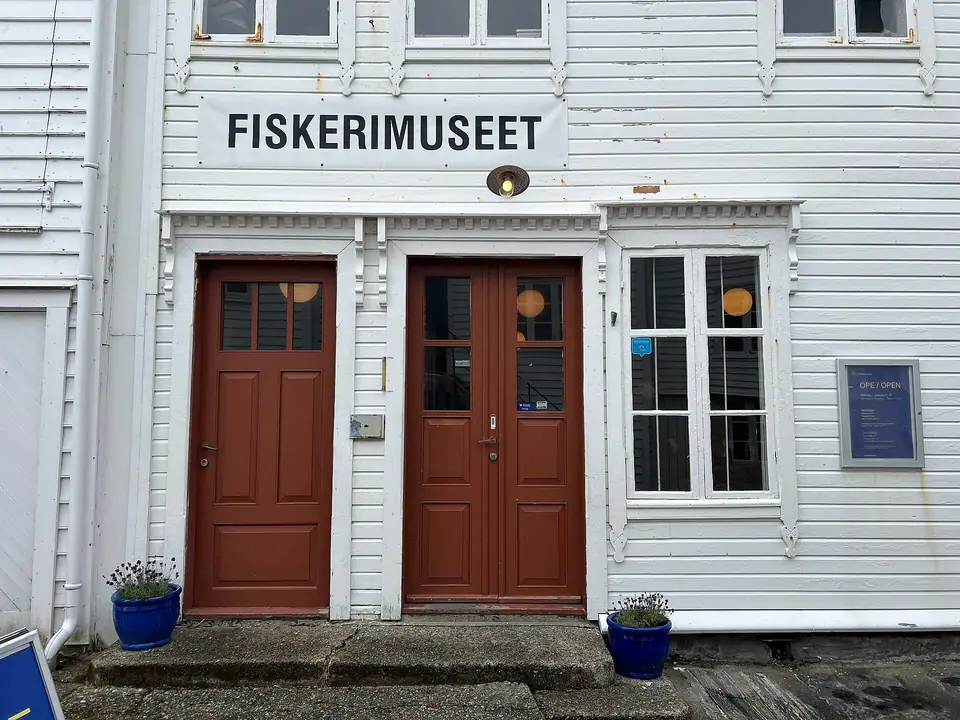
Following 17th- and 18th-century Dutch and Scottish merchants in Nordmøre, Ålesund trading houses led by Carl E. Rønneberg & Søn expanded Sunnmøre's overseas salt-cod trade in the 19th century, sending schooners and steamships loaded with cured cod to Bilbao, Porto, Lisbon, Genoa, Havana, and Rio de Janeiro. Among local curers, the prized export grade known as superior extra is made exclusively from live-bled, line-caught winter spawning cod (skrei) and dried twice for firm, pearly white flakes. Visitors can trace every stage of this maritime craft inside the 1861 Holmbua timber warehouse at the Fisheries Museum (Fiskerimuseet i Ålesund) on Molovegen before sitting down to dinner inside converted 1904 to 1907 stone sea warehouses along Apotekergata, Notenesgata, and Skansegata.
Norwegian Tomato Bacalao, Blandaball, and Quayside Fjord Shrimp
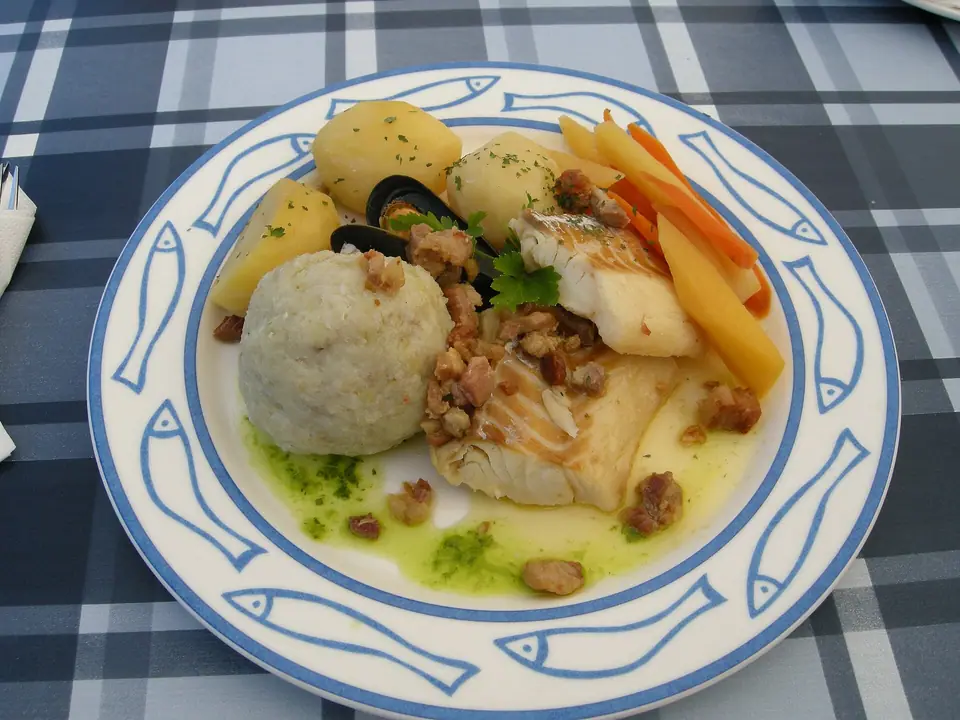
Before cooking in a kitchen, stiff dried klippfisk must be soaked in cold water for one to three days with two to three daily water changes to rehydrate the thick white fillets and reduce the salt content to a savoury balance. In Ålesund and across Møre og Romsdal, its signature preparation is Norwegian bacalao, adapted from bacalao a la Vizcaína after 19th-century Basque sailors and captains arrived in Sunnmøre ports to buy salt cod and shared their galley recipes with local merchant families. Documented as early as Fredrik M. Wallem's 1893 book Handelen med Tørfisk og Klipfisk, traditional Sunnmøre bacalao is slow-simmered in a heavy pot without stirring (to keep the fish flakes intact) using alternating layers of rehydrated klippfisk, thinly sliced local potatoes, yellow onions, olive oil, rich tomato purée, canned sweet pimiento peppers, garlic, and dried Spanish chilli pepper (spansk pepper).
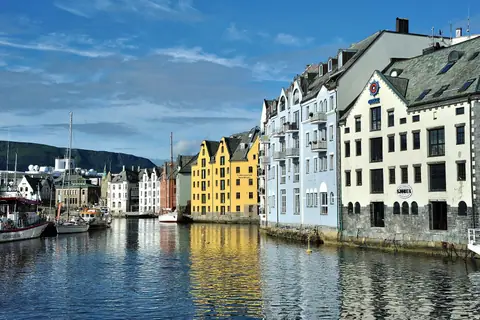
Alongside tomato bacalao and pan-roasted fresh winter skrei served with roe and liver (mølje), traditional cafés and lunch rooms across central Ålesund serve blandaball (also called potetball or raspeball), a coastal Sunnmøre dumpling made from grated raw and boiled potatoes mixed with ground white fish (such as haddock, pollock, or cod), barley flour, and onion, shaped around a cube of salted fat and simmered in broth with salted mutton or lamb, rutabaga mash (kålrotstappe), carrot, and crispy fried bacon. On sunny mornings and afternoons along Brosundet south of Hellebrua, local shrimp trawlers moor directly against the stone quayside steps to sell bags of sweet, freshly boiled fjord shrimp (reker) and crab claws to peel by the water.
MRF Ferry Sveler with Buttercream or Brunost Since 1971
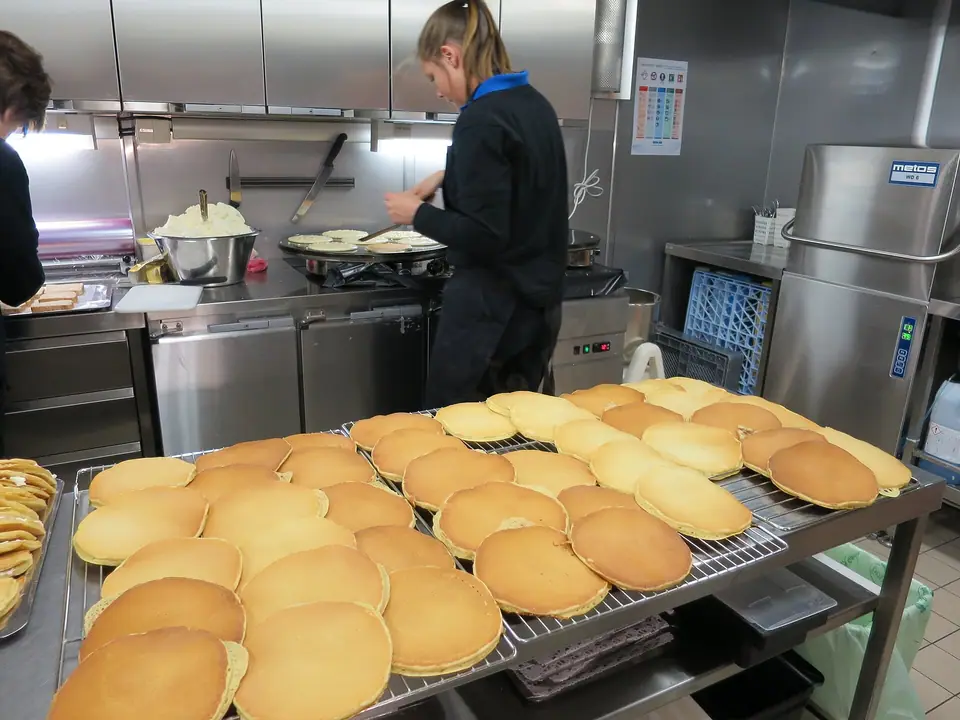
No journey across the Sunnmøre fjords or outer islands is complete without a warm svele (plural sveler), a soft griddle-baked cake measuring roughly 1 centimetre thick and 18 centimetres wide. Whisked from eggs, sugar, wheat flour, melted butter, and soured milk or kefir (kulturmjølk) and leavened with baking soda (natron) and baker's ammonia / horn salt (hjortetakksalt) rather than yeast, the batter is cooked on a flat cast-iron griddle (takke) until golden brown on both sides.
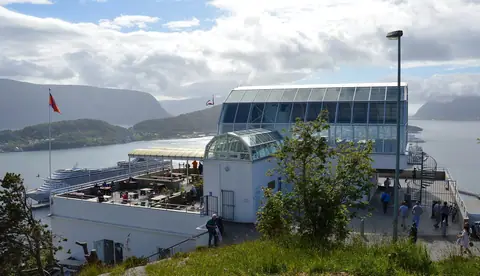
In 1971, the regional shipping company Møre og Romsdal Fylkesbåtar (MRF) began baking fresh sveler on board the Hareid to Sulesund car ferry just south of Ålesund using chief steward Steinar Slettestøl's standardised recipe. Served warm in a paper napkin and folded in half around a generous layer of whipped cinnamon-sugar buttercream (smørkrem) or slices of sweet caramelised Norwegian whey cheese (brunost) alongside a cup of black filter coffee, the ferry svele remains an essential ritual on crossings toward Hjørundfjorden, Geirangerfjorden, and Runde, as well as at Fjellstua atop Mount Aksla.
The Annual Norwegian Food Festival and Where to Dine Along Brosundet
Every late August, culinary producers from across Møre og Romsdal and western Norway gather along the quays and pedestrian streets of Ålesund for the annual Norwegian Food Festival (Den Norske Matfestivalen), featuring open-air seafood kitchens, klippfisk championships, and regional cheeses and cured meats. Throughout the year, visitors will find the largest concentration of seafood restaurants, casual fish bistros, and bakery cafés clustered within a short walk of Hellebrua along Apotekergata, Notenesgata, Kongens gate, and Skansegata.
- Norwegian Bacalao: Rehydrated salted and dried Atlantic cod slow-simmered with sliced potatoes, onions, olive oil, tomato purée, pimiento, and chilli along Brosundet.
- Sunnmøre Blandaball: Grated potato and ground white fish dumplings poached in broth and served with rutabaga, carrot, bacon, and salted mutton, a traditional Thursday staple in local cafés.
- Brosundet Fjord Shrimp (Reker): Boiled at sea on local trawlers and sold in paper bags directly from the boat decks beside Hellebrua and Skansegata for quayside picnics.
- Ferry Svele: A 1-centimetre-thick, 18-centimetre-wide kefir griddle cake folded around buttercream or brunost on regional fjord ferries since 1971 and at island lighthouse cafés.
- Winter Spawning Cod (Skrei) and Mølje: Fresh line-caught North Atlantic winter cod poached with its roe and liver in waterfront restaurants between January and April, or twice-dried into superior extra klippfisk.
Sampling a steaming bowl of tomato-rich bacalao in a stone warehouse on Apotekergata, sitting on the quayside steps below Hellebrua to peel freshly boiled fjord shrimp from a paper bag, or ordering a warm svele with coffee on the ferry to Hareid or Geiranger connects every meal in Ålesund directly back to the cold Atlantic currents and island fishing harbours of Sunnmøre.
Traveller tips
Real advice from people who have been to Klippfisk, Bacalao, Blandaball, and Sunnmøre Ferry Sveler. Every tip is read by our team before it goes live.
No tips yet. Been here? Yours could be the first.
Thank you! Your tip will appear here after a quick review.
More in Ålesund
Continue exploring Ålesund with related neighbourhood, food, and planning guides