


























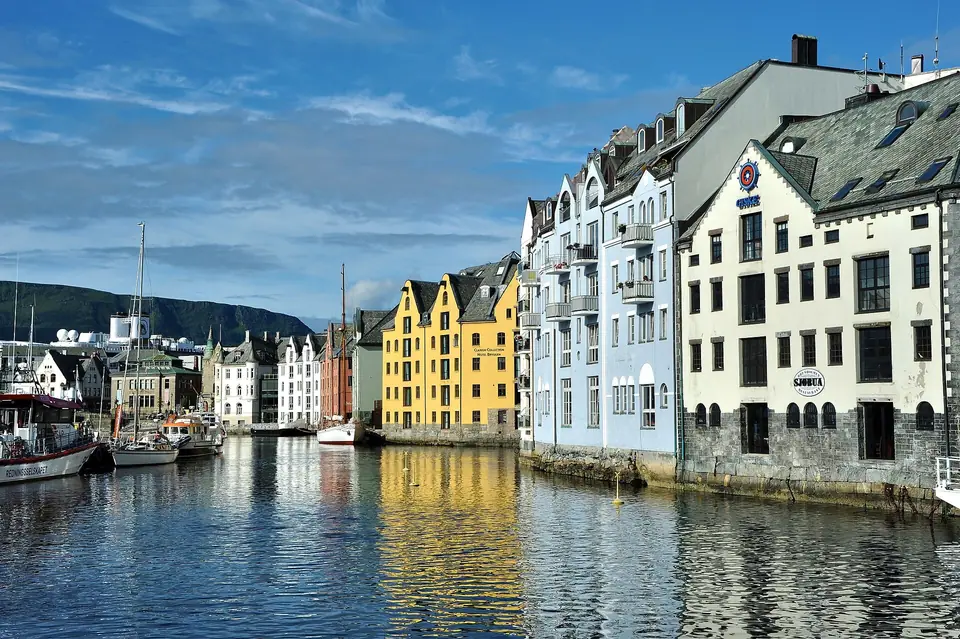
Brosundet Canal, Molja Lighthouse, and Ålesund Harbour
Walk the Brosundet tidal canal between Aspøya and Nørvøya, buy fresh shrimp from fishing boats, and visit Molja Lighthouse and Skansekaia.
The narrow tidal sound of Brosundet (the Bridge Sound) is the historic maritime spine of Ålesund, separating the island of Aspøya on the west from Nørvøya on the east. Indeed, the Old Norse name Álasund (written Aalesund before 1921, from the plural genitive of áll, meaning eel or narrow deep channel, and sund, meaning strait or sound) originally referred to these sheltered island narrows where coastal fishing vessels could ride out North Atlantic gales. Today, Brosundet connects the northern harbour entrance at Molja with the southern bay facing Borgundfjorden, crossed in the middle by Hellebrua bridge right outside the 1905 to 1907 Swan Pharmacy housing Jugendstilsenteret.
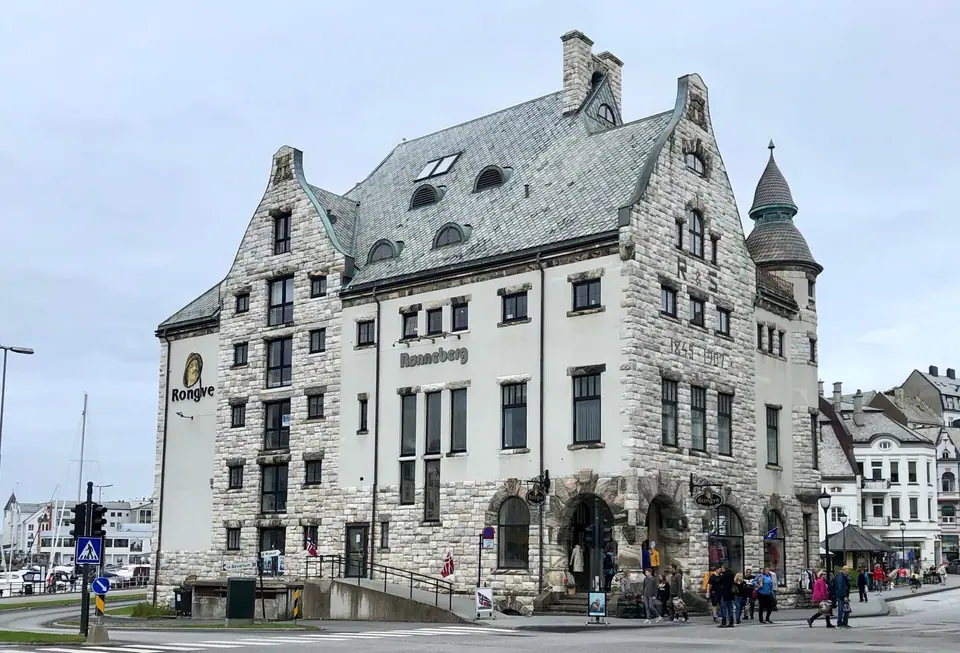
The 1904 Firebreak, Stone Sea Warehouses (Sjøboder), and Rønnebergbua
During the night of 23 January 1904, after fire broke out at Aalesund Preserving Co. on Nedre Strandgate 39 on Aspøya, firefighters attempted to use the open water of Brosundet as a natural firebreak to save the eastern half of the town. Instead, hurricane-force southwest and west gales carried glowing embers 500 metres across the sound to ignite Rønneberg & Sønners warehouse on Notenesgata on Nørvøya, spreading the conflagration for 16 hours across 850 wooden houses as far east as Borgundvegen 37. When the town was rebuilt under strict masonry laws between 1904 and 1907 by roughly 30 Norwegian architects and 20 master builders, merchants erected multi-storey stone and brick sea warehouses (sjøboder) with their foundations set directly into the canal walls along Apotekergata and Skansegata so fishing smacks could hoist catches straight into the salting lofts. At the northern mouth of the sound on Notenesgata stands the grey stone and turreted Rønnebergbua warehouse, recalling the 19th-century merchant house Carl E. Rønneberg & Søn that pioneered overseas klippfisk exports.
Walking both banks of the sound today reveals how closely Ålesund's architecture follows its maritime geography. Along Apotekergata on the western side and Skansegata and Notenesgata on the eastern side, tall warehouse facades painted in muted ochre, cream, terracotta, and slate grey reflect in the calm tidal channel at high water. Old iron cargo hooks and timber hoist beams still project from the upper gables, even where the ground floors now house waterfront cafés, seafood bistros, and hotel lounges.
Skansekaia Coastal Express Pier and Shore Power
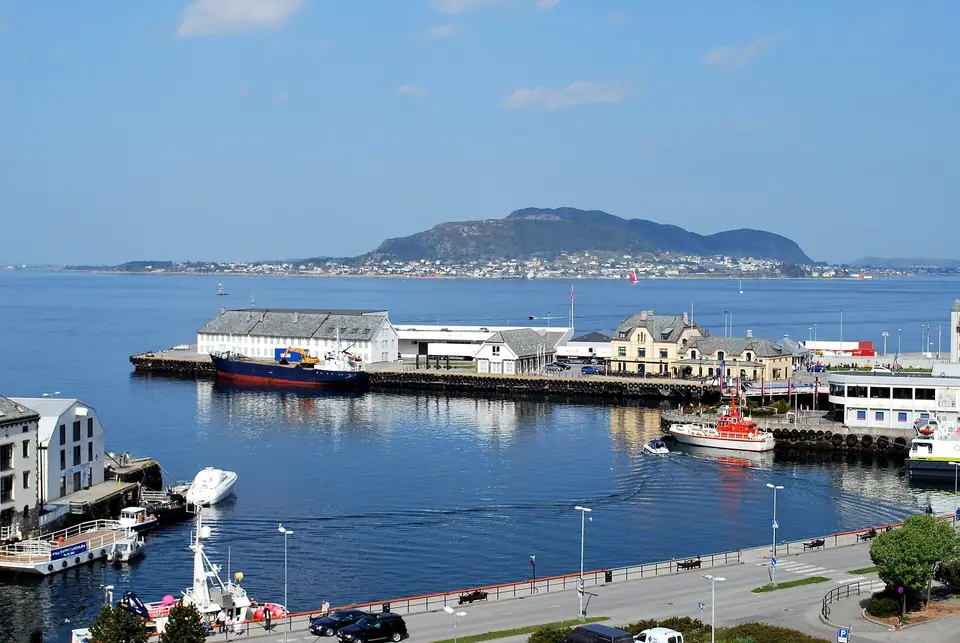
Stretching east from the northern entrance of Brosundet along the shore of Nørvøya lies Skansekaia, Ålesund's deep-water passenger quay. Twice every day year-round, northbound and southbound Hurtigruten and Havila Kystruten vessels on the historic Bergen to Kirkenes coastal route (established in 1893) berth at Skansekaia; in 2022, the port installed high-capacity shore-power connections allowing docked ships to switch off their engines right beside the town centre. From Skansekaia, seasonal catamarans and coastal steamers also set out on full-day voyages into Geirangerfjorden in summer and Hjørundfjorden in autumn.
Skateflua Fast-Boat Quay and the Northern Harbour Basin
Directly opposite Skansekaia across the northern harbour basin on the shore of Aspøya sits the Skateflua passenger quay, where regional high-speed catamarans depart for Hareid, Langevåg, Valderøya, and Nordøyane beneath the gaze of Mount Aksla. Because Ålesund is the main headquarters of the Norwegian Coastal Administration, Norway's largest fishing port by catch landings, and Møre og Romsdal's largest public transport hub, the waters between Skateflua, Skansekaia, and Molja remain active throughout the day with pilot boats, coastal ferries, and offshore fishing vessels.
Quayside Shrimp Boats and Fiskerimuseet in the 1861 Holmbua Warehouse
South of Hellebrua along the calm inner curve of Brosundet, local fishing trawlers tie up beside the stone steps of Skansegata and Apotekergata to sell freshly boiled fjord shrimp (reker), crab claws, and seasonal white fish directly over the gunwales to locals and visitors. Buying a bag of shrimp from a moored boat and sitting on the sunny quayside steps beside Hellebrua is a classic midday ritual in town. Following the western quay north from Apotekergata onto Molovegen on Aspøya brings you to Holmbua, a rare pre-fire 1861 timber klippfisk warehouse that survived the 23 January 1904 blaze. Today Holmbua houses the Fisheries Museum in Ålesund (Fiskerimuseet i Ålesund, part of the regional museum foundation Stiftinga Viti), where multi-floor exhibits trace cod bank fishing, cod-liver oil refining, barrel cooperage, and the sorting and pressing of salted klippfisk, alongside the full-scale replica bank fishing smack Storeggen av Aalesund moored outside in summer.
Walking the Curved Breakwater to the 1889 Molja Lighthouse
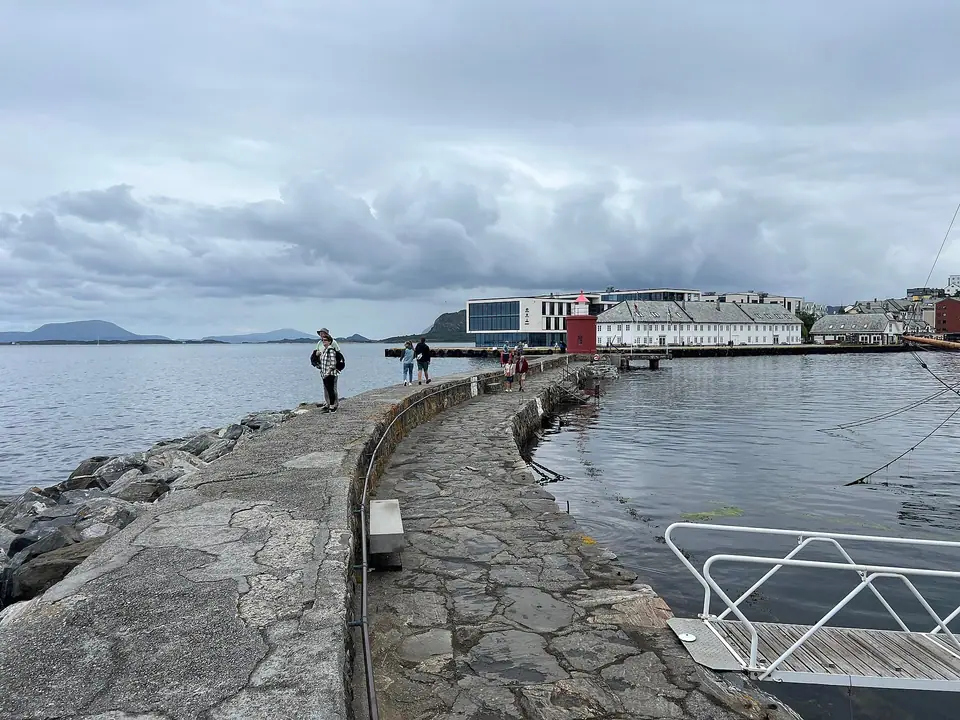
Immediately beyond Fiskerimuseet at the end of Molovegen, a narrow curved stone mole (moloen) extends into the harbour entrance to shield Brosundet from North Sea swells. At its outer tip stands the circular red-and-white cast-iron tower of Molja Lighthouse (Molja fyr), automated in 1889 and converted into a two-level suite (Room 47) operated by Hotel Brosundet, while the stone breakwater walkway itself remains open to the public day and night for views across the water toward Valderøya, Giske, and Godøya. Whether you walk out along the mole in bright summer evening light or watch winter rollers break against the outer stonework, the short loop from Hellebrua along Apotekergata and Molovegen to Molja Lighthouse captures the working harbour character of Ålesund. Along the return walk toward Hellebrua, harbour benches and wooden boardwalk sections let you pause to watch leisure boats and kayaks pass beneath the stone arches of the canal.
- Hellebrua and Inner Brosundet: Central bridge linking Aspøya and Nørvøya right beside Jugendstilsenteret and the quayside shrimp trawlers, with views up to Mount Aksla.
- Apotekergata and Notenesgata Warehouses: 1904 to 1907 stone sea warehouses rising directly from the tidal channel, led by Rønnebergbua at the northern entrance.
- Fiskerimuseet on Molovegen: Housed inside the surviving 1861 timber Holmbua warehouse with klippfisk curing lofts and the replica smack Storeggen av Aalesund.
- Molja Lighthouse (1889) and Skansekaia: Curved stone breakwater lighthouse opposite the coastal express pier where Hurtigruten and Havila ships dock daily using shore power.
- Skateflua Fast-Boat Terminal: Passenger catamaran quay on the northern shore of Aspøya connecting central Ålesund with Hareid, Langevåg, Valderøya, and the outer islands of Nordøyane.
- Skansegata and Southern Basin: Sheltered inner curve of Brosundet south of Hellebrua where local trawlers moor beside the stone steps and kayaks launch into the sound during calm summer and autumn days.
Traveller tips
Real advice from people who have been to Brosundet Canal, Molja Lighthouse, and Ålesund Harbour. Every tip is read by our team before it goes live.
No tips yet. Been here? Yours could be the first.
Thank you! Your tip will appear here after a quick review.
More in Ålesund
Continue exploring Ålesund with related neighbourhood, food, and planning guides
Giske Marble Church, Alnes Lighthouse, and Runde Bird Island
Ålesund, Norway
Klippfisk, Bacalao, Blandaball, and Sunnmøre Ferry Sveler
Ålesund, Norway
Vigra Airport (AES), Hurtigruten, Rail-Bus Links, and Subsea Tunnels
Ålesund, Norway
Best Areas to Stay: Brosundet, Aspøya, Kongens gate & Skansekaia
Ålesund, Norway
