


























Jugendstil Architecture, Apotekergata, and Jugendstilsenteret
Explore the 1904 to 1907 Art Nouveau stone reconstruction of Ålesund, the former Swan Pharmacy at Jugendstilsenteret, KUBE, and Kongens gate.
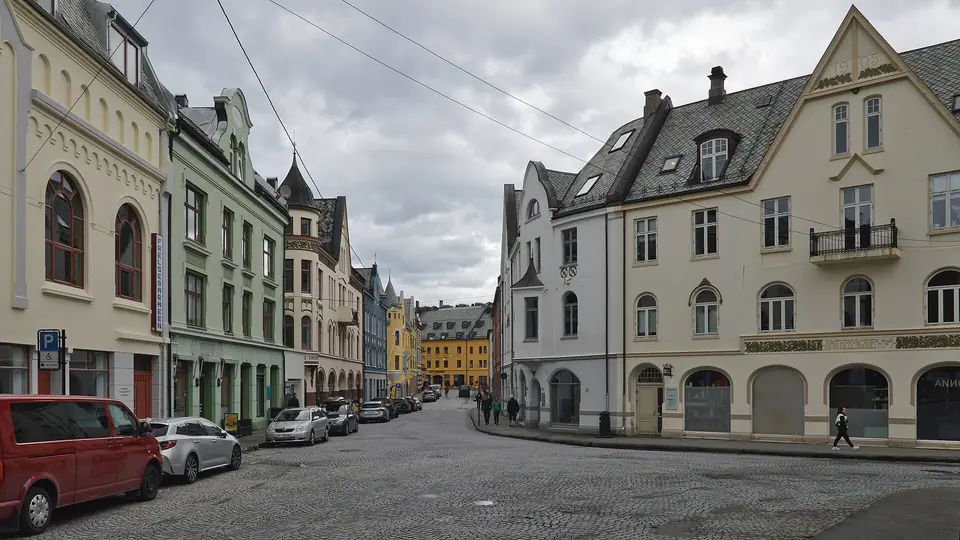
Few European towns display as unified an early-20th-century architectural canvas as Ålesund. After the hurricane-driven fire of 23 January 1904 reduced roughly 850 timber buildings on Aspøya and Nørvøya to ash in 16 hours and left more than 10,000 inhabitants without shelter, the Norwegian authorities enforced strict brick-and-stone building codes (murtvang) across the gutted centre. Between 1904 and 1907, around 30 Norwegian architects and 20 master builders, most of whom had trained in Trondheim and Charlottenburg in Berlin, designed more than 300 masonry buildings in Jugendstil (Art Nouveau). Rather than using standard neoclassical templates, each building received an individual facade combining German and Austrian Secessionist geometry with Norwegian National Romantic stone masonry, dragon-style carvings, corner turrets, asymmetrical bay windows, and medieval-inspired gables. Since 1999, Ålesund has been a partner city in the European Réseau Art Nouveau Network.
Svaneapoteket, Jugendstilsenteret, and KUBE at Apotekergata 16
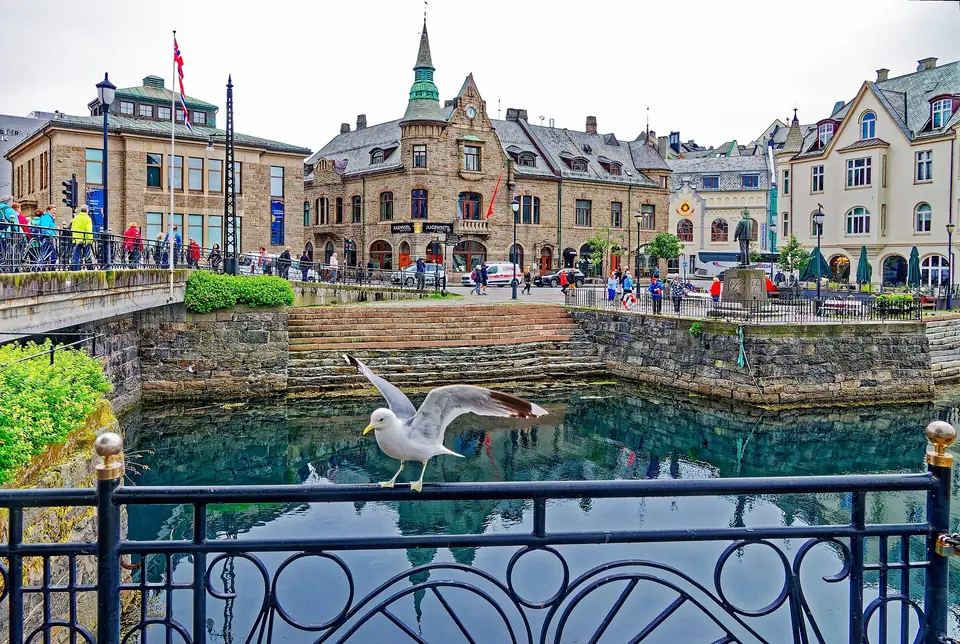
The architectural anchor of the post-fire town stands at Apotekergata 16 beside Hellebrua and Brosundet: the former Swan Pharmacy (Svaneapoteket), designed by architect Hagbarth Martin Schytte-Berg (1860 to 1944) and constructed between 1905 and 1907 for pharmacist Jørgen Anton Johnsen. Built of rough-hewn soapstone and granite with a round corner tower, medievalizing gables, and carved owls and knotwork reliefs inspired by Norwegian stave churches, Svaneapoteket became the first listed Jugendstil monument in Ålesund in 1984 to 1985. On 6 June 2003, Queen Sonja officially opened Jugendstilsenteret (the Norwegian Centre of Art Nouveau Architecture and Møre og Romsdal's millennium site) inside the building.
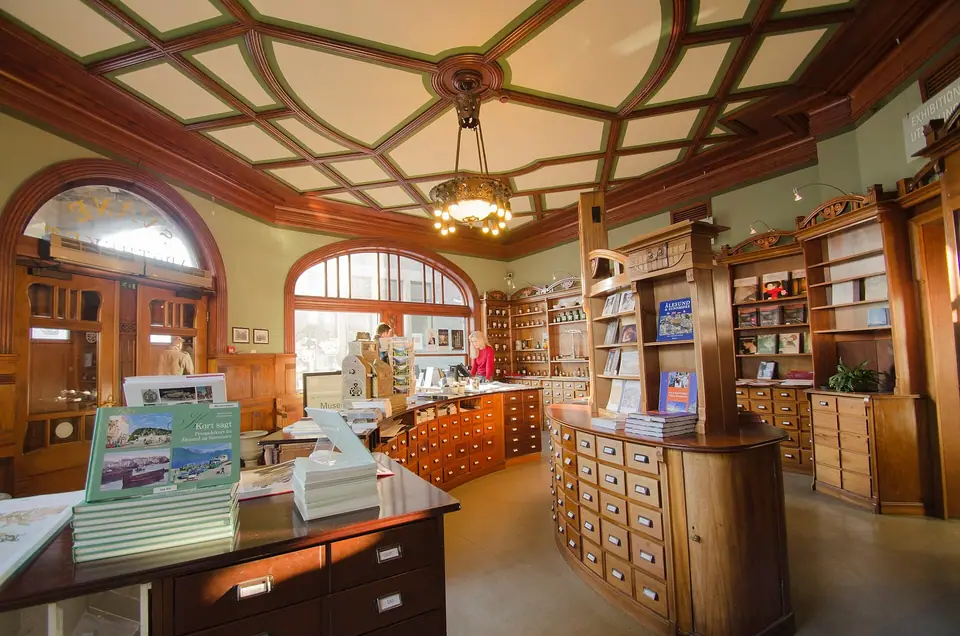
Visitors enter through the preserved 1907 apothecary hall (offisinet), whose polished wooden counters, wall cabinets, carved pilasters, and original brass and glass ceiling light fixtures form the best-preserved Art Nouveau interior in Ålesund. Upstairs, the former pharmacist's private dining room retains its matching Jugendstil panelling and architectural woodwork. From the pharmacy basement, a subterranean extension built in 2004 to 2005 leads into the multimedia time machine Fra aske til jugendstil (From Ashes to Art Nouveau), recreating the night of 23 January 1904 when sparks jumped 500 metres across Brosundet from Nedre Strandgate 39, alongside decorative arts galleries and an underground passage to the KUBE Art Museum inside the former Norges Bank building (designed in 1906 by Schytte-Berg). Together, the two connected buildings allow you to study architectural blueprints, European Art Nouveau glassware and furniture, and temporary contemporary art exhibitions under a single admission ticket.
Architectural Motifs: Soapstone Carvings, Turrets, and National Romanticism
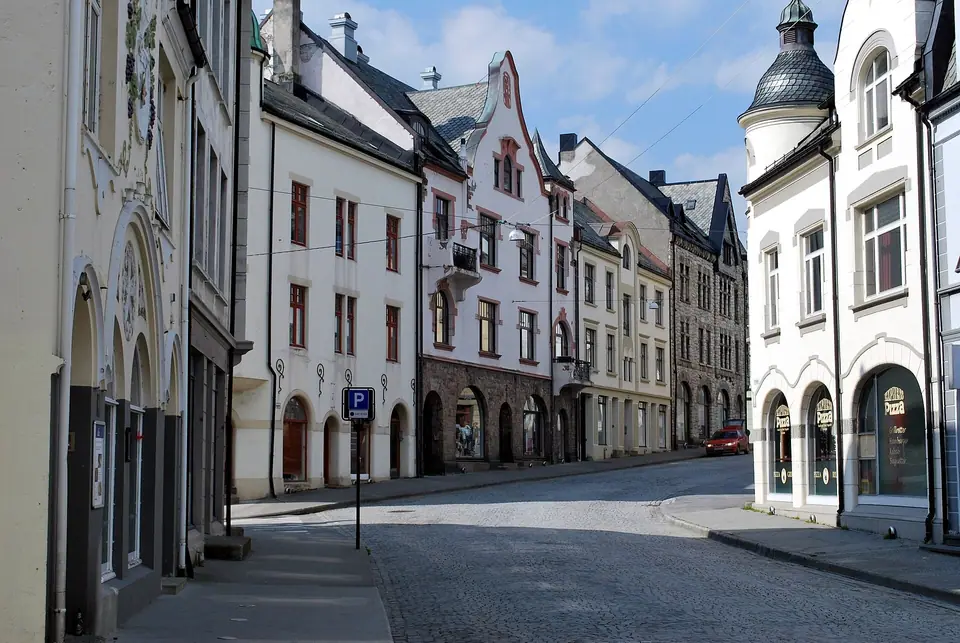
Walking through the rebuilt districts reveals how young Norwegian architects blended continental Art Nouveau with native building materials and Norse decorative traditions. Because the reconstruction coincided with Norway's 1905 dissolution of the union with Sweden, architects sought a distinctly national visual language within the modern Jugendstil movement. On major corner plots, builders raised cylindrical and polygonal towers capped with copper spires or helmet roofs, while facades were finished in tinted lime render of ochre, pale green, rose, and warm grey contrasted with bands of dressed granite and soapstone around doorways and ground-floor arches. Carvers chiselled Viking knotwork, stylised coastal flora, grotesque masks, and watchful owls into window lintels and keystones, while upper-storey casements retained small-paned glazing bars above tall, arched shop windows at street level.
Walking Apotekergata, Notenesgata, and the Brosundet Warehouses
Outside Jugendstilsenteret, follow Apotekergata and Notenesgata along the western and eastern quays of Brosundet, where tall gabled sea warehouses (sjøboder) once used for salting and drying klippfisk rise directly from the tidal water. Notice how architects adapted international Art Nouveau ornament to industrial harbour buildings: stone warehouse walls incorporate arched hoist doors, wrought-iron tie-rod anchors forged into floral shapes, and corner towers such as Rønnebergbua at the northern mouth of Brosundet, while converted warehouses along Apotekergata now house canal-front hotels and seafood restaurants. Even practical quayside cellars and merchant counting houses received sculpted stone portals and curved gable parapets that unify the commercial harbour with the surrounding residential streets.
Kirkegata, Waldehuset at Fjellgata 2, and the 1909 Ålesund Church
On Aspøya, climb Kirkegata west from Brosundet past pastel-plastered townhouses adorned with wrought-iron balconies, floral stucco friezes, and asymmetrical dormers, along with the monumental yellow-rendered Aspøy School building overlooking the sound. Pause on the side street at Fjellgata 2 to see Waldehuset (also known as Mirakelhuset), the solitary wooden house on Aspøya that survived the 23 January 1904 fire after resident Anders Nord stayed inside to wet the walls and roof while the surrounding timber neighbourhood burned. At the crest of Kirkegata stands Ålesund Church, consecrated on 15 September 1909 to designs by architect Sverre Knudsen; its exterior is clad in 2,000 square metres of mottled Nordmøre marble, while the interior features richly coloured stained glass and frescoes painted by Enevold Thømt.
Kongens gate, Keiser Wilhelms gate, and the View from Mount Aksla
Cross Hellebrua to Nørvøya to walk the pedestrianised stretch of Kongens gate, Løvenvoldgata, Storgata, and Keiser Wilhelms gate, named in gratitude to Kaiser Wilhelm II of Germany, who sent four relief vessels with provisions and shelter materials immediately after the fire and visited the town in July 1904. Along Kongens gate and the adjacent side streets, narrow urban plots inspired rhythmic vertical bays, curved roof dormers, and ornamental iron railings that give the shopping district a cohesive early-20th-century profile. Look up above the ground-floor shopfronts to spot carved stone masks, sunburst window arches, and spired corner turrets, then complete your architectural walk with the 418-step climb from Byparken up 135-metre Mount Aksla to see the unified slate and tile rooflines from above.
- Svaneapoteket and KUBE (Apotekergata 16): 1905 to 1907 soapstone pharmacy by Hagbarth Martin Schytte-Berg with original wooden apothecary interior and 1906 Norges Bank art galleries.
- Apotekergata and Notenesgata Quays: 1904 to 1907 stone sea warehouses along Brosundet, including the turreted Rønnebergbua warehouse at the harbour entrance.
- Kirkegata and Aspøya: Pastel Jugendstil apartment blocks, Aspøy School, the surviving pre-fire wooden Waldehuset at Fjellgata 2, and the 1909 Nordmøre-marble Ålesund Church.
- Kongens gate and Keiser Wilhelms gate: Pedestrian streets on Nørvøya lined with gabled commercial facades, stone reliefs, and corner turrets below Byparken.
- Byparken and Mount Aksla Overlook: Elevated vantage point at Kniven and Fjellstua showing how the 1904 to 1907 masonry street grid follows the contours of Aspøya and Nørvøya.
- Løvenvoldgata and Storgata: Quiet upper streets on Nørvøya displaying sculpted soapstone portals, curved gable dormers, and wrought-iron balcony railings from the post-fire reconstruction.
Traveller tips
Real advice from people who have been to Jugendstil Architecture, Apotekergata, and Jugendstilsenteret. Every tip is read by our team before it goes live.
No tips yet. Been here? Yours could be the first.
Thank you! Your tip will appear here after a quick review.
More in Ålesund
Continue exploring Ålesund with related neighbourhood, food, and planning guides
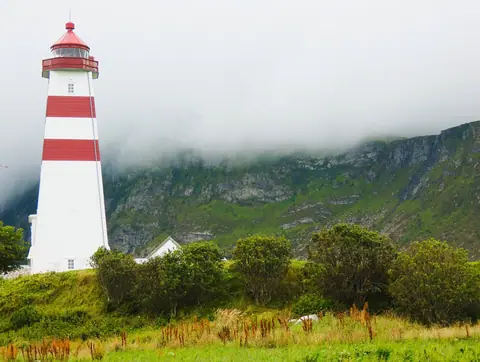
Giske Marble Church, Alnes Lighthouse, and Runde Bird Island
Ålesund, Norway
Klippfisk, Bacalao, Blandaball, and Sunnmøre Ferry Sveler
Ålesund, Norway
Vigra Airport (AES), Hurtigruten, Rail-Bus Links, and Subsea Tunnels
Ålesund, Norway
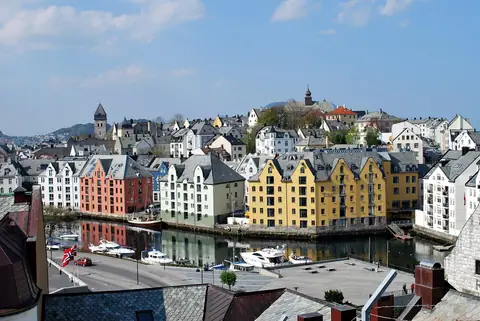
Best Areas to Stay: Brosundet, Aspøya, Kongens gate & Skansekaia
Ålesund, Norway
