Sunnmøre Museum, Replica Viking Ships, and Medieval Borgund
Explore the 55 historic buildings and 40 boats of Sunnmøre Museum at Borgundgavlen, the excavated medieval town of Borgundkaupangen, and Borgund Church.
Four kilometres east of central Ålesund at Borgundgavlen, where Nørvøya meets Nørvasundet and Borgundfjorden, lies the historic cradle of Sunnmøre. Long before Ålesund received limited trading port privileges in 1793 and market town status in 1848, the entire surrounding island and fjord district belonged to the parish and medieval trading town of Borgund. Today, a 120-hectare (300-acre) wooded peninsula and bayshore preserve both the open-air Sunnmøre Museum (part of the regional museum foundation Stiftinga Viti) and the medieval archaeological site of Borgundkaupangen beside whitewashed stone Borgund Church.
55 Relocated Houses and Rural Sunnmøre Homesteads Since 1931
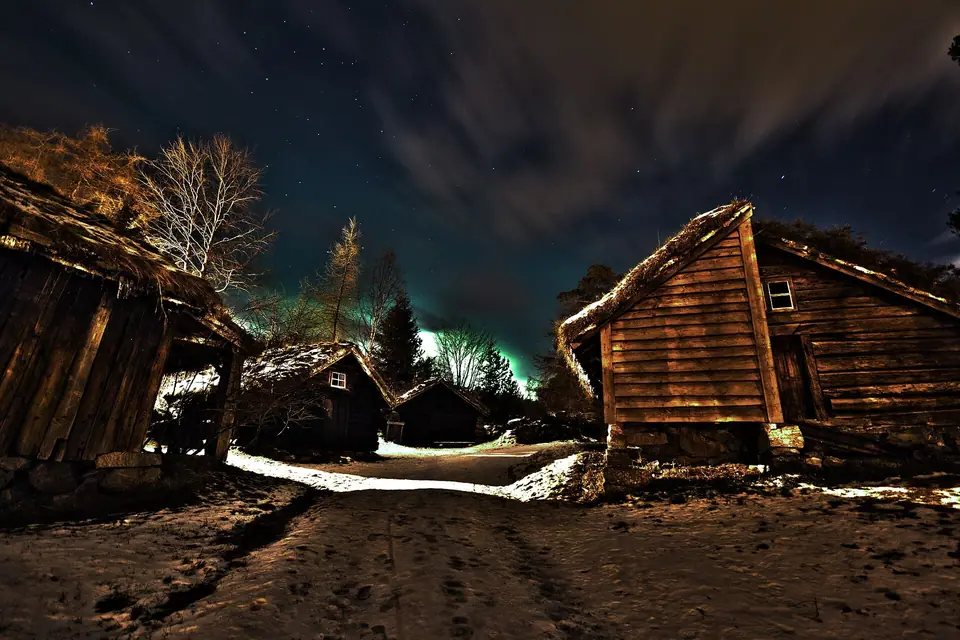
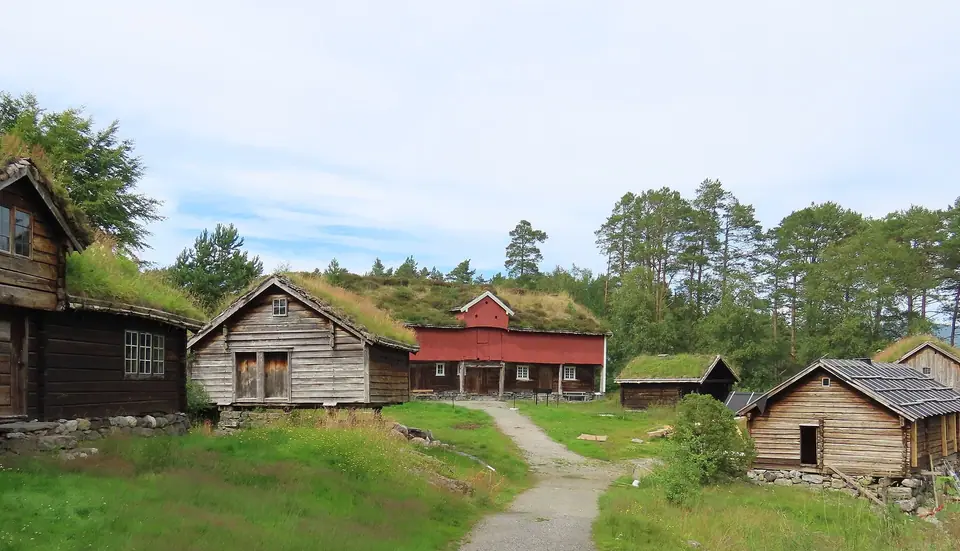
Founded on 11 March 1931 on a 28-dekar plot leased from Borgund parsonage through the initiative of Rasmus Buset, Anders Vassbotn, Olai Bjørlykke, Martin Bjørndal, and Ivar Myklebust, Sunnmøre Museum erected its first relocated farm buildings in 1934 and opened its fireproof concrete main exhibition building on 16 June 1946 in the presence of Crown Prince Olav (after wartime use as an air-raid shelter and archive store delayed its planned 9 April 1940 opening). Walking the wooded hillside and meadow paths today, visitors pass 55 historic rural and coastal buildings from the past 300 years arranged in traditional farmstead courtyards (tun), mountain summer-pasture clusters (seter), and shoreline boathouse rows.
Architectural highlights across the open-air park include Fjordmannsstova (a timber lodging cabin moved from Fosnavåg where inland fjord farmers stayed during the winter cod fisheries), Skulestova from Borgund Free and Poor School, Kyrkjebuene (church-going overnight cabins relocated from Stranda), the Larsnesbuda sea warehouse, and the Åkre prayer house (bedehus). Inside the 1946 main building, cultural history galleries display folk costumes, agricultural and fishing gear, weaving looms, and the 1910 carved and painted Kinsarvik-style parlour furniture crafted by master woodcarver Lars Kinsarvik for poet-priest Anders Hovden. Because the 120-hectare park is laid out with gravel footpaths through birch and pine woods down to sheltered coves along Borgundfjorden, families and walkers use the grounds as an everyday outdoor park alongside the museum exhibitions.
Over 40 Traditional Boats and the Viking Ship Replicas
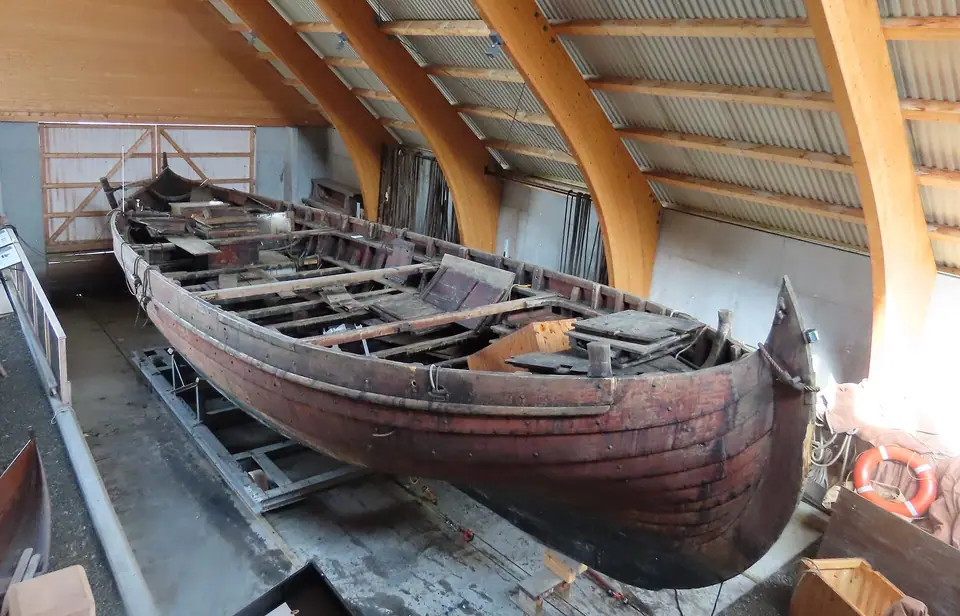
Down by the sheltered water of Borgundgavlen bay, four connected boat halls built from 1955 onward shelter a fleet of more than 40 traditional Sunnmøre and Møre clinker-built wooden working boats. Because farms and fishing stations across the outer islands and inner fjords relied on oar and sail until motorisation in the early 20th century, local boatbuilders developed distinct asymmetric hull planks and dipping lug sails tailored to North Atlantic swells. Inside the boat sheds stands the only surviving original Sunnmørsottring (measured and documented by maritime historian Bernhard Færøyvik), alongside smaller four-oared færing boats, six-oared seksring craft, and the gaff-rigged bank fishing smack replica Storeggen av Aalesund.
Sunnmøre Museum is equally famous for its sailable reconstructions of archaeological vessels built by traditional shipwrights at Borgundgavlen. Pride of place goes to Borgundknarren, a full-scale replica of a 10th-century Viking merchant ship (knarr) modelled on the Skuldelev wreck from Roskilde Fjord, accompanied by reconstructions of the pre-Viking Kvalsund ship discovered in Herøy and smaller medieval coastal boats that take to the water on Borgundfjorden during summer heritage days.
Medieval Borgundkaupangen and Whitewashed Borgund Stone Church
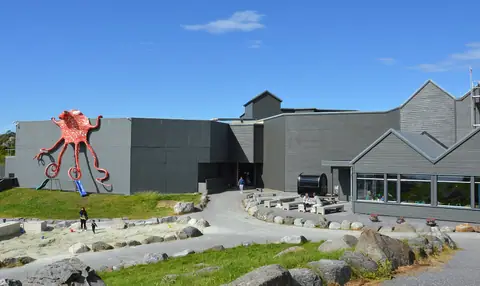
Southeast of the open-air farmsteads, a shady footpath leads across the peninsula to the Medieval Museum (Middelaldermuseet, opened in 1987), erected directly over the excavated foundations of Borgundkaupangen. Flourishing from the late Viking Age through the 13th century and cited in King Haakon VI's 1384 royal decree requiring Sunnmøre farmers and fishermen to bring their goods to market at Borgund before declining in the 15th century, Borgundkaupangen was the largest medieval town between Bergen and Trondheim. Extensive archaeological excavations in the 1950s and 1960s led by Asbjørn Herteig uncovered timber building foundations, cobbled passages, runic inscriptions, pottery, shoe leather, iron fishhooks, and a Christian cemetery containing 300 11th-century graves, all interpreted inside the subterranean museum hall.
Borgund Church and Walking or Riding from Central Ålesund
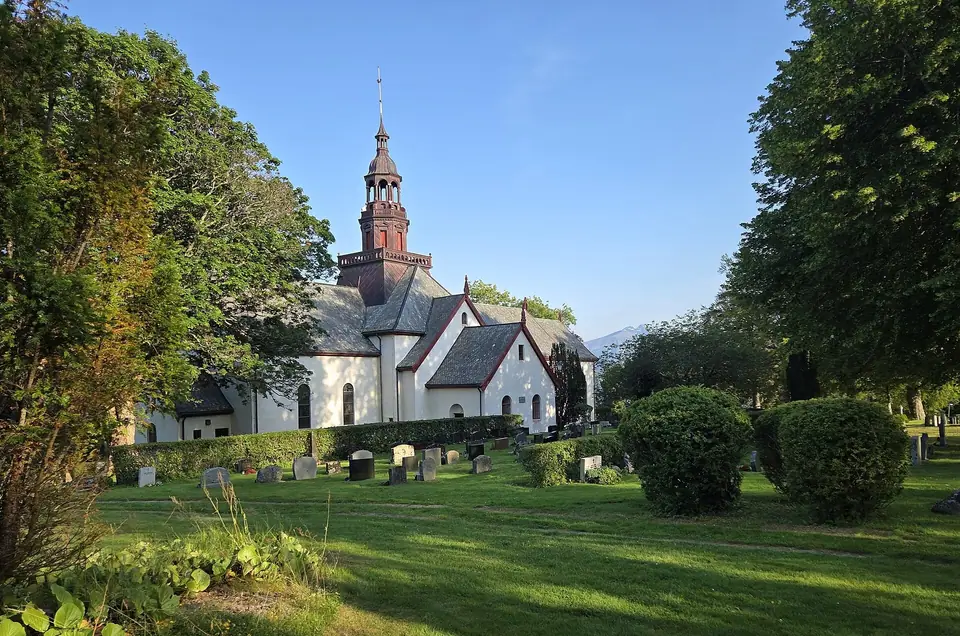
Immediately beside the excavation site stands whitewashed stone Borgund Church (Borgund kyrkje), originally built in the 12th or 13th century as St. Peter's Church (one of three or four medieval stone churches that stood at Kaupangen Borgund, alongside St. Matthew's, Christ Church, and St. Margaret's). Enlarged into a cruciform church in 1632 using dressed marble blocks salvaged from ruined St. Margaret's Church, the building was gutted by an arson fire on 13 April 1904 (less than three months after the great town fire in central Ålesund) and rebuilt within the surviving medieval stone walls by architects Christian and Hans Backer Fürst for reconsecration on 7 August 1907. Visitors can reach Borgundgavlen in ten minutes by FRAM local bus along Borgundvegen from central Ålesund or walk the four-kilometre wooded ridge trail east from Mount Aksla.
- Open-Air Farmsteads (55 Buildings): Relocated turf-roofed timber houses, barns, storehouses, prayer houses, and fishermen's cabins from across Sunnmøre spanning the past 300 years across a 120-hectare coastal park.
- Main Exhibition Building (1946): Folk art, coastal domestic interiors, textile displays, and the 1910 carved parlour suite by Lars Kinsarvik for Anders Hovden.
- Four Boat Halls and Borgundknarren: Over 40 traditional clinker-built wooden boats, the sole surviving original Sunnmørsottring, the Kvalsund ship reconstruction, and the Viking merchant ship replica Borgundknarren.
- Medieval Museum (1987): Built directly over the 1950s and 1960s excavations of Borgundkaupangen by Asbjørn Herteig, displaying Viking and medieval artefacts and 300 11th-century Christian graves.
- Borgund Stone Church: Medieval whitewashed parish church (originally St. Peter's), expanded into a cruciform plan in 1632 and restored in 1907 by Christian and Hans Backer Fürst after the April 1904 fire.
Allow at least two to three hours at Borgundgavlen to cover both the hillside farmsteads and the waterfront boat sheds without rushing. Because the outdoor pathways linking the 55 relocated timber houses, the shoreline boathouses, and Borgund Church remain open year-round as a public recreation area, you can also combine a morning visit inside the museum exhibitions and the 1987 Medieval Museum with a woodland walk back along the southern ridge of Mount Aksla toward Fjellstua and Byparken, or pause by the sheltered bay to watch traditional wooden boats and kayaks glide across Nørvasundet and Borgundfjorden against the backdrop of the Sunnmøre Alps.
Traveller tips
Real advice from people who have been to Sunnmøre Museum, Replica Viking Ships, and Medieval Borgund. Every tip is read by our team before it goes live.
No tips yet. Been here? Yours could be the first.
Thank you! Your tip will appear here after a quick review.
More in Ålesund
Continue exploring Ålesund with related neighbourhood, food, and planning guides