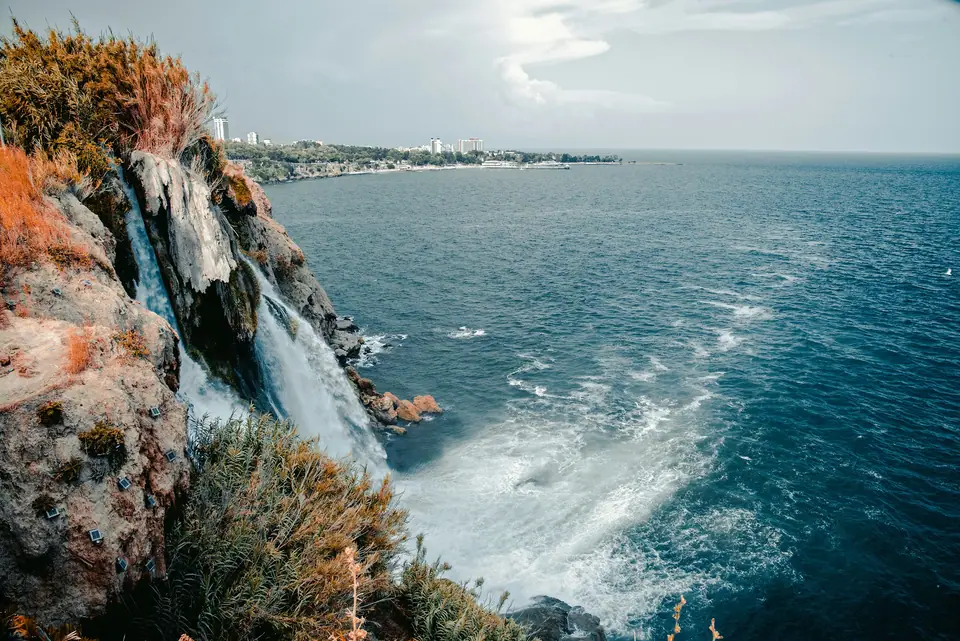
Photo by Adel Salehi on Unsplash
Antalya 3-Day Itinerary
A structured three-day itinerary connecting Antalya's historic old town, ancient Pamphylian ruins, and scenic coastal waterfalls.
A balanced three-day itinerary in Antalya introduces travellers to layered Roman architecture, premier archaeological treasures across the Pamphylian plain, and refreshing Mediterranean coastal waters.
Day 1: Kaleiçi Old Town, Harbour Cruise, and Karaalioğlu Park
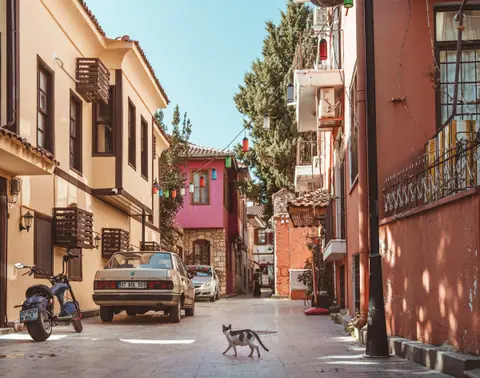
Begin your three days by exploring the historic quarter. Walk past the marble arches of Hadrian's Gate, erected in 130 CE to honour the visiting Roman Emperor Hadrian. Built roughly 2,000 years ago, this Roman monument remains one of the best-preserved ancient structures in the city. Follow the stone path inwards to examine the historic street layout and original regional architecture.
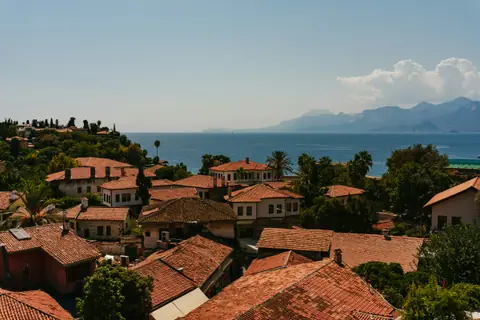
Behind the fortified perimeter stand around 3,000 houses topped with traditional tile roofs. The defending city walls represent communal building work across Hellenistic, Roman, Byzantine, Seljuk, and Ottoman eras. To navigate these residential lanes without losing time, follow our comprehensive Kaleiçi guide. Continue walking downhill as the stone passages descend directly towards the marina, which occupies an ancient Roman port.
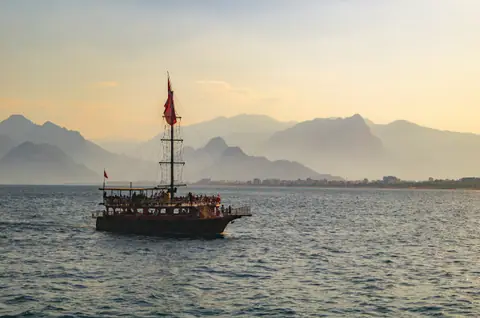
Board an excursion vessel at the docks to see Antalya from the sea. Boat tours departing from the harbour cruise towards Aşağı Düden Waterfall. The torrent drops approximately forty metres over an exposed travertine shelf into the Mediterranean. Have your camera ready as the vessel approaches the crashing water.
Return ashore for lunch in the old quarter. Local dining spots serve skewered meats paired with Antalya piyaz prepared with sesame oil. Visitors preferring plant-based food can request their piyaz without eggs to ensure a vegetarian meal. Complete your meal with a dish of burnt ice cream.
Spend your late afternoon wandering through Karaalioğlu Park, an open green space of 140,000 square metres. Three parallel avenues stretch from east to west across the grounds, each terminating at scenic seaside viewing terraces. At the southwestern edge of the old walls stands Hıdırlık Tower. Constructed in the second century, this historic landmark stands 14 metres tall, combining a square base with a cylindrical upper tower.
Day 2: Pamphylian Antiquity at Perge and Aspendos
Dedicate your second day to exploring the ancient Pamphylian cities east of Antalya. Perge Ancient City lies 18 km east of the city centre along Barbaros Mahallesi in Aksu and welcomes visitors daily. The site spreads over an exceptionally large expanse and preserves dozens of ancient monuments, earning Perge a spot on the UNESCO Tentative List.
Two circular towers from the third century BC guard the historic entrance and serve as enduring symbols of the city. Behind these towers extends a stone avenue roughly 500 metres long, stretching toward a monumental fountain. Hikers begin their journey along St Paul's Way from this main thoroughfare, following a beloved long-distance path across Anatolia. Stroll past the extensive public baths and the vast agora.
Step inside the immense Stadion, which accommodated up to 12,000 spectators during athletic contests. It survives as the second-largest ancient stadium structure preserved in Anatolia. The ancient theatre is temporarily closed to visitors while restoration work continues. Many remarkable statues discovered during excavations across Perge are displayed inside the Antalya Museum.
Travel further east to Aspendos, an ancient settlement divided neatly into Lower and Upper Cities. Built with room for 15,000 spectators, the Aspendos Theatre was constructed under imperial Roman rule between 138 and 164 AD by the architect Zenon. Travellers can borrow an audio guide on site to learn about its architecture. Several ornamental tiles that decorated the building during the Seljuk Period can be viewed at the Antalya Ethnography Museum.
Climb uphill into the Upper City to discover the acropolis, an agora, and an ancient basilica stretching 100 metres in length. Other upper ruins feature an odeon situated right behind a monumental fountain standing 15 metres high and 35 metres across. North of the city walls, observe the surviving stone aqueduct spanning one kilometre. This ancient engineering work supplied drinking water to the acropolis from high mountains situated 25 km northwest of Aspendos.
Day 3: Düden Waterfall, Antalya Museum, and Beaches
Devote your final morning to learning about the region's remarkable subterranean waterways. Düden Waterfall, also called Düdenbaşı Waterfall by local residents, sits within the Kepez district. Public city buses run directly to the park, where visitors can make quick entry payments using an Antalyakart.
Streamflow sinking out of sight at Bıyıklı Düdeni travels subterranean channels for roughly fourteen kilometres until emerging at Varsak depression. The torrent vanishes again beneath the limestone for two kilometres before re-emerging at Düdenbaşı, supplemented by outflows from the Kepez hydroelectric station. Shaded wooden walkways allow visitors to walk near the cascade and view rock formations carved by the spray.
Around midday, proceed to the Antalya Museum, located in the Muratpaşa district on Konyaaltı Caddesi. The Council of Europe selected the institution as Museum of the Year in 1988. European judges later granted it an Excellence Award in 2016 celebrating its historic collection. Standout pieces include the intricately carved Heracles Sarcophagus and the famed Weary Heracles statue.
The Weary Heracles statue dates from the second century AD, copying an earlier fourth-century BC bronze by Lysippos. Archaeologists discovered the lower half during excavations in 1980. Following illicit removal and decades abroad, the upper torso returned home to be reunited with its base in 2011.
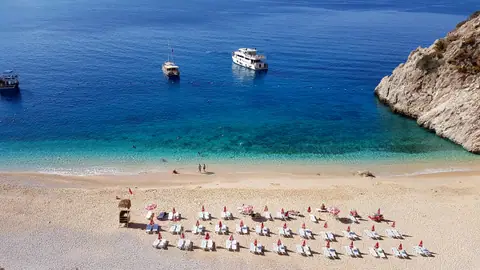
Spend your afternoon on the Mediterranean shoreline, comparing coastal spots in our beaches guide. Konyaaltı Beach is located 3 km westward from the municipality, offering a Blue Flag pebble and sand shore spanning approximately 1.5 km. East of town, Lara Beach provides wide stretches of fine sand near Perge. In the evening, visit a local seafood restaurant to enjoy Lagos fish baked in salt crust.
Extending Past 3 Days: Excursions Along the Turkish Riviera
Antalya features 640 km of indented shoreline, offering numerous excursions for visitors extending their itinerary. Travellers interested in mountain ruins can drive 30 km northwest of Antalya to Termessos. Positioned high among rugged limestone cliffs, it stands as one of Turkey's best-preserved ancient cities.
Heading southward along the coast brings you to Phaselis within Beydağları-Olympos National Park. Colonists originating from Rhodes founded the city in the seventh century BCE. Its strategic maritime position included three separate natural harbours situated on the north, northeast, and southwest shores of the peninsula.
Further along this shoreline lies Olympos Ancient City, taking its name from the 2,375-metre-high Tahtalı Mountain situated 16 kilometres north. Walking through the forested ruins brings you directly to an open beach bordering the sea. For lunch, choose from boutique restaurants in neighbouring Çıralı. Adventurous travellers can ride the passenger cable car to the peak of Tahtalı Mountain in Kemer, standing at an altitude of 2,365 metres.
Rock climbing enthusiasts can tackle dedicated routes around Geyikbayırı, Çitdibi, Akyarlar, Karataşlar, and Olympos. Rafters gather along the Köprüçay inside Köprülü Canyon National Park, which serves as a prime river sports destination. Walkers can join sections of the Lycian Way, St Paul Route, or the Pisidia Heritage Route.
Travel southwest towards Kaş, a quiet and charming district along the Riviera. Stop en route at Myra to inspect Lycian rock-cut tombs, a Roman theatre, and Saint Nicholas Church. Nearby, boat excursions tour Kekova Island, where ancient relics resting a few metres underwater remain visible to the naked eye. While swimming near Kekova Island is prohibited to protect sunken ruins, boats anchor in calm outer bays. Inland, Altınbeşik Cave houses the largest subterranean lake in Turkey within Altınbeşik National Park, displaying extensive stalactite formations.
Where it is
- 1Antalya
- Antalya International Airport (AYT) · about 8 km from Antalya in a straight line
- Directions in Google Maps
Stations and taxi ranks: OpenStreetMap. Airports: OurAirports. Distances are in a straight line.
Traveller tips
Real advice from people who have been to Antalya. Every tip is read by our team before it goes live.
No tips yet. Been here? Yours could be the first.
Thank you! Your tip will appear here after a quick review.
More in Antalya
Continue exploring Antalya with related neighbourhood, food, and planning guides