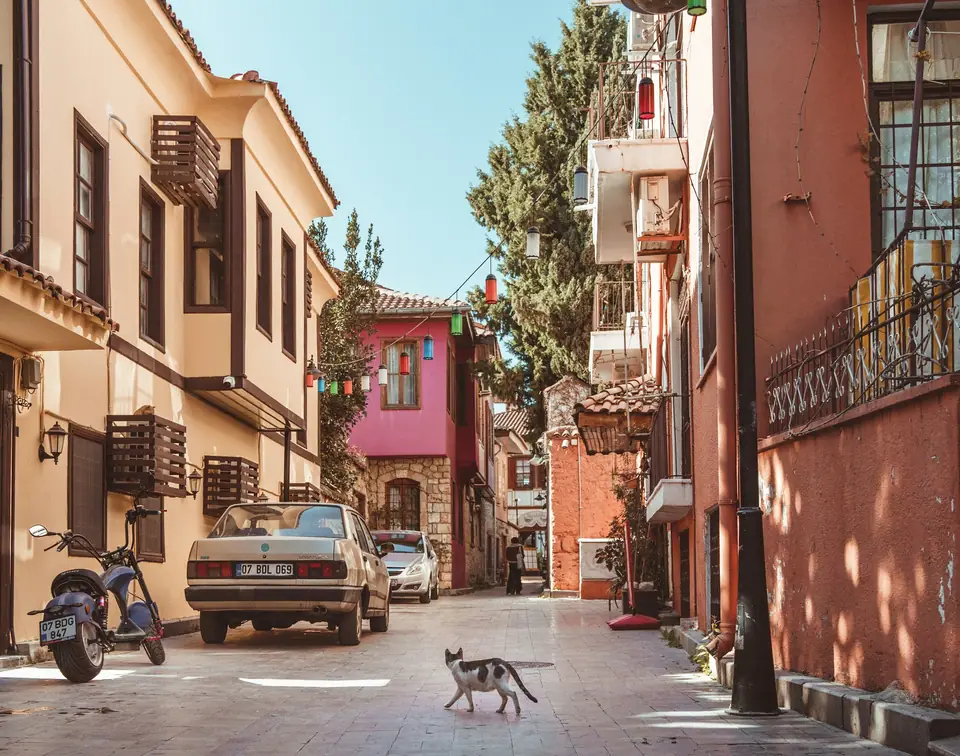
Photo by Evgeny Matveev on Unsplash
Kaleiçi Guide: A Walk Through Antalya's Old Town
A comprehensive walking guide to Kaleiçi, exploring Roman gates, Seljuk monuments, historic architecture, and the ancient yacht marina in Antalya.
Antalya's ancient heart, Kaleiçi, encloses Roman masonry, Seljuk monuments, and restored Ottoman domestic architecture above an ancient harbour basin.
Surrounded both internally and externally by ancient defensive ramparts shaped like a horseshoe, this district represents more than two millennia of continuous urban habitation. Different cultures established their settlements here over two thousand years, leaving layered stone foundations across the coastline. Today, the district contains boutique hotels, historical artefacts, museums, specially designed stores, stylish cafés, and restaurants tucked into pedestrian alleys. Exploring the precinct on foot reveals how maritime defences dictated the city's growth on the high coastal cliffs of southern Türkiye.
Hadrian's Gate and the Horseshoe Fortifications
Entering the eastern flank brings you directly to Hadrian's Gate, which local residents frequently refer to as Hadrian Kapısı. Workers erected this impressive monument during 130 CE in honor of the Roman Emperor Hadrian when he travelled to the city. Built about 2000 years ago, the Roman triumphal entrance stands among the best-preserved historical structures anywhere in Antalya. Passing underneath its carved archways leads directly across the threshold into the residential lanes of the fortified old quarter.
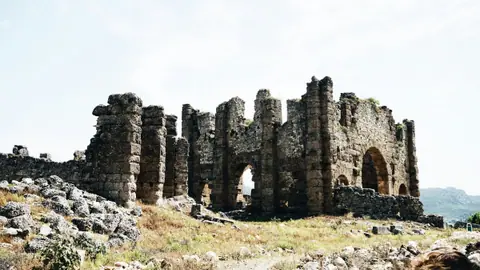
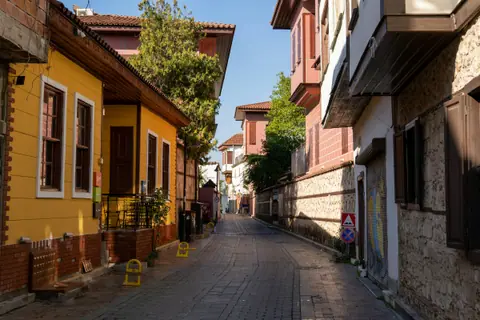
The defensive perimeter retains substantial stone segments that were built by various civilizations that lived here for over two thousand years. Inside these surviving fortifications sit about 3000 houses with tile roofs, creating a dense pattern of traditional residential architecture. The domestic dwellings typically rise two or three storeys high, reflecting vernacular building traditions adapted to Mediterranean weather. One facade of each house looks out toward the street, while the remaining sides open onto private interior courtyards. These private gardens shielded household life from coastal winds and public thoroughfares while catching cool evening breezes.
Travellers seeking characterful accommodation will find that lodging options in the quarter range from small hostels to hotels converted from old mansions. Many of these timber-and-stone residences now operate as boutique guesthouses popular with families and visiting couples. For advice on booking a base inside the perimeter, consult our detailed Where to Stay in Antalya guide. Sleeping inside the ancient enclosure allows you to walk to classical monuments before daytime crowds arrive.
Seljuk Landmarks and Ancient Islamic Sanctuaries
Climbing through the central pedestrian alleys brings you toward the primary religious landmarks established during the medieval transformation of the city. Among these, the Yivli Minaret, a Seljuk building, is one of the first Islamic structures in Antalya. Its fluted column of fired brick dominates the northern skyline above Kalekapısı. The surrounding complex includes the Gıyaseddin Keyhüsrev Madrasah and the Karatay Madrasah, which functioned as important regional academies.
Nearby stands the historic Clock Tower, integrated directly into the defensive masonry of the northern walls. Just beside this civic landmark, visitors can inspect the Tekeli Mahmut Paşa Mosque, which illustrates classic regional dome engineering. Further into the domestic lanes sits the historic Şehzade Korkut Mosque, showcasing layers of repair and communal usage across successive centuries. Descending towards the waterfront reveals the small İskele Mosque, which perches directly beside the water to serve passing seafaring merchants.
You can discover additional ideas for regional sightseeing by reading our curated Best Things to Do in Antalya guide. Every corner of the stone quarter offers insight into how medieval builders repurposed ancient stone blocks to erect their own civic monuments.
The Ancient Roman Port and Kaleiçi Marina
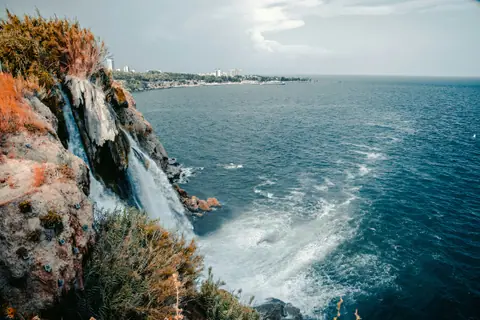
The narrow cobblestone lanes slope continuously downhill toward the shoreline, terminating at the protected water basin of the ancient Roman port. High limestone cliffs encircle the quayside, sheltering boats from Mediterranean gales that frequently strike this stretch of the coast. To avoid the steep stone staircases, you can take the elevator all the way down to the port. This convenient municipal lift links the upper cliff viewing platform directly with the quayside below.
Today, the ancient harbour operates as a modern yacht marina while retaining its historical stone breakwaters. Antalya Kaleiçi Marina stays open 12 months a year, providing visiting yachts with mooring services, electricity, fresh water, showers, toilets, and weather forecast reports. Commercial day-cruise gulets and private motor yachts anchor side by side along the sheltered stone berths throughout the seasons. Visitors can stroll along the water's edge, admire the maritime views, or browse the commercial offerings of famous brands available at Kaleiçi Marina.
The waterfront area provides an ideal setting to understand Antalya's original reason for being founded as a deep-water naval station. Looking back up from the marina, you can appreciate the defensive advantage that the towering stone cliffs provided to early inhabitants. Ships arriving from across the Mediterranean could unload cargo safely beneath the watchful gaze of soldiers garrisoned on the high battlements above.
Suna Kıraç Museum, İki Kapılı Han, and Local Bazaars
Beyond its monumental defensive architecture, Kaleiçi remains the go-to destination for travellers seeking local and authentic Turkish products. Traditional artisans, antique vendors, and carpet merchants occupy the ground-floor rooms of restored Ottoman merchant dwellings. For dedicated jewellery shopping, head straight to İki Kapılı Han, where local merchants display gold and silver ornaments. You can easily find solid or plated gold and silver jewellery adorned with precious and semiprecious stones in and around İki Kapılı Han.
The merchant stalls of İki Kapılı Han also stock classic handwoven carpets, curiosities, and peshtamals made of fine woven fabric. Peshtamals dry quickly, feel remarkably lightweight, and function conveniently as everyday towels both at home and when visiting the beach. While browsing the district's specialty food shops, look out for jars of bitter orange jam. Bitter orange is the most common type of preserve produced in Antalya, offering an intense citrus fragrance and a distinctive regional taste.
Those interested in regional history should visit the Koç University Suna & İnan Kıraç Kaleiçi Museum on Kocatepe Sokak. Following an extensive restoration project, the institution opened its doors to visitors in 1996 as a dedicated ethnographical museum. The primary gallery features rich ceramic collections, historic oil paintings, and archival photography depicting local domestic life. The second building in the museum garden is an Orthodox church known to have been built in honor of Aya Yorgi, also recognised as Saint George.
Hıdırlık Tower, Karaalioğlu Park, and Practical Rules
Following the southern cliffside brings you to Hıdırlık Tower, which marks the southwestern anchor of the historic defensive circuit. The impressive stone bastion stands 14 meters high, featuring a square lower part topped by an imposing cylindrical upper structure. Historians trace its masonry foundations back to Roman antiquity, when it likely served as a combined tomb and coastal watchtower. From its base, travellers can enjoy sweeping panoramas stretching across the Gulf of Antalya towards the distant western peaks.
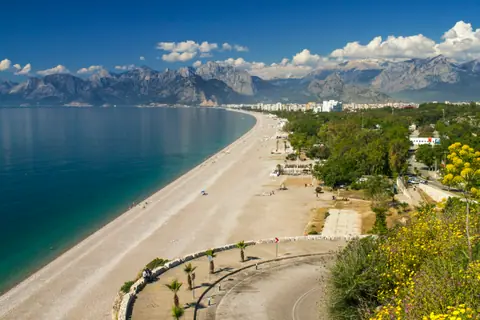
Directly bordering the stone ramparts lies Karaalioğlu Park, which sits on an expansive area of 140 thousand square meters along the cliff edge. Wide promenades, stone fountains, and ornamental greenery provide cool shade during hot afternoons, offering local residents a spacious coastal retreat. Looking outward from the park's terraces, visitors can admire the dramatic seascape that defines this stretch of the Mediterranean shore.
Reaching Kaleiçi in the city centre is easy; you can arrive on foot, by private car, or via city buses from eastern and western districts. When planning your daily movements, remember that public transit systems rely on electronic payment media across the metropolitan bus and tram networks. Check the official site for transit schedules and current museum opening arrangements, as timings change throughout the calendar year.
Foreign travellers should always bear in mind vital Turkish legal regulations when exploring the country. It is illegal not to carry some form of photographic ID in Turkey, so always carry your original passport or residence permit. In addition, buying or exporting genuine antiquities is strictly illegal, carrying hefty financial penalties and prison sentences ranging from 5 to 12 years. Smoking is illegal on public transport, in all indoor workplaces, and in public places, and you should dial 112 to contact the police.
Where it is
- 1Kaleiçi
- Antalya International Airport (AYT) · about 8 km from here in a straight line
- Directions in Google Maps
Stations and taxi ranks: OpenStreetMap. Airports: OurAirports. Distances are in a straight line.
Traveller tips
Real advice from people who have been to Antalya. Every tip is read by our team before it goes live.
No tips yet. Been here? Yours could be the first.
Thank you! Your tip will appear here after a quick review.
More in Antalya
Continue exploring Antalya with related neighbourhood, food, and planning guides