















Best Time to Visit Antalya
Short answer: May, June, late September and October. The sea is warm enough to swim, the ancient sites are bearable in the middle of the day, and hotel prices sit below their August peak.
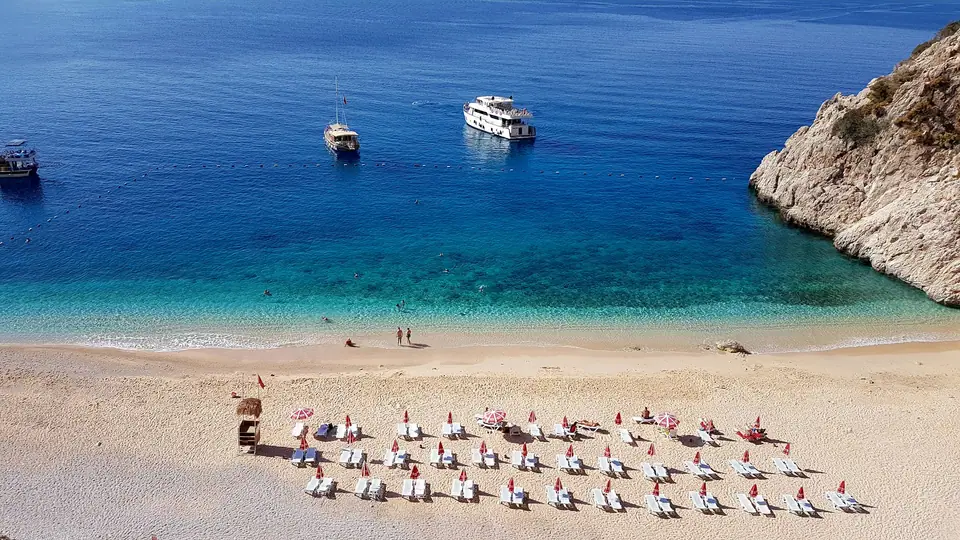
The Mediterranean here heats up slowly and stays warm late. In May the water is fresh but swimmable. By October it's still warmer than in most of Europe in midsummer, which is why autumn is the local favourite. Days are sunny, the evenings are soft, and the crowds thin out once European school holidays end.
July and August are hot, often above 35°C, and humid in a way that makes the city feel hotter than the number. The beaches are full, the resorts are full, and a morning at Perge or Termessos needs a very early start. It's still a fine time for a pure beach holiday. It's hard going for sightseeing.
Winter is quiet and mild. Days in December and January are often around 15°C, with rain in heavy bursts rather than long grey spells. Snow sits on the Taurus Mountains above the city, and on clear days the view from the cliffs of white peaks over a blue sea is the reason some people come in February. Many resort hotels close for the season, but the city itself carries on.
Month by month
- November to February: mild, some heavy rain, very quiet, city hotels cheapest.
- March and April: warming up, orange trees in flower, sea still cold.
- May and June: warm and dry, sea warming, busy but manageable.
- July and August: hot and humid, peak prices and crowds.
- September and October: warm sea, cooler air, the best balance.
September has an extra draw. The International Aspendos Opera and Ballet Festival brings full productions to the Roman theatre at Aspendos, with the 2026 edition running from 12 to 26 September. Dates move a little each year, so check the programme before you book.
Turkish public holidays, especially the two Bayram (religious festival) holidays, fill the coast with domestic visitors. Their dates follow the lunar calendar and shift about eleven days earlier each year.