Photo by Erik Karits on Unsplash
Antalya: What to Know Before You Go
Essential entry rules, local transport connections, and landscape details for planning a holiday across the Antalya coastline.
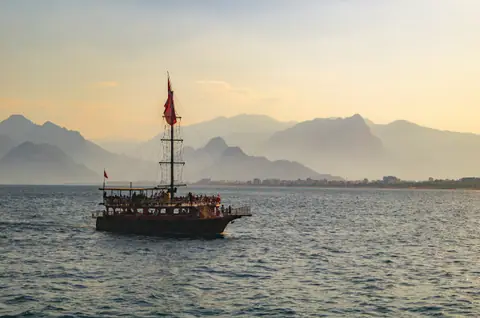
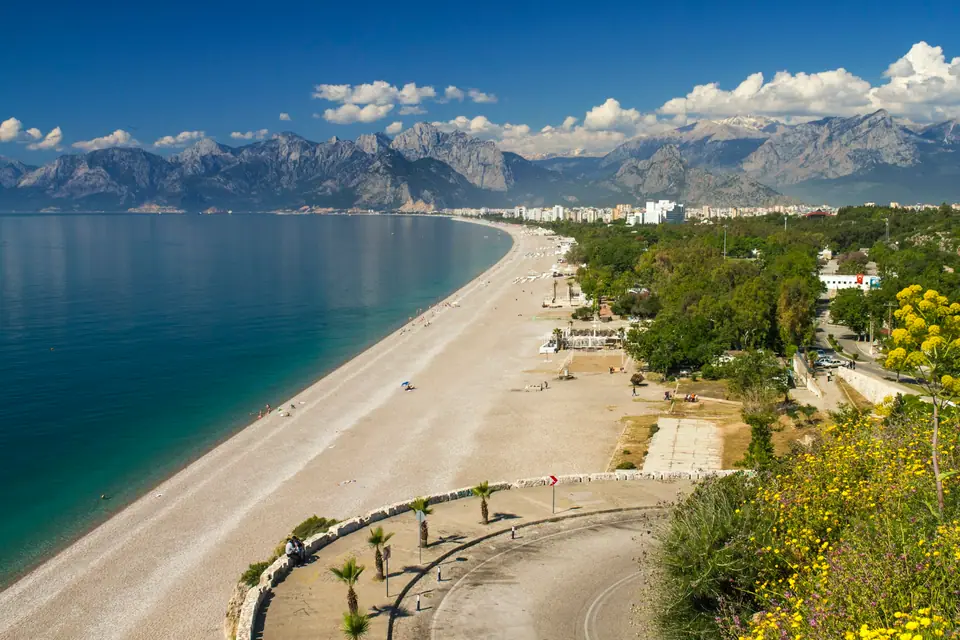
Antalya combines an ancient urban centre on Mediterranean cliffs with a 640-kilometre coastline framed by the Taurus Mountains.
Entry Requirements and National Border Regulations
British citizens can enter Turkey without a visa for up to 90 days in any 180-day period for tourism or business.
To enter Turkey, your passport must have an expiry date at least 150 days after arrival and one blank page.
Residents living in Turkey must hold a passport valid for 6 months from the date they arrive in the country.
Official guidance advises general visitors to maintain a passport validity of at least 6 months from arrival.
The electronic visa system launched on 17 April 2013 and processes online applications in approximately three minutes.
An online e-Visa remains valid only when the stated purpose of travel is tourism or commerce.
If you hold another type of British passport, you will need a visa before travelling to Turkey.
With a valid visa, overseas travellers do not require a separate residence permit for stays up to 90 days.
When entering via a land border, make sure border officials stamp and date your passport at the crossing.
Adults leaving with a dual British-Turkish child aged 18 or younger may need travel permission from the Turkish parent.
Travellers cannot take Turkish lira worth more than 5000 US dollars out of the country.
Any other currency exceeding the value of 5000 US dollars must be declared to customs upon departure.
Prohibited import goods include controlled drugs, firearms, offensive weapons such as flick knives, self-defence sprays, endangered species, and obscene material.
Before travelling, plan your schedule using our detailed Antalya 3-Day Itinerary to connect key sites efficiently.
City Layout and Modern Urban Transport Links
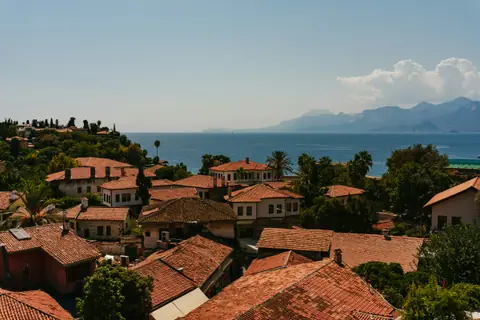
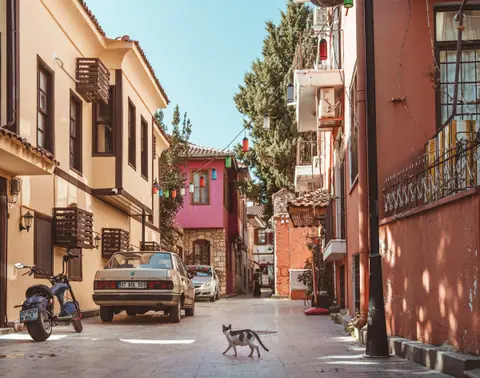
At the geographic core of Antalya sits the historic district of Kaleiçi, framed by ancient walls and coastal cliffs.
The area preserves the heritage of Attaelia, historic Seljuk traces, and an ancient eastern Mediterranean harbour.
Public transit operates across integrated tramlines managed by the regional transport authority, Antalya Ulaşım AŞ.
The AntRay network connects Antalya Airport, Meydan, Fatih, the central districts, and the Antalya Intercity Bus Terminal.
The urban rail system runs services along the Fatih-Havalimanı-Expo (T1) line and the Varsak-Müze (T3) line.
The Antalya Intercity Bus Terminal functions as a transit hub, located 4 km north of the city centre.
Antalyakart cards provide contactless boarding on buses and can be used for car parking at the central bus terminal.
Visitors can also use the municipal Antalyakart system for rapid admission at Upper Düden Waterfall.
At Antalya Airport, the 1st International Terminal and 2nd International Terminal sit approximately 2.5 km apart.
That airport terminal transfer takes around 5 minutes by road vehicle.
Minibuses travelling towards Kemer on the Aspendos, Side, Manavgat, and Alanya routes depart from the western Kemer bus stop.
Travellers can research local lodging areas by consulting our curated Where to Stay in Antalya: A Neighbourhood Guide.
Safety Directives and Local Legal Obligations
Turkish law requires every person to carry photographic identification, such as a passport or residence permit, at all times.
Insulting the Turkish nation, the national flag, the president, or founder Mustafa Kemal Atatürk is a serious criminal offence.
Taking photographs of or near military zones or official government installations is strictly prohibited by law.
Smoking is illegal on all public transport and inside all indoor workplaces and public areas.
Buying, acquiring, or exporting historical antiquities is illegal and carries prison sentences between 5 and 12 years.
Foreign nationals planning archaeological excavations, documentary filming, or formal research must secure official advance permission from authorities.
Both drivers and pillion passengers riding mopeds must wear protective safety helmets on public roads.
Street robbery and pickpocketing occur in major tourist areas, requiring caution with bags and personal valuables.
Wildfires occur frequently during dry summer months across regional forests and scrubland.
Lighting open fires or dropping cigarette butts in risk areas like woodland can result in fines or prison.
On regional beaches, swim flags display water warnings, and a red flag means entering the sea is prohibited.
For medical emergencies, dial 112 from any phone to request emergency ambulance assistance.
Remember that European Health Insurance Cards and Global Health Insurance Cards are not valid in Turkey.
Turkish pharmacies do not accept British prescriptions, so bring all required medications with you.
Check recommended travel vaccines at least 8 weeks before departing for your trip.
Coastal Geography and Major Protected Beaches
Antalya possesses a 640-kilometre Mediterranean coastline bordered directly by the towering Taurus Mountains.
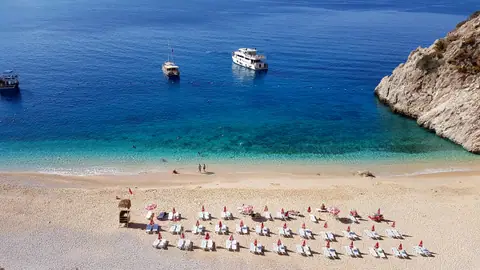
West of the cliffs, Konyaaltı Beach holds a Blue Flag certification and extends for 7.5 km.
Further west along the coastal highway, visitors reach Kaputaş Beach by descending roughly 200 steps.
Patara Beach on the Teke Peninsula features the second longest beach in Turkey at 14 kilometres total length.
The sand width at Patara varies between 280 metres and 1500 metres across its coastal dunes.
Between 15 May and 15 September, visitors access Patara Beach between 08.00 and 20.00.
Loggerhead sea turtles take exclusive possession of Patara Beach overnight between 20.00 and 08.00.
Farther east, Çıralı offers scenic coastal shores beneath forested mountain ridges.
For active sea expeditions, the long island of Kekova measures 7.4 km in length and 500 metres in width.
Kekova stretches directly across the coastal settlements of Üçağız, historically called Teimiussa, and Kale, known as Simena.
Coastal waters near Kaş have established the harbour town as one of the few dedicated diving centres globally.
Kemer features modern coastal resort properties, set against Tahtalı Mountain which reaches an altitude of 2,365 metres.
Further east along the coastline, Belek operates as a major global golf centre featuring specially designed courses and resort hotels.
At the eastern edge of the provincial boundary, Alanya features a historic promontory castle projecting into the sea.
Regional History and Mountain Landscape Expeditions
Karain Cave, located roughly 30 km northwest of Antalya, represents an early known Anatolian settlement of homo sapiens.
The Paleolithic age is known as the Old Stone Age and dates back about 2 million years.
Excavations in Karain Cave yielded bone remnants of homo sapiens neandertalensis from prehistoric eras.
Late Middle Paleolithic tools and traces have also been recorded at Kocapınar Village near Elmalı.
Prehistoric shelters displaying painted cave artwork include Belbaşı, Hayıtlıgöl, Kumbucağı, and Sarıçınar around the Beldibi region.
Beldibi Rock Shelter, Bademağacı, and Höyücek near Bucak represent the oldest known Neolithic settlements in the western Mediterranean region.
During the Bronze Age, King Tudhaliya IV signed a border treaty between 1237 and 1209 BC mentioning Parha.
Parha sat along the Kastaraya river within Lukka territory and became known as Perge in the Hellenistic-Roman era.
Perge later developed into a major Pamphylian port city and served as a recorded stop for St. Paul.
The Tırmi culture occupied the Teke Peninsula, leaving rock tombs, sarcophagi, stelae, and upright monuments across western landscapes.
Persian general Harpagos, serving King Cyrus, captured this Tırmi territory between 546 and 538 BC.
Patara was among the most important cities of the Ancient Lycian Civilization on the Teke Peninsula.
Near the eastern river plains, Aspendos Ancient Theatre survives as one of the best-preserved ancient theatres anywhere.
Further along the eastern shores, Iotape Ancient City preserves stone architectural ruins scattered across a rugged coastline.
In the interior mountains, Köprülü Canyon extends for 14 km with rock walls exceeding 100 metres in height.
Göynük Canyon in the Taurus range features an aerial zipline suspended 40 metres high, reaching speeds of 65 km per hour.
Trails in Adamkayalar allow hikers to walk between towering stone pillars and track autumn routes.
Trail runners assemble annually for the Antalya Canyon Ultra competition, held between 13 and 15 November.
Manavgat provides freshwater river scenery, while citrus groves bloom with fragrant orange flowers during regional spring months.
Altitude sickness remains a physical risk when travelling rapidly into higher elevations of Turkey.
On Bakırlı Mountain, Saklıkent Ski Centre sits 35 kilometres from the city centre, offering winter snow depths between 100 and 120 cm.
Where it is
- 1Antalya
- Antalya International Airport (AYT) · about 8 km from Antalya in a straight line
- Directions in Google Maps
Stations and taxi ranks: OpenStreetMap. Airports: OurAirports. Distances are in a straight line.
Traveller tips
Real advice from people who have been to Antalya. Every tip is read by our team before it goes live.
No tips yet. Been here? Yours could be the first.
Thank you! Your tip will appear here after a quick review.
More in Antalya
Continue exploring Antalya with related neighbourhood, food, and planning guides