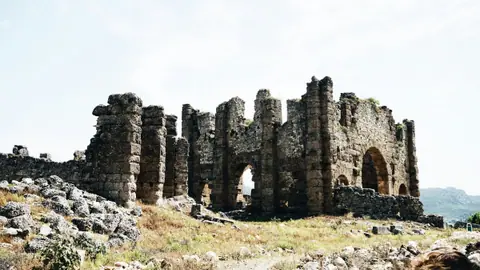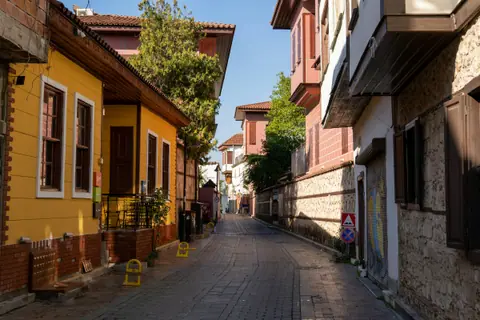
Photo by Vitaliy Gavrushchenko on Unsplash
How to Get to Antalya
Reach Antalya easily via international flights, the AntRay airport tram, municipal buses, intercity coaches, and highway D400.
You can reach Antalya by landing at Antalya Airport or by travelling on intercity coaches into the central bus station connected to city trams.
Arriving through Antalya Airport terminals
Antalya is Türkiye's ninth-largest city and welcomes more than 14 million foreign guests every year. Most visitors arrive through Antalya Airport, which ranks as the third busiest airport in Türkiye and the fifteenth busiest in Europe. The airport grounds sit in the Yeşilköy neighbourhood of the Muratpaşa district, under postal code 07230.
A specialised terminal layout serves this heavy international traffic. Foreign holidaymakers account for around 70 percent of all air passengers. For this reason, the airfield operates two international passenger terminals and one domestic terminal. Official airport documentation identifies the domestic building as Terminal 3. Terminal 1 and the domestic terminal share interconnected concourses with separate outside doorways. This setup permits passengers to walk directly between domestic services and international gates without leaving the terminal building.
Terminal 2 sits approximately 2.5 kilometres away from Terminal 1. Driving between these two international buildings takes around five minutes. Terminal 2 opens only during the busy summer months. A complimentary shuttle service operates in both directions between the Domestic Terminal or Terminal 1 and Terminal 2. Shuttle bus stops stand outside the terminal departures areas. Identifying your arrival building helps you plan onward connections before choosing where to sleep in our Where to Stay in Antalya article.
Passport rules and entry permits for Türkiye
Border regulations depend upon nationality and passport classification. British citizens visiting for tourism or business can enter Türkiye without needing a visa for stays up to 90 days within any 180-day window. Your passport must show an expiration date at least 150 days after your arrival day. It must include at least one blank page for immigration stamps. British citizens residing in Türkiye must present a passport valid for six months from the date of arrival. Travellers who hold other varieties of British passports require a visa and must consult an embassy before departure.
For eligible nationalities needing formal entry authorisation, the Ministry of Foreign Affairs introduced the Electronic Visa platform on 17 April 2013. Travellers can obtain an online e-Visa in approximately three minutes. The e-Visa remains valid strictly for business or leisure visits. Visa charges on the official website remain lower than fees charged for visas issued at airport immigration counters. Foreigners entering Türkiye must hold a travel credential valid for at least 60 days past their visa duration of stay. Official guidance recommends carrying a passport valid for at least six months from the arrival day.
Holding an approved visa removes the obligation for a residence permit during visits up to three months. Border officials enforce strict bans on bringing controlled drugs, firearms, and offensive weapons such as flick knives or self-defence sprays into Türkiye. Travellers may transport Turkish lira or foreign banknotes without statutory ceilings. Anyone intending to shoot a documentary film, conduct scientific research, or participate in an archaeological excavation must secure formal permission beforehand.
Riding the AntRay tram from the airport
AntRay light rail trains offer an affordable, dependable journey into town. The tram system connects the airport complex directly with central urban stops. Arriving passengers can board the Fatih-Havalimanı-Expo (T1) line from the airport platform. The tram proceeds along a corridor serving Meydan, the central district, the Antalya Intercity Bus Terminal, and Fatih. This route enables swift transfers across central neighbourhoods when following an Antalya 3-Day Itinerary.
Terminal 1 connects directly to the AntRay tram station. Terminal 2 lacks a physical link to the AntRay line. Passengers arriving at Terminal 2 can take the free transfer bus to Terminal 1 to board the light rail. Antalya Ulaşım operates daily tramway services across the municipal territory. The wider urban network also includes the Varsak to Müze (T3) line. Passengers can check the official site for real-time timetables and system announcements.
Public transport ticketing relies on the Antalyakart system. This prepaid smart card enables contact-free payment across municipal buses and trams. Antalyakart cards also serve for car park payments at the intercity bus terminal. Cardholders can even use Antalyakart for direct entry into the Upper Düden Waterfall park. Ticket kiosks operate throughout the city, including the Antalyakart Olbia Card Center situated inside the Akdeniz University campus grounds.
Catching airport buses and Havaş shuttles
Antalya Metropolitan Municipality runs scheduled city buses from the airport to various urban districts and coastal neighbourhoods. These municipal buses depart from designated stops situated outside the terminal exits. They provide continuous transport links toward the main downtown areas and suburban transfer centres.
Private coach operator Havaş provides scheduled ground transfers from the passenger concourses. Havaş buses run between the airport terminals and the Antalya Town Center. Visitors travelling farther along the eastern Mediterranean shoreline can note that Havaş also operates at Antalya Gazipaşa-Alanya Airport. That regional airport stands in the Aydıncık locality of Gazipaşa, with postal code 07900. Havaş connects that airfield directly to Alanya. Passengers should check the official Havaş website to review current departure schedules for their travel dates.
Taking licensed taxis from the terminals
Taxis offer door-to-door transit for passengers carrying substantial baggage or landing outside normal rail running hours. Official taxi stands operate directly outside the arrival exits of each terminal building. Every taxi driver working at the airport carries a special airport identification tag. Passengers can check destination prices readily, as an official fare signboard stands adjacent to the airport taxi rank.
State airport authority records place Antalya Airport 13 kilometres from the Antalya city centre. Tourism agency sources describe the separation as 15 kilometres. Driving into the city centre along highway D400 takes approximately 20 to 25 minutes under usual conditions. Highway D400 represents the central transport corridor linking the airport westward to central Antalya and eastward toward Side and Alanya.
Highway D400 also leads directly to prominent coastal hubs across the province. Official road distance listings measure Serik at 30 kilometres and Kemer at 57 kilometres. Manavgat is 65 kilometres away, whereas Finike and Alanya are each 125 kilometres distant. Passengers proceeding to the far western reaches of the province will find Kaş at 200 kilometres and Kalkan at 229 kilometres.
Travelling by intercity coach to the bus terminal
Travellers journeying across Türkiye by bus pull into the Antalya Intercity Bus Terminal. This extensive coach facility is located four kilometres north of the city centre. The station serves as a pivotal passenger hub for the entire Mediterranean shoreline. Long-distance buses link the terminal to provincial capitals and inland destinations throughout the country.
The bus terminal integrates smoothly with municipal urban transit. The AntRay light rail line calls directly at the terminal stop, providing seamless links toward Meydan and Fatih. Local municipality buses and street taxis serve the terminal concourse day and night. Drivers parking vehicles at the facility can settle parking fees with cash, payment cards, or an Antalyakart card. This connected network facilitates swift travel toward local accommodation.
Arriving by road or cruise port
Drivers heading into the province travel principally along highway D400. This highway passes northeast of the city centre beside the airport grounds. It ensures straightforward road connections across regional resort towns. Several car rental providers run service counters inside the airport terminals. Arriving passengers can pick up a rental car directly to discover historical sites and coastal geography independently.
Cruise passengers enter the region via Port Akdeniz Antalya. This multipurpose facility maintains separate harbours for cruise liners, cargo container ships, bulk freighters, and private yachts. The port features three dedicated berths offering an overall berthing line length of 510 metres. Port Akdeniz stands 20 kilometres away from the Antalya city centre and 30 kilometres from Antalya Airport.
Strict environmental regulations protect delicate marine reserves along this stretch of coast. Swimming is forbidden around the sunken ruins of Kekova Island because authorities preserve the area as an archaeological site. Maritime vessels cannot enter the protected waters of Ölüdeniz lagoon. Cruising yachts visiting Ölüdeniz must anchor in the strait beside Gemiler Island, where travellers transfer onto smaller boats to complete the trip.
Where it is
- 1Antalya
- Antalya International Airport (AYT) · about 8 km from Antalya in a straight line
- Directions in Google Maps
Stations and taxi ranks: OpenStreetMap. Airports: OurAirports. Distances are in a straight line.
Traveller tips
Real advice from people who have been to Antalya. Every tip is read by our team before it goes live.
No tips yet. Been here? Yours could be the first.
Thank you! Your tip will appear here after a quick review.
More in Antalya
Continue exploring Antalya with related neighbourhood, food, and planning guides