Bangkok Street Food
Bangkok street food is a daily habit, from noodles at plastic tables to night streets in Chinatown, and a few simple habits keep it enjoyable.
Bangkok is one of the world's great street food cities, and the best meals here often cost less than a bottle of water at a hotel. Cooks work from carts, tables and tiny shopfronts, usually specialising in just a few dishes that they make again and again, and the results can be extraordinary. Eating on the street is not a stunt but an everyday habit, and it is the quickest way to understand the city.
Dishes to start with
Pad Thai, the famous stir-fried noodles, is a familiar first plate, though locals eat it less often than visitors expect. Pad kra pao is a spicy stir-fry of minced meat and holy basil, served over rice with a fried egg. Papaya salad, known as som tam, is crunchy, sour and hot, and grilled pork skewers with sticky rice make a perfect snack. Boat noodles, served in small bowls in a dark, rich broth, are a classic, and chicken rice with a clear soup is a gentle favourite.
Sweet things
For dessert, try mango with sticky rice, which is served with coconut cream and is best in the hot season when mangoes are ripe. Roti with condensed milk and banana, cooked on a griddle, is a late-night favourite. Coconut ice cream, fresh fruit and sweet iced drinks are sold everywhere, and the stalls that sell cut fruit in bags are a cheap, healthy snack.
How to order
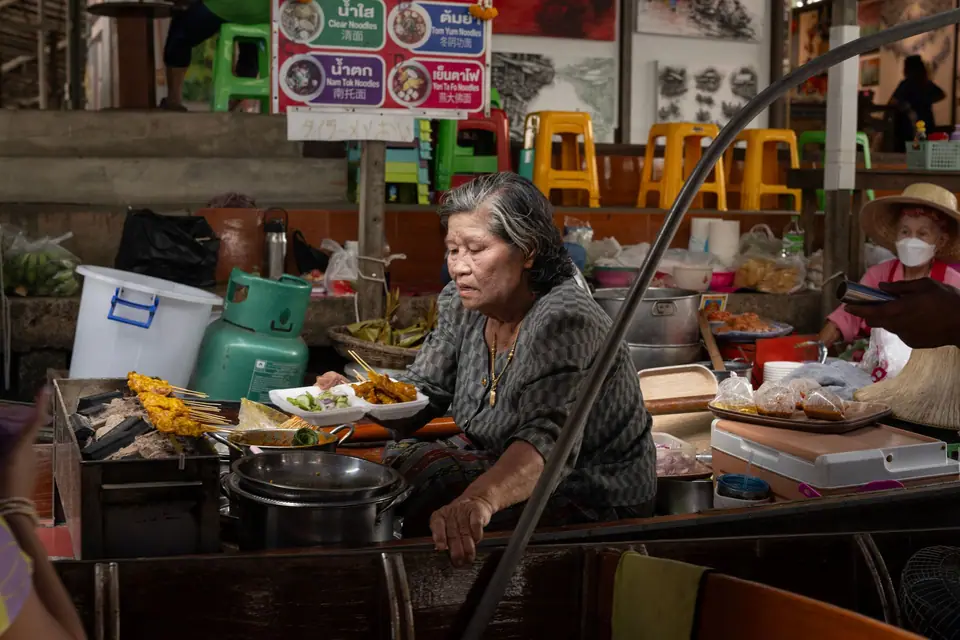
Most vendors speak a little English, and many have picture menus, so you can often just point. If you do not want much heat, say mai phet, which means not spicy, or phet nit noi for a little spicy. Pay when you are served, and keep small notes handy. Tables often have a set of condiments, usually sugar, chilli flakes, fish sauce and vinegar, and locals adjust their dish to taste.
How to eat
Thai people eat with a spoon in the right hand and a fork in the left, using the fork to push food onto the spoon. Chopsticks are used for noodle soups. Do not stand your fork or spoon in the dish, and do not worry about slurping. It is normal to share, so order a few dishes between friends and taste them all.
Where to look
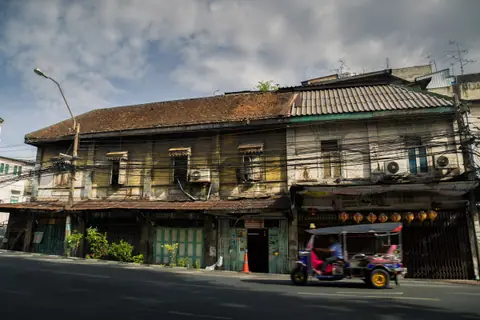
Great street food is everywhere, but some places are better than others. Yaowarat is the best at night, and the markets and lanes around the old town are busy at lunch. Office districts have lunch stalls that are quick and cheap, and the stalls near train stations offer easy dinners. The big weekend market at Chatuchak has a huge range of food.
The Michelin effect
Some street cooks have become famous, and one chef known for her crab omelette and her protective goggles has earned a Michelin star. These stalls are very popular and often need booking or a long wait, and prices are much higher than at an ordinary cart. They can suit a once-only treat, but you can eat just as well at a neighbourhood stall without any queue.
Staying healthy
Choose busy stalls where the food is cooked fresh in front of you, and avoid anything that looks like it has been sitting out in the heat. Peel your own fruit, drink bottled or filtered water and carry hand wipes. If you are new to chilli, start mild and build up, and have some plain rice or a sweet drink nearby. Most visitors eat well without trouble.
Costs
A plate of noodles or rice usually costs a small sum, and a feast for two at a night stall costs far less than a restaurant meal. Prices at tourist spots are higher, so check the price before you order if there is no sign. Cash is the norm, though a growing number of stalls accept QR payments.
What to skip
You do not need to eat insects or scorpions unless you want to, and you can skip stalls with no customers. Sukhumvit has long rows of stalls beside its Skytrain stations, and a rooftop drink makes a fitting end to a night of eating.
Traveller tips
Real advice from people who have been to Bangkok Street Food. Every tip is read by our team before it goes live.
No tips yet. Been here? Yours could be the first.
Thank you! Your tip will appear here after a quick review.
More in Bangkok
Continue exploring Bangkok with related neighbourhood, food, and planning guides