Skytrain and Getting Around
The Skytrain and metro are the fastest way across Bangkok, while boats and taxis fill the gaps in a city famous for its traffic.
Bangkok's traffic is famously bad, and the sensible way to deal with it is to avoid it. The city has a growing network of elevated trains and underground lines, and a river and canal boat system that glides over the jams. With a little planning you can reach nearly every sight without spending more than a short time in a taxi. It is cheap, air-conditioned and much faster than the road at busy times.
The Skytrain
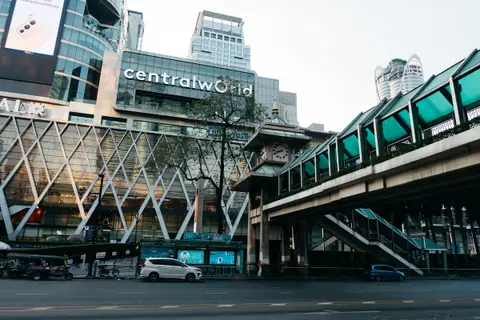
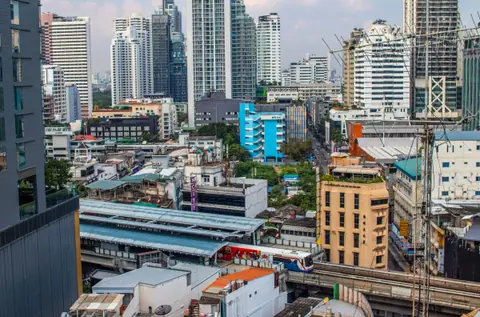
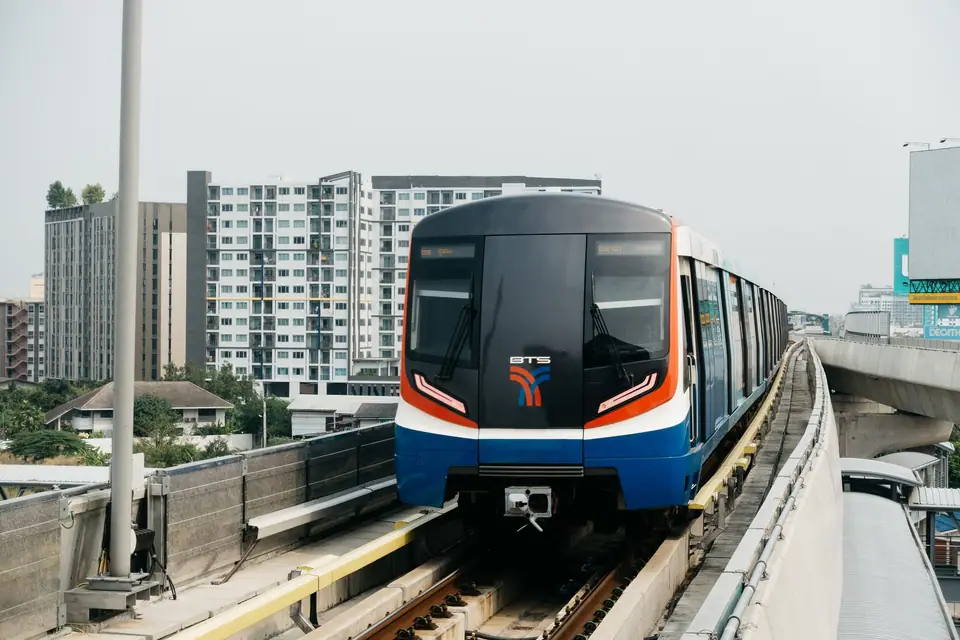
The BTS Skytrain runs on two main lines through the modern centre, the Sukhumvit line and the Silom line, which meet at Siam station. It is clean, fast and frequent, with stations marked in English. Tickets are bought from machines or booths, or you can use a rechargeable card that saves time. Trains are crowded at rush hours, so avoid the early morning and early evening where possible.
The metro
The MRT metro has underground lines that cover areas the Skytrain does not, including the old town and Chinatown. It uses a separate ticket system from the BTS, and you change between them at interchange stations, with a short walk. Check whether your bank card can be used at the gates, or buy a single-journey token or a card at the station.
The airport link
An airport rail link runs from Suvarnabhumi Airport to the city, taking about half an hour to reach its central stations, where you can change to the Skytrain and metro. It is much cheaper and more reliable than a taxi at rush hour. Don Mueang Airport, used by many budget airlines, is served by trains and buses, and taxis are also available.
Boats
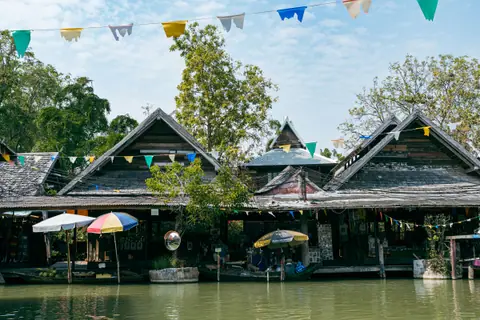
The river boats and canal boats are a fast and scenic way to travel and are part of the transport network. The Chao Phraya River boats link many sights, and the Saen Saep Canal boats cut across the city. Our canal guide explains how to ride them. Boats are cheap but stop running in the evening.
Taxis and ride apps
Taxis are plentiful, and the fare is cheap by international standards, but the driver must use the meter. If a driver refuses, politely say no and find another. Ride apps are widely used and show the price in advance, which avoids arguments. At the airport, use the official taxi queue and expect a small surcharge and tolls.
Tuk-tuks and motorbike taxis
Tuk-tuks are a fun experience, but they have no meter, and prices for visitors can be high, so agree a fare first. They are best for short rides and photographs. Motorbike taxis, whose riders wear orange vests, are a quick way to cover short distances through the traffic, though they carry risks, so wear the helmet and hold on tight.
Rush hours and timing
The roads are at their worst in the early morning and the evening, and a short trip can take an hour. Plan your day so that you move between districts by train or boat at these times, and save taxis for the middle of the day or the late evening. Rain also slows the roads, so allow extra time.
Long-distance trains
Most long-distance trains now leave from a large central station in the north of the city, which is linked to the metro. Check which station your train uses, because the old terminal is now used far less. Tickets can be bought online or at the station, and booking ahead is wise for popular routes, such as the one to Ayutthaya.
What to skip
You do not need to hire a car, and you can skip any driver who refuses the meter. For a first trip, the Skytrain, a metro card and a ride app are all you need. Our airport guide covers the links from Suvarnabhumi and Don Mueang, and the taxi, tuk-tuk and bus guide explains the rest of the road network.
Traveller tips
Real advice from people who have been to Skytrain and Getting Around. Every tip is read by our team before it goes live.
No tips yet. Been here? Yours could be the first.
Thank you! Your tip will appear here after a quick review.
More in Bangkok
Continue exploring Bangkok with related neighbourhood, food, and planning guides