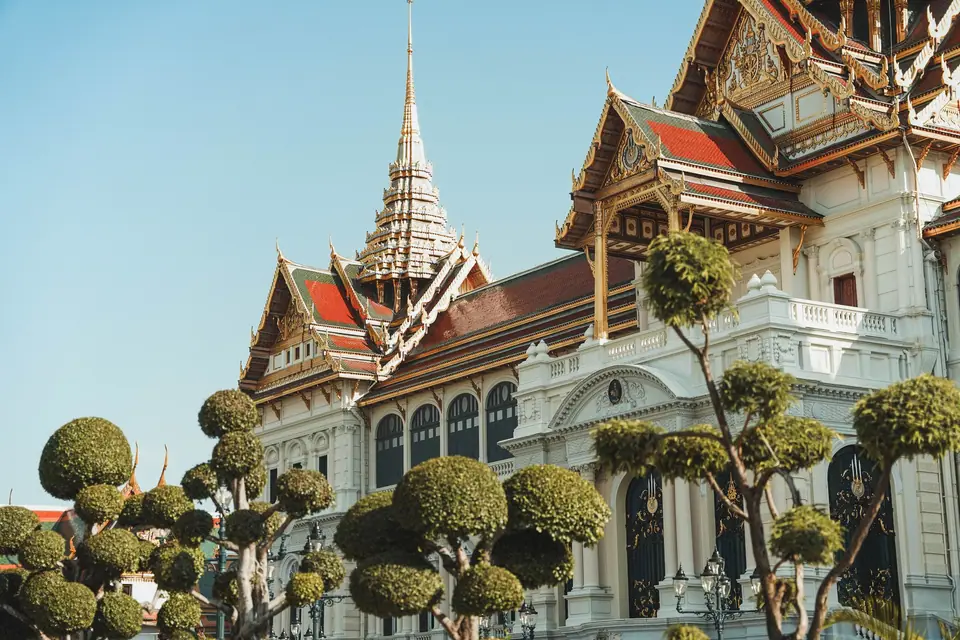
Grand Palace
The Grand Palace is Bangkok's royal showpiece, home to the Emerald Buddha, painted cloisters and a dress code that is firmly enforced at the gate.
The Grand Palace is the grandest single sight in Bangkok, a walled compound of gilded spires, mirrored halls and glazed orange and green roofs beside the Chao Phraya River. King Rama I began building it in 1782 when the capital moved across from Thonburi, and for more than a century it served as royal residence and seat of government. The kings no longer sleep here, but it still hosts state ceremonies, which is why the rules are strict and the schedule can change without warning.
The layout of the compound
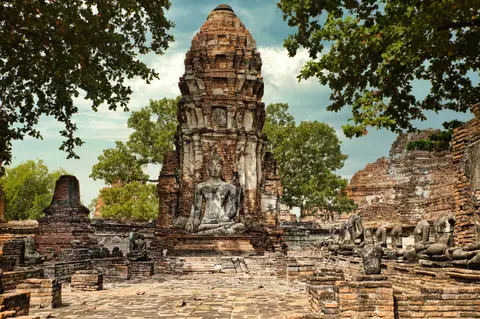
The site is really several worlds side by side. The outer courts hold the throne halls, the most photographed being the Chakri Maha Prasat, which puts a Thai roof on a European Victorian body, a compromise that tells you a lot about nineteenth-century Siam. Beside it stand pavilions, a small museum of royal regalia and the grounds of the Temple of the Emerald Buddha, Wat Phra Kaew, which occupies the north-eastern corner.
The Emerald Buddha
The image is far smaller than most people expect, a figure carved from a single block of green jade and perched high above the worshippers on a golden altar. It is the palladium of the Thai kingdom, and the king himself changes its robes at the turn of the hot, rainy and cool seasons. Photography is forbidden inside the hall, and we sit with our feet tucked behind us, never pointing at the image.
Murals, guardians and golden chedis
The cloister around Wat Phra Kaew carries a continuous mural of the Ramakien, the Thai version of the Indian Ramayana, running for hundreds of metres in panels of battles, palaces and monkey warriors. Giant demon guardians called yaksha stand at the gates in glass mosaic armour, and a golden chedi and a Khmer-style prang rise from the upper terrace. Walk the whole loop slowly, because the detail repays it.
Dress code and the entrance gate
Shoulders and knees must be covered, and clothing should not be sheer, tight or torn. Shorts, sleeveless tops and short skirts will be turned away at the gate. Light, loose trousers and a cotton shirt are the sensible choice in the humidity, and we carry a scarf for the shoulders. Stalls near the entrance lend or sell cover-ups, but the queue for them eats into a morning, so it is better to arrive dressed correctly. More detail sits in our guide to temple etiquette and dress.
The closed-today trick
The best-known scam in the city starts near the palace walls, where a friendly stranger tells you the site is shut for a ceremony and offers a tuk-tuk tour of other temples and gem shops instead. Ignore it. Walk to the official entrance and read the notice there, buy your ticket only at the ticket office inside the gate, and decline any offer of a guide before you reach it. Our page on safety and common scams covers the other tricks.
Timing and heat
The courtyards are paved, bright and almost shadeless, so we arrive at the opening and finish before the tour coaches fill the paths. From November to February the air is kinder, while the hot season from March to May makes midday a trial. Allow a slow half day, and carry water, since the cloisters offer little shelter. Closures for royal ceremonies do happen, so confirm on the official website before setting out.
Getting there and what comes next
The most pleasant approach is an express boat to Tha Chang pier, a short walk from the gate, and our notes on the Chao Phraya River explain the boat lines. The MRT station at Sanam Chai is also close, while taxis crawl through the old city at busy hours. Wat Pho sits just south, and Wat Pho and its reclining Buddha make the natural second stop, followed by a ferry across to Wat Arun as the afternoon cools.
After the palace we usually cross to Wat Pho on foot, then take a boat on the Chao Phraya River to Wat Arun for sunset, a route that keeps the temples in a sensible order and avoids Bangkok's traffic. The old town lanes behind the palace walls are the natural place to eat afterwards.
Traveller tips
Real advice from people who have been to Grand Palace. Every tip is read by our team before it goes live.
No tips yet. Been here? Yours could be the first.
Thank you! Your tip will appear here after a quick review.
More in Bangkok
Continue exploring Bangkok with related neighbourhood, food, and planning guides