Jim Thompson House
The Jim Thompson House gathers traditional teak houses around a green garden, and tells the story of the American who revived Thai silk.
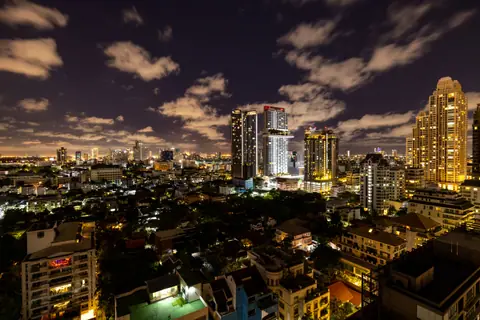
The Jim Thompson House is a quiet museum in the middle of a busy district, and it tells the story of the American who revived the Thai silk industry. Set in a leafy garden beside a canal, it is made up of several traditional teak houses that were carried here from other parts of Thailand and joined into a single home. The rooms are calm, cool and beautiful, a real contrast to the roar of the streets outside.
The man behind the silk
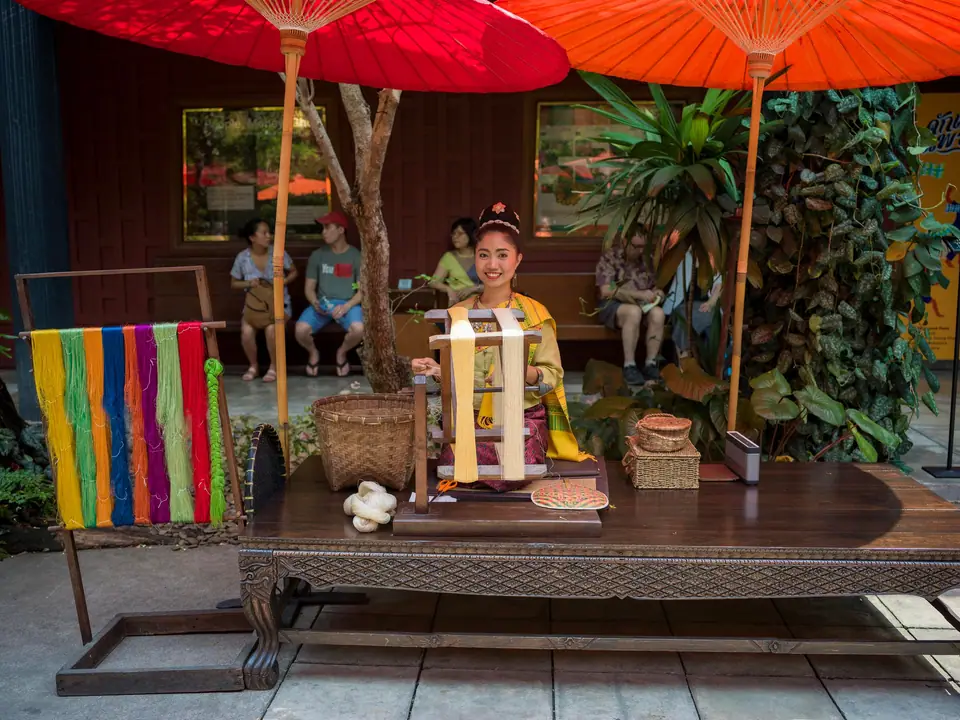
Jim Thompson was an American architect and former intelligence officer who settled in Bangkok after the Second World War. He fell for Thai silk, worked with local weavers to improve the designs and the dyes, and then promoted the fabric to international buyers and fashion houses. His company became famous, and Thai silk became a staple of Western wardrobes. He collected art on the side, and his house is full of his finds.
A mystery that was never solved
In 1967, while on holiday in the Cameron Highlands of Malaysia, Thompson went for a walk and never returned. Despite huge searches, no trace of him was found, and theories range from an accident to a plot. The guides tell the story with relish, and it adds a thrill to the quiet rooms.
Teak houses built for the climate
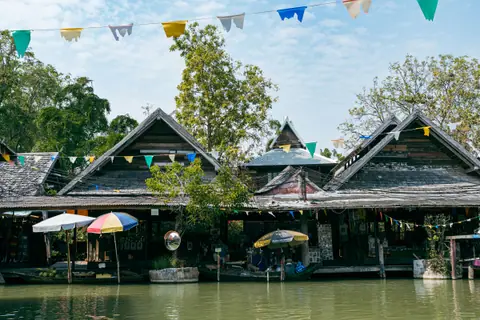
Thompson had the old houses taken apart, then reassembled with their walls tilted slightly inward, in the traditional style, and linked by covered walkways. Tall ceilings, polished floors and open sides show how a Thai home was designed to catch breezes and shed monsoon rain. Our weather guide explains why that design still makes sense.
Antiques and art
Inside, you will see Buddha images, Khmer stonework, Chinese ceramics, paintings, carved furniture and old maps from across Southeast Asia. Thompson arranged them to feel lived in rather than staged. Photography is not allowed inside the houses, so you will rely on memory, but cameras are welcome in the garden. If the objects spark an interest in earlier Thai art, the Bangkok National Museum offers a much broader sweep.
The guided tour
Visits to the houses are by guided tour only, with groups leaving in several languages, including English. The guides give a lively account of the house and its owner, and afterwards you are free to wander the garden, browse the silk shop and sit in the cafe. Book ahead on busy days through the official website, since tour places are limited and groups fill up.
Getting there
The house stands down a quiet lane a short walk from National Stadium Skytrain station, and the shopping malls of Siam are close by. We find the train much easier than a taxi, because the surrounding roads clog badly. Our Skytrain guide shows how to reach it from the main lines, and the Siam malls page suggests what to pair it with.
Making a day of it
The house suits a morning, when the garden is cool and the light is soft. Afterwards, walk or ride to Lumphini Park for a lakeside rest, or head north to the sprawl of Chatuchak Weekend Market if the day is a weekend and you want crowds and bargains after all that calm.
Jim Thompson was an American who settled in Bangkok after the Second World War and helped revive the Thai silk trade, before he vanished in the Malaysian highlands in 1967, a mystery that has never been solved. The house is a group of traditional teak buildings brought from Ayutthaya and from a canal community near the city, which is why it looks so unlike the towers around it. Visits are by guided group, with tours in English, so we arrive in good time and allow a slow afternoon. National Stadium Skytrain station is a short walk away, beside the Siam shopping district.
Traveller tips
Real advice from people who have been to Jim Thompson House. Every tip is read by our team before it goes live.
No tips yet. Been here? Yours could be the first.
Thank you! Your tip will appear here after a quick review.
More in Bangkok
Continue exploring Bangkok with related neighbourhood, food, and planning guides