Salineras de Maras, Moray Terraces and Chinchero Weaving Town
Combine the high plateau northwest of Cusco in one trip: Chinchero’s Inca terraces and textile studios, Moray’s circular bowls, and the Maras salt pans.
While the main road through the Sacred Valley follows the floor of the Urubamba River canyon, a parallel route runs across the rolling 3,500-to-3,760-metre Chinchero-Maras plateau northwest of Cusco, backed by the glaciated peaks of Mount Verónica (5,893 metres) and Chicón. Linking the weaving town of Chinchero, the concentric amphitheatres of Moray, and the cliffside evaporation ponds of Salineras de Maras makes a half-day or full-day circuit that pairs seamlessly with an afternoon arrival in Ollantaytambo.
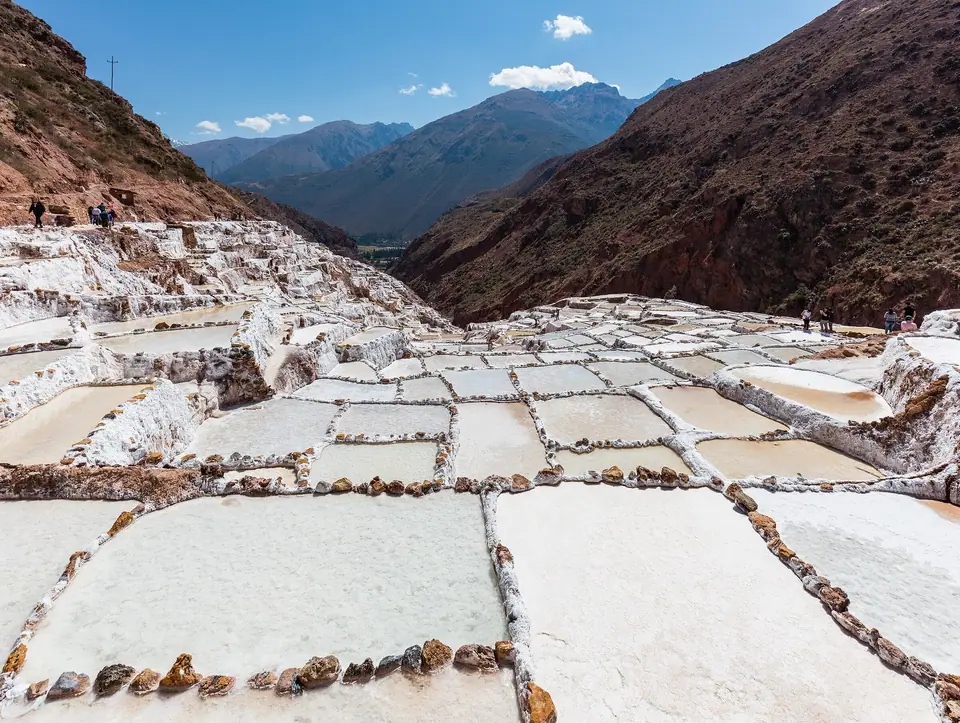
Salineras de Maras (3,200 Metres)
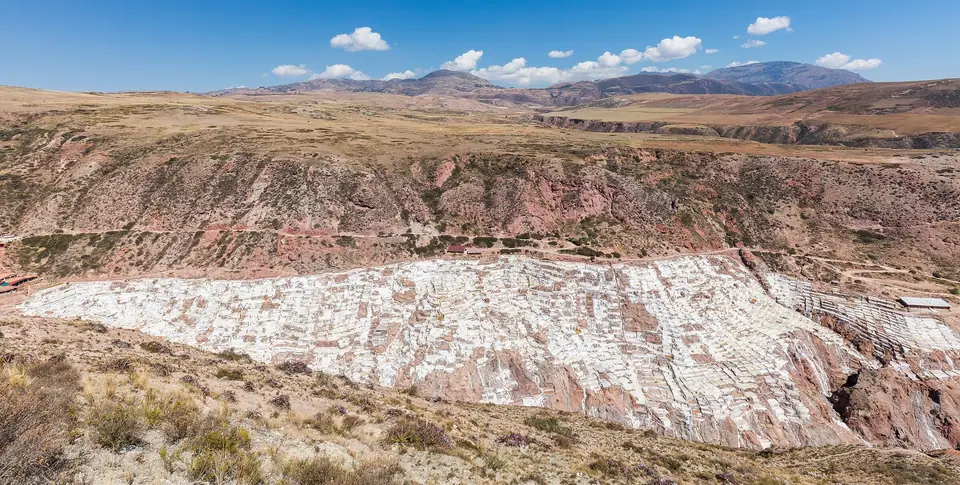
Tucked into a steep red-earth canyon 6 kilometres north of the town of Maras at 3,200 metres elevation, the Salineras de Maras have been harvested continuously since pre-Inca times. High inside the mountain, a subterranean thermal spring (Qoripujio) discharges a steady stream of hypersaline water. Local families from the communities of Maras and Pichingoto, organised through the MarasSal cooperative, direct this brine through a delicate network of mud-and-stone channels into more than 3,000 shallow stepped evaporation pans.
During the dry season (May to October), when sunshine is intense and rainfall scarce, keepers flood each pond to a depth of a few centimetres, close the intake notch, and allow the water to evaporate over several days, raking up layers of pink and white Andean mountain salt. Note that Salineras de Maras is owned by the local community and requires a separate cash admission ticket rather than the Boleto Turístico.
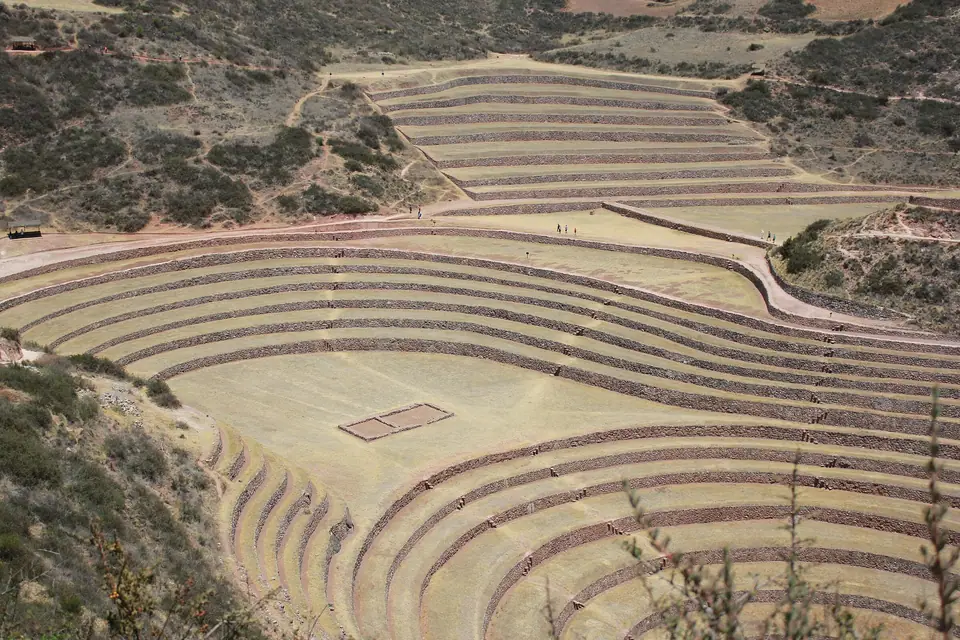
Moray (Inca Agricultural Terraces at 3,500 Metres)
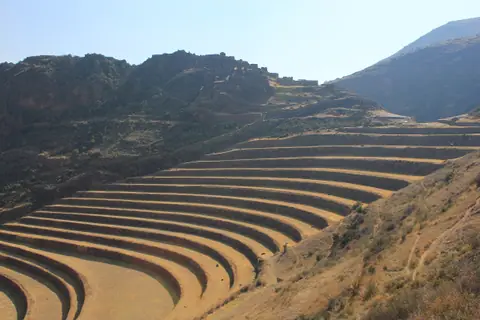
Seven kilometres west of Maras village on a windswept limestone plateau at 3,500 metres, Moray consists of four sinkhole depressions sculpted by the Incas into concentric circular stone retaining terraces, irrigated by vertical water channels and linked by projecting stone steps (sarunas). The largest depression (Qechuyoq) drops 30 metres (98 feet) from rim to floor across twelve circular tiers. Because the bowl traps solar radiation by day and cold air inversions by night, researchers have recorded microclimatic temperature differences of up to 15 °C (25 °F) between the top ring and the lowest terrace, allowing Inca agronomists to acclimatise lowland and highland crop seeds.
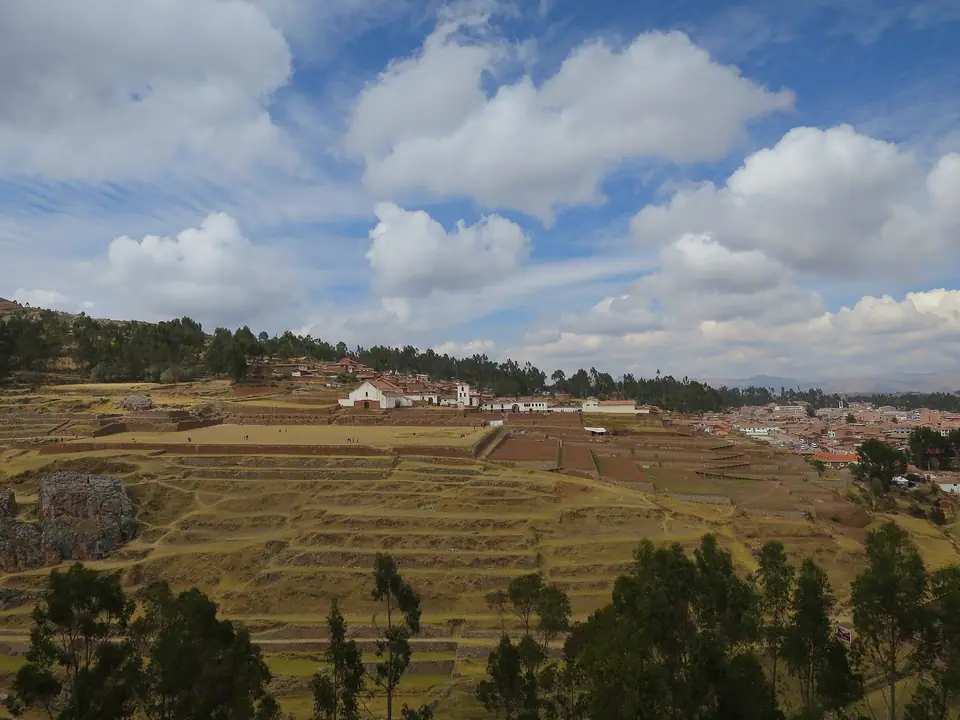
Chinchero (3,762 Metres)
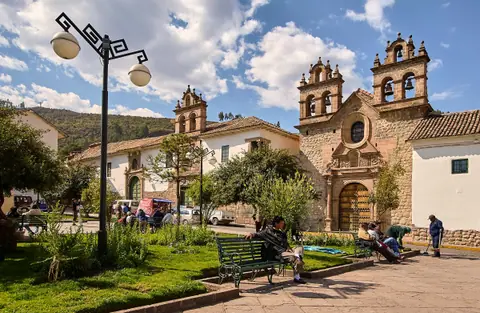
Located 28 kilometres northwest of Cusco at 3,762 metres, Chinchero was the country estate of the tenth Sapa Inca, Tupac Inca Yupanqui. A sweeping stone wall pierced by twelve large trapezoidal niches frames the upper plaza, where the early 17th-century Church of Nuestra Señora de Monserrat rises over the royal palace foundations, decorated inside with floral ceiling frescoes and canvases by indigenous painter Diego Quispe Tito.
Natural Dyeing and Weaving Cooperatives
Both Chinchero and Moray are included on Circuit III of the Boleto Turístico, and Chinchero’s women-led weaving centres demonstrate how cochineal, ch’illka leaves, and qolle flowers are boiled to dye alpaca yarn.
Traveller tips
Real advice from people who have been to Salineras de Maras, Moray Terraces and Chinchero Weaving Town. Every tip is read by our team before it goes live.
No tips yet. Been here? Yours could be the first.
Thank you! Your tip will appear here after a quick review.
More in Cusco
Continue exploring Cusco with related neighbourhood, food, and planning guides