


























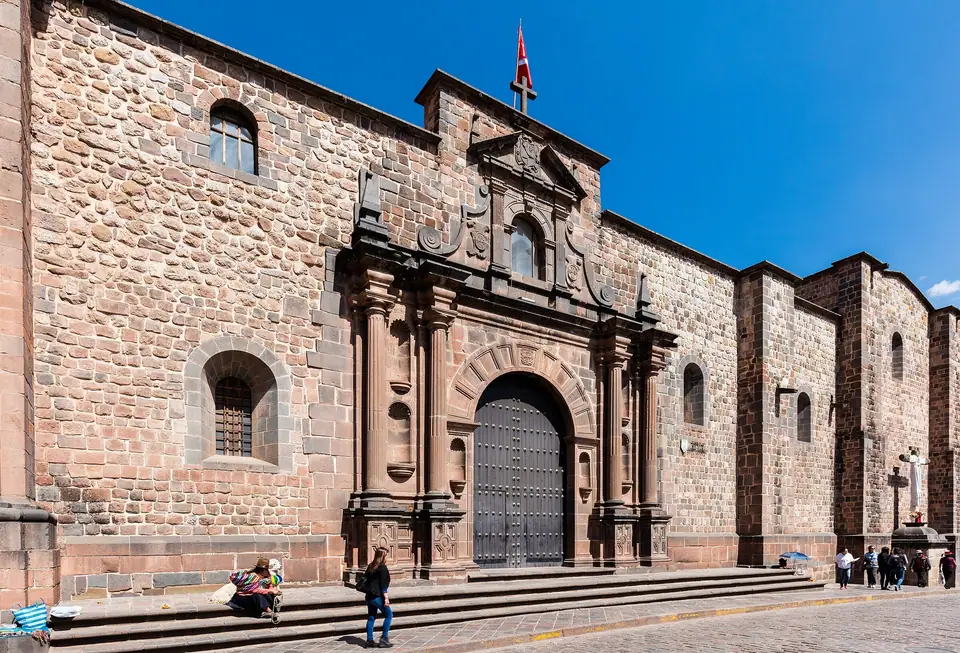
Qorikancha, Convent of Santo Domingo and Hatun Rumiyoc’s Twelve-Angled Stone
Examine Cusco’s finest Inca masonry at the Temple of Qorikancha, the Convent of Santo Domingo, Calle Loreto, and the Twelve-Angled Stone.
Nowhere in the Andes is the precision of imperial Inca stonecutting clearer than in the blocks running between Plaza de Armas and Avenida El Sol. Working with bronze pry bars, river-cobble hammerstones, and wet quartz sand, 15th-century architects shaped basalt, dark andesite, and green sacrificial diorite into earthquake-resistant walls that incline slightly inward and lock together without mortar. Two walks showcase the two main styles of imperial masonry: the coursed rectangular ashlar of Qorikancha and the interlocking polygonal blocks of Hatun Rumiyoc.
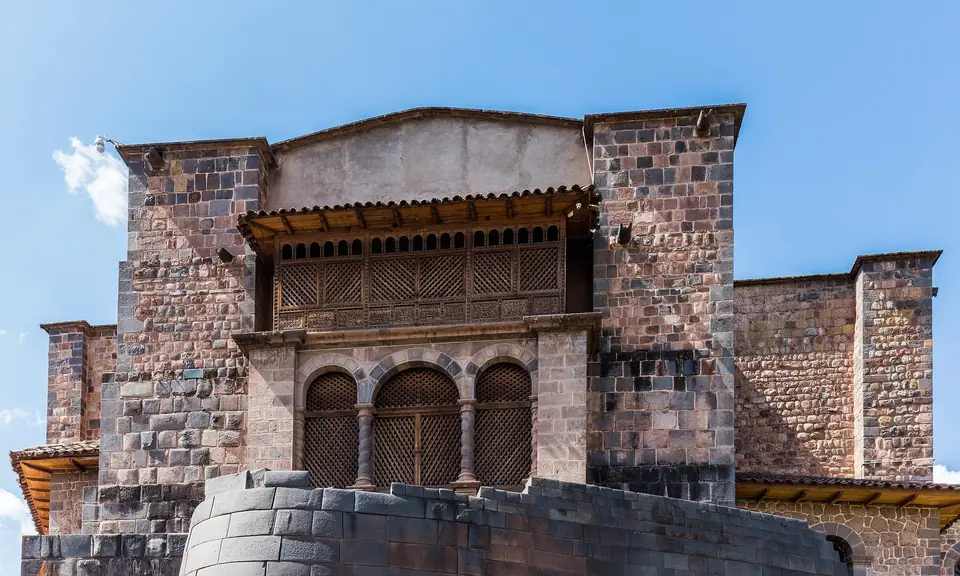
Qorikancha (The Inca Temple of the Sun) and Santo Domingo
Located four blocks southeast of Plaza de Armas at the confluence of Avenida El Sol and Calle Loreto, Qorikancha (from Quechua Quri Kancha, meaning Golden Enclosure) was the religious centre of the Inca Empire and the zero point from which 41 sacred sightlines (ceques) radiated across the four quarters of Tawantinsuyu. Rebuilt under Sapa Inca Pachacuti in the mid-15th century, its exterior walls were once sheathed in beaten sheets of gold, and Spanish chroniclers described a lower terraced garden planted with life-size golden maize stalks and llamas.
In the 1530s, the site was awarded to Juan Pizarro, who bequeathed it to the Dominican Order. The friars raised the Convent and Church of Santo Domingo directly atop the Inca walls. When major earthquakes struck Cusco in 1650 and again in May 1950, the colonial Baroque arches and bell tower collapsed, while the underlying Inca chambers stood firm. Today you can walk through the Renaissance cloister to inspect the trapezoidal niches and double-jamb doorways of the Temples of the Moon, Stars, Rainbow, and Lightning, and view the curved western apse wall from the esplanade overlooking the restored solar garden.
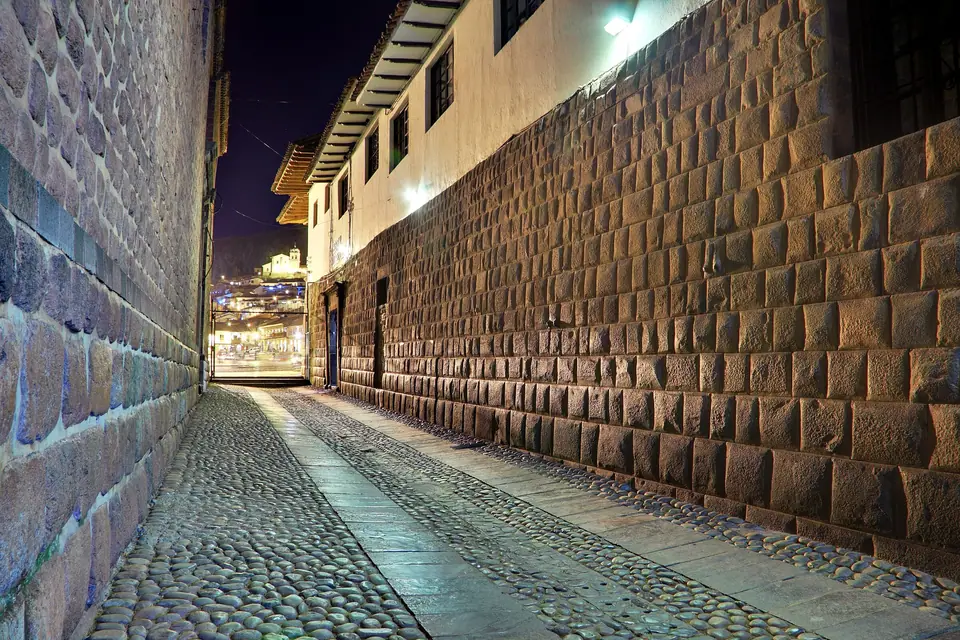
Calle Loreto (Intik'ijllu) and Kusikancha
To walk from Plaza de Armas to Qorikancha along an original Inca street grid, follow Calle Loreto (Intik'ijllu). For 250 metres, the narrow cobbled lane is flanked on the west by the high coursed andesite wall of Amarucancha (palace of Huayna Capac) and on the east by the Aqllawasi (House of the Chosen Women, now the Convent of Santa Catalina). One block east on Calle Maruri, the excavated compound of Kusikancha reveals multi-room residential foundations facing Qorikancha.
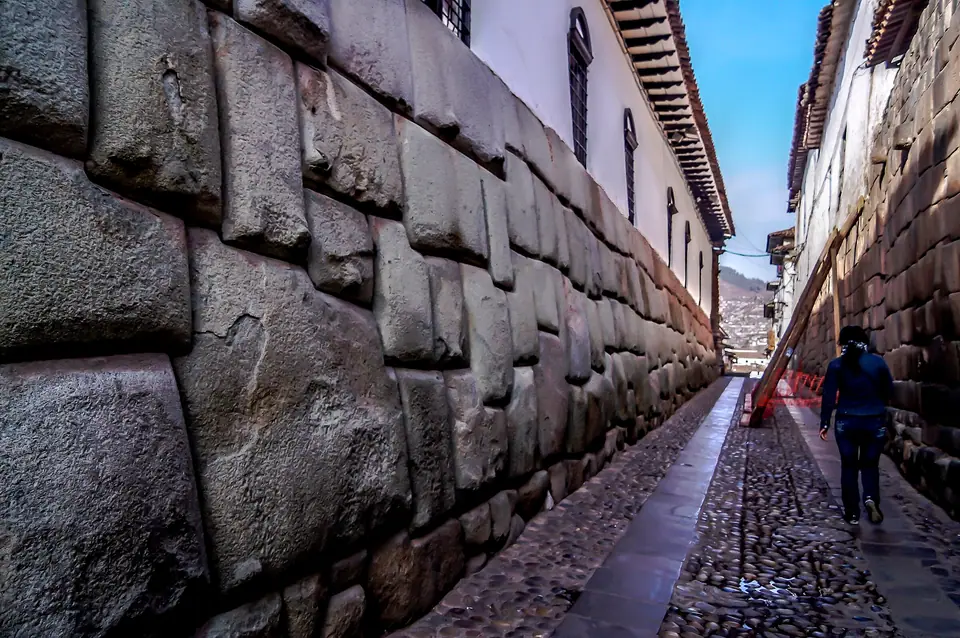
Hatun Rumiyoc and the Twelve-Angled Stone
On the opposite side of the Cathedral, follow Calle Triunfo into Hatun Rumiyoc. The right-hand wall belonged to the palace of the sixth ruler, Inca Roca, and now supports the Archbishop’s Palace (Museum of Religious Art). Built of green diorite in cellular polygonal style, its centrepiece is the Twelve-Angled Stone (Piedra de los Doce Ángulos), a national heritage monument whose twelve recessed and projecting corners fit so tightly that not even a sheet of paper can slip between the joints. Continue up the street to reach San Blas.
Traveller tips
Real advice from people who have been to Qorikancha, Convent of Santo Domingo and Hatun Rumiyoc’s Twelve-Angled Stone. Every tip is read by our team before it goes live.
No tips yet. Been here? Yours could be the first.
Thank you! Your tip will appear here after a quick review.
More in Cusco
Continue exploring Cusco with related neighbourhood, food, and planning guides
Where to Stay in Cusco: Historic Centre, San Blas and San Cristóbal
Cusco, Peru
Cusco 3-Day Itinerary: Historic Core, Sacsayhuamán and the Sacred Valley
Cusco, Peru
What to Eat in Cusco: Lomo Saltado, Cuy al Horno, Chiri Uchu and San Pedro Market
Cusco, Peru
Plaza de Armas, Cusco Cathedral and Iglesia de la Compañía de Jesús
Cusco, Peru
