


























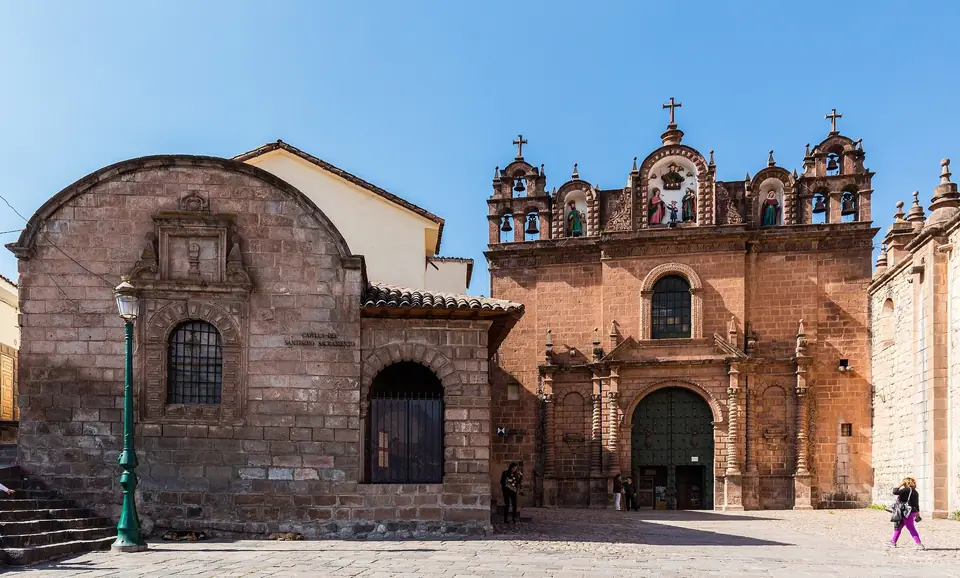
Plaza de Armas, Cusco Cathedral and Iglesia de la Compañía de Jesús
Explore Cusco’s monumental heart at Plaza de Armas, built over the Inca square of Huacaypata and framed by the Cathedral Basilica and Jesuit Church.
Before the Spanish arrived in 1534, the open space at the centre of Cusco was known in Quechua as Huacaypata or Aucaypata, a vast ceremonial expanse created when Inca engineers drained a marshland and channelled the Saphy River underground. Surrounded by the royal palaces of Sapa Incas Pachacuti, Tupac Inca Yupanqui, Huayna Capac, and Viracocha, it hosted state solstices and military triumphs. The Spanish reduced the square’s footprint by building two-storey stone arcades across the middle, dividing Plaza de Armas from neighbouring Plaza Regocijo, and raised two of South America’s grandest churches directly over the Inca palace compounds. In 1781, indigenous rebel leader Túpac Amaru II was executed here, and in 1983 the square became the centrepiece of Cusco’s UNESCO World Heritage designation.
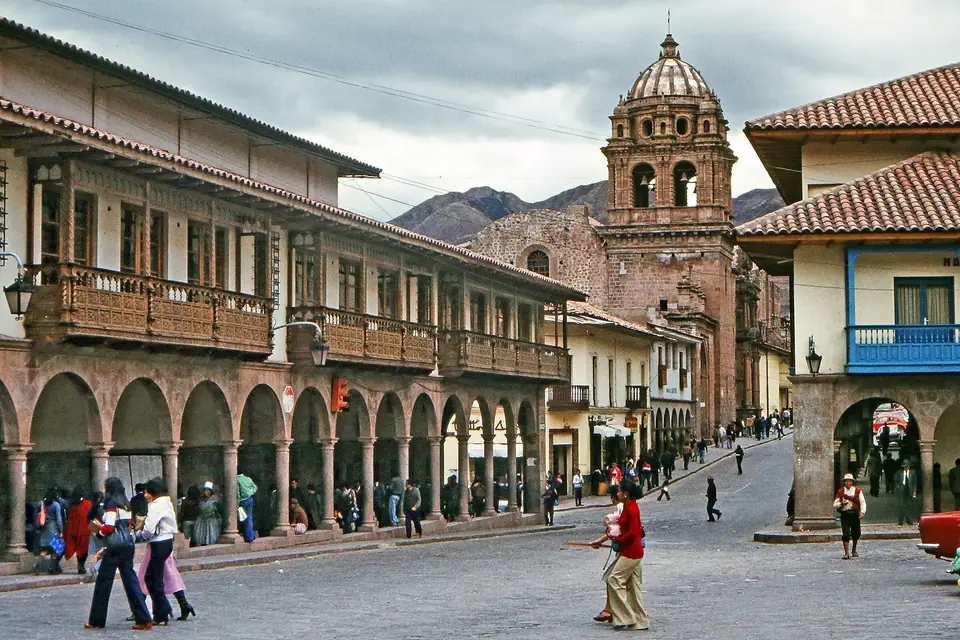
Cusco Cathedral (Catedral Basílica de la Virgen de la Asunción)
Dominating the northeast side of the square, the Cathedral Complex covers 3,920 square metres across the former site of the Inca Suntur Wasi (armoury and emblem hall) and Kiswarkancha, the palace of the eighth Inca ruler Viracocha. Construction began in 1560 using red andesite blocks hauled from Sacsayhuamán and concluded in 1654, blending late Gothic rib vaults with Renaissance proportions and a Baroque carved stone facade.
The complex links three contiguous temples: the 1539 Iglesia del Triunfo on the right flank (the oldest Christian church in Cusco, housing the dark-wood Crucifix of the Señor de los Temblores), the Main Basilica at the centre, and the twin-towered Iglesia de la Sagrada Familia (1723 to 1735) on the left. Inside the main nave, cedar choir stalls carved with 42 saints and an embossed silver main altar stand beside more than 300 canvases from the 17th- and 18th-century Cusco School, including Marcos Zapata’s 1753 Last Supper showing Christ and the disciples dining on roasted cuy and Andean fruits.
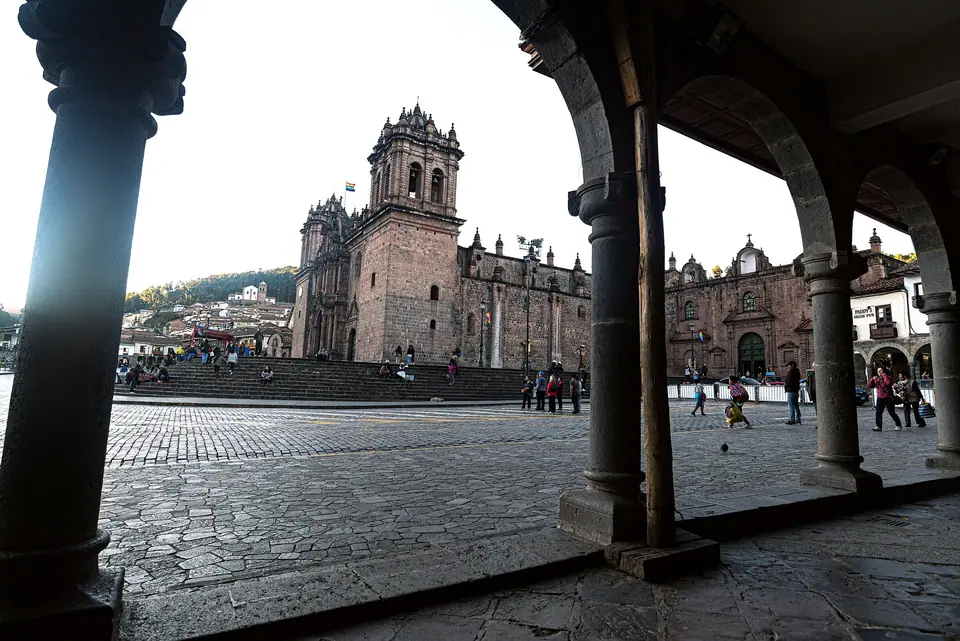
Iglesia de la Compañía de Jesús and the Colonial Portals
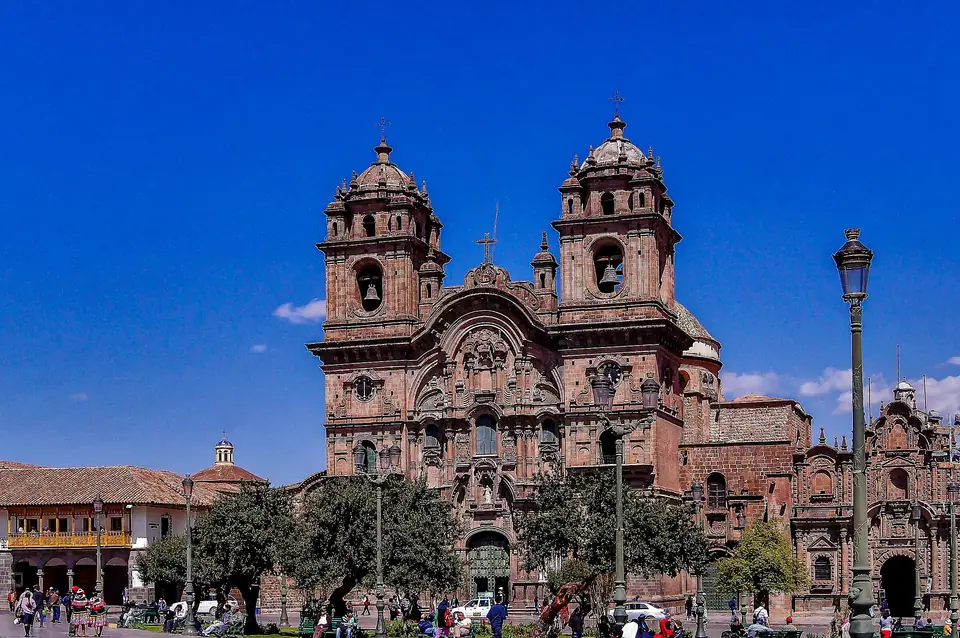
On the southeast corner of Plaza de Armas stands the Iglesia de la Compañía de Jesús, erected by the Jesuits over Amarucancha, the palace of Inca Huayna Capac. Rebuilt between 1651 and 1668 after the 1650 earthquake, its soaring twin-towered stone frontispiece was designed on such a lavish scale that the Bishop of Cusco formally complained to Madrid that it rivalled the Cathedral across the plaza. Inside, a 21-metre gilded cedar retablo frames paintings depicting the marriage of Martín García de Loyola (nephew of St Ignatius) to the Inca princess Beatriz Clara Coya. After touring both churches, walk beneath the stone arches of Portal de Belén, Portal de Harinas, and Portal de Panes, or visit Museo Inka one block uphill.
Traveller tips
Real advice from people who have been to Plaza de Armas, Cusco Cathedral and Iglesia de la Compañía de Jesús. Every tip is read by our team before it goes live.
No tips yet. Been here? Yours could be the first.
Thank you! Your tip will appear here after a quick review.
More in Cusco
Continue exploring Cusco with related neighbourhood, food, and planning guides
Best Time to Visit Cusco: Dry Andean Winters, Inti Raymi and Rainy Months
Cusco, Peru
Where to Stay in Cusco: Historic Centre, San Blas and San Cristóbal
Cusco, Peru
Cusco 3-Day Itinerary: Historic Core, Sacsayhuamán and the Sacred Valley
Cusco, Peru
What to Eat in Cusco: Lomo Saltado, Cuy al Horno, Chiri Uchu and San Pedro Market
Cusco, Peru
