San Blas Artisan Quarter, Hatun Rumiyoc and Cristo Blanco Viewpoint
Climb the cobbled steps of San Blas to visit Cusco’s traditional folk-art studios, San Blas wooden pulpit, Sapantiana Aqueduct, and Cristo Blanco.
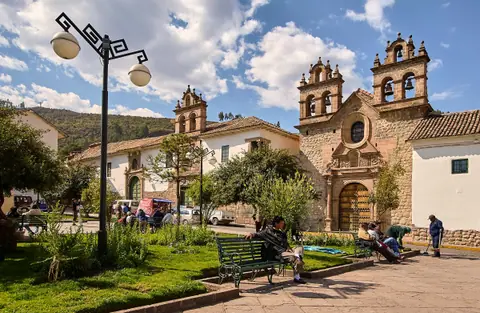
Known in Inca times as T'oqokachi (Salt Cave), the hillside parish of San Blas rises northeast of Plaza de Armas along narrow stone staircases flanked by whitewashed adobe houses and cobalt-blue wooden balconies. During the colonial era and the 20th century, San Blas became the home of Cusco’s foremost families of religious sculptors, ceramicists, and woodcarvers. Today, its car-free lanes link courtyard cafés, working family galleries, and uphill footpaths leading to the colonial Sapantiana Aqueduct and the panoramic Cristo Blanco statue above the city.
Walking Up Hatun Rumiyoc and Cuesta de San Blas
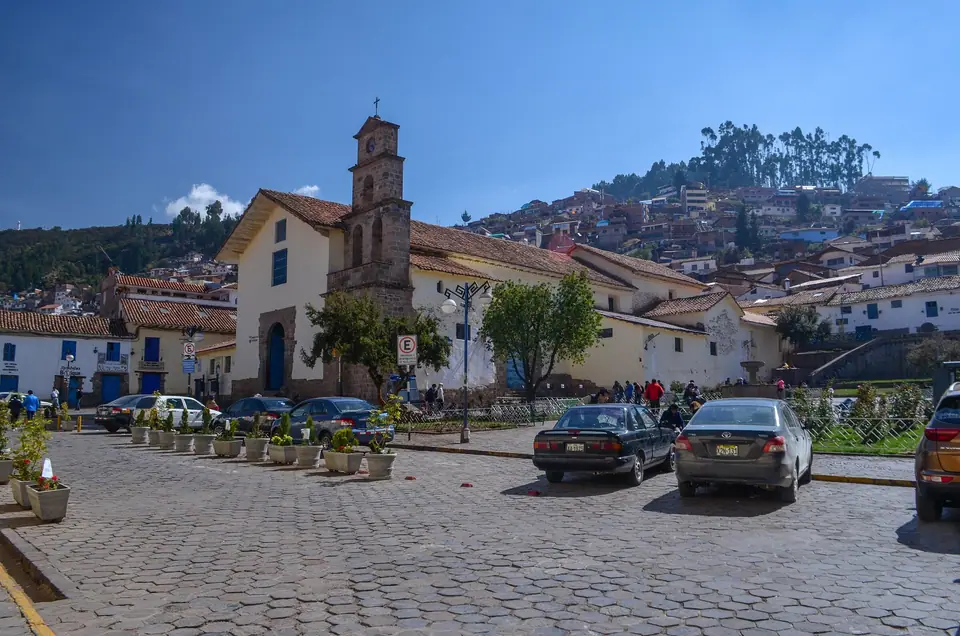
The classic pedestrian approach leaves the northeast corner of Plaza de Armas along Calle Triunfo, passes the green diorite palace wall of Hatun Rumiyoc and the Twelve-Angled Stone, and climbs the stepped incline of Cuesta de San Blas. Because the street gains roughly 60 metres of elevation in three blocks, take the stone steps slowly and pause at the small workshops along the way.
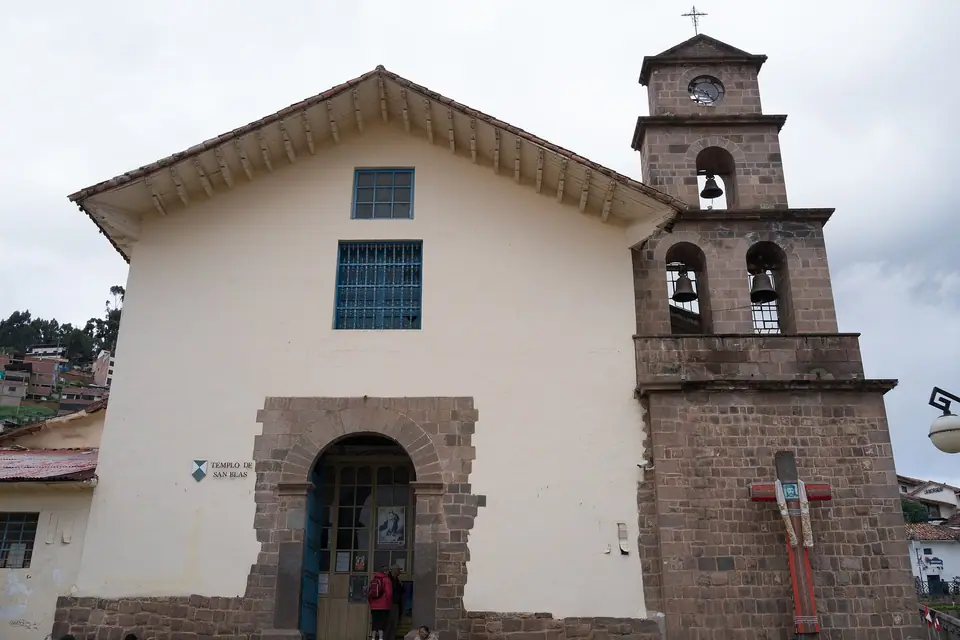
At the top of the rise opens Plazoleta de San Blas, bordered by the 1563 adobe Church of San Blas (Templo de San Blas). Inside its simple nave stands one of the masterpieces of Andean Baroque woodcarving: a cedar pulpit sculpted from a single tree trunk in the late 17th century, attributed to indigenous master craftsman Juan Tomás Tuyru Túpac and topped by a figure of St Paul and a skull.
Artisan Dynasties and the Sapantiana Aqueduct
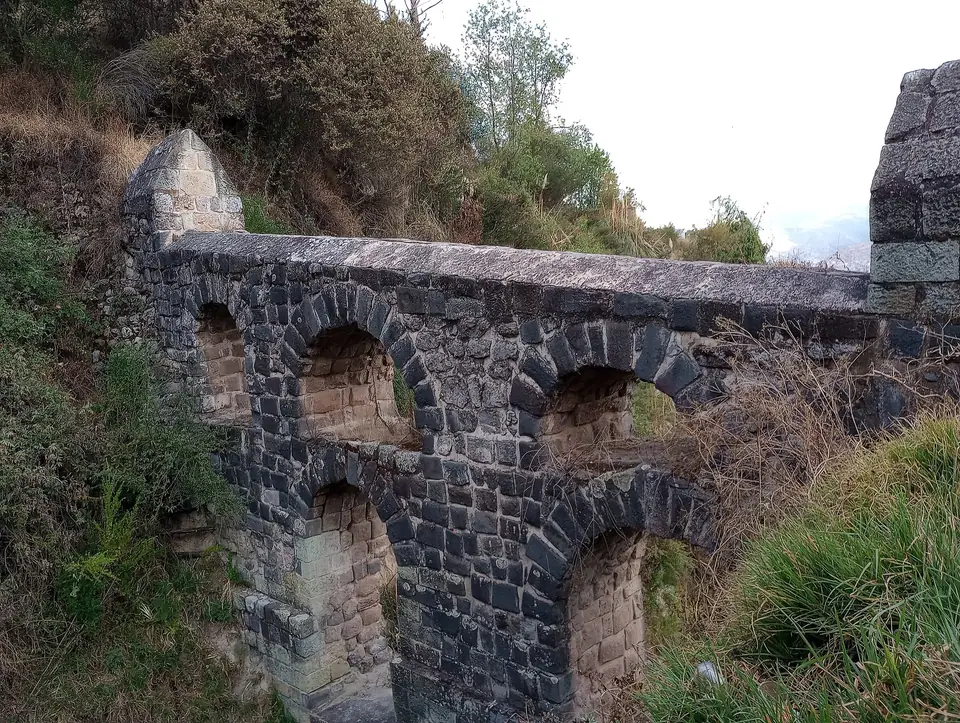
Around Plazoleta de San Blas and along Calle Tandapata and Carmen Alto, you can step into the workshops of the four families who shaped modern Cusqueño folk art: the Mendívil studio (famed for elongated-neck religious figures sculpted from maguey paste and rice flour), the Olave studio (creators of the ceramic Niño Manuelito Christ child figures), the Mérida studio (expressionist clay sculptures of Andean life), and the Rojas studio. Five minutes east down Calle Choquechaka and Pasaje Sapantiana, a grassy ravine reveals the Acueducto de Sapantiana, a four-tiered stone colonial aqueduct built by the Jesuits in the 17th and 18th centuries over the Tullumayo stream.
Climbing to San Cristóbal and Cristo Blanco
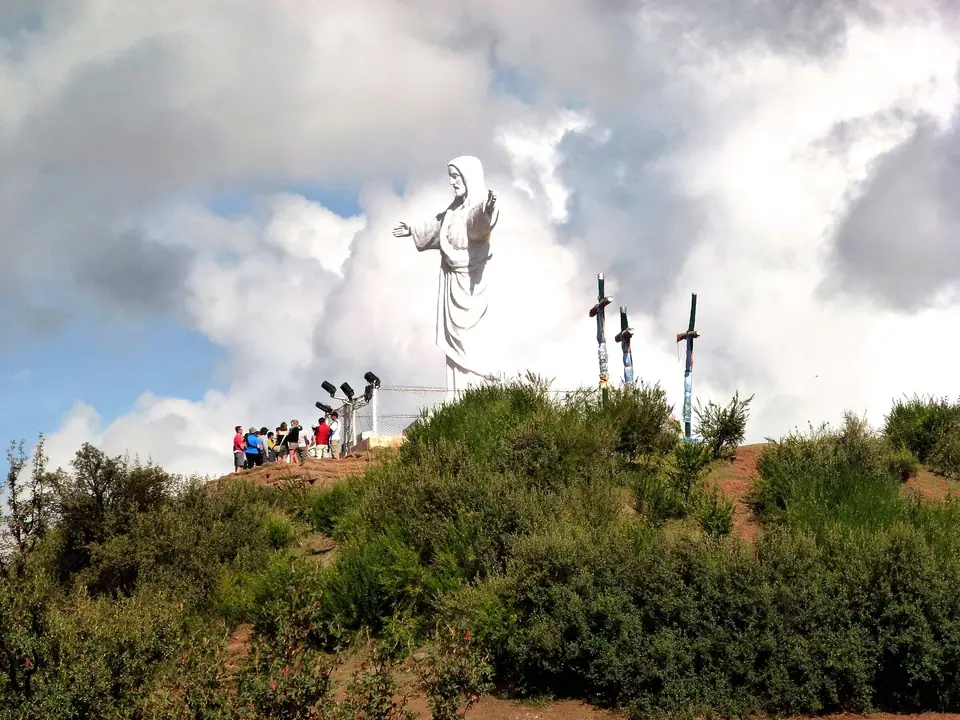
From Calle Tandapata at the upper edge of San Blas, a stone footpath winds uphill to the Pukamoqo ridge at 3,600 metres, just east of Sacsayhuamán. Here stands the eight-metre white statue of Cristo Blanco, sculpted by local artist Francisco Olazo and gifted by Cusco’s Palestinian community in 1945. The open terrace below Cristo Blanco, together with the lower bell-tower plaza of San Cristóbal Church (founded by Inca Paullu Topa), offers the widest sunset panorama over Plaza de Armas and the snow-dusted peak of Ausangate (6,384 metres) on the southeastern horizon.
Traveller tips
Real advice from people who have been to San Blas Artisan Quarter, Hatun Rumiyoc and Cristo Blanco Viewpoint. Every tip is read by our team before it goes live.
No tips yet. Been here? Yours could be the first.
Thank you! Your tip will appear here after a quick review.
More in Cusco
Continue exploring Cusco with related neighbourhood, food, and planning guides