






















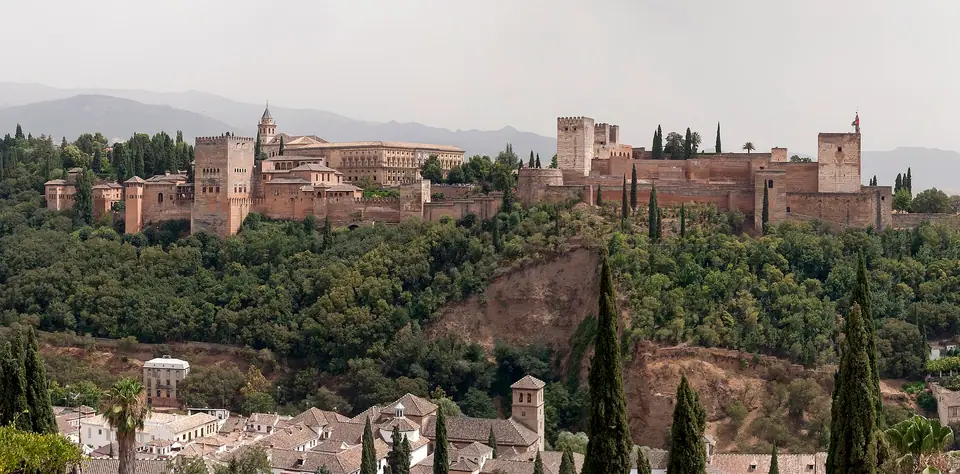
Albaicín & Mirador de San Nicolás Guide: Darro Walk, Carmen Gardens & Viewpoints
Navigate the UNESCO hillside labyrinth of the Albaicín, from the riverside cobbles of Carrera del Darro to Mirador de San Nicolás, Zirid walls, and walled carmen houses.
Added to Granada's UNESCO World Heritage inscription in 1994, the Albaicín (also spelled Albayzín, from the Arabic Rabad al-Bayyazin) is the oldest surviving residential core of Granada. Long before the Nasrids built the Alhambra on the opposite hill, the Zirid Berber dynasty founded its 11th-century citadel (the Alcazaba Cadima) here. At its medieval peak, the Albaicín housed 40,000 residents around 28 underground rain cisterns (aljibes) and thirty mosques later converted into Mudéjar churches. Because GPS navigation frequently struggles inside narrow 1.5-metre-wide alleys flanked by high garden walls, the best way to experience the Albaicín is by connecting four distinct viewpoints (miradores) and historic water cisterns. Pair this route with our Dobla de Oro and El Bañuelo guide and our Sacromonte cave quarter walk.
| Mirador / Landmark | Elevation & Location | Alhambra Camera Angle | Crowd Level & Best Time |
|---|---|---|---|
| 1. Paseo de los Tristes (River Floor) | 725 m. East end of Carrera del Darro | Dramatic upward angle looking 100 m up at the Torre de Comares and Alcazaba cliffs | Lively all day. Atmospheric at dusk when the fortress spotlights switch on |
| 2. Mirador de Carvajales | 760 m; Placeta de Carvajales (Lower Albaicín) | Eye-level framing of the Alcazaba and Torre de la Vela through pomegranate trees | Quiet and intimate. Shady stone benches and fountain pool in the afternoon |
| 3. Mirador de San Nicolás & Mezquita Mayor | 805 m; Plaza de San Nicolás (Upper Albaicín) | Classic frontal panorama of the entire Alhambra complex backed by the Sierra Nevada | Very busy 45 min before sunset. Use the adjacent Mezquita Mayor garden for calmer space |
| 4. Mirador de San Cristóbal & San Miguel Alto | 815 m / 865 m. Western and highest northern crests | Wide-angle sweep over the 11th-century Zirid walls, Cathedral dome, and Alhambra flank | Spacious and relaxed. Ideal for late-afternoon photography and wide cityscapes |
What is a Granadino Carmen and how to see inside
As you climb the stepped cobblestone lanes of the Albaicín, you will notice that most streets show only tall whitewashed walls topped by cascading jasmine, cypress tips, and heavy wooden doors studded with iron nails. Behind these walls lie Granada's signature urban house type: the carmen (from the Arabic karm, originally meaning a hillside vineyard or orchard). Created after the 16th century when small medieval plots were merged behind one wall, a traditional carmen combines a pleasure garden with a productive orchard. Grapevines shade stone water channels, pomegranate trees, and patterned pebble courtyards facing the Alhambra.
Although most cármenes are private homes, several fine examples welcome visitors free of charge. The Carmen de la Victoria on Cuesta del Chapiz is owned by the University of Granada. You can visit its terraced water gardens free by ringing the gate bell or reserving a weekday slot. Nearby on Camino Nuevo de San Nicolás, the Carmen de Max Moreau (open Tuesday to Sunday, free entry) preserves a Belgian painter's studio inside a three-level garden.
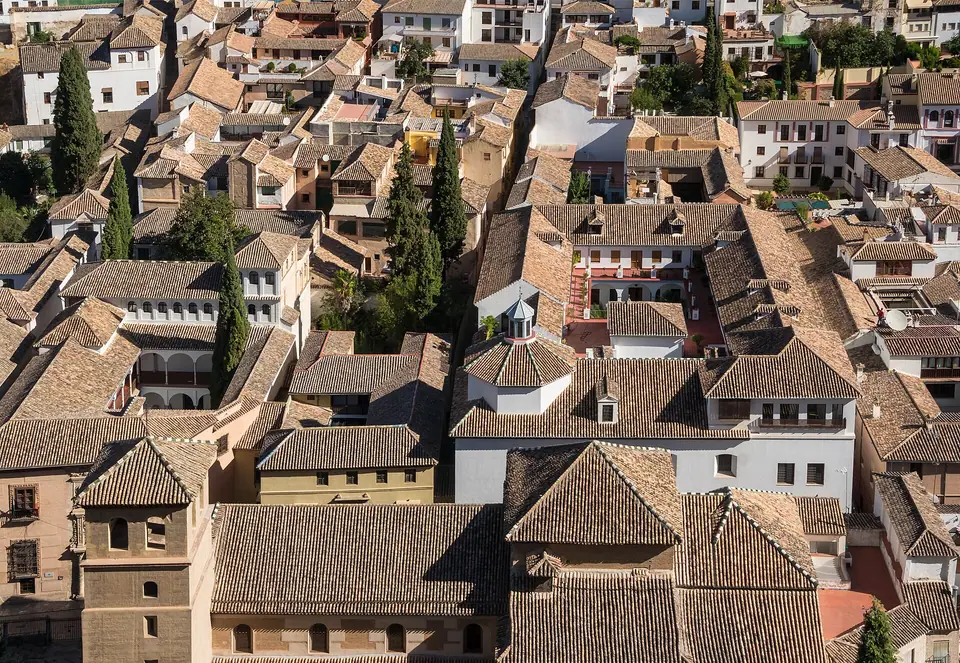
Step-by-step walking route: Plaza Nueva to San Nicolás and Plaza Larga
To explore the Albaicín without climbing steep stairs, ride the C31 or C32 minibus from Plaza Isabel la Católica up to Plaza Larga (~€1.60 cash fare as of November 2026). From the top, spend two hours walking gradually downhill through the medieval core:
- Plaza Larga and Arco de las Pesas (810 m). Begin in Plaza Larga, the everyday neighbourhood heart of the upper Albaicín, where morning fruit and spice stalls operate until 14:00 and cafés serve breakfast toast and pasteles morunos. Walk through the massive 11th-century Zirid defensive horseshoe gate of Arco de las Pesas (Puerta Nueva), where tampered market weights used by dishonest merchants were once hung in iron cages as a public warning.
- Aljibe del Rey and Mirador de San Nicolás (805 m). Follow Callejón de San Cecilio past the 11th-century Aljibe del Rey, the largest medieval underground rain cistern in Granada (holding 300,000 litres and open weekday mornings). Just beyond the cistern gardens, you emerge onto the stone terrace of Mirador de San Nicolás. After admiring the view outside the 1525 Mudéjar church of San Nicolás, walk thirty metres east into the gardens of the Mezquita Mayor de Granada. Its quiet terrace frames the Comares Tower and Partal through olive and cypress trees.
- Callejón de las Tomasas to Placeta de Carvajales (760 m). Descend west from San Nicolás along high-walled Callejón de las Tomasas and Cuesta de San Gregorio. Pause at the shady fountain terrace of Mirador de Carvajales for a closer lower-angle view of the Alcazaba watchtowers.
- Calderería Nueva and Carrera del Darro (700 m). Finish your descent down the lantern-draped steps of Calle Calderería Nueva, lined with Moorish-style teterías serving mint tea and pastries (~€3.00 to €4.50 as of November 2026). Alternatively, follow Calle San Juan de los Reyes past its 13th-century Almohad minaret down to Paseo de los Tristes.
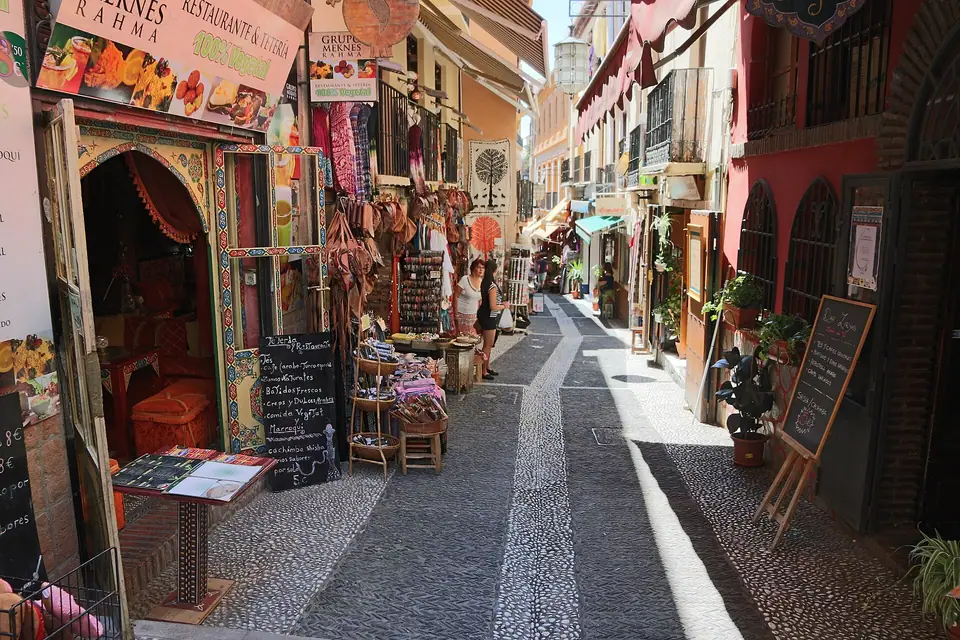
The 11th-century Zirid Walls, Puerta de Elvira, and Puerta Monaita
History enthusiasts who want to trace the 11th-century fortifications of Zirid Granada should walk fifteen minutes west from Plaza Larga along the crest of the hill toward Mirador de San Cristóbal. This western spur preserves long stretches of the 11th-century Muralla de la Alcazaba Cadima and the bent-axis citadel gateway of Puerta Monaita (Bab al-Unaydar). At the bottom of Cuesta de Alhacaba on Calle Elvira stands the grand horseshoe arch of Puerta de Elvira (Bab Ilbira), for five centuries the main northern gate of Islamic Granada.
Traveller tips
- Keep bags zipped at Mirador de San Nicolás at sunset. San Nicolás is safe and policed, but the dense shoulder-to-shoulder crowd along the stone parapet during the 30 minutes before sunset can attract occasional pickpockets. Wear your bag in front and avoid placing cameras or phones unattended on the wall ledge.
- Follow the bronze cistern plaques. Look for brass plaques marking the Albaicín's 28 surviving medieval rain cisterns (aljibes), fed for centuries by the Aynadamar mountain canal.
- Visit the Archaeological Museum in the 1539 Casa de Castril on Carrera del Darro. At Carrera del Darro 41 stands the Museo Arqueológico y Etnológico de Granada (free entry for EU citizens, €1.50 for others as of November 2026, open Tuesday to Sunday), housed inside the richly sculpted 1539 Plateresque stone palace of Hernando de Zafra's grandson. Notice the corner balcony above the portal carved with the motto "Esperándola del cielo" ("Awaiting it from heaven"). Inside, galleries display Phoenician urns, Roman bronzes, and 14th-century Nasrid astrolabes and ceramics facing the Alhambra.
- Convent sweets at Santa Isabel la Real and Concepción. Across the Albaicín, several 16th-century convents still bake handmade almond pastries sold through a revolving wooden turnstile (torno). At Santa Isabel la Real or Convento de Zafra, ring the bell beside the wooden wheel and ask for yemas or roscos de anís (~€6.00 to €12.00 cash as of November 2026). Place your money on the turntable and spin it to receive wrapped convent sweets.
- Fajalauza ceramics at the historic Puerta de Fajalauza workshops. At the highest northern gate of the Albaicín wall stands the 14th-century Puerta de Fajalauza (Bab al-Fajj al-Lawza, "Gate of the Almond Tree Hill"), where traditional family potteries have fired tin-glazed earthenware since the 16th century. Visit the Fundación Fajalauza kiln on Carretera de Murcia to watch artisans hand-paint cobalt-blue and green pomegranates onto white bowls.
- Best morning coffee and toast stop in Plaza Larga. Join locals at Café 4 Gatos or on Plaza Larga for morning olive-oil toast and fresh orange juice (~€3.50 to €4.50 as of November 2026).
- Visiting the Church of El Salvador on Plaza del Abad. Two minutes above Plaza Larga stands the 16th-century Collegiate Church of El Salvador (~€2.00 entry or included in Diocesan passes as of November 2026). Its courtyard preserves the intact horseshoe-arched ablutions patio of the medieval Great Mosque of the Albaicín.
- Finding the quietest sunset bench at San Cristóbal. Unlike Mirador de San Nicolás, the broad stone esplanade of Mirador de San Cristóbal faces west across the 11th-century Zirid walls toward the sunset itself. Pair it with a look at the adjacent Renaissance tower of the Church of San Cristóbal.
- Navigating Albaicín street signs. Ceramic blue-and-white pomegranates on corner walls indicate historic walking routes down to Plaza Nueva and Carrera del Darro. When in doubt, walking downhill always leads back to the river or Calle Elvira.
Where it is
- 1Albaicín & Mirador de San Nicolás
- F.G.L. Airport Granada-Jaén Airport (GRX) · about 16 km from here in a straight line
- Directions in Google Maps
Traveller tips
Real advice from people who have been to Granada. Every tip is read by our team before it goes live.
No tips yet. Been here? Yours could be the first.
Thank you! Your tip will appear here after a quick review.
More in Granada
Continue exploring Granada with related neighbourhood, food, and planning guides
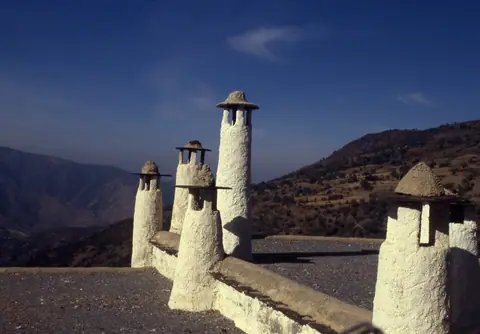
Best Day Trips from Granada: Las Alpujarras Villages, Sierra Nevada & Guadix
Granada, Spain
Granada: Alhambra Palaces, Albaicín Hills & Essential Logistics
Granada, Spain
Best Things to Do in Granada: Alhambra, Albaicín & Cultural Highlights
Granada, Spain
How to Get to Granada: AVE Trains, Málaga & Granada Airports & ALSA Buses
Granada, Spain
