


























Granada: Alhambra Palaces, Albaicín Hills & Essential Logistics
Plan your visit to Granada across the Sabika hill of the Alhambra, the medieval lanes of the Albaicín, the Renaissance Cathedral quarter, and traditional free-tapas streets.
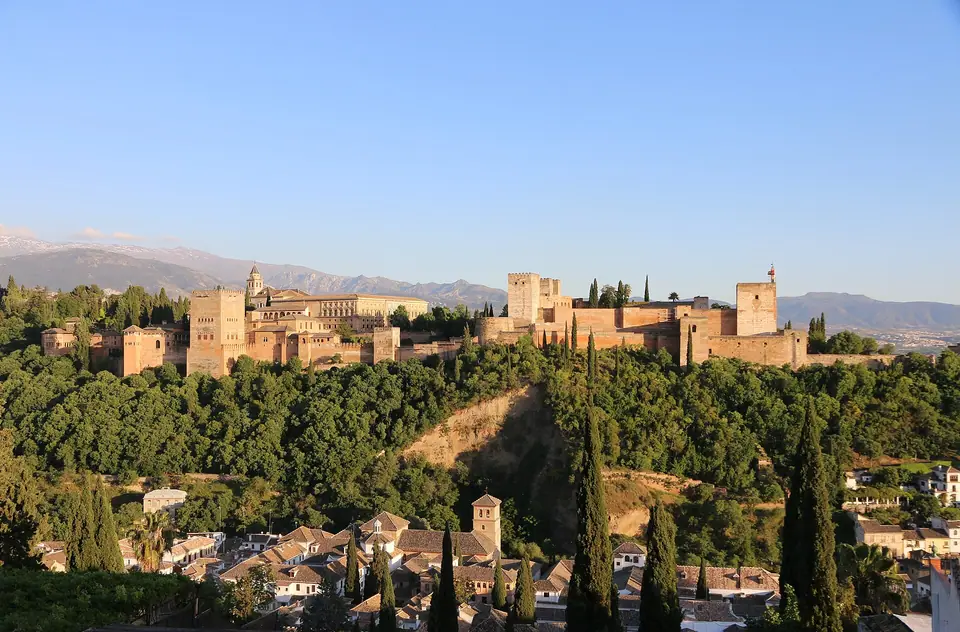
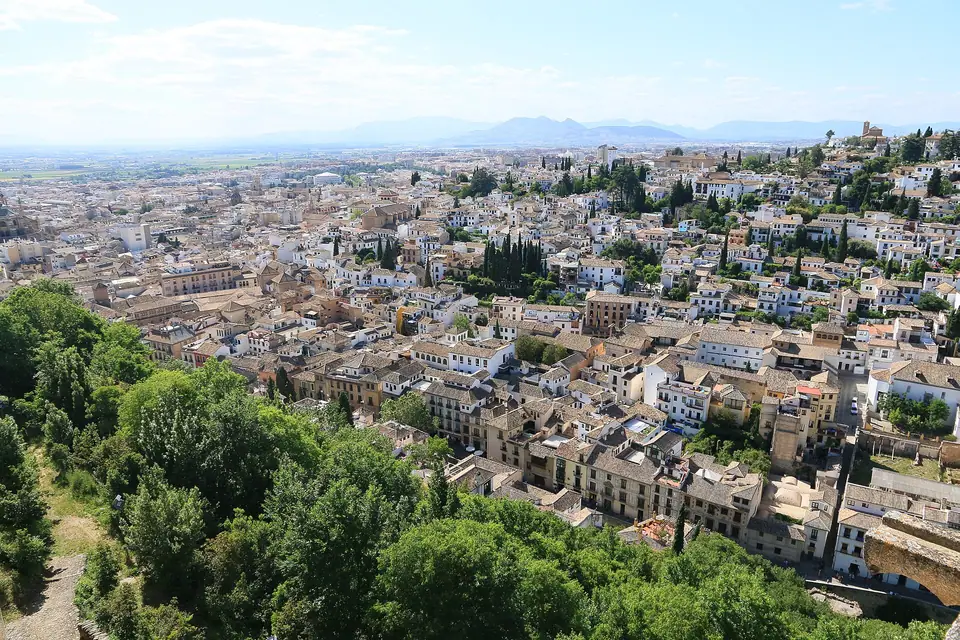
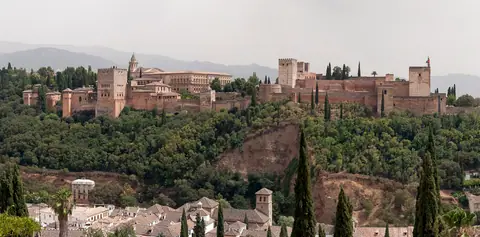
Granada occupies a dramatic natural amphitheatre at 738 metres (2,421 feet) above sea level where the Darro and Genil rivers emerge from the snow-covered peaks of the Sierra Nevada onto the fertile Vega plain. First-time visitors often assume Granada is flat like Seville. Instead, its UNESCO World Heritage core (Reference 314) rises across three steep spurs divided by a deep gorge. On the southern Sabika ridge stands the red-clay fortified palatine city of the Alhambra and the summer estates of the Generalife. Directly opposite, across the narrow ravine of the Río Darro, climbs the medieval Moorish labyrinth of the Albaicín and the whitewashed cave-dwellings of Sacromonte. Below both hills spreads the lower Renaissance city built after 1492 around the Royal Chapel and Granada Cathedral. Begin by checking our Alhambra and Nasrid Palaces booking guide and our Granada 3-day itinerary to align your palace entry slot with your accommodation base.
| Zone / Hilltop | Elevation & Terrain | Core Highlights | Best Access Method |
|---|---|---|---|
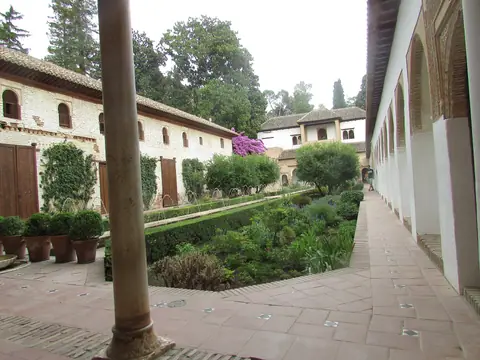
| 1. Sabika Hill (Alhambra & Generalife) | 790 m to 840 m. Forested 120 m climb above Plaza Nueva | Nasrid Palaces, Alcazaba fortress, Palace of Charles V, and Generalife gardens | C30 or C32 minibus from Isabel la Católica, or a 15-minute climb up Cuesta de Gomérez |
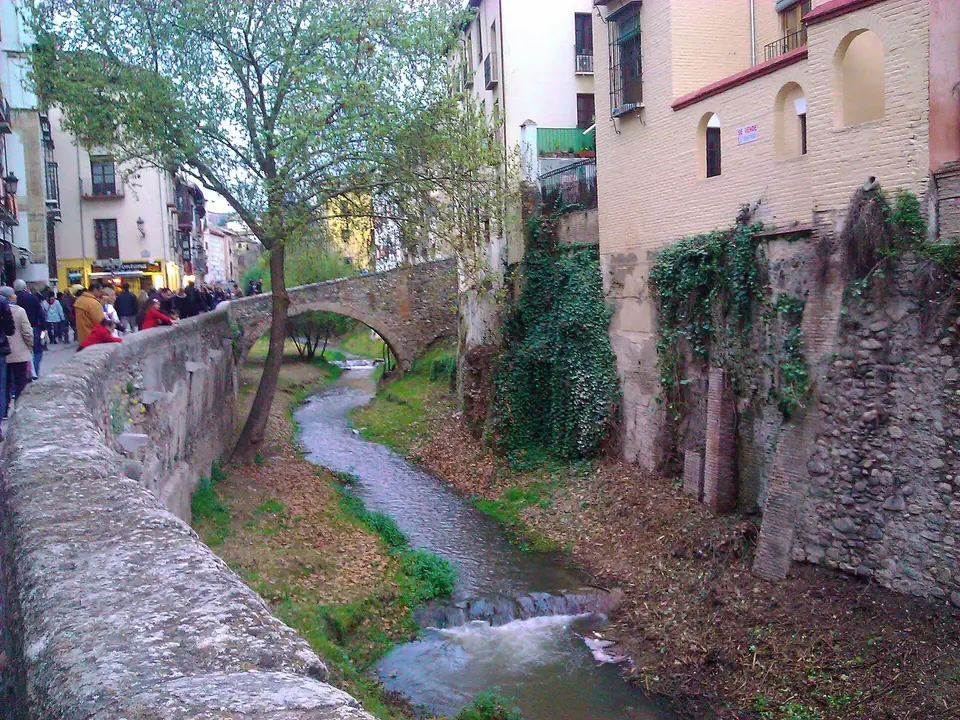
| 2. Albaicín & Paseo de los Tristes | 730 m to 815 m. Steep cobbled pedestrian alleys and steps | Mirador de San Nicolás, El Bañuelo Arab baths, Casa de Zafra, and carmen courtyards | Walk along riverside Carrera del Darro, or ride the C31 and C32 minibuses to the upper ridge |
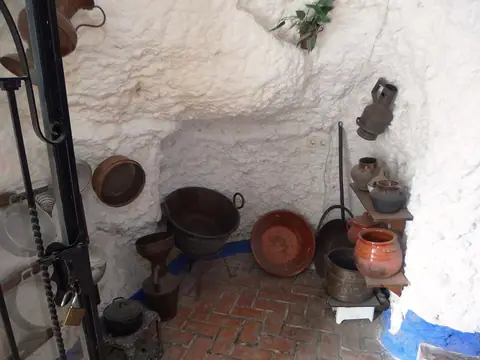
| 3. Sacromonte Valley | 780 m to 850 m. Terraced hillside path above the Darro canyon | Cuevas troglodyte houses, Museo Cuevas del Sacromonte, and evening zambra flamenco caves | C34 minibus from Plaza Nueva, or a 25-minute walk from Paseo de los Tristes via Cuesta del Chapiz |
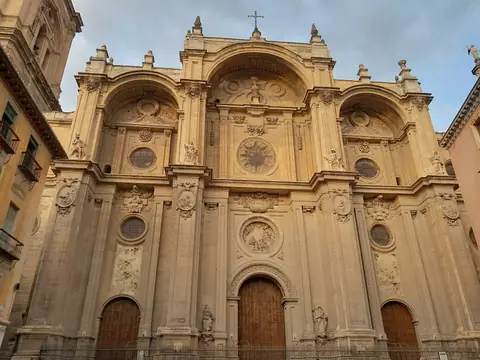
| 4. Centro Catedral & Realejo | 680 m to 730 m. Mostly flat plazas and lower southern slopes | Granada Cathedral, Royal Chapel, Alcaicería silk market, Corral del Carbón, and Calle Navas tapas | Flat walking routes linked by Gran Vía buses and the Granada Metro at Recogidas |
How Granada is laid out across two rivers and three hills
Understanding the relationship between Plaza Nueva, the Río Darro, and the surrounding ridges prevents exhausting backtracking during your trip. Plaza Nueva is the geographical hinge of historic Granada, built directly over an arched brick vault that covers the Darro River before it flows beneath Calle Reyes Católicos toward Puerta Real. Facing east from Plaza Nueva, Carrera del Darro leads straight into the canyon between the two hills.
To your right rises the wooded Cuesta de Gomérez, which climbs through the 16th-century Puerta de las Granadas archway to the Alhambra ticket pavilions and the Gate of Justice. To your left rise the stepped lanes (cuestas) of the lower Albaicín. Here, whitewashed cármenes with pomegranate gardens look directly across at the Alcazaba. South of the Alhambra lies the Realejo, while the flat Cathedral district extends to the west.
Alhambra ticket rules and passport verification
Every Granada itinerary revolves around your timed entry to the Nasrid Palaces inside the Alhambra complex. Daily admission is capped at roughly 6,600 visitors, and ticket windows sell nothing once online quotas fill. As of November 2026 (subject to official Patronato adjustment), the General Daytime Ticket costs €19.09, the Gardens, Generalife, and Alcazaba ticket costs €10.61, and the Night Visit to the Nasrid Palaces costs €10.61.
The half-hour time slot printed on your ticket applies specifically to the checkpoint at the entrance to the Nasrid Palaces, not to the outer gates of the Alhambra complex. You can visit the Alcazaba, Partal, and Generalife at any point during your morning (08:30 to 14:00) or afternoon (14:00 to 18:00 or 20:00) session. However, arriving late for your 30-minute window at the Nasrid Palaces doorway means the barcode scanner will reject your entry. Because tickets are nominative, guards inspect the original physical passport or EU national ID card of every visitor at the gate.
Getting around: C30 to C34 red minibuses, walking, and ZBE camera zones
Granada operates a fleet of compact red-and-white Alhambra Bus minibuses (Lines C30, C31, C32, and C34) engineered specifically to squeeze through medieval stone arches and tight hairpin turns that full-sized buses cannot pass. As of November 2026 (subject to tariff revisions), a single cash fare costs €1.60. Buying a reloadable Credibús card (€2.00 deposit) drops fares to roughly €0.87 to €0.90 and lets multiple people tap on together.
- Line C30 (Alhambra Express). This minibus runs every 8 to 10 minutes from Plaza Isabel la Católica to the Alhambra main pavilion. It also stops at Puerta de la Justicia for quick access to the Nasrid Palaces.
- Line C32 (Alhambra to Albaicín Link). This route connects the Alhambra directly with Plaza Nueva, Gran Vía, and the upper Albaicín around Mirador de San Nicolás and Plaza Larga.
- Line C31 and C34. Line C31 loops exclusively through the Albaicín from Gran Vía and Plaza Nueva, while Line C34 climbs further east along the Camino del Sacromonte to the Sacromonte Abbey.
- Driving and ZBE Camera Restrictions. Both the Albaicín and Carrera del Darro are protected by automatic bolardos (retractable bollards) and number-plate recognition cameras that issue immediate fines to non-resident vehicles. If arriving by rental car, use the official Alhambra car park (€2.45 per hour or ~€21.00 per day as of November 2026). You can also park in an underground garage at Acera del Darro or San Agustín.
Money, dining schedules, and Granada's free-tapas custom
Spain uses the Euro (€), and contactless Visa and Mastercard payments are accepted across Granada's ticket desks, city buses, taxis, and restaurants. Still, carry €20 to €30 in cash for convent bakeries selling pastries through wooden turnstiles (tornos) and churros stalls on Plaza Bib-Rambla.
In Granada, ordering a beer, glass of wine, tinto de verano, or soft drink (€2.80 to €3.80 as of November 2026) automatically includes a free plate of food. Unlike San Sebastián where you pay per pintxo, here the kitchen selects your free tapa. Round one brings pork loin montaditos or olives, while later rounds bring fried aubergines or grilled fish. Lunch runs from 13:30 to 16:00, and evening tapas bars open their kitchens at 20:00 or 20:30.
Dobla de Oro combined ticket for Islamic monuments
Beyond the Alhambra hill, six conserved Nasrid and Zirid monuments sit scattered across the Albaicín and lower Darro valley under the joint Dobla de Oro programme managed by the Patronato. These sites include the 11th-century El Bañuelo Arab baths, the Corral del Carbón caravanserai, and Dar al-Horra. The pass also covers Horno de Oro, the Maristán hospital ruins, and Casa del Chapiz.
As of November 2026 (subject to official change), the standalone Bono Monumentos Andalusíes costs €7.07 for all six sites. Alternatively, book the combined Dobla de Oro General pass (€27.09) with your Alhambra entry. Visiting these quieter courtyards in the morning reveals intricate carved stucco, timber coffered ceilings (artesonado), and reflecting pools without the dense crowds of the main citadel. Read our Dobla de Oro and El Bañuelo guide for exact walking sequences.
Traveller tips
- Enter Nasrid Palaces via Puerta de la Justicia. If your Nasrid Palaces slot is within 30 minutes of your arrival on the hill, do not walk all the way east to the main Access Pavilion. Alight from the C30 bus at Puerta de la Justicia to reach the Nasrid Palaces queue in 4 minutes.
- Avoid heels on empedrado granadino. Traditional Granada pavements are laid with rounded river pebbles set on edge in geometric floral patterns. After rain or morning dew, these stones become slick on steep descents from San Nicolás, so rubber-soled walking shoes are essential.
- Tap water quality. Granada's tap water comes directly from snowmelt reservoirs in the Sierra Nevada (Cenes de la Vega treatment system) and is safe, cold, and pleasant to drink. Carry a reusable bottle to refill at the bronze drinking fountains across the Alhambra and Realejo.
- Official tourist information offices in Granada. The regional Junta de Andalucía tourist office sits at Calle Santa Ana 4 right off Plaza Nueva, while the municipal Granada Tur office operates on Plaza de Mariana Pineda and inside the Alhambra Access Pavilion (open daily 09:00 to 19:00). Staff provide free printed maps showing the C30 to C34 minibus loops, step-free accessibility routes, and current Dobla de Oro opening hours.
- Emergency numbers and tourist police support. Across Spain, the single toll-free emergency number for ambulance, fire, and police in English and Spanish is 112. The National Police (Policía Nacional) station handling lost passport reports sits on Calle Duquesa near the Botanical Garden of the University of Granada.
Where it is
- 1Granada
- F.G.L. Airport Granada-Jaén Airport (GRX) · about 17 km from Granada in a straight line
- Directions in Google Maps
Traveller tips
Real advice from people who have been to Granada. Every tip is read by our team before it goes live.
No tips yet. Been here? Yours could be the first.
Thank you! Your tip will appear here after a quick review.
More in Granada
Continue exploring Granada with related neighbourhood, food, and planning guides
Generalife Gardens & Palace Guide: Patio de la Acequia, Water Stairway & Silla del Moro
Granada, Spain
Albaicín & Mirador de San Nicolás Guide: Darro Walk, Carmen Gardens & Viewpoints
Granada, Spain
Sacromonte Cave Quarter Guide: Zambra Flamenco, Cave Museum & Abbey
Granada, Spain
Granada Cathedral & Royal Chapel Guide: Catholic Monarchs, Alcaicería & Corral del Carbón
Granada, Spain
